

When it comes to upgrading your kitchen, the debate between Scanpan vs HexClad is one I’ve wrestled with myself. I’ve spent countless mornings flipping eggs, searing steaks, and sautéing veggies on both, and each has its own personality in the kitchen. From the smooth, classic feel of Scanpan to the bold, high-tech vibe of HexClad, these pans promise top-notch performance, but which one truly earns a spot in your home? I’ll share my hands-on experience, break down the differences, and help you figure out which pan fits your cooking style best. By the end, you’ll know exactly which one I’d reach for first—and why.
Is Scanpan Good?
Yes — Scanpan makes great pans. I’ve used the Scanpan CTX 10-1/4-Inch Fry Pan, and it cooks really well. It heats fast, cooks evenly, and feels strong in the hand. For eggs, pancakes, or searing salmon, it gives clean, even results every time.
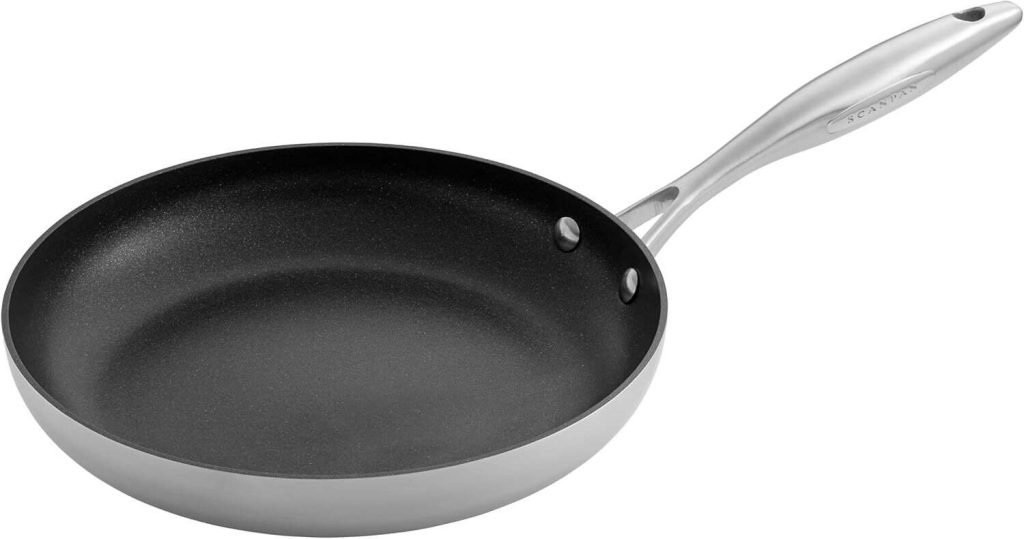

The 5-ply stainless steel design makes it tough and steady. You can feel the quality when you lift it. The heat spreads well across the surface, which helps food cook the same on every side.
This Danish-made cookware also looks beautiful. The satin silver finish fits any kitchen. It works on gas, electric, and induction stovetops. I also like that the nonstick surface lets me cook with less oil. Food slides right off, even after months of use.
What I Like
- Strong and solid build: The 5-ply stainless steel body feels heavy in a good way. It heats fast and stays even. I love that when I’m browning chicken or vegetables.
- Cooks like a pro pan: The Scanpan CTX holds heat well. On my induction cooktop, it gives steady heat that helps sauces and meats cook perfectly.
- Eco-friendly and made in Denmark: I like that Scanpan uses recycled steel and still makes each pan by hand. It feels like real artisan cookware.
- Easy to clean: The nonstick coating holds up great. After cooking, I just rinse it and wipe it clean. No scrubbing needed.
- Oven safe up to 500°F: I often start cooking on the stove, then move the pan into the oven. It’s great for frittatas or baked pasta.
What Could Be Better
- It’s pricey: The Scanpan CTX costs more than most nonstick pans. But the quality matches the price. It’s a long-term buy, not a quick fix.
- The coating won’t last forever: Like all nonstick cookware, it can wear out over time. To make it last, I use soft utensils and skip the dishwasher.
- Hard to find in some places: In the U.S., it’s easy to buy. But in other countries, like Canada or Bangladesh, the price and shipping can be high.
Read: Made In vs Caraway Fry Pan
Recommendation
If you want a premium nonstick stainless steel fry pan, this is a smart choice. The Scanpan CTX suits people who cook a lot and care about quality. It’s perfect for everyday cooking and induction-friendly kitchens.
If you want a pan that lasts for life, a cast iron or carbon steel pan might be better. But if you want comfort, style, and smooth cooking, Scanpan is worth it.
In my kitchen, it’s been one of my favorites. It cooks evenly, cleans fast, and feels built to last. For me, that’s what good cookware should do — make cooking simple, fun, and stress-free.
Is HexClad Good?
Yes — HexClad is good. I have used the HexClad Hybrid Nonstick 10-Inch Frying Pan for many meals over years. I have cooked shrimp, eggs, quesadillas, sauces. I even tested it with metal utensils and a hand mixer. It still works well.
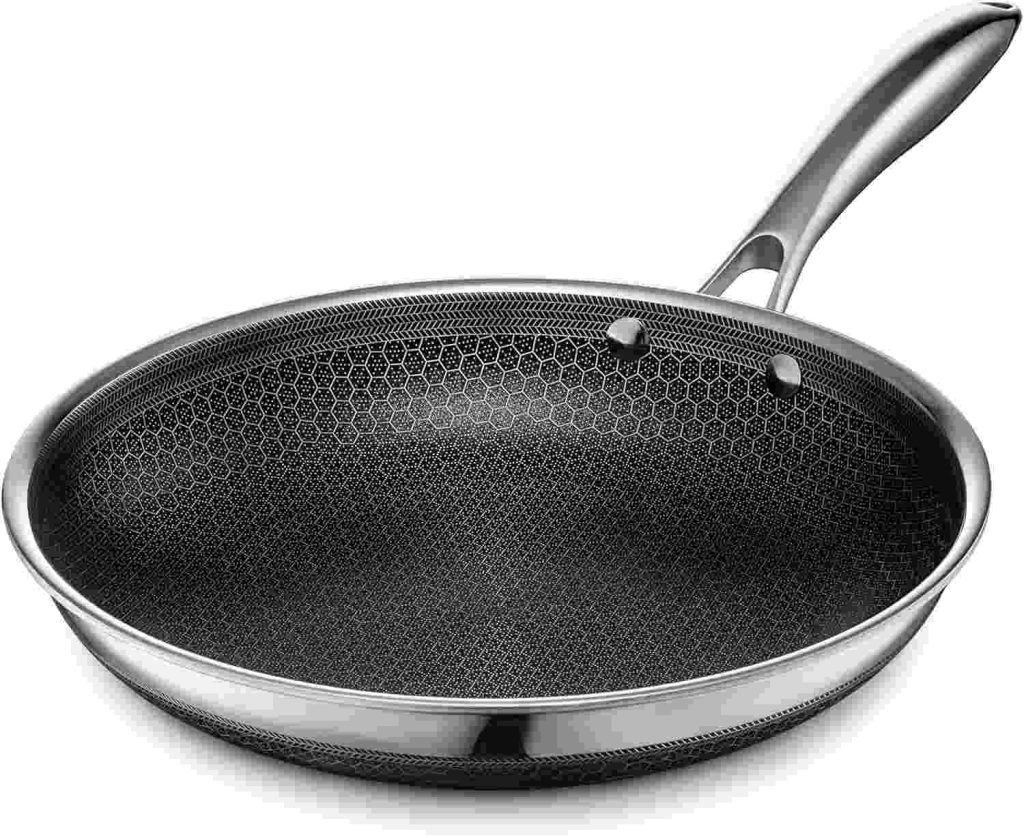
I notice the pan still gives a smooth nonstick stainless steel surface. It heats evenly thanks to its tri-ply construction and aluminum core. It holds up on induction cooktops, and I have used it in the oven too. It gets hot, up to high oven-safe temperatures. The TerraBond ceramic coating feels newer and tougher than old PTFE on mine. Discoloration shows, yes — but it does not spoil the cooking.
What I Like
- Strong hybrid design: I feel the laser-etched hexagonal nonstick surface gives both searing and easy cleaning. When I sear meat or do shrimp, food slides off nicely.
- Durability under abuse: I broke a few “nonstick rules” by using metal utensils, letting it get very hot, and using a mixer once. Still, I see no deep scratches, and the surface still performs.
- Versatility: It works on any cooktop. Gas, induction, oven — all good. The stay-cool handle helps. I bake, roast, sauté in it. It does many jobs well.
- Lifetime warranty (from manufacturer defects): This gives me peace when spending more. If a serious defect appears, the brand backs it.
- Easy to clean: After cooking, most residue washes off with warm water or soft sponge. Sometimes I use mild cleaners. Even after six years, it cleans up well.
What Could Be Better
- Price is high: It costs a lot. For many cooks, the price may feel steep. You are buying premium features.
- Discoloration happens fast: The pan shows stain or color changes after heat. It does not affect function, but it looks used. I wish the newer coating resists that more.
- Coating change brings uncertainty: The shift to TerraBond ceramic coating in 2024 means newer pans may behave differently. Some users report sticking. I do not yet know how new batches will last.
Recommendation
If you cook often and want a hybrid frying pan that combines nonstick ease with stainless steel strength — go for HexClad. It fits well if you use induction, like to sear, bake, sauté. It gives value over time if you take care of it (but not too fragile care).
If you cook lightly or rarely, or care most about the pan always looking brand new, you might wait or compare with cheaper options. The cost may be hard to justify for occasional use.
From me: I would buy HexClad again. It holds up. It earns its price in long use. Just clean gently, avoid nonstick sprays, avoid letting it burn. Then you’ll get the best out of it.
scanpan vs HexClad — Which Frying Pan Is Better?
Choosing between Scanpan and HexClad feels like picking between two kitchen legends. I’ve cooked with both for years — searing salmon, frying eggs, and making quick stir-fries on busy mornings. Both pans promise durability, nonstick power, and that “chef-style” feel. But how do they really compare? Here’s what I’ve learned from real, hands-on use.
Design & Build Quality
I can feel the difference right when I pick them up. The Scanpan CTX has a solid, balanced weight — stainless steel with a satin finish that feels elegant. The HexClad has a futuristic look with its laser-etched hex pattern. Both are built strong, but the textures tell two different stories: Scanpan feels smooth and steady, while HexClad feels bold and modern.
| Feature | Scanpan CTX | HexClad Hybrid |
| Material | 5-ply stainless steel with nonstick coating | Tri-ply stainless steel with hybrid nonstick hex surface |
| Design Feel | Smooth, sleek, satin finish | Modern, hexagonal pattern with shine |
| Handle Comfort | Rounded, soft-touch feel | Stay-cool stainless handle, firm grip |
Winner: Scanpan — it feels more classic and balanced in the hand, ideal for long cooking sessions.
⭐ Rating: Scanpan 4.8 / HexClad 4.6
Cooking Performance
Cooking on both pans feels like working with two different moods. The Scanpan CTX gives calm, even heat. My omelets glide off like silk, and the browning looks perfect. The HexClad gives a sharper sear — great for steak and crispy chicken skin. It heats up faster and holds temperature better when I push the heat higher.
| Feature | Scanpan CTX | HexClad Hybrid |
| Heat Distribution | Even and gentle | Fast and powerful |
| Best For | Sauces, eggs, sautéing | Meats, stir-fries, searing |
| Oven-Safe Temp | Up to 500°F | Up to 900°F (metal lid 900°F) |
Winner: HexClad — it’s a beast for high-heat searing and pro-style cooking.
⭐ Rating: Scanpan 4.6 / HexClad 4.8
Nonstick Surface & Cleaning
After years of use, I can say both coatings are impressive. My Scanpan nonstick still works beautifully with little oil. Food slides off clean, and cleanup is quick. The HexClad has a more textured surface, so it takes a little more scrubbing but never peels or flakes. It’s metal-utensil safe, which gives me confidence when I’m not gentle.
| Feature | Scanpan CTX | HexClad Hybrid |
| Coating Type | Ceramic titanium nonstick | Hybrid stainless + ceramic (TerraBond) |
| Ease of Cleaning | Very easy, smooth surface | Easy, but may show discoloration |
| Utensil Safety | Metal-safe (light use) | Fully metal-safe, no scratches |
Winner: Scanpan — smoother surface, easier cleanup after everyday meals.
⭐ Rating: Scanpan 4.8 / HexClad 4.5
Durability & Longevity
I’ve had both pans for years. My Scanpan CTX still looks clean, though the base shows light wear. My HexClad, even after rough tests — metal whisk, mixer, and all — still performs like new. It resists damage, though discoloration shows fast. Both last long if you treat them right, but HexClad’s hybrid surface is tougher against scratches.
| Feature | Scanpan CTX | HexClad Hybrid |
| Longevity | 5+ years with care | 6+ years even with heavy use |
| Scratch Resistance | Strong, not for abuse | Excellent, handles metal tools |
| Warranty | Limited lifetime | Lifetime (defect coverage) |
Winner: HexClad — it wins for resilience and toughness.
⭐ Rating: Scanpan 4.7 / HexClad 4.9
Price & Value
Price is where both make you think twice. Scanpan CTX (10.25″) costs around $139.95, while the HexClad 10″ is about $149.00. Scanpan feels fair for its quality, but HexClad gives more temperature range and durability. I see them as long-term investments, not cheap buys.
| Feature | Scanpan CTX | HexClad Hybrid |
| Price Range | Around $140 | Around $150 |
| Value for Money | Balanced quality and design | Premium durability and innovation |
| Overall Worth | Great for daily cooks | Ideal for passionate home chefs |
Winner: Tie — both justify their price if you value quality and long use.
⭐ Rating: Scanpan 4.7 / HexClad 4.7
Final Recommendation
Both are excellent — it depends on what kind of cook you are.
If you love smooth cooking, elegant design, and simple cleaning, go with Scanpan CTX. It’s a joy for everyday meals and steady heat lovers.
If you like bold sears, high heat, and don’t mind a bit of patina on your pan, HexClad might suit you better. It feels more “pro kitchen,” built for tough love and long life.
For me, Scanpan feels like a quiet craftsman, and HexClad feels like a tech genius. Both earn their spots — but if I had to choose one for long-term use, I’d lean slightly toward HexClad for its durability and bold performance.
⭐ Overall Ratings:
- Scanpan CTX: 4.7 / 5
- HexClad Hybrid: 4.8 / 5
My Final Thoughts
After spending time with both, I can honestly say that Scanpan vs HexClad each has its charm. If you love a smooth, classic nonstick feel and easy cleanup, Scanpan will feel like second nature in your kitchen. On the other hand, if you enjoy experimenting with high-heat searing and a modern, almost futuristic design, HexClad might excite you more. For me, the choice boils down to your cooking style and what you value most—ease and simplicity or innovation and versatility. Either way, both are solid options that will elevate your cooking experience.
FAQ – Scanpan vs HexClad
Q1: Which is better for everyday cooking, Scanpan or HexClad?
A1: For everyday cooking, Scanpan is easier for quick meals and cleaning, while HexClad shines for high-heat searing and more advanced cooking techniques.
Q2: Are Scanpan and HexClad dishwasher safe?
A2: Scanpan is fully dishwasher safe, making cleanup simple. HexClad can be washed in the dishwasher, but hand washing helps maintain its nonstick performance longer.
Q3: Can I use metal utensils on HexClad or Scanpan?
A3: HexClad’s hybrid design allows metal utensils safely. Scanpan works best with silicone or wooden tools to protect its nonstick coating.
Q4: Which pan heats faster, Scanpan or HexClad?
A4: HexClad heats evenly and quickly thanks to its stainless steel layers. Scanpan heats consistently but slightly slower due to its traditional nonstick construction.
Q5: Are Scanpan and HexClad compatible with induction cooktops?
A5: Both Scanpan and HexClad work on induction, gas, and electric stoves, giving you flexibility across all cooking surfaces.
Q6: How long do these pans last?
A6: With proper care, Scanpan can last 10+ years. HexClad is durable too, and its scratch-resistant design keeps it looking new even with frequent metal utensil use.
Q7: Which is worth the investment, Scanpan or HexClad?
A7: If you value long-lasting simplicity, Scanpan is a smart choice. HexClad is ideal if you want a high-tech, versatile pan for varied cooking styles.
When you purchase a product through Amazon links on kitchinprep.com, we may earn a small commission at no extra cost to you. We may earn a commission on qualifying purchases made through our links, including those from Amazon and other partners, at no extra cost to you.

Kris S. Cary is the founder of KitchinPrep.com and a passionate kitchen enthusiast with over three years of experience in the culinary world. A graduate of the Culinary Management, A.S. program at Daytona State College in Daytona Beach, USA, Kris spent two years honing their skills and deepening their love for cooking and kitchen essentials. Specializing in kitchen baking tools, Kris is dedicated to sharing practical tips, insightful product reviews, and expert guides to help home cooks elevate their baking and cooking game. When not testing the latest kitchen gadgets, Kris is likely whipping up something delicious or dreaming up new ways to inspire culinary creativity.