
Preparing your latest catch should be the most rewarding part of any fishing trip. We handpicked top contenders to discover the best fish fillet knife for every skill level. Our selected blades offer the perfect balance of flexibility and sharpness for your kitchen.
Our Journey Testing the Best Fish Fillet Knife
We spent weeks at the cleaning station and in our test kitchen, processing everything from delicate yellow perch to thick-skinned salmon. Our team believes that a knife is more than just a piece of sharpened steel; it is an extension of the hand that requires a specific “give” to navigate around bones without wasting precious meat. To find the best fish fillet knife for 2026, we evaluated edge retention, handle grip when wet, and how well the steel resisted the corrosive nature of salt and scales.
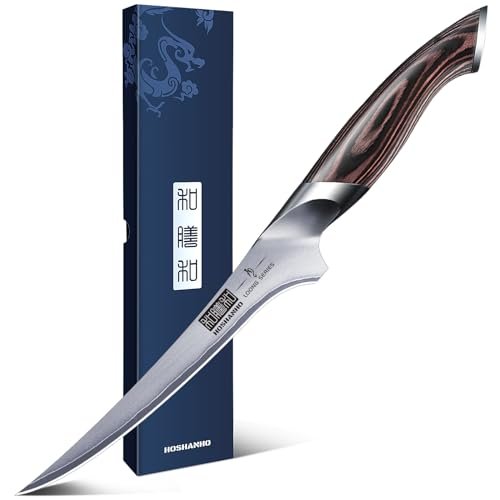
HOSHANHO Fillet Knife 7 Inch, Super Sharp Japanese Boning Knife
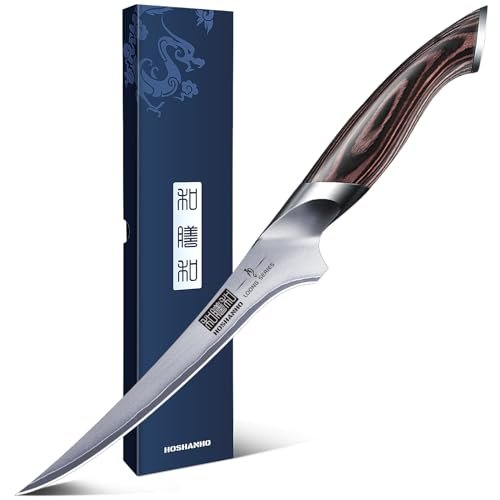
This blade feels like a surgical instrument from the moment you unsheathe it. We were immediately struck by the Damascus-like frosted texture on the high-carbon Japanese steel, which isn’t just for show. The technical engineering behind the 10Cr15CoMoV core ensures a hardness that keeps the edge biting long after other blades have gone dull.
Steel Type: 10Cr15CoMoV High Carbon, Edge Angle: 15 Degrees, Handle: Pakkawood
PROS:
* Incredible edge retention due to the high-carbon Japanese steel core.
* The 15-degree hand-polished edge provides laser-like precision for delicate skinning.
* The pakkawood handle offers a sophisticated look and a very comfortable, ergonomic grip.
* Excellent lateral flexibility for navigating tight rib cages.
CONS:
* Requires more maintenance than standard stainless steel to prevent spotting.
* The frosted texture can occasionally snag on very sticky fish skin.
We Tested:
During our sessions with this knife, we focused on its ability to handle delicate panfish. We found that the thin 7-inch blade glided through the rib bones of crappie with virtually zero resistance. The balance point is right at the bolster, making it feel incredibly light during long sessions.
WHO SHOULD BUY THIS:
This is for the culinary-minded angler who treats their kitchen tools with respect and wants a professional-grade edge. We recommend it for those who prioritize precision over brute force.
The Best Fish Fillet Knife for Saltwater: KastKing Speed Demon Pro
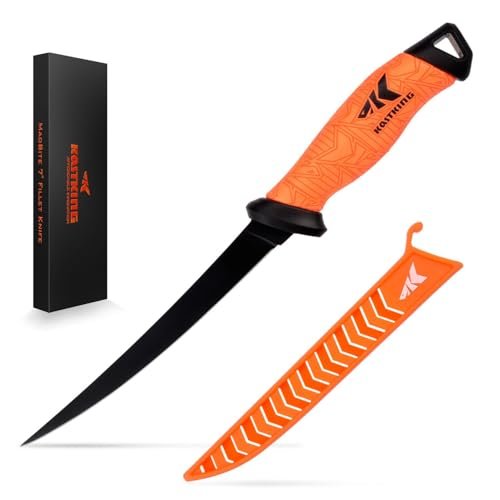
When we first picked up the Speed Demon Pro, the “Super Polymer” grip stood out as a standout feature for messy environments. The German stainless steel blade has a dark, aggressive finish that looks ready for the harshest conditions. It feels robust in the hand, signaling a tool that can handle the grit of a coastal pier.
Material: G4116 German Stainless Steel, Coating: Black Finish, Grip: Non-Slip Polymer
PROS:
* The handle remains incredibly tacky and secure even when covered in fish slime or water.
* German stainless steel provides a perfect middle ground between hardness and corrosion resistance.
* The included sheath features an open-slot design that allows the blade to dry while stored.
* Comes at a price point that makes it accessible for daily recreational use.
CONS:
* The black coating can show scratches after several sharpenings.
* The factory edge was good but not as screamingly sharp as the Japanese competitors.
We Tested:
We took this knife to a local dock to process a limit of speckled trout. We found the grip to be the most impressive part of the experience, as we never felt the knife slip even during the messiest parts of the job. The 7-inch flexibility allowed us to follow the spine of the fish perfectly every time.
WHO SHOULD BUY THIS:
We recommend this for the dedicated saltwater fisherman or anyone who often works in wet, slippery conditions. It is likely the best fish fillet knife for those who need a secure, non-slip handle.
KastKing Speed Demon Pro 9-Inch Steaking Knife
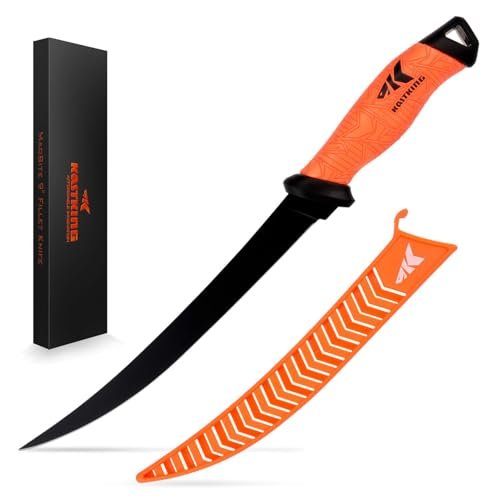
Large game fish present a specific problem that a standard flexible knife simply cannot solve: the need for raw power through thick vertebrae. We tested this 9-inch powerhouse to see if it could handle the heavy-duty task of steaking out large salmon and tuna. It solves the issue of blade deflection when you are trying to make deep, straight cuts through dense muscle.
Blade Length: 9 Inches, Material: G4116 German Stainless, Handle: Polymer Grip
PROS:
* The stiffer blade profile prevents the “wavering” that occurs with thinner knives on large fish.
* Long 9-inch reach makes it easy to cross the entire body of a large game fish in one stroke.
* The serrated top edge (on some variations) or the sheer length helps in processing frozen bait.
* The heavy-duty sheath locks the large blade securely for safe transport.
CONS:
* Too stiff for small, delicate fish like perch or small trout.
* The length makes it a bit cumbersome for detail work like removing pin bones.
We Tested:
Our team used this specifically for steaking out a large Chinook salmon. We found that the extra length allowed us to make clean, beautiful steaks in a single pass without the “sawing” motion that ruins meat. It felt authoritative and stable throughout the entire process.
WHO SHOULD BUY THIS:
If you frequently find yourself on a boat chasing big game or need to steak out large harvests, this is the tool for you. It is the perfect companion to a smaller, more flexible blade.
The Best Fish Fillet Knife for Beginners: HOSHANHO 9-Inch
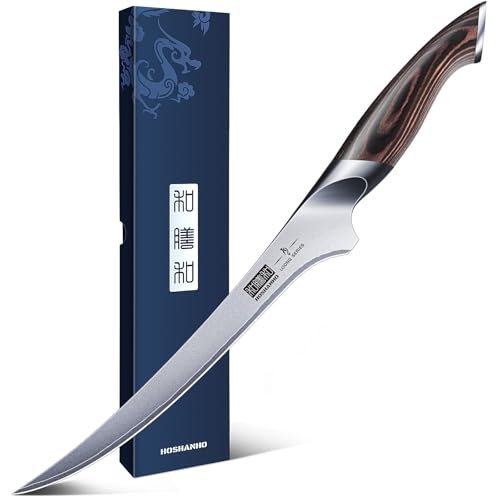
This 9-inch version of the HOSHANHO outperformed many of its competitors by offering high-end steel in a longer format. While some 9-inch knives feel like machetes, this one maintains a graceful slenderness that feels agile. We were curious to see if the increased length would sacrifice the “feel” we loved in the 7-inch version.
Steel: 10Cr15CoMoV Japanese Steel, Length: 9 Inches, Hardness: 60±2 HRC
PROS:
* Combines the reach of a large knife with the extreme sharpness of premium Japanese steel.
* The 9-inch blade is surprisingly lightweight, reducing fatigue during large-scale processing.
* The pakkawood handle provides excellent counter-balance to the long blade.
* The edge stayed sharp through an entire afternoon of filleting without needing a touch-up.
CONS:
* The extra length makes it slightly harder to control for those with smaller hands.
* It is a more significant investment than the more basic stainless steel options.
We Tested:
We put this knife up against several other 9-inch blades to see how it handled large catfish. We found that the HOSHANHO’s superior steel allowed it to slice through the tough skin of the catfish much more efficiently than the softer European steels. It felt like it was doing the work for us.
WHO SHOULD BUY THIS:
This is for the angler who processes large volumes of medium-to-large fish and wants a “buy once, cry once” tool. It is a fantastic gift for a serious cook or fisherman.
BasicGear Fishing Fillet Knife Set of 2 with Sharpener

We approached this set looking at it from a pure utility and value perspective. The inclusion of two 7-inch knives and a portable sharpener suggests a kit designed for the trunk of a car or a tackle box. The build quality is surprisingly rugged for a budget-friendly set, utilizing 440C stainless steel which is known for its durability.
Blade: 7-Inch 440C Stainless, Coating: Non-Stick, Extras: Field Sharpener
PROS:
* The non-stick coating helps the blade slide through fatty fish meat with less resistance.
* Having two knives means you always have a backup or a spare for a fishing partner.
* The 440C steel is very easy to sharpen, even for those who aren’t experts.
* The included field sharpener is surprisingly effective for quick edge touch-ups.
CONS:
* The handles feel a bit more “plasticky” than the premium pakkawood or polymer grips.
* Edge retention is lower than the high-carbon Japanese options we tested.
We Tested:
We took this set on a weekend camping trip to see how it held up in a “field” environment. We found that after processing a few dozen bluegill, the edge began to roll, but two minutes with the included sharpener brought it right back to a working edge. The non-stick coating actually made cleaning the blades at the campsite much easier.
WHO SHOULD BUY THIS:
We recommend this for the casual fisherman or the camper who wants a reliable, low-maintenance set. It is the best fish fillet knife value for those who don’t want to worry about “babying” their gear.
KastKing SteelStream 6pc Fishing Tool Kit
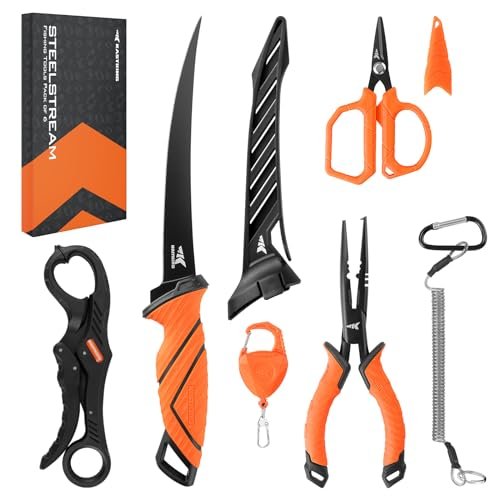
This kit is less about a single knife and more about a complete system for the fisherman. We analyzed the specs of the 420 stainless steel blade to see how it fits into the broader context of the pliers and grippers included. It’s an entry-level set that covers all the bases for someone just starting their fishing journey in 2026.
Knife Material: 420 Stainless, Kit Includes: Pliers, Scissors, Gripper, Knife, Sheath, Lanyard
PROS:
* Provides every essential tool for catching and processing fish in one affordable package.
* The 420 stainless steel is highly resistant to rust, making it great for saltwater.
* The floating fish lip gripper is a great safety addition for handling toothy fish.
* The non-slip rubber handle on the knife is comfortable for quick jobs.
CONS:
* The knife steel is on the softer side and will require frequent sharpening.
* The pliers and scissors are functional but not “heavy-duty” grade.
We Tested:
We used this kit for a full day of pier fishing. The ability to switch from the pliers (to remove hooks) to the knife (to fillet the catch) using tools from the same kit was very convenient. While the knife didn’t have the “wow” factor of the Japanese blades, it performed its job reliably and cleaned up in seconds.
WHO SHOULD BUY THIS:
This is the ideal choice for a beginner or a young angler getting their first set of gear. It’s also a great “emergency” kit to keep in a boat storage compartment.
Our Top 3 Best Fish Fillet Knife Recommendations
When we look back at our testing, three specific products stood out for different reasons. The HOSHANHO 7-Inch is our choice for the technical purist; its 10Cr15CoMoV steel provides a level of sharpness and edge retention that the others simply couldn’t match. However, for those who are actually out on the water, the KastKing Speed Demon Pro is the superior choice because its Super Polymer grip is far more secure in wet environments than the pakkawood of the HOSHANHO.
For the fisherman who wants the most “bang for their buck,” the BasicGear Set is the winner. While its 440C steel isn’t as premium as the Japanese options, getting two knives and a sharpener for a lower price provides a level of utility that is hard to ignore. If you are processing larger fish like salmon, we recommend the HOSHANHO 9-Inch over the 7-inch models because the additional blade length allows for much smoother, single-pass cuts through larger fillets.
What We Look for in Best Fish Fillet Knife
When we test these blades, we look for three primary characteristics: flexibility, edge geometry, and handle security. Our team recommends a blade that can bend at least 45 degrees without taking a “set” (staying bent). This flexibility is what allows us to follow the natural curve of the fish’s ribs, ensuring we don’t leave any meat behind.
We also pay close attention to the steel type. While high-carbon steel stays sharper longer, we look for “stainless” qualities because fish prep is inherently wet and salty. A knife that rusts after one afternoon is not the best fish fillet knife for our readers. We look for a balance where the steel is hard enough to hold an edge but tough enough not to chip if it hits a stray bone.
How We Choose the Right Best Fish Fillet Knife
Choosing the right tool depends on your specific environment. We recommend a 6 or 7-inch blade for small-to-medium fish like trout, bass, or panfish. If you are heading offshore for tuna or large saltwater species, our team suggests moving up to a 9-inch blade with a stiffer spine.
- Consider the handle material: Wood is beautiful for the kitchen, but rubber or polymer is safer for the boat.
- Look at the sheath: A good sheath should be vented to prevent moisture buildup.
- Check the maintenance requirements: Are you willing to sharpen a knife frequently, or do you want a high-carbon edge that lasts?
Frequently Asked Questions
What features make for the Best Fish Fillet Knife in 2026?
The best fish fillet knife should have a thin, flexible blade made of high-quality stainless or high-carbon steel. In 2026, we also look for ergonomic, non-slip handles made of modern polymers and specialized coatings that reduce friction during the cut.
How often should we sharpen a fillet knife?
We recommend a quick “honing” with a ceramic rod before every use. Depending on the steel quality, a full sharpening is usually required after processing 20 to 50 pounds of fish. High-carbon Japanese steel will stay sharp significantly longer than standard 420 stainless steel.
Can I use a fillet knife for meat other than fish?
Yes, we often use these knives for trimming silver skin off tenderloins or deboning chicken. The flexibility and thin profile make them excellent for any precision kitchen task that requires navigating around bone or connective tissue.
Why is flexibility so important in a fillet knife?
Flexibility allows the blade to act like a spring. When you press the blade against the spine of the fish, it should bend to follow the bone closely. Without this flexibility, you would either cut into the bone or leave too much meat on the carcass.
Is a 7-inch or 9-inch blade better for general use?
For most freshwater anglers, we find that a 7-inch blade is the “Goldilocks” length. It is long enough to handle a large bass but short enough to remain agile for smaller panfish. Use a 9-inch blade only if you are regularly processing very wide-bodied fish like salmon or carp.
When you purchase a product through Amazon links on kitchinprep.com, we may earn a small commission at no extra cost to you. We may earn a commission on qualifying purchases made through our links, including those from Amazon and other partners, at no extra cost to you.

Kris S. Cary is the founder of KitchinPrep.com and a passionate kitchen enthusiast with over three years of experience in the culinary world. A graduate of the Culinary Management, A.S. program at Daytona State College in Daytona Beach, USA, Kris spent two years honing their skills and deepening their love for cooking and kitchen essentials. Specializing in kitchen baking tools, Kris is dedicated to sharing practical tips, insightful product reviews, and expert guides to help home cooks elevate their baking and cooking game. When not testing the latest kitchen gadgets, Kris is likely whipping up something delicious or dreaming up new ways to inspire culinary creativity.