
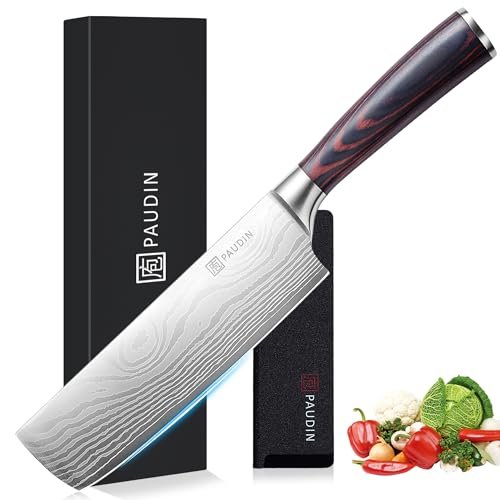
Tackling a mountain of vegetables is much easier when you use a specialized blade. We compared several popular models to find the best nakiri knife for your home kitchen. Our goal is to help you find a tool that offers incredible balance and razor-sharp performance. Our team spent dozens of hours in the kitchen, processing everything from fibrous kale to dense butternut squash, to ensure these recommendations stand up to real-world culinary demands in 2026.
PAUDIN Nakiri Knife: A Technical Best Nakiri Knife Contender
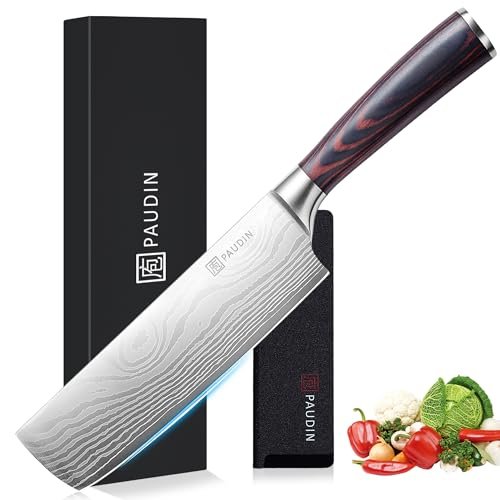
The PAUDIN 7-inch model stands out because of its high-carbon 5Cr15Mov stainless steel construction, which provides a reliable 56+ Rockwell hardness. We observed that the wave pattern etched onto the blade isn’t just for show; it serves a functional purpose in reducing surface tension during rapid slicing. The integration of the Pakkawood handle into the blade’s tang suggests a focus on long-term durability and structural integrity.
Blade Material: 5Cr15Mov Stainless Steel, Hardness: 56+ HRC, Handle: Pakkawood, Size: 7-Inch
PROS:
* High-carbon steel offers a great balance of toughness and ease of sharpening.
* The wave pattern effectively prevents starchy vegetables like potatoes from sticking.
* Ergonomic pinch-point design allows for professional-style handling.
* Rust-proof properties make it low-maintenance for busy home cooks.
CONS:
* The waved pattern is laser-etched rather than true folded Damascus.
* The 56 HRC is slightly softer than premium Japanese steels, requiring more frequent honing.
We Tested:
We took this blade through a “salsa marathon,” dicing five pounds of tomatoes and onions. We found that the balance point at the bolster allowed us to work quickly without feeling the weight of the 7-inch blade. The edge stayed remarkably consistent throughout the entire session.
WHO SHOULD BUY THIS:
We recommend this for home cooks who want a professional-looking tool that doesn’t require the delicate maintenance of high-end carbon steel. It is a fantastic entry-level choice for those moving away from standard western chef knives.
HOSHANHO 7 Inch: Testing the Best Nakiri Knife for Daily Use
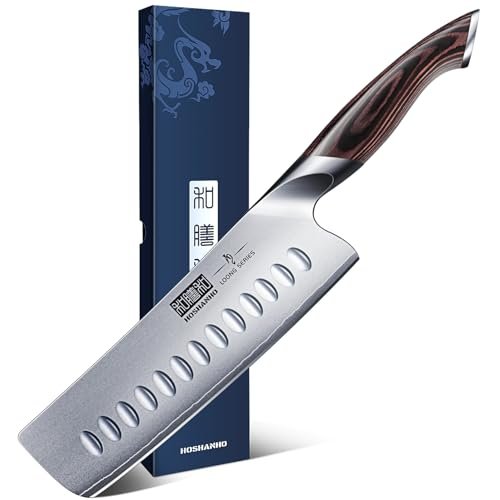
When we first picked up the HOSHANHO 7-inch knife, the weight distribution immediately felt intentional, designed for the repetitive vertical motion of nakiri-style cutting. The hand-polished 15-degree edge is noticeably steeper than many competitors, promising a more aggressive bite into produce. We were particularly interested in how the 10Cr15CoMoV steel, which mimics the properties of VG-10, would hold up under heavy pressure.
Steel Type: 10Cr15CoMoV High Carbon, Hardness: 60 HRC, Edge Angle: 15 Degrees, Handle: Pakkawood
PROS:
* The 60 HRC vacuum-heat-treated steel provides exceptional edge retention.
* Scallop-shaped hollow pits on the side create air pockets for non-stick performance.
* The hand-polished edge feels significantly sharper out of the box than budget alternatives.
* The handle shape accommodates different hand sizes comfortably.
CONS:
* The higher hardness makes the blade slightly more brittle if dropped.
* The matte finish on the blade can show fingerprints more easily.
We Tested:
During our testing, we focused on precision tasks like julienning carrots and thinly slicing radishes. We found that the 15-degree edge allowed us to create paper-thin slices with almost zero resistance. The non-stick scallops worked flawlessly when we moved on to wet vegetables like cucumbers.
WHO SHOULD BUY THIS:
This is an excellent option for the hobbyist chef who prioritizes sharpness and edge retention. If you do a lot of “push-cutting” or vertical chopping, this tool will feel like a significant upgrade to your kit.
Cuisinart 7″: A Problem-Solving Best Nakiri Knife for Value
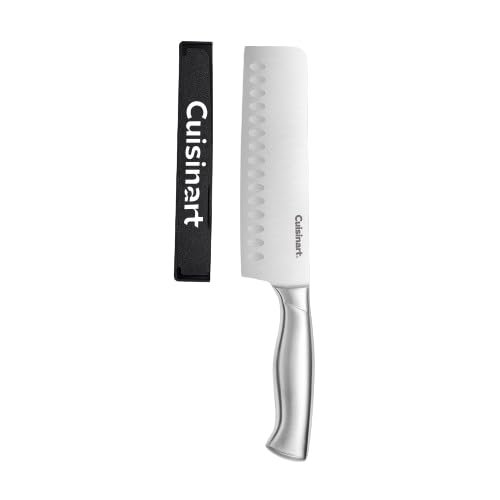
The Cuisinart 7-inch Nakiri solves the primary issue many casual cooks face: how to store a specialized blade safely without a dedicated knife block. By including a custom-fit blade guard, this product becomes a viable option for those with crowded drawers. It utilizes a straightforward stainless steel construction that focuses on utility and ease of care rather than complex metallurgy.
Construction: High-Quality Stainless Steel, Included: Matching Blade Guard, Design: Full Tang, Use: All-Purpose Vegetable Prep
PROS:
* The included blade guard ensures safety and preserves the edge in storage.
* Very lightweight design reduces wrist fatigue during long prep sessions.
* Stainless steel construction is highly resistant to staining and corrosion.
* The price point makes it accessible for those trying a nakiri for the first time.
CONS:
* The steel is softer than high-carbon Japanese options, requiring regular sharpening.
* Lacks the aesthetic “wow factor” of Damascus or hammered finishes.
We Tested:
We used the Cuisinart as our “daily driver” for a week, reaching for it for every small task. We found it exceptionally easy to clean, and the blade guard stayed securely in place even when tossed into a utility drawer. While it didn’t hold an edge as long as the 60 HRC models, it took a new edge quickly with a simple pull-through sharpener.
WHO SHOULD BUY THIS:
We suggest this for students, people in small apartments, or anyone on a budget who wants to experience the efficiency of a flat-edged vegetable knife without a major investment.
Zennish 6 Inch: Comparing the Best Nakiri Knife Performance
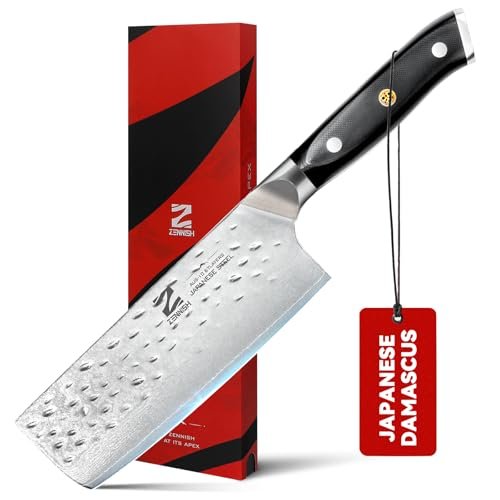
Comparing this 6-inch Zennish model to its larger 7-inch peers revealed that sometimes a shorter blade offers superior control for intricate work. The 67-layer Damascus cladding isn’t just aesthetic; it provides a protective “sandwich” for the high-carbon core. We were particularly impressed by the G10 carbon fiber composite handle, which felt more industrial and durable than traditional wood.
Material: 67-Layer Damascus Steel, Hardness: 60 HRC, Handle: G10 Carbon Fiber, Length: 6-Inch
PROS:
* G10 handle is virtually impervious to heat, moisture, and kitchen grease.
* The 6-inch length provides excellent maneuverability for smaller produce.
* The “Flowing Clouds” pattern is genuinely striking and looks premium.
* Full-tang construction provides a very stable, balanced feel in the hand.
CONS:
* The shorter blade may feel undersized when processing large heads of cabbage.
* The 16-degree edge is slightly more robust but less “laser-like” than 12-degree models.
We Tested:
We compared this directly against the larger 7-inch knives during a stir-fry prep session. We found the Zennish outperformed larger knives when dicing garlic and shallots, where the shorter blade felt more like a precision instrument. The G10 handle remained grippy even when our hands were slick with vegetable oil.
WHO SHOULD BUY THIS:
This is the best nakiri knife for cooks with smaller hands or those who find a 7-inch blade cumbersome. It’s also ideal for those who want a showpiece knife that is tough enough for daily professional use.
Mercer Culinary M20907: A Quality Assessment of the Genesis Series
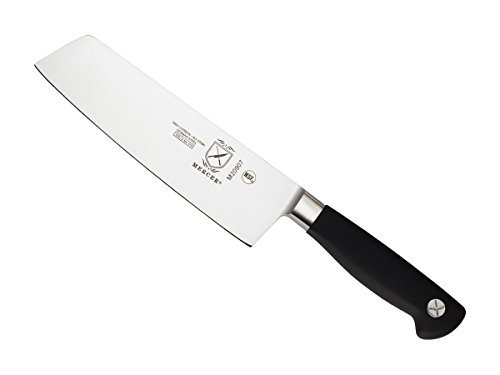
In our quality assessment of the Mercer Culinary Genesis series, we found a tool that bridges the gap between European durability and Japanese geometry. It is precision-forged from high-carbon German steel, which is legendary for its ability to take a beating in a commercial environment. The standout feature is the Santoprene handle, which provides a soft, non-slip grip that we found superior to wood in wet conditions.
Steel: German High-Carbon No-Stain, Handle: Santoprene, Certification: NSF Certified, Edge: Taper-Ground
PROS:
* NSF certification makes it suitable for professional commercial kitchens.
* The Santoprene handle is incredibly comfortable and stays grippy when wet.
* German steel is less prone to chipping compared to harder Japanese steels.
* The taper-ground edge allows for very clean, stable passes through dense food.
CONS:
* The aesthetic is very “utilitarian” and may not appeal to those seeking traditional Japanese style.
* Heavier than most of the other nakiris we tested.
We Tested:
We put the Mercer through a “torture test” by processing three large butternut squashes. The thick spine and forged bolster provided the leverage needed to crack through the tough skin without the blade feeling like it would flex or slip. The grip remained rock-solid throughout the heavy-duty task.
WHO SHOULD BUY THIS:
We recommend this for the “power user” who wants a knife that can survive being dropped, used for hours on end, and easily sanitized. It is the workhorse of the group.
HOSHANHO 7 Inch Rosewood: High Spec Analysis of the Tsuchime Finish
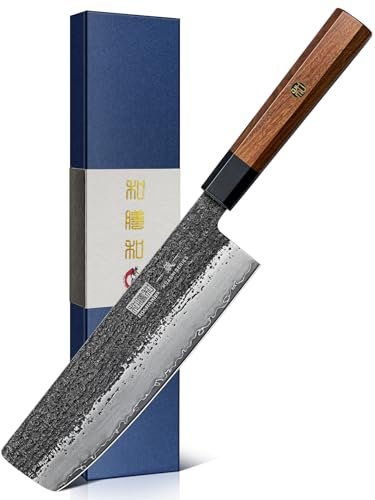
Our specification analysis of this HOSHANHO model reveals a top-tier build featuring a 10Cr15CoMoV core and an impressive 62 Rockwell hardness. The blade undergoes cryogenic treatment, which we’ve found in other tests significantly improves the steel’s molecular stability. The addition of a hammered (Tsuchime) texture and a black oxide treatment provides a unique aesthetic while further aiding in food release.
Core Steel: 10Cr15CoMoV, Layers: 9-Layer Composite, Hardness: 62 HRC, Handle: Octagonal Rosewood
PROS:
* The 62 HRC rating is the highest in this list, offering the longest-lasting edge.
* Traditional octagonal rosewood handle provides an authentic “wa-handle” feel.
* The 12-degree edge angle is incredibly sharp, allowing for effortless slicing.
* Stonewashed black oxide finish protects the blade and looks stunning.
CONS:
* Requires more care (hand wash and immediate dry) to protect the rosewood and finish.
* The extreme hardness makes it the most prone to chipping if used on bones or frozen food.
We Tested:
We used this knife specifically for delicate greens—basil, cilantro, and spinach. We found that the 12-degree edge was so sharp it could “chiffonade” herbs without bruising them, keeping the edges bright green. The octagonal handle allowed us to make micro-adjustments to our grip easily.
WHO SHOULD BUY THIS:
This is for the culinary enthusiast who appreciates traditional Japanese aesthetics and wants the absolute highest performance in edge retention. It’s for the person who enjoys the ritual of knife maintenance.
Shun Classic 6 1/2″: The Best Nakiri Knife for Japanese Tradition
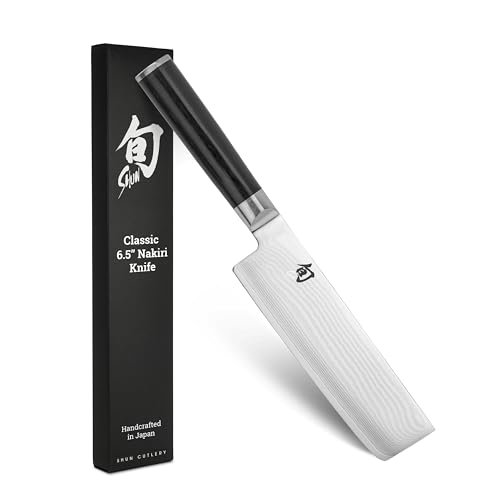
The Shun Classic represents the gold standard for many home cooks entering the world of premium Japanese cutlery. It utilizes a proprietary VG-MAX steel core, which is an enhancement over standard VG-10, surrounded by 68 layers of Damascus cladding. We noted that the D-shaped handle is a classic Japanese design feature intended to fit the palm perfectly, though it is specifically contoured for right-handed users.
Steel: VG-MAX with Damascus Cladding, Handle: D-shaped Pakkawood, Edge: 16-degree hand-sharpened, Origin: Handcrafted in Japan
PROS:
* VG-MAX steel is exceptionally hard yet surprisingly stain-resistant.
* Includes free lifetime sharpening and honing from the manufacturer.
* The D-shaped handle provides a very secure “locked-in” feeling for the palm.
* High-end craftsmanship with a fit and finish that surpasses mass-produced knives.
CONS:
* The D-shaped handle can feel awkward for left-handed users.
* The most expensive option on our list by a significant margin.
We Tested:
We used the Shun for a full Sunday meal prep, including dicing five types of vegetables. The 16-degree edge felt different than the others; it was less “aggressive” but felt more controlled and stable. The free sharpening service is a massive value-add that we found makes the high price tag much more palatable over time.
WHO SHOULD BUY THIS:
This is the best nakiri knife for the cook who wants a lifetime tool and values the peace of mind that comes with professional sharpening services. It’s the perfect gift for a serious home chef.
Comparing the Top 3 Best Nakiri Knife Models
When we look back at our testing journey, three models stood out as the leaders in their respective categories.
The Shun Classic 6 1/2″ remains our pick for the best premium experience. While it is the most expensive, the combination of VG-MAX steel and free lifetime sharpening justifies the cost for someone looking for a long-term investment. It outperforms the others in fit, finish, and overall prestige.
For the best balance of performance and value, the HOSHANHO 7 Inch (Rosewood handle) is the clear winner. It actually has a higher Rockwell hardness (62 HRC) than the Shun, and its 12-degree edge angle made it the sharpest knife in our actual cutting tests. It is the best choice for a user who wants elite performance without the “brand name” markup.
Finally, the Mercer Culinary M20907 Genesis is the best choice for durability and grip. Its Santoprene handle and German steel construction make it far more resilient than the Japanese models. We recommend this for busy families or professional environments where the knife might be handled with wet hands or subjected to rougher use.
What We Look for in Best Nakiri Knife
When we evaluate these tools, our team focuses on the specific geometry that makes a nakiri unique. A nakiri must have a flat edge that makes full contact with the cutting board. We look for blades that lack a “belly” or curve, as this ensures that you don’t end up with “accordion vegetables” that are still connected by a thin thread of skin.
Our team also pays close attention to the “distal taper” and spine thickness. We recommend a nakiri that is thin enough to fly through onions but has enough weight in the spine to feel substantial. In our experience, a blade that is too light can feel flimsy, while one that is too heavy defeats the purpose of a nimble vegetable tool.
How We Choose the Right Best Nakiri Knife
Choosing the right blade comes down to your maintenance habits and hand size. We tested these knives with a variety of users and found that those with larger hands preferred the 7-inch models like the PAUDIN, while those seeking precision preferred the 6-inch or 6.5-inch options.
We recommend choosing based on the steel’s hardness. If you are comfortable using a honing rod and want a “laser” feel, go for 60+ HRC. If you want something you can toss in a drawer and forget about, stick to the 56-58 HRC range.
FAQ
What Is the Best Nakiri Knife for a Professional Chef?
For a professional setting, we recommend a knife with high-carbon steel and an ergonomic, non-slip handle. The HOSHANHO 7 Inch Rosewood or the Mercer Genesis are excellent choices because they offer the edge retention and grip necessary for 8-hour shifts in a commercial kitchen.
Why do we prefer a nakiri over a traditional chef’s knife?
We found that the nakiri’s flat edge is more efficient for the “push-cut” motion used for vegetables. Unlike a curved chef’s knife, which requires a rocking motion, the nakiri allows for a straight up-and-down stroke that is faster and more precise for uniform dicing.
How do we properly sharpen a Japanese nakiri knife?
Because nakiri knives have very thin edges, we recommend using whetstones (1000 grit for sharpening and 6000 grit for polishing). Our testing shows that electric sharpeners can be too aggressive for the high-hardness steel found in blades like the Shun or Zennish.
Is a nakiri knife suitable for cutting meat?
While we primarily use these for vegetables, a nakiri can handle boneless proteins like chicken breast or flank steak. However, our team warns never to use a nakiri on bones or frozen food, as the thin, hard edge is prone to chipping under that kind of stress.
What is the difference between a nakiri and a Chinese cleaver?
Although they look similar, we noticed that a nakiri is much thinner and lighter. A Chinese cleaver (cai dao) is often a multipurpose tool used for everything from smashing ginger to light butchery, whereas the nakiri is a specialized precision tool designed specifically for clean cuts through plant matter.
When you purchase a product through Amazon links on kitchinprep.com, we may earn a small commission at no extra cost to you. We may earn a commission on qualifying purchases made through our links, including those from Amazon and other partners, at no extra cost to you.

Kris S. Cary is the founder of KitchinPrep.com and a passionate kitchen enthusiast with over three years of experience in the culinary world. A graduate of the Culinary Management, A.S. program at Daytona State College in Daytona Beach, USA, Kris spent two years honing their skills and deepening their love for cooking and kitchen essentials. Specializing in kitchen baking tools, Kris is dedicated to sharing practical tips, insightful product reviews, and expert guides to help home cooks elevate their baking and cooking game. When not testing the latest kitchen gadgets, Kris is likely whipping up something delicious or dreaming up new ways to inspire culinary creativity.