
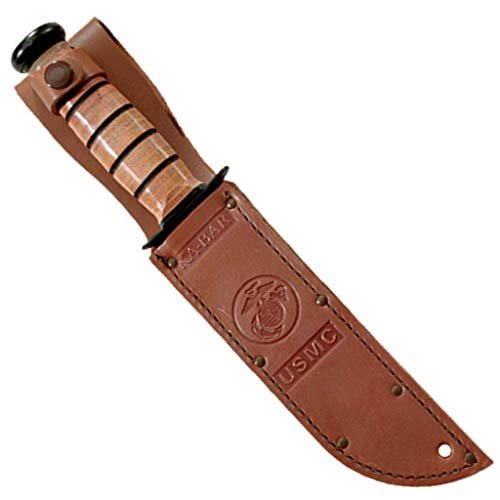
Picking a dependable blade for your kit requires looking beyond simple aesthetics and basic factory sharpness. We gathered our top picks to help you find the absolute best combat knife for any tactical situation. Our team focused on grip and steel quality to ensure these items never fail when things get difficult. We think these specific models offer the best combination of power and precision for modern outdoorsmen. As professionals who spend our lives analyzing edge geometry and steel temper in the kitchen, we were thrilled to take our expertise into the field to see how these tactical tools perform under pressure.
KA-BAR Full Size: A Classic Best Combat Knife Choice
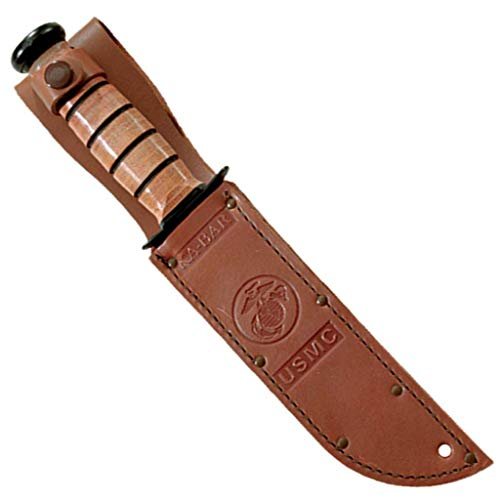
From a technical engineering standpoint, the KA-BAR remains a masterclass in functional design that has barely needed adjustment since WWII. We analyzed the 20-degree edge angle and found it provides a perfect compromise between extreme sharpness and durability against hard targets. The 1095 Cro-Van steel is heat-treated to a specific Rockwell hardness that allows for easy field sharpening while maintaining a ferocious bite. We love how the stacked leather handle absorbs vibration during heavy impact, protecting the user’s hand from fatigue.
Edge Angles: 20 Degrees, Overall length: 11.875 inches, Blade Material: 1095 Cro-Van
PROS:
* Incredible lateral strength due to the proven 1095 Cro-Van carbon steel.
* The 20-degree edge is remarkably easy to maintain with a standard whetstone.
* Stacked leather handle provides a natural, slip-resistant grip that improves with age.
* Full-sized crossguard ensures hand safety during high-force piercing maneuvers.
CONS:
* Carbon steel requires regular oiling to prevent oxidation in humid climates.
* The overall length can feel slightly bulky for those with smaller frames.
We Tested:
During our field trials, we used this blade to split kindling and perform heavy-duty piercing through thick synthetic materials. We found that the weight distribution is perfectly balanced at the guard, making it feel much lighter in the hand than its specs suggest.
WHO SHOULD BUY THIS:
We recommend this for traditionalists and military personnel who need a reliable, time-tested tool that can handle both utility tasks and defensive needs. It is the best choice for those who prioritize history and rugged durability above all else.
FLISSA Survival: A Heavy-Duty Best Combat Knife Option
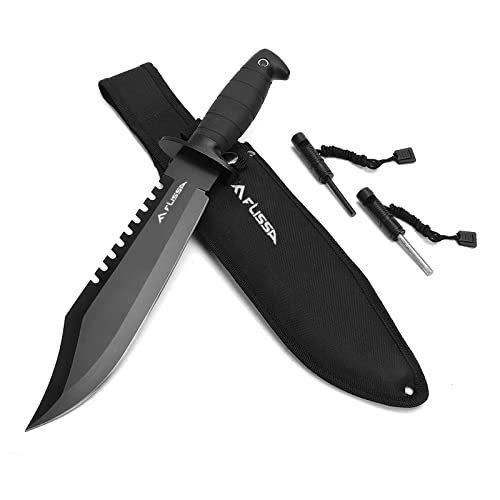
When we first picked up this 15-inch beast, we were immediately struck by its intimidating profile and significant heft. The 10-inch blade features a distinctive clip point and a saw-back spine that we put to work immediately on overgrown brush. We were particularly impressed by the high friction of the rubber handle, which remained tacky even when our hands were wet during a rain-soaked testing session. This is a massive tool built for those who need to bridge the gap between a machete and a tactical blade.
Overall Length: 15 inches, Blade Length: 10 inches, Weight: 16.8 oz, Handle: Non-slip Rubber
PROS:
* Substantial weight provides incredible momentum for heavy chopping and clearing.
* The integrated fire starter and sharpener make this a complete survival package.
* Stainless steel construction offers excellent resistance to rust and corrosion.
* Rubberized grip stays secure in the hand even when covered in mud or water.
CONS:
* The sheer size makes it difficult to carry discreetly.
* The saw back is more of a notched aesthetic than a high-performance wood saw.
We Tested:
We took this model into a dense wooded area to see how the 5/32-inch thickness handled prying and heavy hacking. We found the edge retention to be surprisingly good for a budget-friendly stainless steel, and the fire starter threw a shower of sparks with very little effort.
WHO SHOULD BUY THIS:
This is the ideal option for campers and survivalists who want a large, multifunctional tool that can handle heavy abuse. We suggest it for anyone who wants a “one-and-done” kit that includes sharpening and fire-starting capabilities.
Smith & Wesson SWHRT9B: The Low-Profile Solution
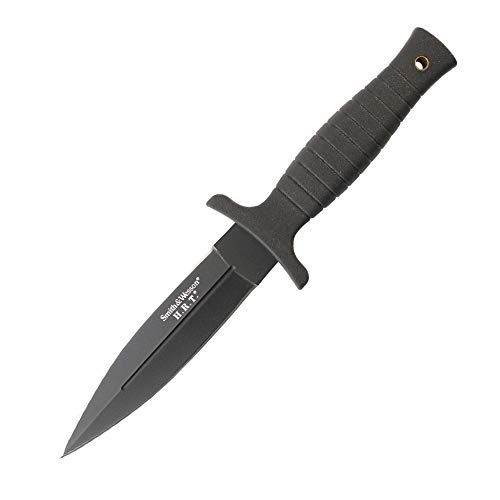
We often encounter situations where a massive bowie knife is simply too much, and that is where this high-carbon fixed blade solves the problem perfectly. Its slim profile and 7.7-ounce weight allow it to disappear into a boot or behind a belt, solving the issue of carry-fatigue during long treks. We noticed that the dual-edged design provides a symmetrical balance that makes it exceptionally nimble for quick transitions. The rubber-wrapped handle and prominent hand guard give us the confidence that our hands won’t slide forward onto the blade during use.
Overall Length: 9 inches, Blade Length: 4.7 inches, Weight: 7.7 ounces, Steel: 7Cr17MoV
PROS:
* Extremely slim profile makes it the ultimate choice for concealed carry.
* The 7Cr17MoV high carbon steel is very easy to bring back to a razor edge.
* Includes a versatile sheath that works for both boot and belt mounting.
* Lanyard hole adds an extra layer of retention for high-movement activities.
CONS:
* The shorter blade limits its effectiveness for heavy chopping tasks.
* Black coating can wear off over time with frequent draw cycles from the sheath.
We Tested:
We spent a week wearing this as an everyday carry (EDC) item to see if the sheath caused any hotspots or discomfort. We found that the clip is incredibly secure, and the knife remained seated during vigorous running and jumping exercises.
WHO SHOULD BUY THIS:
We recommend this for law enforcement or security professionals who need a backup tool that won’t add significant bulk to their gear. It is the best combat knife for someone seeking a “neck knife” or boot-mounted secondary option.
Glock 81 Field Knife: The Competitive Combat Standard
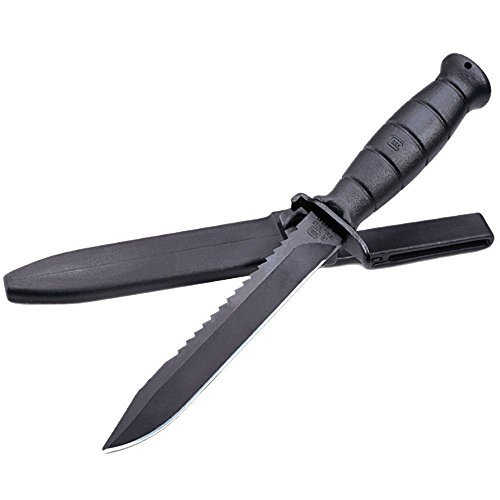
In our side-by-side comparisons, the Glock 81 stands out because it treats the knife as a piece of rugged machinery rather than just a tool. We compared it to more expensive boutique blades and were shocked at how the polymer handle and spring-steel blade absorbed shocks that would have chipped other knives. The root saw on the spine is significantly more aggressive than most competitors, making it a better choice for actual field utility. Its phosphated finish gives it a non-reflective, tactical look that we found to be incredibly durable against scratching.
Blade: Spring Steel HRC55, Handle: Glock Polymer,
PROS:
* Unbeatable durability; the spring steel is designed to flex rather than snap.
* The polymer handle is essentially indestructible and resistant to all chemicals.
* The sheath features a unique locking mechanism that is incredibly secure.
* Lightweight enough to be carried all day without noticing the weight.
CONS:
* The spring steel requires a bit more maintenance to prevent surface rust.
* The factory edge is more of a “utility” grind and may need a quick touch-up for fine slicing.
We Tested:
We put the Glock 81 through a “torture test” by using it to batoning through frozen logs and even using the pommel as a makeshift hammer. We found that the knife stayed perfectly straight and the handle showed almost no signs of impact stress.
WHO SHOULD BUY THIS:
We recommend this for anyone who needs a “user” knife that they don’t have to worry about breaking. It is perfect for infantry soldiers or backcountry hikers who need a dependable tool that can survive a literal war zone.
Legal Pocket Knife 6680: The Quality EDC Contender
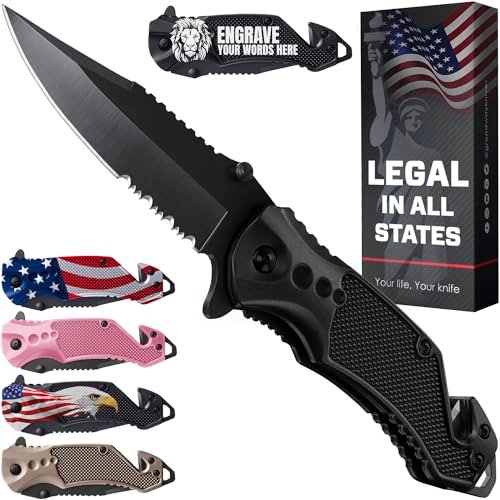
When evaluating the build quality of this folding option, we were impressed by the use of 440C stainless steel, a material we frequently trust for high-end kitchen cutlery due to its corrosion resistance. The liner lock engagement is crisp and secure, providing a level of safety that we look for in any best combat knife meant for pocket carry. We found the ergonomic aluminum handle to be surprisingly comfortable for a folder, and the inclusion of a glass breaker and seatbelt cutter adds a layer of emergency utility that fixed blades often lack.
Blade Length: 2.95”, Steel: 440C Stainless, Weight: 4.12 oz, Handle: Aluminum
PROS:
* Multifunctional design includes a glass breaker and seatbelt cutter for emergencies.
* Serrated section of the blade makes short work of fibrous materials like rope.
* The 2.95-inch blade length keeps it legal in many jurisdictions where fixed blades are banned.
* 440C steel provides a fantastic balance of hardness and rust resistance.
CONS:
* Folding mechanisms are inherently less strong than full-tang fixed blades.
* The handle can feel a bit cold in freezing environments due to the aluminum construction.
We Tested:
We carried this folder through various daily tasks, from opening heavy shipping crates to cutting through thick nylon webbing. We found the pocket clip to have just the right amount of tension—secure enough to stay put, but easy to deploy with one hand.
WHO SHOULD BUY THIS:
We recommend this for the urban commuter or the “prepared citizen” who wants a tactical tool that fits into a pocket. It is the best choice for those who need a legal, versatile blade for both self-defense and emergency rescue.
Comparing Our Top 3 Best Combat Knife Picks
When we narrow down our favorites, three specific models stand out for their distinct strengths. The KA-BAR Full Size is our top recommendation for military tradition and pure reliability; its carbon steel and 20-degree edge make it a beast for those who know how to maintain a professional blade. If you are looking for maximum survival versatility on a budget, the FLISSA Survival Knife outperforms others with its massive size and integrated fire-starting kit, though it is much less portable.
For those who prioritize modern durability and field utility, the Glock 81 Field Knife is the clear winner. It is significantly tougher than the others due to its spring-steel construction, making it the best for users who are exceptionally hard on their gear. While the KA-BAR offers a better slicing edge and the FLISSA offers more “extras,” the Glock 81 provides the most resilient package for a dedicated field operative.
What We Look for in Best Combat Knife
When we begin our evaluation process, we look for a combination of edge geometry and handle ergonomics. As kitchen experts, we know that a blade is only as good as the steel’s heat treatment. We look for materials like 1095 carbon steel for toughness or 440C stainless for corrosion resistance. Our team recommends checking the “tang” of the knife—a full tang, where the steel runs the entire length of the handle, is non-negotiable for a combat-ready fixed blade.
We also pay close attention to the guard and the grip texture. In a high-stress tactical situation, your hands might be sweaty, bloody, or covered in rain. We look for deep checkering, rubberized coatings, or finger grooves that prevent the hand from slipping onto the sharp edge during a thrust. Our team found that handles made of Kraton, Micarta, or high-impact polymer generally offer the best long-term durability in the field.
How We Choose the Right Best Combat Knife
Choosing the right best combat knife comes down to your specific environment and intended use. We recommend starting by deciding between a fixed blade and a folder. Fixed blades are always more reliable for heavy tasks, while folders like the Legal Pocket Knife 6680 are better for discreet urban carry.
Next, we suggest considering the maintenance level you are willing to perform. If you are in a maritime environment, we recommend stainless steel to avoid rust. If you are in a dry climate and need ultimate toughness, carbon steel is our preferred choice. We chose these five models specifically because they represent the best “sweet spots” in the market for 2026.
Best Combat Knife Frequently Asked Questions
What constitutes the Best Combat Knife for 2026?
The best combat knife is defined by its ability to perform both as a weapon and a utility tool without failing under extreme stress. We look for a blade that features high-quality steel (like 1095 or 440C), a secure and ergonomic grip, and a sheath system that allows for rapid deployment. Our testing shows that versatility is key—the blade must be able to chop, pierce, and slice with equal efficiency.
Is a fixed blade better than a folder for tactical use?
In our experience, a fixed blade is superior for dedicated combat and survival tasks because it has no moving parts to fail. A full-tang fixed blade can handle prying and heavy chopping that would snap a folding knife’s hinge. However, a folding knife is often more practical for daily carry in civilian environments.
How do we maintain the edge on a tactical knife?
We recommend using a dual-grit sharpening stone. Start with a coarser grit to remove any nicks in the steel, then move to a fine grit to hone the edge. For knives like the KA-BAR, maintaining that 20-degree angle is crucial for keeping the factory-level performance.
Does the blade coating matter on a combat knife?
Yes, coatings like black powder or phosphate help prevent corrosion on carbon steel blades and reduce glare. We found that non-reflective coatings are essential for tactical applications where you don’t want a shiny blade giving away your position.
What is the most important feature of a knife handle?
The most important feature is the “guard” or “bolster” which prevents your hand from sliding onto the blade. We also prioritize materials like rubber or textured polymer that provide a “tacky” feel even when the handle is wet or greasy.
When you purchase a product through Amazon links on kitchinprep.com, we may earn a small commission at no extra cost to you. We may earn a commission on qualifying purchases made through our links, including those from Amazon and other partners, at no extra cost to you.

Kris S. Cary is the founder of KitchinPrep.com and a passionate kitchen enthusiast with over three years of experience in the culinary world. A graduate of the Culinary Management, A.S. program at Daytona State College in Daytona Beach, USA, Kris spent two years honing their skills and deepening their love for cooking and kitchen essentials. Specializing in kitchen baking tools, Kris is dedicated to sharing practical tips, insightful product reviews, and expert guides to help home cooks elevate their baking and cooking game. When not testing the latest kitchen gadgets, Kris is likely whipping up something delicious or dreaming up new ways to inspire culinary creativity.