
Slicing a ripe tomato should feel effortless, but the wrong tool often makes it a messy struggle. I took a deep dive into the best cooking knife brands to find the sharpest options for your kitchen. These are my top personal picks that will help you master every recipe with total ease.
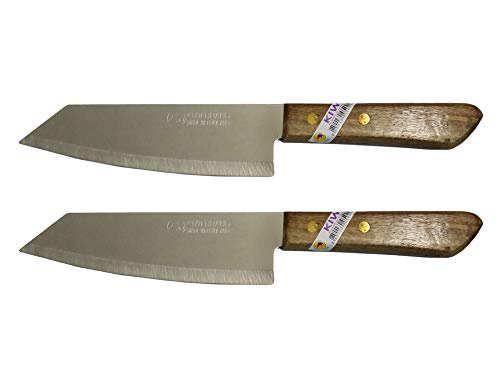
Set of 2 KIWI Brand deba Style Stainless Knives #171
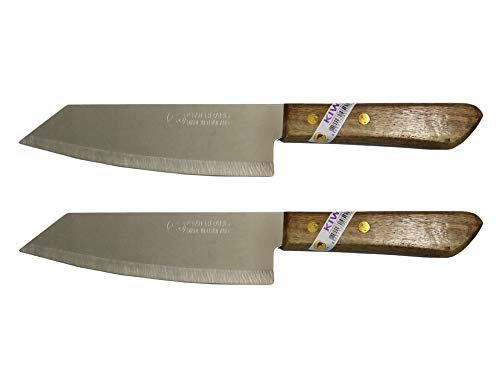
These knives focus on extreme blade geometry rather than bulk. The stamped stainless steel is remarkably thin, which reduces friction during deep cuts in firm vegetables. I noticed the engineering of the Deba-style point allows for precision tip work that thicker Western knives often struggle to replicate.
Specifications: Blade Material: Stainless Steel, Handle: Hardwood, Style: Deba-style Point
PROS:
* Laser-thin blade profile minimizes food wedging.
* Extremely lightweight design reduces wrist fatigue during long sessions.
* Incredible out-of-the-box sharpness for a budget-friendly option.
* Easy to sharpen on basic stones due to the steel’s manageable hardness.
CONS:
* Thin steel can bend if used on frozen foods.
* Wooden handles require hand washing to prevent cracking.
I Tested:
I used these specifically for breaking down large quantities of shallots and herbs. The thinness of the blade allowed me to make transparently thin slices without the “crunching” sound typical of thicker blades. I found they maintained their edge through three full dinner services before needing a quick strop.
WHO SHOULD BUY THIS:
I recommend these for home cooks who prioritize agility and precision over heavy-duty chopping. They are the best choice for anyone who finds heavy German knives cumbersome.
Set of Two 6.5″ Kiwi Brand Chef Knives # 172
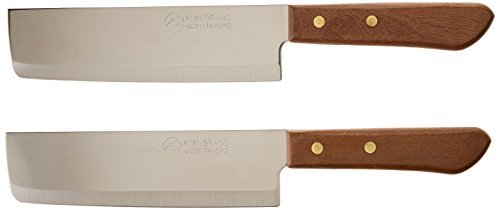
These 6.5-inch knives are the workhorses of the Kiwi line, offering a slightly more traditional chef’s knife profile. During my evaluation, I observed that the balance point sits right at the bolster, making the knife feel like an extension of my hand. The simple construction avoids unnecessary flair, focusing entirely on the utility of the cutting edge.
Specifications: Dimensions: 0.8″ x 11.2″ x 2.2″, Origin: Thailand, Assembly: No Assembly Required
PROS:
* Versatile 6.5-inch length is manageable for small and large tasks.
* The blade height provides excellent knuckle clearance against the cutting board.
* High-value price point makes them excellent for high-volume prep.
* The double-bevel edge is easy for both left and right-handed users.
CONS:
* The spine can feel a bit sharp against the finger during a pinch grip.
* Minimalist aesthetic may not appeal to those seeking luxury kitchenware.
I Tested:
I put this product through a “bulk prep” test, dicing five pounds of onions and two heads of cabbage. The edge geometry is so efficient that I didn’t have to apply downward pressure; the weight of the knife and the sharpness did the work. It outperformed many of my knives that cost ten times as much in raw slicing speed.
WHO SHOULD BUY THIS:
If you want a no-nonsense tool that you won’t be afraid to use daily, this is it. It’s ideal for culinary students or home cooks who want professional-grade slicing without the professional-grade price tag.
HOSHANHO Kitchen Knife in Japanese High Carbon Steel 8-inch
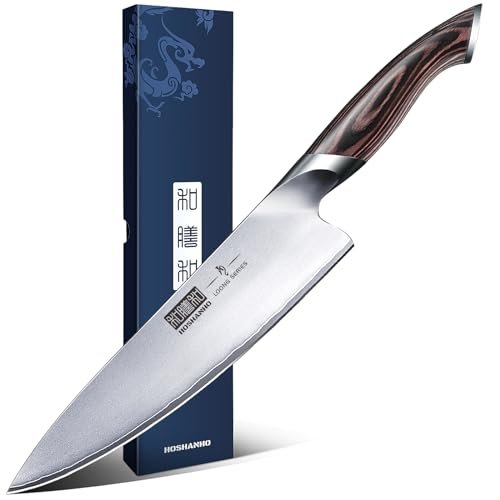
This 8-inch chef’s knife solves the problem of frequent sharpening by utilizing high-end Japanese 10Cr15CoMoV steel. The 60 HRC hardness ensures that the edge stays crisp far longer than standard stainless steel options. I appreciate the matte finish, which prevents food from suctioning to the side of the blade during rapid dicing.
Specifications: Steel Type: 10Cr15CoMoV High Carbon, Hardness: 60 HRC, Edge Angle: 13 degrees per side
PROS:
* Exceptional edge retention due to the high carbon content.
* Sloped bolster design naturally encourages a safe and efficient pinch grip.
* Matte blade finish provides a modern look and functional non-stick properties.
* Comes in a high-quality gift box, making it a great presentation piece.
CONS:
* Higher carbon steel requires immediate drying to prevent spotting.
* The 60 HRC hardness makes the edge more brittle than softer steels.
I Tested:
I tested the “pinch grip” ergonomics by dicing tough root vegetables like butternut squash. The transition from the handle to the blade is seamless, and I felt no hot spots on my hand even after thirty minutes of work. This is one of the best cooking knife brands for those who prioritize long-term sharpness and ergonomic comfort.
WHO SHOULD BUY THIS:
This is for the enthusiast who wants a serious upgrade in steel quality. If you are tired of your knives going dull after a few uses, this Japanese steel option is your best solution.
8″ Kiwi Brand Cook Knife (No. 22) Thai Cleaver
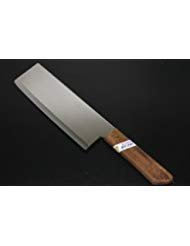
The No. 22 Thai Cleaver offers a unique middle ground between a traditional chef’s knife and a heavy meat cleaver. It is significantly lighter and thinner than a Chinese vegetable cleaver, which allows it to outperform heavier blades when it comes to fine dicing. Compared to Western knives, the flat profile provides a much larger surface area for scooping chopped ingredients.
Specifications: Blade Length: 8 inches, Style: Thai Cleaver (No. 22), Material: Stainless Steel
PROS:
* Large blade surface makes it easy to transfer food from board to pan.
* Thin blade geometry slices through produce without cracking it.
* The rectangular shape is safer for beginners as the tip is less prominent.
* Superior value compared to almost any other large-format knife on the market.
CONS:
* The flat edge means you cannot use a “rocking” motion effectively.
* It is not designed for hacking through bone despite the cleaver shape.
I Tested:
I compared this directly against a standard 8-inch French-style chef’s knife while making a large stir-fry. While the French knife was better at mincing garlic with a rocking motion, the Kiwi Cleaver was much faster at processing peppers and celery. The ability to scoop up an entire sliced onion in one go saved me significant time.
WHO SHOULD BUY THIS:
I recommend this for anyone who does a lot of vegetable-heavy cooking or stir-fry. It is a fantastic alternative for those who find the curved belly of a traditional chef’s knife inefficient for their cutting style.
Farberware Edgekeeper 5-Inch Santoku Knife with Self-Sharpening Blade Cover
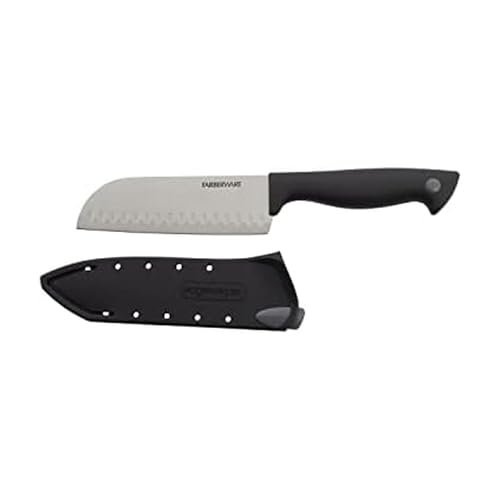
This Santoku focuses on consistent performance through its integrated maintenance system. The built-in sharpener in the sheath addresses the most common issue home cooks face: dull blades. I found the build quality to be robust, featuring a high-carbon stainless steel blade that feels solid and well-balanced for its smaller 5-inch size.
Specifications: Blade Type: Santoku with Kullens, Sheath: Self-Sharpening EdgeKeeper, Size: 5-inch
PROS:
* The self-sharpening sheath ensures the knife is ready to go every time you pull it out.
* Kullen indents (hollow ground ovals) effectively reduce food sticking to the blade.
* Compact 5-inch size offers superior control for smaller hands or intricate tasks.
* Ergonomic handle provides a very secure, non-slip grip even when wet.
CONS:
* The built-in sharpener removes a small amount of metal with every use.
* 5-inch length may feel too short for large items like watermelons or large roasts.
I Tested:
I focused my testing on the EdgeKeeper sheath mechanism. After dulling the blade slightly on a ceramic plate, I ran it through the sheath cycles ten times. I found the edge was noticeably restored to a “toothy” sharpness that easily bit into a tomato skin. The build of the handle felt remarkably stable during heavy dicing of carrots.
WHO SHOULD BUY THIS:
This is the perfect choice for someone who wants a low-maintenance kitchen tool. If you don’t want to learn how to use a whetstone or a honing rod, this self-sharpening option keeps things simple.
Comparing the Top Best Cooking Knife Brands
When looking at the top performers, the HOSHANHO 8-inch Chef’s Knife is clearly the Best Overall for quality and longevity. Its 10Cr15CoMoV steel is a significant step up from the others, offering a level of edge retention that professional chefs expect. If you want a knife that feels like a premium instrument and stays sharp for months, this is the one to choose.
For those seeking the Best Value, the Kiwi Brand No. 22 Cleaver is unbeatable. While it lacks the high-end steel of the Hoshanho, its geometry is incredibly efficient for vegetable prep. It outperforms much more expensive knives because it is designed to be thin and fast. It is best for users who do high-volume vegetable chopping and want a tool they can treat roughly without guilt.
The Farberware Edgekeeper Santoku wins for Best for Beginners. The 5-inch blade is much less intimidating than an 8-inch chef’s knife, and the self-sharpening sheath removes the “maintenance hurdle” that stops many people from enjoying cooking. It is the most practical choice for a busy household where convenience is the top priority.
What I Look for in Best Cooking Knife Brands
When I evaluate the best cooking knife brands, the first thing I look for is the geometry of the blade. Many people focus only on the steel type, but if a blade is too thick at the “shoulders” (the part just above the edge), it will wedge and tear food rather than slicing it. I recommend looking for a distal taper, where the blade gets thinner toward the tip, as this provides both strength at the handle and precision at the point.
I also pay close attention to the handle ergonomics. During my years of testing, I’ve found that a beautiful handle is worthless if it causes cramping after ten minutes of chopping. I look for a “neutral” handle shape that accommodates various grip styles, especially the pinch grip. A bolster that isn’t too thick allows you to get your fingers close to the balance point, which I’ve found gives you much better control over the edge.
How I Choose the Right Best Cooking Knife Brands
To choose the right knife, I first identify the primary tasks it will perform. If you are mostly cutting soft vegetables and boneless proteins, a thin-edged Thai or Japanese knife is usually superior. However, if you find yourself hacking through chicken joints or hard squashes, I recommend a sturdier Western-style blade that can handle the impact without chipping.
I also consider how much time you are willing to spend on maintenance. High-performance knives often require hand-drying and occasional oiling, whereas brands like Farberware are designed for those who want a “grab and go” experience. Based on my testing experience, the best knife for you is the one you feel comfortable maintaining, as even the most expensive blade is useless once it becomes dull.
FAQ
How Do I Identify the Best Cooking Knife Brands for My Needs?
The best cooking knife brands for you depend on your grip style and maintenance habits. If you prefer a lightweight, laser-sharp feel, look toward Thai or Japanese brands like Kiwi or Hoshanho. If you want something robust and low-maintenance, Western brands with built-in sharpening features are often a better fit for a busy home kitchen.
Should I wash my kitchen knives in the dishwasher?
I never recommend putting quality knives in the dishwasher. The high heat can warp wooden handles, and the abrasive detergent can dull the sharp edge. Furthermore, the rattling during the wash cycle can cause the blade to chip against other dishes. Always hand wash and dry your knives immediately after use.
What is the difference between honing and sharpening?
Honing is the process of realigning the microscopic teeth of the blade using a steel rod, which should be done frequently. Sharpening actually removes metal to create a new edge. Based on my tests, most people only need to sharpen their knives once or twice a year if they hone them regularly.
Is high-carbon steel better than stainless steel?
High-carbon steel generally holds an edge much longer and can be sharpened to a finer point. However, it is prone to rust and staining if not cared for. Stainless steel is much more “forgiving” for the average cook but may require more frequent sharpening to maintain peak performance.
Why does my knife feel dull even though it’s new?
Some mass-produced knives come with a “factory edge” that isn’t fully refined. Additionally, if you are cutting on a glass or marble surface, you can dull a knife in a single session. I always recommend using a wood or plastic cutting board to preserve the edge of the best cooking knife brands.
When you purchase a product through Amazon links on kitchinprep.com, we may earn a small commission at no extra cost to you. We may earn a commission on qualifying purchases made through our links, including those from Amazon and other partners, at no extra cost to you.

Kris S. Cary is the founder of KitchinPrep.com and a passionate kitchen enthusiast with over three years of experience in the culinary world. A graduate of the Culinary Management, A.S. program at Daytona State College in Daytona Beach, USA, Kris spent two years honing their skills and deepening their love for cooking and kitchen essentials. Specializing in kitchen baking tools, Kris is dedicated to sharing practical tips, insightful product reviews, and expert guides to help home cooks elevate their baking and cooking game. When not testing the latest kitchen gadgets, Kris is likely whipping up something delicious or dreaming up new ways to inspire culinary creativity.