
Dull knives used to haunt my kitchen because I could never maintain a consistent edge by hand. Finding the best angle to sharpen a knife became a personal mission for my home kitchen. I compared the top guides on the market to see which ones deliver professional results. After hours of grinding steel against stone, I’ve identified the tools that actually work without the fluff.
Wedgek AGM Angle Wedges for Sharpening Knives
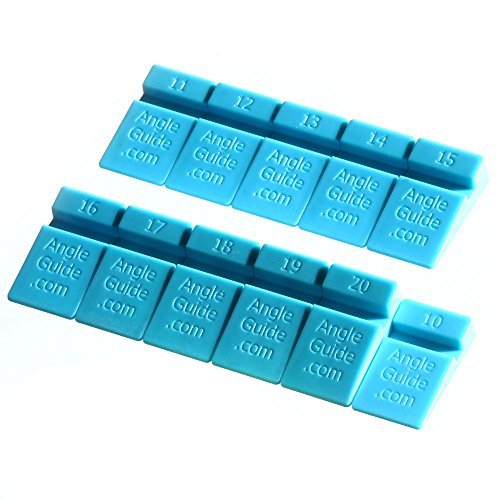
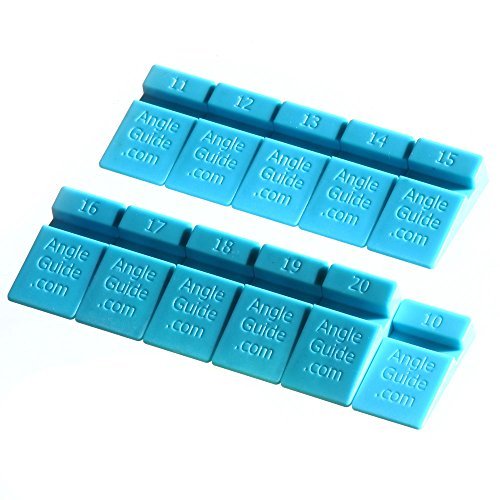
These wedges operate on a simple geometric principle that appeals to my technical side. They don’t clip onto the blade; instead, they serve as a physical reference point sitting on your stone to set your initial tilt. I found that using these requires more manual control than a clip-on guide, but the precision they offer is unmatched for specific degree requirements.
Model: Wedgek AGM Medium size, 10 to 20 degrees, Plastic construction, Includes 2 rubber bands
PROS:
* Provides a wide range of specific degree increments
* Small footprint doesn’t interfere with the sharpening surface
* Can be stacked to achieve up to 39-degree angles
* No risk of scratching the blade since it doesn’t clip on
CONS:
* Requires a steady hand to maintain the angle after the initial set
* The small size makes them easy to lose in a cluttered drawer
I Tested:
I placed the 15-degree wedge at the end of my whetstone and rested my chef’s knife against it to find my starting position. It took some concentration to keep that angle throughout the stroke, but the visual reference was invaluable for correcting my form.
WHO SHOULD BUY THIS:
I recommend this for experienced sharpeners who want to transition away from bulky guides but still need a reliable reference to check their work.
SHARPAL 196N: The Practical Approach to the Best Angle to Sharpen a Knife
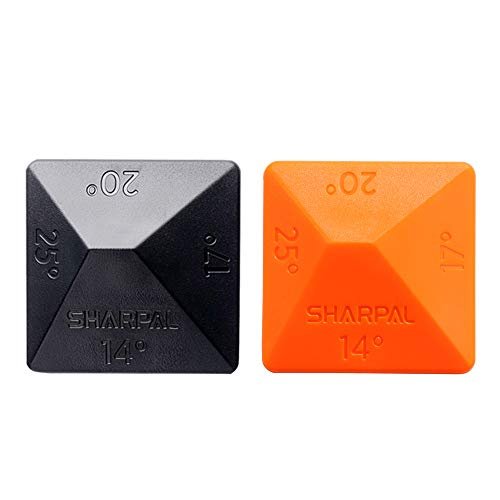
The SHARPAL 196N is a versatile pyramid-style tool that addresses the most common kitchen needs in one unit. I noticed immediately that the magnetic base makes a massive difference when working with ferrous metal sharpening stations. It provides four distinct angles that cover everything from Japanese paring knives to heavy-duty cleavers. Using this tool helped me realize that finding the best angle to sharpen a knife often depends on having a stable reference that doesn’t slide around.
Angles: 14°, 17°, 20°, 25°, Magnetic base, Anti-slip rubber pad, Universal design
PROS:
* Magnetic base secures it firmly to metal sharpening systems
* Non-slip rubber bottom works perfectly on ceramic or water stones
* Four-sided design is incredibly intuitive to rotate
* Compact enough to store in a knife roll
CONS:
* The fixed angles mean you can’t dial in a custom 18-degree edge
* Plastic body can get nicked if you aren’t careful with your stroke
I Tested:
I used the 20-degree side on a standard Western chef’s knife and found the height to be exactly what I needed for a consistent bevel. The rubber base gripped my wet stones surprisingly well, even when things got messy with slurry.
WHO SHOULD BUY THIS:
This is my top pick for home cooks who own a variety of knife styles and want a foolproof way to switch between standard and Asian-style edge angles.
SHARPAL 194H Whetstone Knife Blade Sharpener
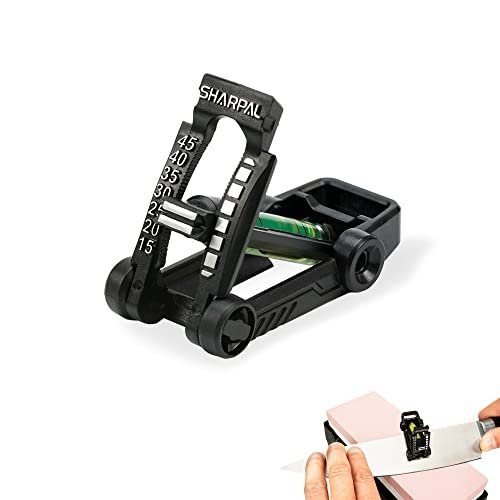
The SHARPAL 194H solves the problem of inconsistency by offering an adjustable range rather than fixed steps. It functions as a honing guide that can handle much wider angles, making it useful for tools beyond just kitchen cutlery. I appreciate the build quality here; it feels like a piece of equipment designed for a workshop rather than just a kitchen gadget.
Angle Range: 15° to 45°, Magnetic base, Multi-tool compatibility, High-quality materials
PROS:
* Most versatile range for knives, chisels, and plane irons
* Strong magnet keeps the guide stationary during the entire process
* Excellent for beginners who struggle with muscle memory
* Durable construction survives heavy use
CONS:
* Bulkier than the pyramid-style guides
* The 15-degree minimum might be too steep for some ultra-thin Japanese blades
I Tested:
I set this to 25 degrees to fix a damaged pocket knife and found the magnetic stability allowed me to focus entirely on my pressure rather than my wrist angle. It turned a difficult repair job into a straightforward task.
WHO SHOULD BUY THIS:
I recommend this for the DIY enthusiast who needs to sharpen both kitchen knives and woodworking tools with a single, reliable guide.
Professional 2-Pack: A Dedicated Best Angle to Sharpen a Knife Solution
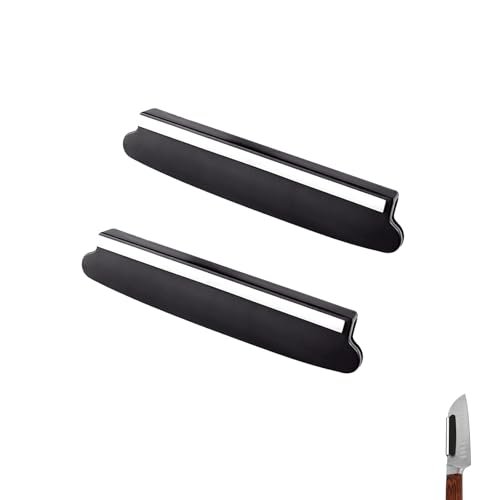
This 2-pack is designed with a specific focus on the 15-degree angle, which is the standard for most modern high-end cutlery. Unlike the other options, these clip directly onto the spine of the knife. In my comparison, this style provides the most “automated” experience because the guide travels with the blade across the stone.
Angle: Fixed 15°, Ceramic protective strip, 2-Pack, Fits blades up to 14”
PROS:
* Ceramic guard prevents the guide from wearing down against the stone
* Ensures a perfectly consistent 15-degree bevel from heel to tip
* Very affordable since it comes as a pair
* Easiest learning curve for absolute beginners
CONS:
* Only offers one angle, limiting its use for heavy outdoor knives
* Not suitable for small knives under 3.5 inches
I Tested:
I clipped this onto a 10-inch slicing knife and ran it across a 1000-grit stone. The ceramic strip glided smoothly without scratching the stone’s surface, which is a common issue with cheaper plastic guides that lack the ceramic insert. It made finding the best angle to sharpen a knife a non-issue.
WHO SHOULD BUY THIS:
This is the best choice for someone who primarily uses Asian-style kitchen knives or modern Western knives and wants the simplest “clip and go” solution.
Comparing the Top Tools for the Best Angle to Sharpen a Knife
When comparing these options, the SHARPAL 196N stands out as the most versatile for the average kitchen. It provides four fixed angles in a compact, stable format that doesn’t require clipping anything to your blade. For those who need absolute precision and custom degrees, the Wedgek AGM is superior, though it requires more skill to use. If you are a woodworker or tool enthusiast, the SHARPAL 194H outperforms the others due to its 45-degree capacity, which the knife-specific guides simply cannot match. For pure ease of use on a budget, the Professional 2-Pack is the winner because the ceramic glides protect your investment while locking you into a 15-degree angle effortlessly.
What I Look for in Best Angle to Sharpen a Knife
When I test these tools, the first thing I look for is stability. A guide that slides around on a wet stone is worse than using no guide at all. I prefer magnetic bases or high-friction rubber because they stay put when things get slippery. I also look for material durability; if the guide is made of soft plastic, the whetstone will eventually grind it away, changing your sharpening angle over time.
I also evaluate the “feedback” the guide provides. I recommend tools that don’t block your view of the edge. You need to see how the metal is reacting to the stone. A guide should assist your hands, not get in the way of your eyes.
How I Choose the Right Best Angle to Sharpen a Knife
I choose my sharpening guides based on the specific knife’s steel and intended use. For my delicate Japanese steel, I look for 15-degree guides that won’t scratch the face of the blade. For my heavy-duty German knives, I prefer a 20-degree reference to ensure the edge is robust enough for chopping through bone or squash.
- Check the blade thickness to ensure clip-on guides will fit.
- Match the guide’s available angles to your knife manufacturer’s specs.
- Prioritize ceramic or hardened surfaces for long-term durability.
FAQ
What Is the Best Angle to Sharpen a Knife for Daily Kitchen Use?
For most kitchen tasks, a 20-degree angle per side is the industry standard for durability and sharpness. If you use high-end Japanese knives, a 15-degree angle is better for precision slicing, though it requires more frequent maintenance.
Why does the sharpening angle matter?
The angle determines the balance between sharpness and edge retention. A lower angle is sharper but more fragile, while a higher angle stays sharp longer but doesn’t cut through delicate items as easily.
Can I use these guides on diamond stones?
Yes, most of these guides work on water stones, oil stones, and diamond plates. I found that the ceramic-lined guides are particularly good for diamond stones as they don’t wear down as quickly.
Will a sharpening guide scratch my knife?
Clip-on guides can sometimes trap grit and scratch the finish of a blade. I recommend cleaning the inside of the guide and the spine of your knife thoroughly before attaching it to prevent this.
How often should I use a guide?
I recommend using a guide every time you sharpen until your muscle memory is perfect. Even as an expert, I still use a reference guide occasionally to ensure my hand isn’t drifting over a long sharpening session.
When you purchase a product through Amazon links on kitchinprep.com, we may earn a small commission at no extra cost to you. We may earn a commission on qualifying purchases made through our links, including those from Amazon and other partners, at no extra cost to you.

Kris S. Cary is the founder of KitchinPrep.com and a passionate kitchen enthusiast with over three years of experience in the culinary world. A graduate of the Culinary Management, A.S. program at Daytona State College in Daytona Beach, USA, Kris spent two years honing their skills and deepening their love for cooking and kitchen essentials. Specializing in kitchen baking tools, Kris is dedicated to sharing practical tips, insightful product reviews, and expert guides to help home cooks elevate their baking and cooking game. When not testing the latest kitchen gadgets, Kris is likely whipping up something delicious or dreaming up new ways to inspire culinary creativity.