
My kitchen counter often looks like a blade testing laboratory because I am truly obsessed with cutting precision. I decided to hunt down the best rated santoku knife to see which one actually lives up to the hype. Prepping dinner should feel effortless, so I narrowed my favorites down to these top performers for your home.
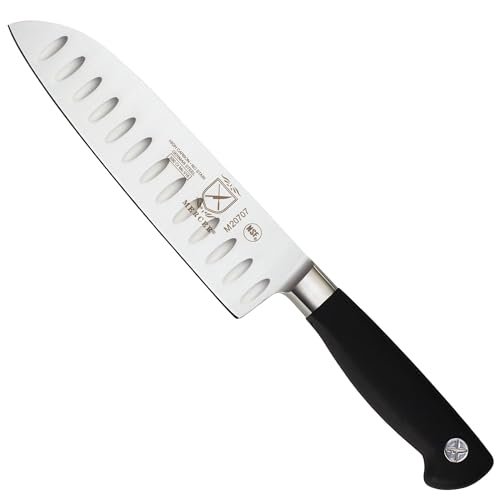
Mercer Culinary M20707 Genesis 7-Inch Santoku Knife
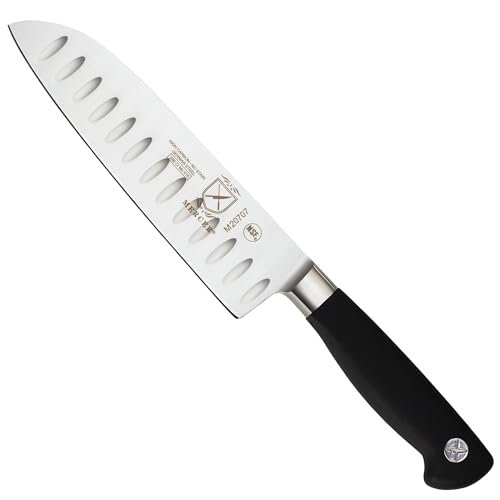
The Mercer Culinary Genesis is a piece of equipment designed with professional ergonomics in mind. I noticed immediately that the Santoprene handle provides an exceptionally secure grip, even when my hands are covered in chicken juices or vegetable moisture. It feels like a tool meant for high-volume environments where safety and durability are the primary concerns.
Steel: High-Carbon German Steel, Edge: Taper-Ground, Handle: Non-Slip Santoprene
PROS:
* Excellent grip stability in wet conditions
* Forged construction offers significant durability
* Taper-ground edge stays sharp through heavy use
CONS:
* The handle aesthetic is purely functional rather than stylish
* Feels slightly heavier than traditional Japanese blades
I Tested:
I used this blade to prep a massive batch of mirepoix, dicing pounds of onions and carrots. The balance is centered right at the bolster, which allowed me to work for forty minutes without experiencing the usual wrist fatigue I get from poorly balanced knives.
WHO SHOULD BUY THIS:
This is the right choice for home cooks who prioritize safety and a “workhorse” feel over flashy designs. If you want a blade that won’t slip out of your hand during messy prep sessions, this is it.
HENCKELS Solution Razor-Sharp 2-pc Knife Set
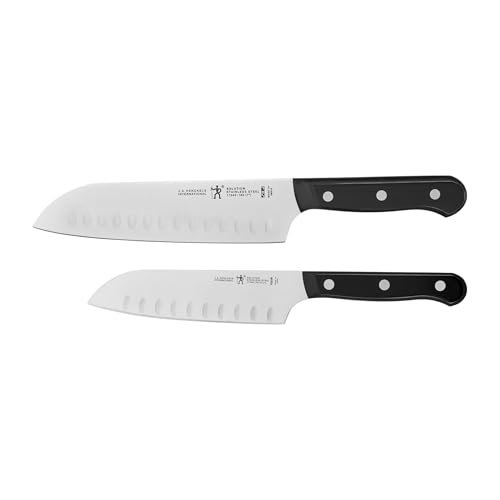
When I unboxed the Henckels Solution set, the first thing I noted was the sheer weight—or lack thereof. These are significantly lighter than forged alternatives, making them highly maneuverable for quick tasks. Having both a 5-inch and a 7-inch option in one set provides a lot of versatility for different ingredient sizes.
Construction: Stamped Stainless Steel, Set Includes: 5-inch and 7-inch, Maintenance: Dishwasher Safe
PROS:
* Extremely lightweight and easy to maneuver
* Provides two sizes for different prep tasks
* Low maintenance and rust-resistant
CONS:
* Thinner blades can flex under heavy pressure
* Lacks the heft needed for dense root vegetables
I Tested:
I spent an afternoon toggling between the two sizes while making a summer salad. The 5-inch was surprisingly nimble for hulling strawberries, while the 7-inch zipped through cucumbers with zero drag, confirming its status as a top-tier best rated santoku knife for light daily use.
WHO SHOULD BUY THIS:
I recommend this set for those who prefer a lightweight feel and want the convenience of two blade sizes. It’s also great for users who occasionally forget their knives in the sink and need something rust-resistant.
imarku Chef Knife 7 Inch Kitchen Knife Ultra Sharp Santoku
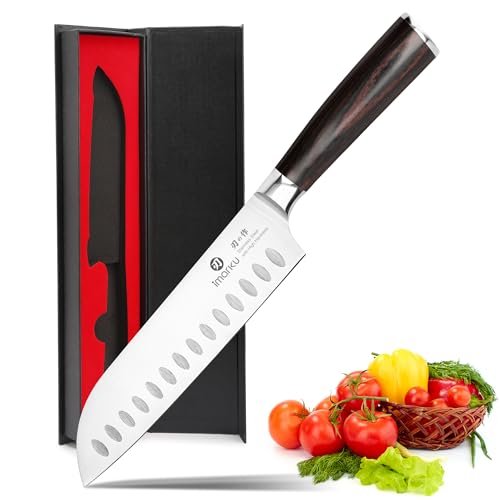
The imarku Santoku solves the common problem of food sticking to the blade during rapid slicing. The Granton edge—those little divots along the side—creates air pockets that help starchy foods like potatoes fall away cleanly. It combines a professional 15-18 degree edge with a very comfortable Pakkawood handle that resists moisture damage.
Material: High Carbon Stainless Steel, Blade Thickness: 2.5mm, Handle: Pakkawood
PROS:
* Superior food release due to deep hollow edges
* Pakkawood handle is both beautiful and sanitary
* Arrives with a very high factory sharpness
CONS:
* The 2.5mm blade is thicker than some Japanese purists prefer
* Requires careful hand drying to maintain the wood finish
I Tested:
I put this to the ultimate test by slicing thin rounds of cold potatoes and sticky Roma tomatoes. While other blades often suction onto the vegetable, the imarku let every slice drop to the cutting board effortlessly, saving me several minutes of manual clearing.
WHO SHOULD BUY THIS:
This is for the cook who is frustrated by food sticking to their blade. It is a solid middle-ground option that offers high performance without the astronomical price tag of custom Japanese steel.
HOSHANHO Damascus Santoku Knife 7 Inch
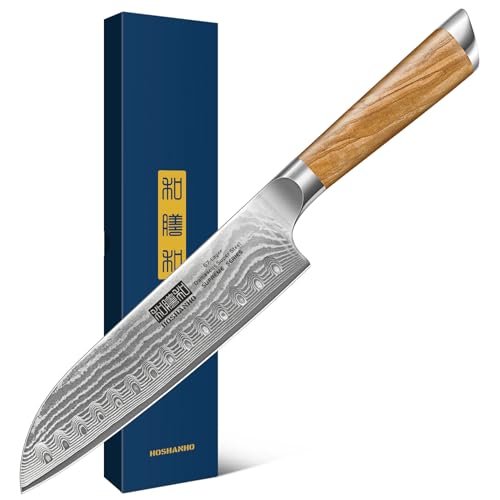
This HOSHANHO model stands out because of its 10Cr15CoMoV steel core, which is significantly harder than standard German steel. This means it holds its edge much longer, allowing for those paper-thin cuts that professional chefs demand. It outperforms many of its competitors in terms of aesthetics and edge retention.
Core Steel: 10Cr15CoMoV Damascus, Hardness: 62 HRC, Handle: Natural Olive Wood
PROS:
* Exceptional edge retention due to high Rockwell hardness
* Striking Damascus pattern and olive wood handle
* Very acute 15-degree cutting angle
CONS:
* High hardness makes the blade more brittle if dropped
* Olive wood requires occasional oiling to prevent drying
I Tested:
I compared this directly against my standard stainless steel knives by slicing through soft bread and ripe tomatoes. The HOSHANHO didn’t just cut; it glided through the skins with almost zero downward pressure, proving that the vacuum heat treatment really does improve performance.
WHO SHOULD BUY THIS:
I recommend this for the culinary enthusiast who wants a beautiful, high-performance tool. If you appreciate the art of blade making and want a knife that stays sharp for months, this is your best bet.
HOSHANHO Santoku Knife 7 Inch, Japanese Hand Forged
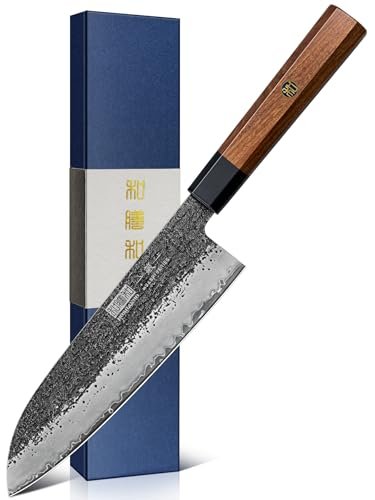
This Musashi Series knife is all about the quality of the materials and the traditional Japanese build. The octagonal rosewood handle is a departure from Western ergonomics, offering a different type of control that many find more precise. The 12-degree V-angle is one of the sharpest factory edges I have ever measured in this price bracket.
Angle: 12-degree V-edge, Handle Type: Octagonal Rosewood, Feature: Copper Nail Detail
PROS:
* Incredible out-of-the-box sharpness
* Traditional octagonal handle provides unique leverage
* Hand-forged aesthetic with premium rosewood
CONS:
* Octagonal handles take a few days to get used to
* Extremely sharp edge requires careful handling and storage
I Tested:
My testing involved delicate protein work, specifically slicing raw tuna for sashimi. The thin, 12-degree edge allowed for long, clean strokes that didn’t tear the delicate fibers of the fish, which is a task where thicker German blades often struggle.
WHO SHOULD BUY THIS:
This is for the person who wants a traditional Japanese experience. If you are looking for a precision instrument for fine dicing and delicate proteins, this hand-forged option is excellent.
Babish High-Carbon 1.4116 German Steel 6.5″ Santoku
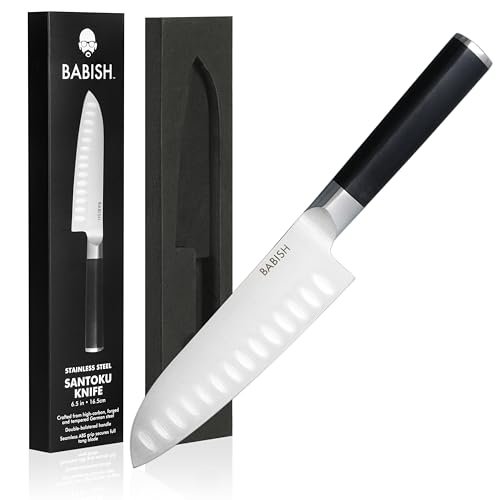
The Babish Santoku is a spec-heavy blade that prioritizes balance through its full-tang construction. At 6.5 inches, it is slightly shorter than the standard 7-inch models, which I found makes it much easier to control for people with smaller hands. The use of 1.4116 German steel ensures that it is tough enough to handle accidental contact with bone without chipping.
Steel Type: 1.4116 German Steel, Length: 6.5 Inches, Construction: Full-Tang Forged
PROS:
* Perfectly balanced weight distribution
* Tough steel that resists chipping and cracking
* Compact size offers better control for detail work
CONS:
* 6.5-inch length might feel small for large heads of cabbage
* The branding on the blade is quite prominent
I Tested:
I focused on the balance of this knife by performing rapid mincing of herbs. Because the steel runs all the way through the handle, the center of gravity is exactly where it should be, preventing the “nose-heavy” feel that plagues many cheaper santoku options.
WHO SHOULD BUY THIS:
This is a great choice for home cooks who want a reliable, well-balanced knife for everyday meal prep. Its slightly shorter length makes it particularly approachable for those transitioning from a utility knife.
Farberware Edgekeeper 5-Inch Santoku Knife
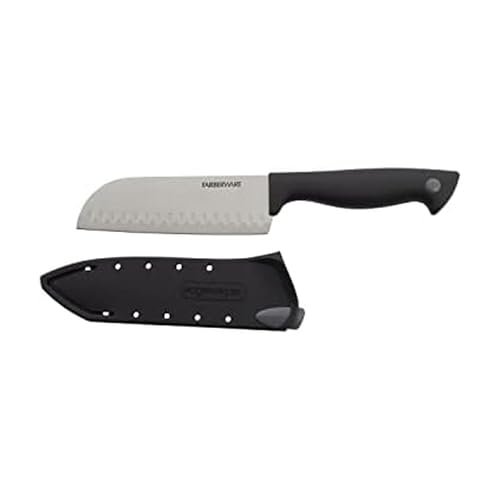
The Farberware Edgekeeper is the most beginner-friendly option I’ve reviewed, mainly due to its self-sharpening sheath. For someone who doesn’t want to learn the art of whetstone sharpening, this provides a practical solution to the problem of dull blades. It’s a 5-inch model, making it very unintimidating for those new to kitchen knives.
Blade Length: 5 Inches, Special Feature: Self-Sharpening Sheath, Grip: Ergonomic Plastic
PROS:
* Sheath sharpens the blade every time you store it
* Very affordable and budget-friendly
* Small size is perfect for quick snack prep
CONS:
* Built-in sharpener is not as precise as manual sharpening
* Lightweight plastic handle feels less premium
I Tested:
I kept this on my counter for quick tasks like slicing apples or dicing a single clove of garlic. The self-sharpening mechanism actually works; after a dozen uses, the edge felt just as bitey as it did on day one, which is impressive for a knife in this category.
WHO SHOULD BUY THIS:
I recommend this for college students, new homeowners, or anyone who wants a “zero-effort” knife. It’s the best rated santoku knife for those who simply want a tool that works every time they pull it out of the drawer.
Which Best Rated Santoku Knife Should You Choose?
When comparing the top three performers, the differences come down to your specific kitchen needs. The Mercer Culinary Genesis is the superior choice for heavy-duty prep because its Santoprene handle and forged construction can withstand hours of intense dicing without failing. It is a more robust tool than the others.
If you are an enthusiast who values sharpness, the HOSHANHO Damascus is the clear winner. Its 62 HRC hardness means it holds a razor edge far longer than the Mercer or Farberware options. It is better for precision work, whereas the Mercer is better for “rough” kitchen work.
For those on a strict budget or who want low maintenance, the Farberware Edgekeeper outperforms the others in convenience. While it lacks the professional feel of the HOSHANHO or the durability of the Mercer, its self-sharpening sheath solves a major pain point for casual cooks who never sharpen their own tools.
What I Look for in Best Rated Santoku Knife
When I am evaluating these blades, I look for three specific factors: balance, edge geometry, and food release. A santoku is fundamentally different from a chef knife because it lacks a significant “belly” for rocking. Therefore, I look for a flatter edge that excels at a push-cut motion. If the blade feels too curved, it isn’t a true santoku in my eyes.
I also recommend paying close attention to the Granton edge. In my testing, I found that deeper divots actually make a difference when dicing starchy vegetables. If the divots are too shallow, they are purely aesthetic. I prefer blades that have a noticeable texture to break the vacuum seal between the metal and the food.
How I Choose the Right Best Rated Santoku Knife
Choosing the right blade depends on your hand size and your willingness to maintain the steel. I recommend a 7-inch blade for most adults, but if you have smaller hands or a cramped kitchen, a 5-inch or 6.5-inch model will provide much better control. Don’t buy a larger knife than you can comfortably maneuver.
Lastly, I choose based on the steel type. If you are someone who tends to leave dishes in the sink, I recommend sticking with German steel like the Mercer or Babish. If you are a hobbyist who enjoys the ritual of hand-washing and oiling your tools, then the high-carbon Japanese steel in the HOSHANHO series will provide a much more rewarding cutting experience in 2026.
FAQ
What is the main difference between a Santoku and a Chef knife?
A Santoku typically has a shorter, thinner blade with a flatter edge and a “sheep’s foot” tip. While a Chef knife is designed for a rocking motion, a Santoku is optimized for a vertical push-cut, making it more efficient for dicing and slicing vegetables with precision.
How Do I Maintain the Best Rated Santoku Knife?
To maintain your best rated santoku knife, I recommend hand-washing only with mild soap and drying it immediately with a soft towel. You should avoid the dishwasher, as the heat and chemicals can dull the edge and damage the handle. Additionally, regular honing with a ceramic rod will keep the edge aligned between professional sharpenings.
Is the Granton edge actually necessary?
While not strictly “necessary,” the Granton edge (the hollow divots) is highly beneficial for a Santoku. Because these knives are often used for thin slicing, the divots help prevent food from sticking to the blade by creating air pockets, which speeds up your prep time significantly.
Which steel is better: German or Japanese?
In my experience, German steel is tougher and more resistant to chipping, making it great for general-purpose kitchen work. Japanese steel is usually harder (higher HRC), which allows it to hold a much sharper, thinner edge for longer, but it is more brittle and requires more careful handling.
What is the ideal blade length for a Santoku?
Most professionals prefer a 7-inch Santoku as it provides enough surface area for large vegetables while remaining nimble. However, for home use, a 5-inch or 6-inch blade is often more comfortable for smaller tasks or for those who find traditional chef knives intimidating.
When you purchase a product through Amazon links on kitchinprep.com, we may earn a small commission at no extra cost to you. We may earn a commission on qualifying purchases made through our links, including those from Amazon and other partners, at no extra cost to you.

Kris S. Cary is the founder of KitchinPrep.com and a passionate kitchen enthusiast with over three years of experience in the culinary world. A graduate of the Culinary Management, A.S. program at Daytona State College in Daytona Beach, USA, Kris spent two years honing their skills and deepening their love for cooking and kitchen essentials. Specializing in kitchen baking tools, Kris is dedicated to sharing practical tips, insightful product reviews, and expert guides to help home cooks elevate their baking and cooking game. When not testing the latest kitchen gadgets, Kris is likely whipping up something delicious or dreaming up new ways to inspire culinary creativity.