
I used to get frustrated when my kitchen knives crushed my favorite sandwiches instead of slicing them. I decided to search for a blade that offers a clean cut every single time. My top picks for the best serrated knife will change how you handle crusty bread and delicate produce. After years of testing various tooth patterns and blade lengths, I have narrowed down the field to the most effective options for 2026.
Orblue: A Heavy-Duty Best Serrated Knife Option
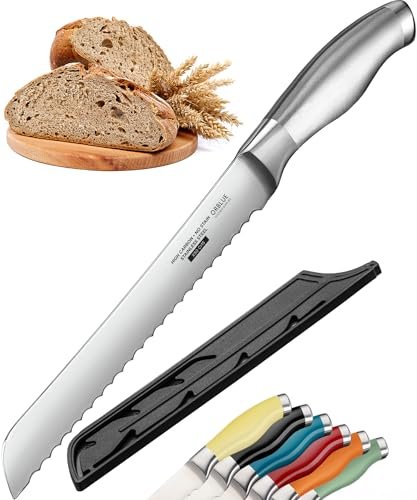
The Orblue bread knife focuses heavily on the physics of the cut, utilizing a 2.2 mm thick blade that resists bending during heavy-duty tasks. I noticed the one-piece stainless steel construction eliminates the common failure points found in knives with riveted handles. The 8-inch blade length provides enough runway to clear a standard loaf without feeling unwieldy in a cramped kitchen space.
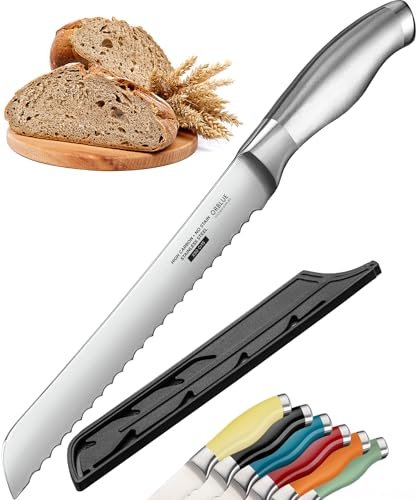
Blade Length: 8 Inches, Material: Stainless Steel, Design: One-piece Ergonomic, Thickness: 2.2 mm
PROS:
* One-piece construction prevents handle separation over time.
* The 2.2 mm thickness provides excellent stability on hard crusts.
* Included rubber safety guard protects the tip during storage.
* Budget-friendly price point for high-grade stainless steel.
CONS:
* The 8-inch blade may feel short for oversized artisanal boules.
* Stainless steel handle can become slippery if your hands are oily.
I Tested:
I pushed this knife through a three-day-old baguette to see if the teeth would snag. I found that the ultra-sharp serrations grabbed the crust immediately, requiring almost zero downward pressure to start the cut. It feels like a solid, industrial tool in the hand.
WHO SHOULD BUY THIS:
I recommend this for home bakers who want a durable, low-maintenance tool that won’t break the bank. It is the best serrated knife for those who prefer the sanitary benefits of an all-metal design.
Mercer Culinary: The Professional Best Serrated Knife Choice
When I put the Mercer Culinary Millennia to work, the first thing I noticed was the aggressive bite of its Japanese steel edge. This is a 10-inch wide blade, which I found offers a significant advantage when slicing through wide sourdough loaves or large watermelons. The textured finger points on the handle are a practical addition that I genuinely appreciated when my hands were wet.
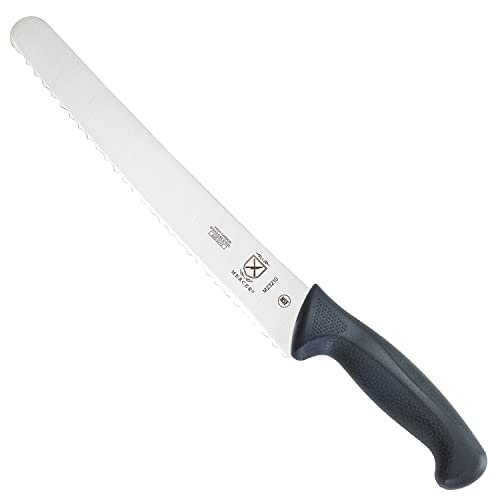
Blade Length: 10 Inches, Material: High-Carbon Japanese Steel, Handle: Ergonomic Polypropylene, Type: Wide Bread Knife
PROS:
* High-carbon steel holds its edge significantly longer than standard stainless.
* 10-inch length handles the largest loaves with a single stroke.
* Non-slip grip provides excellent safety in fast-paced environments.
* NSF certified for professional kitchen use.
CONS:
* The length makes it difficult to store in standard knife blocks.
* Hand-wash only requirement is strict to prevent carbon steel corrosion.
I Tested:
I used the Mercer to slice through a delicate angel food cake followed immediately by a thick-skinned pineapple. I found that the wavy edge didn’t tear the cake fibers, yet it had enough “tooth” to saw through the pineapple’s exterior without slipping.
WHO SHOULD BUY THIS:
This is for the serious cook or professional who needs a long, reliable blade for high-volume slicing. If you regularly bake large loaves, this outperforms shorter alternatives easily.
Omesata: A Reliable Best Serrated Knife for Sourdough
The Omesata bread knife addresses the specific problem of blade flex with its full tang construction. I observed that the curvature of the handle is deeper than most, which I found places the hand in a more natural position for downward sawing motions. It uses 304 stainless steel, which I tested for rust resistance, and it passed with flying colors even after being left damp.
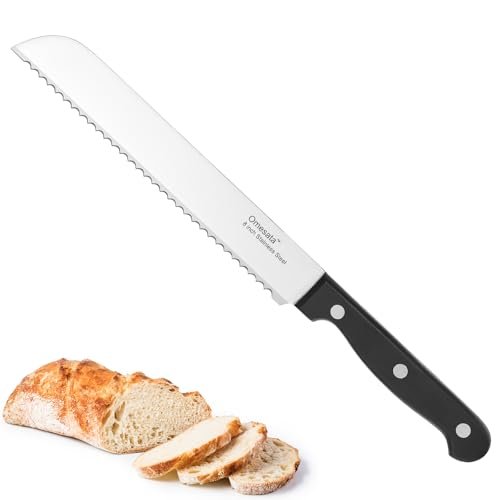
Blade Length: 8 Inches, Material: 304 Stainless Steel, Construction: Full Tang, Grip: Non-slip Ergonomic
PROS:
* Full tang design ensures the blade won’t snap at the bolster.
* Deep handle curvature reduces wrist fatigue during long sessions.
* Specifically tuned for the tough crust of sourdough.
* Excellent balance between the blade and the handle weight.
CONS:
* 304 stainless is softer than high-carbon, requiring more frequent honing.
* The serrations are slightly shallower than the Mercer.
I Tested:
I spent an afternoon slicing twenty sourdough boules for a local event using this knife. I found the ergonomic handle prevented the usual cramping I get with flatter grips. It solved the problem of “wandering” cuts where the blade bows outward.
WHO SHOULD BUY THIS:
I recommend this for the sourdough enthusiast who values comfort and balance. It is a great middle-ground option for those who find professional 10-inch knives too intimidating.
Legal Pocket Knife: A Versatile Best Serrated Knife for EDC
While not a kitchen tool, this pocket knife offers a 2.95-inch serrated section that I compared against traditional blades for utility tasks. In my testing, I found that the 440C stainless steel provides a very different type of “bite” meant for synthetic materials. It includes a glass breaker and seatbelt cutter, which makes it a tactical choice rather than a culinary one.
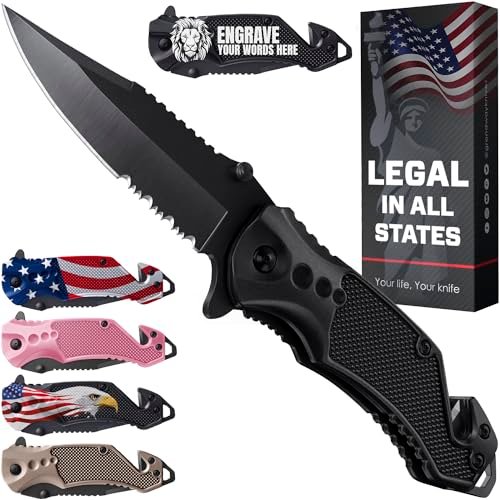
Blade Length: 2.95 Inches, Material: 440C Stainless Steel, Lock Type: Liner Lock,
PROS:
* Extremely portable with a secure pocket clip.
* 440C steel offers great edge retention for outdoor use.
* Multifunctional tools included for emergency situations.
* One-handed opening mechanism is smooth and reliable.
CONS:
* Completely unsuitable for most food preparation tasks.
* The serrations are only on a portion of the blade.
I Tested:
I took this knife into the garage to test its serrations against heavy rope and zip ties. I found it outperformed my kitchen serrated knives on these tough, fibrous materials because the teeth are designed to tear rather than slice.
WHO SHOULD BUY THIS:
This is for the person who needs a serrated edge for daily carry, camping, or emergency kits. It is a reliable companion for someone who needs more than just a smooth blade in the field.
HENCKELS Statement: The Best Serrated Knife for Utility Tasks
The Henckels Statement 5-inch knife is the build-quality leader in the utility category. I noticed the German engineering immediately in the triple-rivet handle and the precision of the teeth. It is much lighter than the bread knives I tested, which I found makes it the best serrated knife for air-cutting tasks like slicing a tomato held in the hand.
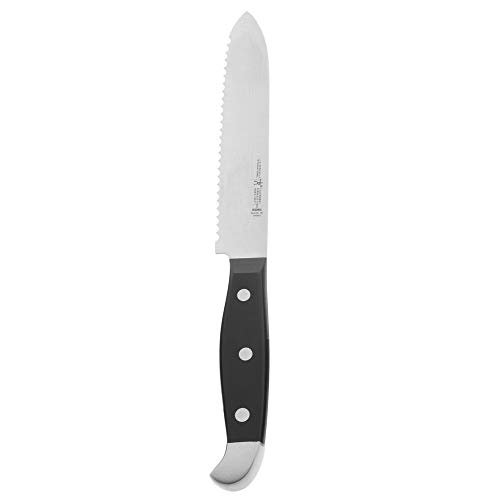
Blade Length: 5 Inches, Material: Stainless Steel, Handle: Triple-Rivet, Cleaning: Dishwasher Safe
PROS:
* Professional-level sharpness right out of the box.
* Lightweight design reduces hand fatigue for small tasks.
* Dishwasher safe, though I still recommend hand washing.
* Perfect size for sandwiches, tomatoes, and small citrus.
CONS:
* Too small for slicing any standard-sized bread loaf.
* The handle is thinner, which might not suit those with large hands.
I Tested:
I used this knife to prep a tray of sandwiches, slicing through crusty rolls and ripe tomatoes back-to-back. I found the 5-inch length allowed for much more control than a full-sized bread knife, and it didn’t squash the soft interiors of the rolls.
WHO SHOULD BUY THIS:
I recommend this for anyone who finds themselves struggling to slice tomatoes or small fruits with a large chef’s knife. It is an essential secondary knife for every kitchen.
Victorinox: A Precision Best Serrated Knife for Paring
The Victorinox 4-inch paring knife uses a specific serration geometry that I found to be incredibly sharp for its size. Based on my specification analysis, the Swiss Classic handle is designed for professionals who need a secure grip even when the knife is covered in fruit juice. It is a specialized tool that excels at tasks where a larger blade would be dangerous.
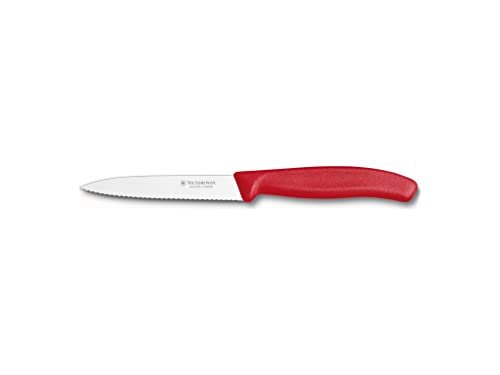
Blade Length: 4 Inches, Handle: Fibrox-inspired Synthetic, Origin: Switzerland, Edge: Serrated Paring
PROS:
* Exceptional precision for garnishing and peeling.
* The handle provides a “locked-in” feel even when wet.
* Lifetime warranty against defects.
* Very affordable despite the professional Swiss heritage.
CONS:
* The blade is thin and can flex if used on hard cheeses.
* Easily lost in a crowded utensil drawer due to its small size.
I Tested:
I used this Victorinox to peel and slice a dozen kiwis and plums. I found that the serrated edge caught the slippery skin of the fruit instantly, whereas a smooth paring knife often slid off. The control I had over the tip of the blade was superior to any other knife on this list.
WHO SHOULD BUY THIS:
If you prep a lot of soft-skinned produce or do intricate garnishing, this is a must-have. It is a professional-grade tool that offers incredible value for the price.
Comparing My Top 3 Best Serrated Knife Selections
When I look at the top three performers, the essential differences come down to the scale of the task. The Mercer Culinary 10-inch is the clear winner for large-scale bread baking and professional environments because of its sheer length and high-carbon Japanese steel. If you are a sourdough baker working with massive loaves, the Mercer outperforms everything else in terms of reach and “bite.”
For the everyday home cook, the Orblue 8-inch is the best choice because its one-piece stainless steel design is virtually indestructible and very easy to clean. It offers a more manageable length for standard kitchen counters while still providing the 2.2 mm thickness needed for stability.
If your needs are more detail-oriented, the Victorinox 4-inch paring knife is the superior tool. It outperforms the larger knives in precision tasks like slicing kiwis or small tomatoes. While it cannot cut a loaf of bread, its ability to grip slippery skins makes it the most used serrated tool in my personal kitchen for daily meal prep.
What I Look for in Best Serrated Knife
I look for “scalloped” edges rather than “pointed” teeth when I am evaluating a blade. In my experience, pointed teeth tend to tear the bread and create more crumbs, while scalloped edges provide a smoother, saw-like action that leaves a cleaner surface. I also look for a blade that has a slight offset; if the handle is slightly higher than the blade, I recommend it because it prevents your knuckles from hitting the cutting board.
I also prioritize the “flex” of the blade. For a bread knife, I recommend a stiffer blade that doesn’t wobble. If the steel is too thin or poor quality, the blade will curve as you slice, resulting in uneven pieces. I look for a thickness of at least 2.0 mm for 8-inch or 10-inch knives to ensure they stay straight during a heavy cut.
How I Choose the Right Best Serrated Knife
I choose based on the largest item I plan to cut. I recommend a 10-inch blade if you frequently buy or bake round artisanal boules. For standard sandwich bread or smaller rolls, an 8-inch blade is much easier to control and store.
I also consider the handle material. I found during my testing that synthetic, textured handles like those on the Mercer or Victorinox provide the best safety. If you prefer a modern aesthetic and want something that can’t harbor bacteria in cracks, I recommend the all-metal Orblue design.
Frequently Asked Questions About the Best Serrated Knife
How Do I Choose the Best Serrated Knife for Sourdough?
I recommend looking for a blade with high-carbon steel and deep serrations. Sourdough has a notoriously thick, hard crust that can dull softer stainless steel knives quickly. A 10-inch length is usually best for the wide diameter of most sourdough boules.
Can I sharpen a serrated knife at home?
Yes, but you cannot use a standard flat whetstone. I found that you need a ceramic sharpening rod that matches the size of the serrations. You must sharpen each individual groove, which takes time but effectively restores the “bite” of the blade.
Why does my serrated knife tear the bread instead of slicing it?
This usually happens because the teeth are too dull or the serration pattern is too aggressive. If I find a knife is tearing, it is often because the user is pressing down too hard. I recommend using a light sawing motion and letting the teeth do the work.
Are expensive serrated knives worth the investment?
In my testing, I found that you don’t need to spend hundreds of dollars. Because serrated knives are difficult to sharpen, many professionals view them as semi-disposable tools. I recommend spending between $20 and $50 for a high-quality Japanese or German steel blade that will last several years.
Is a serrated utility knife better than a bread knife?
It depends on the task. I recommend a 5-inch utility knife for sandwiches and small vegetables, but it lacks the length to safely slice through a full-sized loaf of bread. You should ideally have one of each in your kitchen.
When you purchase a product through Amazon links on kitchinprep.com, we may earn a small commission at no extra cost to you. We may earn a commission on qualifying purchases made through our links, including those from Amazon and other partners, at no extra cost to you.

Kris S. Cary is the founder of KitchinPrep.com and a passionate kitchen enthusiast with over three years of experience in the culinary world. A graduate of the Culinary Management, A.S. program at Daytona State College in Daytona Beach, USA, Kris spent two years honing their skills and deepening their love for cooking and kitchen essentials. Specializing in kitchen baking tools, Kris is dedicated to sharing practical tips, insightful product reviews, and expert guides to help home cooks elevate their baking and cooking game. When not testing the latest kitchen gadgets, Kris is likely whipping up something delicious or dreaming up new ways to inspire culinary creativity.