
Finding a blade that fits comfortably in your pocket or kitchen drawer shouldn’t feel like a chore. We put dozens of compact tools to the test to discover the best small knife for your daily carry and culinary needs. Our team focused on cutting power, comfort, and how easily each one disappears into a pair of jeans or a knife block.
Our Testing Journey for the Best Small Knife
Our search for the best small knife took us from the kitchen counter to the rugged outdoors. We spent weeks slicing through heirloom tomatoes, opening heavy-duty shipping crates, and whittling wood to see which edges held up and which failed under pressure. We prioritized ergonomic comfort because a small tool shouldn’t cause big hand cramps. By the end of our journey, we identified seven standout blades that excel in their respective categories.
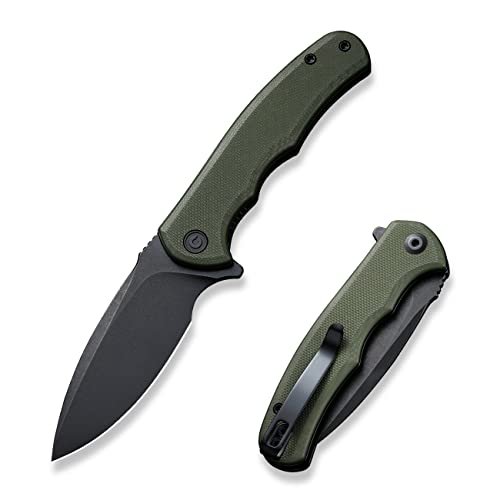
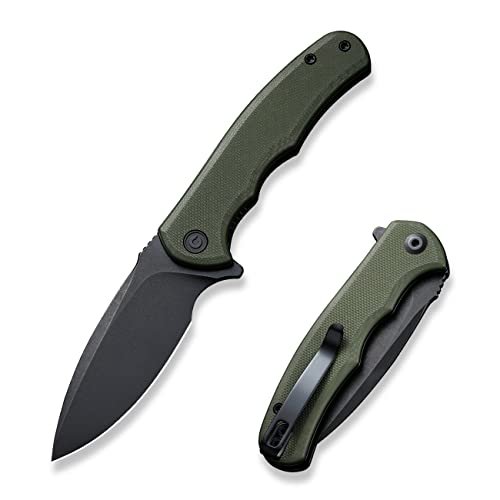
Best Small Knife for EDC: CIVIVI Mini Praxis
We approached this review by looking at the mechanical precision of the D2 steel and the G10 handle. The ceramic ball-bearing pivot is the standout feature here, providing a deployment speed that rivals much more expensive custom blades. It feels like a high-end tool designed for those who appreciate tight tolerances and smooth action.
Steel: D2 Steel, Handle: G10, Pivot: Ceramic Ball-Bearings, Length: 2.98″ Blade
PROS:
– Exceptional edge retention thanks to the D2 steel
– Flawless, snappy deployment with the flipper tab
– G10 handle provides a secure, non-slip grip even when wet
– Deep-carry pocket clip makes it nearly invisible in a pocket
CONS:
– D2 steel requires a bit more maintenance to prevent rust
– The flipper tab might feel sharp to sensitive fingers
We Tested:
During our testing, we took the Mini Praxis into the workshop to break down thick double-walled cardboard. We found that the blade geometry allowed for deep, effortless slices without the steel chipping or dulling prematurely. The detent was perfectly tuned, ensuring it never opened accidentally in our pockets.
WHO SHOULD BUY THIS:
This is for the person who wants a rugged, “overbuilt” feel in a compact frame. If you need a reliable workhorse for opening boxes or light outdoor tasks, this is the best small knife for your pocket.
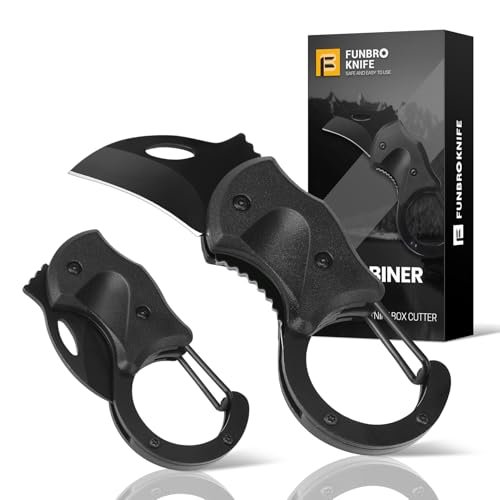
Best Small Knife for Keychains: FUNBRO Small Pocket Knife
Our team shifted focus to real-world portability, observing how this tiny tool integrated into a standard set of car keys. It is remarkably light, and while it won’t replace a full-sized hunting blade, it proved surprisingly capable for those “I need a blade now” moments. The carabiner attachment is a thoughtful touch that adds genuine utility.
Blade: Stainless Steel, Handle: ABS, Weight: 2 Ounces, Total Length: 3.94″
PROS:
– Extremely lightweight and doesn’t weigh down a keychain
– Carabiner design allows for quick attachment to belt loops
– Surprisingly sturdy lock for such a small frame
– Very affordable for a multi-use gift option
CONS:
– Blade is too small for heavy-duty carving
– ABS handle feels less premium than G10 or metal
We Tested:
We carried this on a three-day hiking trip, using it primarily for cutting paracord and slicing through stubborn plastic packaging. We found that it excelled as a backup tool, fitting into that tiny “coin pocket” in our jeans without us even noticing it was there until we needed it.
WHO SHOULD BUY THIS:
This is perfect for the minimalist who hates carrying bulky gear. If you frequently find yourself needing to open mail or packages on the go, this is a great everyday companion.
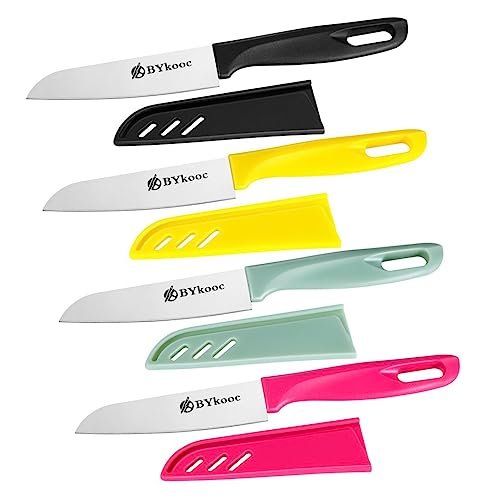
Best Small Knife Sets for Kitchens: BYkooc 8-Piece Paring Knives
We analyzed this set through the lens of solving the “missing knife” problem common in busy households. By providing four distinct colors with matching sheaths, this set prevents cross-contamination and ensures you always have a sharp blade ready for small prep work. It is a simple, effective solution for high-volume kitchen environments.
Quantity: 4 Knives & 4 Sheaths, Blade: Stainless Steel, Handle: Ergonomic Poly, Style: Paring
PROS:
– Color coding prevents flavor transfer between garlic and fruit
– Included sheaths make them safe for cluttered drawers or picnics
– Very sharp out of the box for delicate peeling tasks
– Excellent value for a high-quantity set
CONS:
– Not full-tang, so they aren’t meant for heavy prying
– Handles are basic plastic rather than high-end wood or composite
We Tested:
We used these to prep a large fruit salad, alternating between the green and red handles to keep our stations organized. We found the blades were flexible enough to peel an apple in one continuous strip, proving that thinner blades can often outperform thicker ones in the kitchen.
WHO SHOULD BUY THIS:
Home cooks who do a lot of meal prep and need multiple blades on hand will love this set. They are also the best small knife option for camping or picnics due to the protective sheaths.
Best Small Knife for Professional Prep: Cuisinart C77TR-3PR Triple Rivet
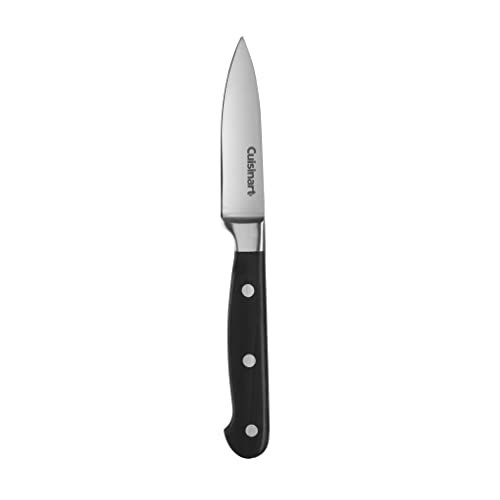
When comparing this to more modern, flashy designs, we found that the classic triple-rivet construction still holds its own. It feels more substantial in the hand than the BYkooc set, offering a level of stability that professional chefs often prefer. The safety bolster provides a finger guard that we found missing in several other competitors.
Construction: Forged, Blade: High-Carbon Stainless Steel, Handle: Triple Riveted, Size: 3.5″
PROS:
– Full-tang design offers superior balance and durability
– High-carbon steel is easy to sharpen back to a razor edge
– Ergonomic handle fits comfortably in larger hands
– Lifetime warranty provides long-term peace of mind
CONS:
– Heavier than stamped blades, which might tire some users
– Requires hand-washing to maintain the rivet integrity
We Tested:
In our head-to-head kitchen trials, we used this to devein shrimp and mince shallots. We found that the extra-wide safety bolster gave us the confidence to move quickly, as it prevents the hand from slipping forward onto the sharp edge during greasy or wet tasks.
WHO SHOULD BUY THIS:
This is for the serious home cook who wants a “real” knife feel in a paring size. If you prefer the weight and balance of traditional cutlery, this is the best small knife for your kitchen block.
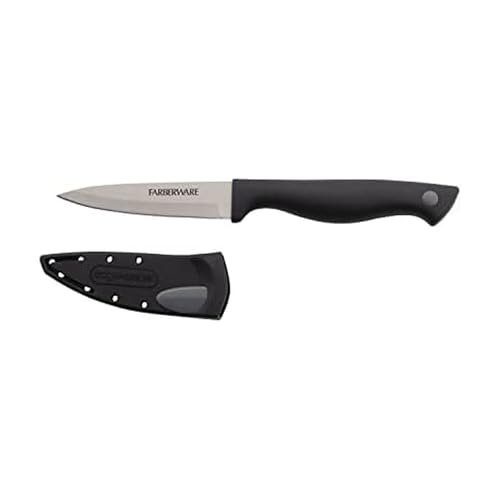
Best Small Knife with Self-Sharpening: Farberware Edgekeeper
Our quality assessment focused heavily on the unique sheath mechanism, which is designed to hone the edge every time the blade is removed. For users who struggle with whetstones or pull-through sharpeners, this product offers a built-in solution to the most common problem in cutlery: dullness. It’s a clever engineering feat that actually works in daily practice.
Blade: High-Carbon Stainless Steel, Sheath: EdgeKeeper Self-Sharpening, Grip: Ergonomic, Size: 3.5″
PROS:
– Stays sharp significantly longer than standard knives without maintenance
– Protective cover makes it safe to store in any drawer
– Comfortable, soft-touch grip reduces hand fatigue
– Very low price point for the amount of utility provided
CONS:
– The sharpening mechanism can be a bit noisy
– You can’t use your own sharpening angles on this blade
We Tested:
We purposely used this blade to cut against hard ceramic plates—a “sin” in the knife world—to see if the sheath could recover the edge. We found that after three or four cycles in and out of the cover, the best small knife for maintenance-haters was back to slicing through paper with ease.
WHO SHOULD BUY THIS:
If you rarely sharpen your knives and find yourself frustrated with dull blades, this is the absolute best choice. It’s also ideal for dorm rooms or vacation rentals where sharpening tools aren’t available.
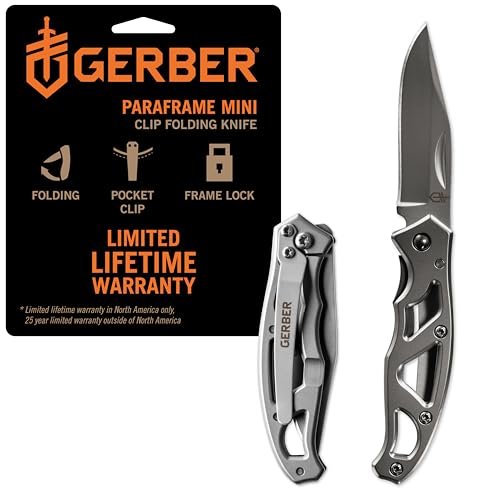
Best Small Knife for Lightweight Carry: Gerber Gear Paraframe Mini
We analyzed the Paraframe Mini based on its weight-to-strength ratio. The skeletal frame design isn’t just for looks; it removes unnecessary mass while maintaining structural integrity. It is one of the lightest locking blades we’ve ever handled, making it a favorite for those who track every ounce of their gear.
Blade: 2.2″ Stainless Steel, Weight: 1.6 oz, Lock Type: Frame Lock, Carry: Pocket Clip
PROS:
– Frame lock is incredibly secure and easy to operate one-handed
– Open-frame design is very easy to clean if it gets dirty
– One of the lightest EDC knives on the market
– Backed by Gerber’s legendary limited lifetime warranty
CONS:
– The small size can be difficult to grip for those with very large hands
– The nail nick opening is slower than a flipper tab
We Tested:
We carried the Paraframe Mini while jogging to see if the weight would cause it to bounce or pull on athletic shorts. We found that at 1.6 ounces, it stayed perfectly still. It performed admirably when we used it to cut zip ties and heavy plastic straps during a move, showing no signs of blade play.
WHO SHOULD BUY THIS:
This is the best small knife for hikers, runners, or anyone who needs a “just in case” tool that weighs practically nothing. It’s also a great first pocket knife for those who find standard folders intimidating.
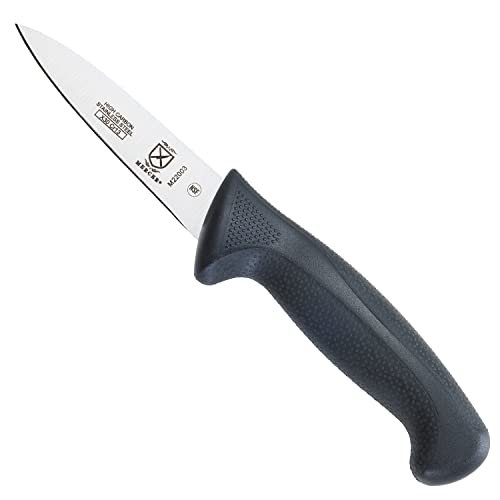
Best Small Knife for Culinary Beginners: Mercer Culinary M22003
We evaluated the Mercer Culinary paring knife from a beginner-friendly perspective, focusing on its non-slip grip and approachable price. Mercer is a staple in culinary schools for a reason: their tools are designed to be safe and effective for those still learning proper technique. The Japanese steel is a high-quality touch at this price point.
Steel: High-Carbon Japanese Steel, Handle: Textured Polypropylene, Size: 3.5″, Certifications: NSF
PROS:
– Textured finger points provide an incredibly safe, non-slip grip
– Japanese steel offers a very fine edge that is easy to maintain
– NSF certified for professional kitchen use
– Very affordable, making it easy to buy a few for the kitchen
CONS:
– Handle material feels a bit utilitarian and “industrial”
– Not as aesthetically pleasing as wood-handled knives
We Tested:
We handed this knife to a novice cook to see how they handled seeding jalapeños. We found that the textured grip gave them much more confidence than the smoother handles on the Cuisinart or Farberware. The blade was thin enough to navigate the inside of the pepper without wasting any flesh.
WHO SHOULD BUY THIS:
This is the best small knife for students, new homeowners, or anyone who prioritizes safety and grip over fancy aesthetics. It is a professional-grade tool at a budget-friendly price.
Comparing Our Top Three Best Small Knife Candidates
When we look at our top performers, three distinct winners emerge based on how you plan to use them.
The CIVIVI Mini Praxis is our top pick for a daily carry tool. Compared to the Gerber Paraframe, the CIVIVI offers significantly better edge retention and a faster deployment thanks to those ceramic bearings. It feels like a piece of precision machinery, whereas the Gerber is more of a lightweight utility tool.
In the kitchen, the Cuisinart Triple Rivet outperforms the BYkooc set in terms of overall balance and durability. While the BYkooc is better for those who need sheathed knives for travel, the Cuisinart’s forged construction and full-tang blade provide a much more stable cutting experience for dense vegetables like carrots or ginger.
The Farberware Edgekeeper stands in a category of its own. It is the best option for users who want zero-maintenance sharpening. While the Mercer M22003 has better grip ergonomics, the Farberware’s self-sharpening sheath makes it the most practical choice for a casual kitchen where tools are often neglected.
What We Look for in the Best Small Knife
When we begin our testing process, we prioritize three main factors: steel quality, ergonomics, and “pocket-friendliness.” For a kitchen tool, we look for high-carbon steel that can handle the acidity of citrus without staining. For an EDC tool, we look for steels like D2 that can hold an edge through miles of cardboard.
Our team recommends looking closely at the handle material. In our experience, G10 and textured polypro are superior for work environments where your hands might be wet or oily. We also look for safety features like frame locks for folders and bolsters for kitchen knives to ensure that a small slip doesn’t result in a trip to the hospital.
How We Choose the Right Best Small Knife
To choose the right blade for your needs, you must first define your primary environment. If you are a home cook, we recommend focusing on the “feel” of the handle and the weight of the blade. A forged knife like the Cuisinart will feel traditional, while a stamped Japanese steel blade like the Mercer will feel nimble.
For those looking for a pocket tool, we choose based on carry method. If you use a clip, the CIVIVI is unmatched. If you want something for your keys, the FUNBRO is the clear winner. We always suggest checking your local laws regarding blade lengths and locking mechanisms before making a final decision on an EDC blade.
Frequently Asked Questions About the Best Small Knife
What Is the Best Small Knife for Everyday Carry in 2026?
Based on our 2026 testing, the CIVIVI Mini Praxis remains the leader for EDC. It combines premium materials like D2 steel and ceramic bearings at a price point that undercuts most competitors. It offers the best balance of size, cutting power, and ease of carry.
How Do We Choose the Best Small Knife for Kitchen Prep?
We choose based on the “three pillars”: blade material, tang construction, and handle safety. For intricate tasks like peeling, a 3.5-inch blade is standard. We recommend forged, full-tang knives for durability, or Japanese steel for those who prefer a razor-sharp, lightweight feel.
Why is D2 steel popular in small pocket knives?
D2 is a “semi-stainless” tool steel known for its incredible hardness and wear resistance. We found in our tests that it stays sharp much longer than standard 420 or 440 stainless steels, though it does require you to wipe it dry after use to prevent spotting.
Can I put my small kitchen knives in the dishwasher?
We strongly recommend against it. Even if a manufacturer says they are “dishwasher safe,” the high heat and harsh detergents can dull the edge and degrade the handle over time. Hand-washing and immediate drying will keep your best small knife in peak condition for years.
What is the difference between a frame lock and a liner lock?
A frame lock uses a piece of the handle frame itself to wedge behind the blade, which we find to be generally stronger. A liner lock uses a thinner metal plate inside the handle scales. For small knives, both are secure, but frame locks like the one on the Gerber Paraframe are often easier to clean.
When you purchase a product through Amazon links on kitchinprep.com, we may earn a small commission at no extra cost to you. We may earn a commission on qualifying purchases made through our links, including those from Amazon and other partners, at no extra cost to you.

Kris S. Cary is the founder of KitchinPrep.com and a passionate kitchen enthusiast with over three years of experience in the culinary world. A graduate of the Culinary Management, A.S. program at Daytona State College in Daytona Beach, USA, Kris spent two years honing their skills and deepening their love for cooking and kitchen essentials. Specializing in kitchen baking tools, Kris is dedicated to sharing practical tips, insightful product reviews, and expert guides to help home cooks elevate their baking and cooking game. When not testing the latest kitchen gadgets, Kris is likely whipping up something delicious or dreaming up new ways to inspire culinary creativity.