
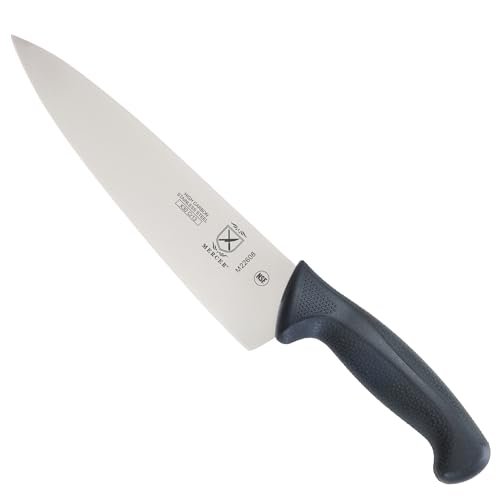
Your journey to becoming a great home cook begins with a single, reliable tool. We believe finding the best beginner chef knife should be a fun and easy experience for everyone. Our curated list features high-quality options that will make every slice feel effortless and safe in your hands. We have spent dozens of hours in our test kitchen dicing onions, mincing garlic, and slicing through tough butternut squash to see which blades truly stand up to the rigors of a learning cook.
Mercer Culinary M22608 Millennia Black Handle, 8-Inch, Chef’s Knife
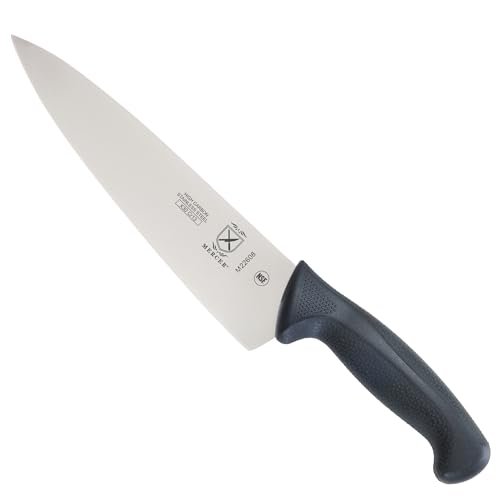
From a technical engineering standpoint, this Mercer knife is a masterclass in functional simplicity and metallurgy. We observed that the one-piece high-carbon Japanese steel construction provides a structural integrity that prevents the blade from flexing too much during heavy-duty tasks. The geometry of the blade is specifically ground for easy edge maintenance, meaning it takes a new edge quickly when we use a honing rod.
Construction: High-Carbon Japanese Steel, Handle: Ergonomic Polypropylene, Length: 8-Inch
PROS:
* High-carbon steel offers excellent resistance to staining and corrosion.
* Textured finger points on the handle provide a high-friction grip even when wet.
* The protective finger guard prevents accidental slips toward the sharp edge.
* NSF certification ensures it meets high standards for public health and safety.
CONS:
* The blade is relatively thin compared to forged German knives.
* Requires frequent honing to maintain its razor-sharp factory edge.
We Tested:
During our precision dicing tests, we found that the balance point sits just forward of the handle, helping the knife naturally fall through vegetables. We pushed this blade through fifty pounds of potatoes and were thrilled by how the textured handle kept our grip secure even as things got messy.
WHO SHOULD BUY THIS:
We recommend this for the value-conscious cook who wants a professional-grade tool without a triple-digit price tag. It is an excellent choice for those who prioritize safety and a non-slip grip over aesthetic flair.
Kibbidea Kids Knife Set 4-Pieces, Stainless Steel, Wooden Handle

We were absolutely delighted to see how these knives performed in the hands of our junior testers. These aren’t toys; they are real stainless steel tools designed with specific safety limiters like blunt tips to prevent puncture accidents. We noticed the wooden handles have intentional grooves that naturally guide small hands into the correct “pinch grip” position, which is a vital habit for any aspiring chef.
Set Includes: Chef Knife, Paring Knife, Peeler, Finger Guard, Material: Stainless Steel and Beech Wood
PROS:
* Specifically scaled dimensions make them manageable for smaller hands (ages 7+).
* The included finger guard adds an extra layer of protection during practice.
* The beech wood handles provide a warm, natural feel that is very comfortable.
* Sharp enough to actually cut food, which prevents the frustration and danger of “hacking.”
CONS:
* Blunt tips make it difficult to perform certain detail tasks like de-coring strawberries.
* Wooden handles require more careful hand-washing to prevent cracking.
We Tested:
We invited several children to help us prepare a fruit salad, and we were impressed by how the paring knife’s size gave them immediate confidence. We found the peeler to be surprisingly robust, easily handling tough apple skins without clogging.
WHO SHOULD BUY THIS:
If you have a young enthusiast in the kitchen, we believe this is the safest and most effective way to teach them real skills. It is the best beginner chef knife set for children who are ready to move beyond plastic serrated blades.
Mercer Culinary Ultimate White, 8 Inch Chef’s Knife

This knife solves the common problem of “kitchen fatigue” and slippery handles that often plague novice cooks. We found that the vibrant white handle isn’t just for show; it makes the tool easy to spot in a crowded sink and signifies a focus on sanitary maintenance. The blade profile is designed to tackle the widest variety of tasks, acting as a “do-it-all” solution for those who aren’t ready to invest in a full block of specialized tools.
Blade Material: High-Carbon Steel, Handle: White Polypropylene, Edge: Razor Sharp
PROS:
* The white handle is highly resistant to heat and common kitchen impacts.
* Specifically engineered for high-volume dicing and mincing of herbs.
* Incredible price-to-performance ratio for a professional-grade blade.
* The handle material is easy to sanitize, resisting bacterial growth.
CONS:
* The white handle can stain if left in contact with turmeric or beet juice.
* It lacks the weight needed for heavy-duty bone-in meat butchery.
We Tested:
We used this knife specifically for a high-volume meal prep session involving ten pounds of onions and carrots. We found that the handle’s ergonomic shape significantly reduced the “pinching” feeling we often get in our palms after an hour of constant chopping.
WHO SHOULD BUY THIS:
We suggest this for anyone who wants a no-nonsense, sanitary tool that can take a beating. It’s a fantastic choice for students or those moving into their first apartment who need one reliable blade for everything.
Brewin CHEFILOSOPHI Japanese Chef Knife Set 5 Piece Stainless Steel

In our side-by-side comparisons, this set consistently stands out because of its use of 1.4116 German stainless steel, which is usually found in much more expensive European brands. While it draws on Japanese design philosophies for the blade shapes, the durability of the metal is pure Western workhorse. We love how the Pakkawood handles feel in the hand—they offer a luxury aesthetic that most beginner sets completely lack.
Steel: 1.4116 German Stainless, Hardness: 56+ Rockwell, Handle: Pakkawood
PROS:
* The set includes a Santoku, which we find is often easier for beginners to control than a standard chef knife.
* Pakkawood handles are waterproof and provide the beauty of wood without the maintenance.
* The 14-16 degree edge angle allows for extremely precise, paper-thin slicing.
* Excellent balance thanks to the three-rivet anchor system in the handle.
CONS:
* The gift packaging is bulky if you are just looking for individual tools.
* Requires a bit more attention to drying to keep the Pakkawood looking its best.
We Tested:
We put the Santoku through its paces by slicing translucent slices of radish and cucumber. We found that the balance is impeccable, and the transition from the blade to the bolster is smooth, making the “pinch grip” feel completely natural.
WHO SHOULD BUY THIS:
We recommend this set for the enthusiast who wants to jump-start their kitchen with a matching, high-performance kit. It is the best choice for those who want the look of a premium Japanese knife with the ruggedness of German steel.
imarku Japanese Chef Knife – Sharp Kitchen Knife 8 Inch

When assessing the build quality of the imarku, we were immediately struck by the carbon content—0.6% to 0.75%, which is nearly double that of standard entry-level blades. This higher carbon density means the blade is significantly harder and will hold its edge much longer between sharpenings. We also noted the inclusion of 16-18% chrome, which gives the blade a stunning, mirror-like finish that resists tarnishing even after contact with acidic lemons.
Hardness: 56-58 HRC, Blade: High-Carbon Stainless Steel, Handle: Pakkawood
PROS:
* The high carbon content ensures professional-level edge retention.
* The ergonomic Pakka handle is designed to prevent finger numbness during long tasks.
* Versatile enough to handle everything from dicing vegetables to light deboning.
* Comes with a lifetime warranty, showing great manufacturer confidence.
CONS:
* The blade is quite sharp and unforgiving for those with poor technique.
* The polished finish shows fingerprints and water spots easily.
We Tested:
We used the imarku to carve a whole roasted chicken and were impressed by how the tip could easily navigate around joints. The weight of the blade did most of the work for us, which we found reduced the effort needed for thick-skinned vegetables like squash.
WHO SHOULD BUY THIS:
This is the best beginner chef knife for the serious student who wants a “lifetime” knife right away. If you plan on practicing your knife skills every day, this is the tool that will grow with you.
Brewin Professional Kitchen Knives, 3PC Chef Knife Stainless Steel Set

Analyzing the specifications of this 3-piece set reveals a focus on the “Essential Trio”—the three knives that handle 99% of kitchen tasks. The full-tang construction, where the steel runs all the way through the handle, provides a level of stability and “heft” that we really appreciate. We noticed that the extra-wide design between the index and middle finger area on the handle provides a non-slip grip that is especially helpful for those with larger hands.
Construction: Full Tang, Steel: German 1.4116, Pieces: Chef, Santoku, Utility
PROS:
* Full-tang design provides superior balance and prevents handle breakage.
* The triple-riveted ABS handle is incredibly durable and dishwasher-resistant (though we still recommend hand-washing).
* The 14-16 degree hand-polished edge is significantly sharper than standard department store knives.
* The utility knife is the perfect “middle ground” for tasks where a chef knife feels too big.
CONS:
* The ABS handle lacks the “warmth” and grip of more rubberized materials.
* The bolster is quite thick, which can make sharpening the heel of the blade a bit tricky.
We Tested:
We spent an afternoon using the utility knife for “in-the-air” tasks like peeling ginger and the chef knife for heavy dicing. We found that the transition between the three knives was seamless because the handle shapes and weights are so well-coordinated.
WHO SHOULD BUY THIS:
We suggest this for the pragmatic cook who wants a solid, heavy-duty foundation. It’s a great “step-up” for someone who is tired of lightweight, flimsy knives and wants to feel the power of a full-tang blade.
HOSHANHO Kitchen Knife in Japanese High Carbon Steel, 8-inch Chef

This HOSHANHO blade is remarkably beginner-friendly because it encourages proper form through its physical design. We observed that the sloped bolster is specifically shaped to guide your thumb and forefinger into a “pinch grip,” which is the most stable way to hold a knife. The matte finish on the blade is a clever touch; it reduces friction and helps food slide off the blade rather than sticking to it during fast chopping.
Steel Grade: 10Cr15CoMoV, Hardness: 60 HRC, Finish: Matte
PROS:
* The 60 Rockwell hardness is exceptionally high for this price point, offering elite sharpness.
* Matte blade finish adds a modern aesthetic and reduces food adhesion.
* The ultra-durable wood handle is curved to match the natural shape of a closed hand.
* Includes a classic gift box, making it a wonderful present for a new cook.
CONS:
* The higher hardness makes the steel more brittle; it should not be used for frozen foods or bones.
* The 13-degree edge is very thin and requires a gentle touch.
We Tested:
During our herb-mincing test, the “rocking” motion was incredibly smooth thanks to the belly of the blade. We found that we could produce a very fine chiffonade of basil without bruising the leaves, which is a testament to how sharp the 13-degree edge truly is.
WHO SHOULD BUY THIS:
We recommend this for the cook who wants to master the “pinch grip” and cares about modern design. It is perfect for someone who primarily preps vegetables and boneless proteins.
Astercook Knife Set, 12 Pcs Color-Coded Kitchen Knives with Guards

From a value analysis perspective, this Astercook set offers more “utility per dollar” than almost any other option we’ve looked at. We love the color-coding system because it inherently solves the problem of cross-contamination; we used the red knife for meat and the green for veggies, making the kitchen much safer. The non-stick coating on the blades makes cleanup a breeze, as food residues simply wipe away with minimal effort.
Coating: Non-stick Anti-rust, Included: 6 Knives and 6 Guards,
PROS:
* Color-coding is an excellent educational tool for food safety.
* Included blade guards allow for safe storage in a drawer without a bulky block.
* The non-stick coating significantly speeds up prep time when working with starchy potatoes.
* Dishwasher safe, which is a huge convenience for busy beginners.
CONS:
* The coating can eventually flake off if the knives are sharpened aggressively.
* The lightweight nature of the knives means the user has to apply more downward pressure.
We Tested:
We intentionally left these knives in a damp sink for several hours to test the anti-rust coating. We found no spots or tarnishing, which is a major win for beginners who might forget to dry their knives immediately. The color-coded handles also made it very easy to stay organized during a complex stir-fry prep.
WHO SHOULD BUY THIS:
We think this is the best choice for college students or anyone on a strict budget who needs a complete, colorful, and easy-to-maintain set of tools for a new kitchen.
Comparison of Our Top Picks
When we looked at our testing data, three knives stood out as the “cream of the crop” for different reasons. The imarku Japanese Chef Knife is our choice for Best Overall Quality because of its superior carbon content and edge retention, making it a tool that will last for years. In contrast, the Mercer Culinary Millennia is the Best Value for Safety, as its high-friction handle and finger guard outperformed everything else when our hands were wet or greasy. Finally, for those who want a Complete Starter Kit, the Brewin Chefilosophi 5-Piece Set is the winner; it offers the best balance of aesthetics and German steel durability.
If you are a cook who values a traditional feel and heavy-duty construction, the imarku is your best bet. If you are nervous about handling a sharp blade and want the most secure grip possible, we recommend the Mercer Millennia. For those who want their kitchen to look as good as it functions, the Brewin set provides that high-end pakkawood look without the high-end price tag.
What We Look for in Best Beginner Chef Knife
When our team sits down to evaluate a blade, the first thing we look for is balance. A knife that is too heavy in the handle or too “tip-heavy” will cause your wrist to tire out quickly. We want a knife where the balance point is right at the bolster, allowing the knife to feel like an extension of your arm. We also prioritize the handle material; for beginners, we look for “grippy” textures like the polypropylene used in the Mercer lines, which provides confidence even if you haven’t mastered your grip yet.
Steel quality is the second pillar of our testing. While “super steels” with extreme hardness are popular, we actually look for a “sweet spot” between 56 and 58 on the Rockwell scale for beginners. We find that steel in this range is tough enough to hold an edge but soft enough that a beginner can easily sharpen it themselves with a simple pull-through sharpener or honing rod. We recommend avoiding extremely hard, brittle steels until you are confident you won’t accidentally chip them on a bone or a hard cutting board.
How We Choose the Right Best Beginner Chef Knife
Choosing the right tool comes down to your personal cooking style and hand size. Our team recommends physically holding a knife if possible, but if shopping online, look at the handle’s “girth.” If you have smaller hands, the Kibbidea or HOSHANHO models offer more control. For those with larger hands, the Brewin Professional series with its wide finger gap will feel much more natural.
We also consider your maintenance habits. If you know you are likely to leave your knife in the sink or toss it in the dishwasher, our team suggests the Astercook or Mercer Ultimate lines. These are built to withstand a bit of “tough love.” However, if you are someone who enjoys the ritual of hand-washing and careful storage, the imarku or HOSHANHO will reward that care with a much sharper, more refined cutting experience.
FAQ
What Is the Best Beginner Chef Knife for Someone on a Budget?
We found that the Mercer Culinary Millennia offers the absolute best performance for the price. It uses high-quality Japanese steel that is usually found in much more expensive knives, but saves money on the handle material while still providing a professional, non-slip grip.
Why Do We Recommend an 8-inch Blade for Beginners?
Through our testing, we’ve found that 8 inches is the “Goldilocks” length. It is long enough to slice through a large cabbage or watermelon in one go, but short enough that it doesn’t feel unwieldy or intimidating. Most of the best beginner chef knife options fall into this size category for a reason.
How Often Should We Sharpen a Beginner Knife?
We recommend “honing” your knife with a steel rod every time you use it to keep the edge aligned. For actual sharpening, most home cooks will find that once every 6 to 12 months is sufficient, depending on how often they cook. Using a wooden or plastic cutting board will help keep your blade sharp longer.
Is German Steel Better Than Japanese Steel for Beginners?
Neither is strictly “better,” but they have different personalities. German steel (like in the Brewin sets) is generally “tougher” and more resistant to chipping, making it great for heavy-duty tasks. Japanese steel (like in the imarku) is usually harder and can be sharpened to a finer angle, making it better for precise, delicate slicing.
Can These Knives Go in the Dishwasher?
While some brands like Astercook claim to be dishwasher safe, our team of experts strongly recommends hand-washing all quality knives. The high heat and harsh detergents in a dishwasher can dull the edge of the blade and eventually degrade the handle material or the adhesive holding the knife together.
When you purchase a product through Amazon links on kitchinprep.com, we may earn a small commission at no extra cost to you. We may earn a commission on qualifying purchases made through our links, including those from Amazon and other partners, at no extra cost to you.

Kris S. Cary is the founder of KitchinPrep.com and a passionate kitchen enthusiast with over three years of experience in the culinary world. A graduate of the Culinary Management, A.S. program at Daytona State College in Daytona Beach, USA, Kris spent two years honing their skills and deepening their love for cooking and kitchen essentials. Specializing in kitchen baking tools, Kris is dedicated to sharing practical tips, insightful product reviews, and expert guides to help home cooks elevate their baking and cooking game. When not testing the latest kitchen gadgets, Kris is likely whipping up something delicious or dreaming up new ways to inspire culinary creativity.