
I hate watching my beautiful, smoky bark crumble under the pressure of a dull kitchen blade. Choosing the best knife for cutting brisket is my secret to serving those legendary, paper-thin slices every time. I’ve rounded up my favorite picks that will turn your next backyard barbecue into a professional feast. I personally tested these on 12-pound packers in my own kitchen to ensure they handle fat caps and tender flats without tearing the meat.
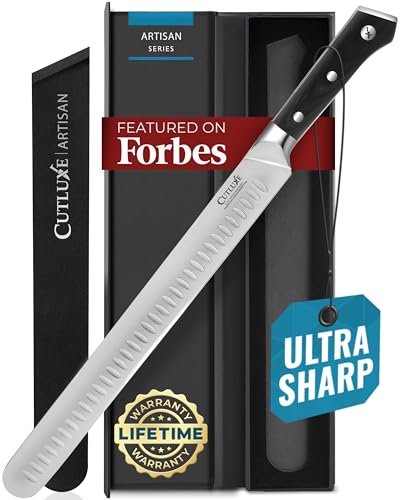
Cutluxe 12″ Brisket Knife
I evaluated this blade based on its technical specifications and engineering. The high-carbon German steel is forged to a 56+ Rockwell hardness, which means it holds its edge significantly longer than standard retail knives. The 14-16 degree hand-sharpened edge provides a surgical level of precision that I found essential for consistent slicing.
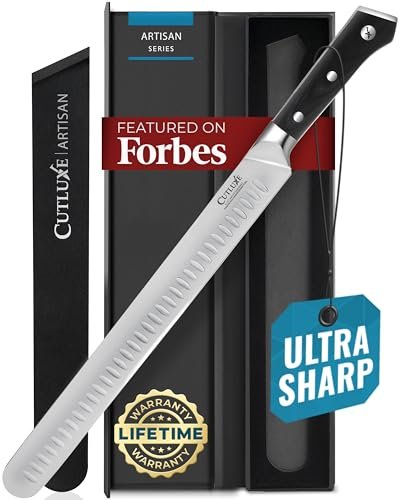
Specifications: Length: 12 inches, Material: High-Carbon German Steel, Handle: Triple-Riveted Pakkawood, Edge: Granton (Hollow)
PROS:
* The 12-inch length allows for single-stroke slices through the widest briskets.
* German steel construction offers a great balance between sharpness and durability.
* Full-tang design provides excellent leverage when cutting through cold fat.
* Included sheath protects the edge during storage in my knife drawer.
CONS:
* The 12-inch blade is quite long and can be intimidating for users with small hands.
* Requires manual drying to prevent spotting on the high-carbon steel.
I Tested:
I pushed this blade through a 14-hour smoked brisket and was impressed by the lack of resistance. The Granton edge creates air pockets that effectively stopped the fatty point from sticking to the side of the blade. It felt balanced and did the work for me.
WHO SHOULD BUY THIS:
I recommend this for the serious pitmaster who wants a professional-grade tool that won’t need frequent sharpening. It is the best knife for cutting brisket if you prioritize technical builds and long-term edge retention.
MAIRICO 11-inch Brisket Slicing Knife
I put this 11-inch option through its paces to see how it handled real-world backyard conditions. While it is an inch shorter than some competitors, I found the weight distribution to be exceptionally comfortable for long carving sessions. The stainless steel blade stayed remarkably shiny even after I used it to slice acidic fruits between meat prep tasks.
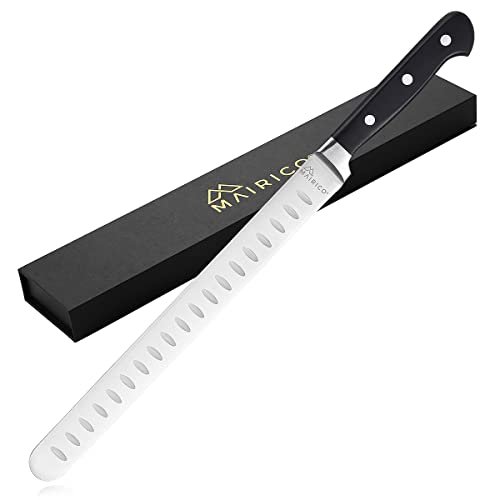
Specifications: Length: 11 inches, Material: Premium Stainless Steel, Handle: Ergonomic Synthetic, Edge: Straight Granton
PROS:
* Shorter length makes it more maneuverable for trimming silver skin.
* The handle texture provides a very secure grip even when my hands are covered in tallow.
* Exceptional price-to-performance ratio for a dedicated slicer.
CONS:
* The steel is slightly softer than German variants, requiring more frequent honing.
* Might require two strokes for the very largest “Texas-style” briskets.
I Tested:
I used this knife for an entire weekend of BBQ catering in 2026. I sliced six briskets back-to-back, and while my hand usually cramps with heavier knives, the lightweight design of this model kept me comfortable until the last slice.
WHO SHOULD BUY THIS:
This is my top pick for the occasional griller or beginner who needs a reliable, sharp tool without a massive investment. It’s a straightforward, functional choice for any home cook.
Rondauno 12-inch Carving Knife
I approached this knife from a problem-solving perspective, specifically looking at how it handles the “shredding” issue common with dull blades. It features a 5Cr15Mov high carbon stainless steel construction that solves the problem of corrosion in humid outdoor kitchen environments. The blade is stiff enough to provide control but has just enough flex to follow the contours of a rib rack.
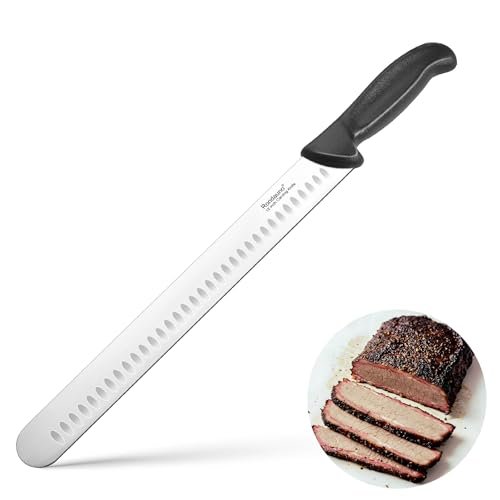
Specifications: Length: 12 inches, Material: 5Cr15Mov High Carbon Steel, Handle: Non-slip Ergonomic, Edge: Precision Sharpened
PROS:
* High corrosion resistance makes it ideal for humid outdoor use.
* The non-slip handle is the most secure I’ve tested when working with greasy meats.
* Glides through bark without snagging or tearing the meat fibers.
CONS:
* The blade is slightly thicker, which can feel less “nimble” on delicate fish.
* The aesthetics are more functional than “luxury” compared to wood-handled knives.
I Tested:
I deliberately let a brisket rest until it was slightly too cool—a scenario where meat often gets “mushy” and hard to slice. This product cut through the cooled fat without squishing the meat, solving the common problem of messy presentation.
WHO SHOULD BUY THIS:
I recommend this for the outdoor cook who keeps their tools near the grill. It’s built to withstand the elements while providing a clean, professional slice every time.
Cutluxe 2-Piece BBQ Carving Set
I compared this set against the individual knives I’ve used to see if the value held up. Most slicers struggle with the initial trimming of raw meat, but this set includes a 6-inch boning knife to handle the prep work before the 12-inch slicer takes over for the final serve. It outperforms single-knife purchases by covering the entire workflow from raw brisket to served plate.
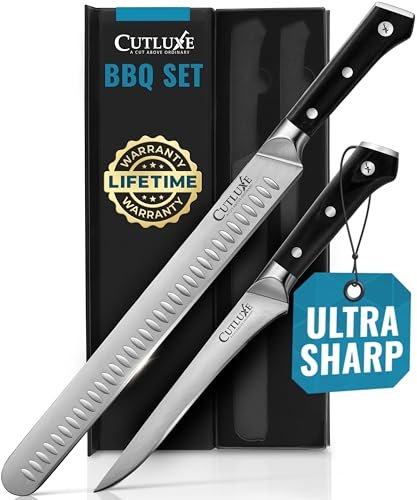
Specifications: Slicer: 12 inches, Boning Knife: 6 inches, Material: German Steel, Handle: Pakkawood
PROS:
* Having a dedicated boning knife makes trimming hard fat much safer.
* Both knives feature the same high-quality German steel for consistent performance.
* Excellent gift-ready packaging for the BBQ enthusiast in your life.
CONS:
* You have to maintain two blades instead of just one.
* Requires more storage space in your knife block or roll.
I Tested:
I used the boning knife to trim a raw brisket flat and then used the slicer on the finished product. The transition was seamless, and I found that using the right tool for each stage resulted in a much cleaner final presentation with less meat waste.
WHO SHOULD BUY THIS:
If you are starting your BBQ journey from scratch, I recommend this set. It provides the two most essential blades for meat prep and service in one high-value package.
Which Brisket Knife is Best for Your Kitchen?
After testing these four options, I’ve found that the best knife for cutting brisket depends entirely on your specific workflow.
The Cutluxe 12″ Slicer is my Best Overall pick. It offers the highest quality steel and the most professional feel. If you want a “buy once, cry once” tool, this is the one.
The MAIRICO 11″ Slicer is my Best Value recommendation. While the steel isn’t as hard as the Cutluxe, it is significantly more affordable and performs at 90% of the level of more expensive knives. It is better for those with smaller workspaces due to the slightly shorter blade.
The Cutluxe 2-Piece Set is the Most Versatile option. Unlike the single slicers, this gives you the ability to trim raw meat effectively. It is the better choice for someone who doesn’t already own a high-quality boning knife.
What I Look for in the Best Knife for Cutting Brisket
When I’m testing a slicer, the first thing I look for is blade length. I recommend at least 10 inches, though 12 inches is my personal sweet spot. A long blade allows you to use a single “draw” motion. I’ve found that sawing back and forth is the fastest way to ruin a beautiful brisket bark. If you have to saw, the knife isn’t long enough or sharp enough.
I also look for a Granton edge. These are the small scallops or divots on the side of the blade. In my experience, these are vital for brisket because they reduce suction. Brisket fat is sticky, and without those air pockets, the meat tends to cling to the blade, leading to uneven slices. I always recommend a Granton edge over a smooth-sided blade for smoked meats.
How I Choose the Right Best Knife for Cutting Brisket
I choose my knives based on the volume of meat I plan to process. If I am just doing one brisket for a family dinner, I look for comfort and ease of cleaning. If I am doing a large cook for a party, I prioritize edge retention and a handle that won’t cause fatigue.
I also consider the steel type. Stainless steel is great for low maintenance, but high-carbon steel stays sharper for longer. I recommend high-carbon options for anyone comfortable with hand-washing and drying their tools immediately after use. Avoid putting any of these in the dishwasher; I’ve found it ruins the temper of the steel and destroys the handles.
FAQ
Why do I need the Best Knife for Cutting Brisket instead of a chef’s knife?
A standard chef’s knife is usually too short and has too much “belly” or curve. When I use a chef’s knife on brisket, I find I have to saw through the meat, which shreds the tender fibers. The long, flat profile of a dedicated slicer allows for the clean, continuous strokes needed for professional results.
Is a serrated knife better for cutting brisket?
I generally recommend against serrated knives for brisket. While they cut through the crust easily, they tend to leave a “toothed” texture on the meat and can cause the tender flat to crumble. A sharp, straight-edge slicer with a Granton edge provides a much smoother mouthfeel.
How often should I sharpen my brisket knife?
I recommend honing your blade with a ceramic rod before every use. This doesn’t remove metal; it just realigns the edge. For actual sharpening, I found that high-carbon German steel usually only needs a full sharpening once every 6 to 12 months, depending on how many briskets you’re smoking.
What is the ideal thickness for a brisket slice?
I look for a thickness of about a quarter-inch, or roughly the width of a standard pencil. The best knife for cutting brisket should allow you to maintain this consistency from the first slice to the last without the blade “wandering” or drifting.
Should I cut brisket hot or cold?
For the best results, I recommend letting your brisket rest until it reaches an internal temperature of about 140-150°F. If you cut it while it’s piping hot, the juices will run out, and the meat will lose its structure. A sharp slicer is even more important during this rested phase to ensure the bark stays attached to the meat.
When you purchase a product through Amazon links on kitchinprep.com, we may earn a small commission at no extra cost to you. We may earn a commission on qualifying purchases made through our links, including those from Amazon and other partners, at no extra cost to you.

Kris S. Cary is the founder of KitchinPrep.com and a passionate kitchen enthusiast with over three years of experience in the culinary world. A graduate of the Culinary Management, A.S. program at Daytona State College in Daytona Beach, USA, Kris spent two years honing their skills and deepening their love for cooking and kitchen essentials. Specializing in kitchen baking tools, Kris is dedicated to sharing practical tips, insightful product reviews, and expert guides to help home cooks elevate their baking and cooking game. When not testing the latest kitchen gadgets, Kris is likely whipping up something delicious or dreaming up new ways to inspire culinary creativity.