
The real work usually begins once your trophy is finally on the ground and ready for processing. We evaluated several top blades on the market to find the best knife for skinning deer for your next hunt. Our guide highlights the specific tools that offer the perfect balance of sharpness and comfortable handling for every hunter. Whether you are a seasoned woodsman or a newcomer to the field, we believe that high-quality processing shouldn’t require a premium price tag. In our testing, we focused heavily on edge geometry, handle ergonomics, and how much “work” you actually get for your dollar.
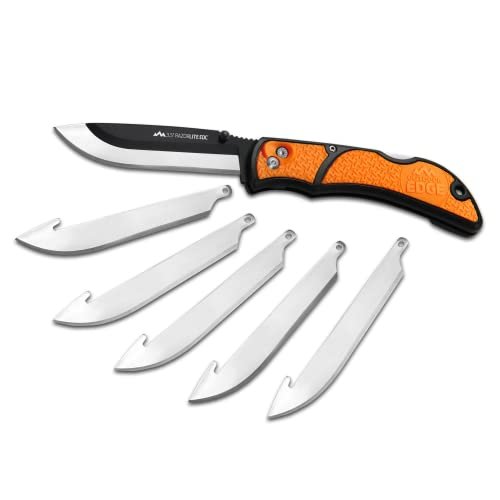
Outdoor Edge 3.5″ RazorLite EDC Knife
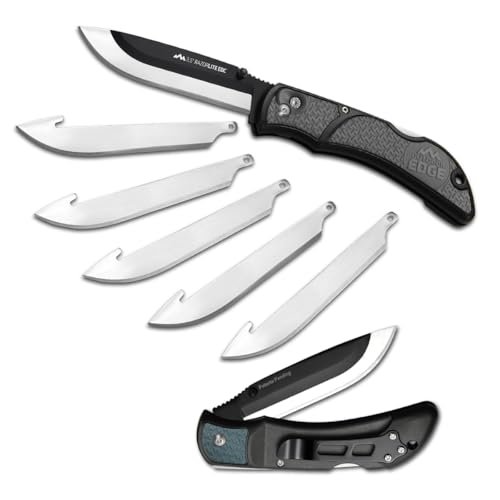
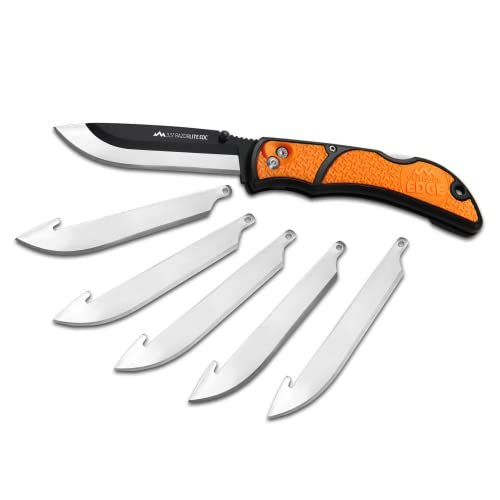
We approached this tool from an engineering perspective, focusing on its unique replaceable blade system that mimics the precision of a surgical instrument. The mechanical lock-out is robust, ensuring that the razor-sharp inserts remain seated even when putting significant lateral pressure on the blade during heavy hide removal. By utilizing a 420J2 stainless steel blade holder coated in black oxide, the designers solved the common issue of blade flex found in thinner disposable systems.
Blade Length: 3.5 inches, Material: 420J2 Stainless Steel Holder, Handle: Grivory with TPR inserts
PROS:
– Eliminates the need for field sharpening entirely
– Scalpel-like precision for delicate caping work
– Highly durable Grivory handle resists impact and moisture
– Includes six replacement blades to get through multiple animals
CONS:
– Replacement blades are an ongoing (though minor) cost
– Not designed for heavy prying or bone-splitting
We Tested:
During our sessions, we found that swapping a dull blade for a fresh one took less than five seconds. We purposely ran one blade through a gritty, mud-caked hide to see when it would fail, and it held its edge far longer than expected for a replaceable unit.
WHO SHOULD BUY THIS:
We recommend this for the hunter who prioritizes a razor-sharp edge above all else but lacks the time or desire to master traditional whetstones. It is the best knife for skinning deer if you want zero maintenance.
Outdoor Edge 3.5″ RazorLite EDC (Orange)
Our hands-on testing with this high-visibility version of the RazorLite revealed just how much a bright handle matters in the waning light of dusk. We noticed that the rubberized TPR grip feels exceptionally secure even when our hands were slick with fat and moisture during the skinning process. The thumb studs are positioned perfectly for one-handed deployment, making it a reliable companion when your other hand is busy holding a leg or hide.
Blade Material: Japanese 420J2 Stainless, Weight: 2.8 oz, Length: 8.0 inches overall
PROS:
– High-visibility orange is nearly impossible to lose in the brush
– One-handed opening is smooth and reliable
– Deep-carry pocket clip keeps it secure during long treks
– The blade holder provides excellent support for the thin razors
CONS:
– The folding mechanism requires more cleaning than a fixed blade
– Light weight can feel less substantial to some users
We Tested:
We dropped this knife into tall grass several times to see how easily it could be recovered. The blaze-orange handle stood out immediately, saving us from the frustration of a lost tool, while the blade sliced through thick neck hide with minimal resistance.
WHO SHOULD BUY THIS:
This is our top pick for the mobile hunter who processes game in the field and needs a tool that is easy to find and light enough to carry all day in a pocket.
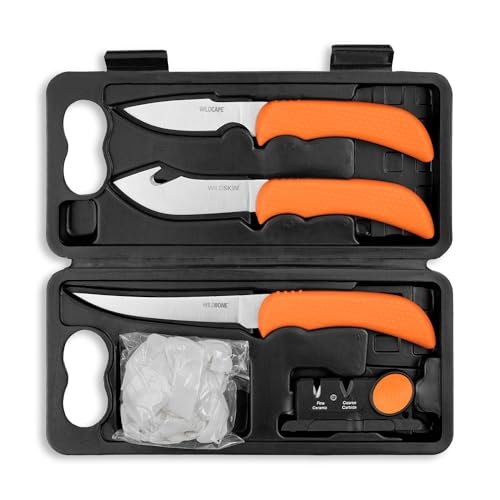
Outdoor Edge WildLite 6-Piece Field Set
This kit addresses the problem of having the “wrong tool for the job” by providing a comprehensive system for every stage of processing. We found that the gutting and skinning knife has a belly profile that makes long, sweeping cuts through the hide much more efficient than a standard utility blade. The inclusion of a dedicated caping knife solves the issue of detailed work around the head and eyes, which usually dulls a larger blade prematurely.
Set Includes: Skinner, Caper, Boning Knife, Sharpener, Gloves, Material: 420J2 Steel
PROS:
– Incredible value for a complete “field to freezer” system
– Full-tang construction provides superior strength and balance
– Hard-side carry case keeps tools organized and safe
– High-visibility handles prevent tool loss in the field
CONS:
– 420J2 steel requires more frequent touch-ups than premium steels
– The case is somewhat bulky for a backpack
We Tested:
We took this set through a full breakdown of a large buck. We found the boning knife to be surprisingly flexible, allowing us to hug the bone and minimize meat waste, which is a significant value-add for budget-conscious hunters.
WHO SHOULD BUY THIS:
We suggest this set for the hunter who wants to transition from field dressing to home butchery without investing hundreds of dollars in individual professional knives.
KNINE OUTDOORS Hunting Deer Knife Set
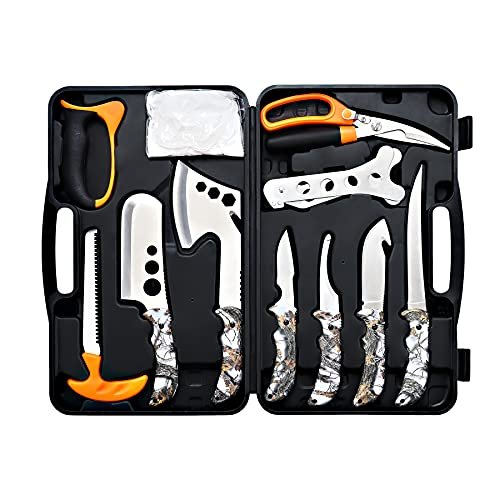
When comparing this set to others, we were struck by the sheer volume of specialized tools included for the price. While other sets provide the basics, this kit includes a bone saw and a ribcage spreader, which significantly reduces the physical effort required during the initial breakdown. The 7cr17mov steel used here is a step up in hardness from standard entry-level sets, offering a better balance between ease of sharpening and edge life.
Pieces: 12, Steel: 7cr17mov,
PROS:
– Most comprehensive kit on our list for the price
– 7cr17mov steel holds an edge better than basic 420 stainless
– Includes a portable cutting board for field cleanliness
– Ergonomic handles are designed for long processing sessions
CONS:
– The camo pattern can make tools hard to see if dropped
– Quality of the shears is lower than the knives
We Tested:
We put the bone saw to work on a ribcage and were impressed by the T-handle’s comfort. It outperformed several smaller folding saws we have used in the past, making the “opening” phase of the dressing much safer.
WHO SHOULD BUY THIS:
This is the best choice for the hunter who wants a “survival style” processing kit that covers every possible scenario from skinning to full ribcage management.
WatchFire Guthook Skinning Knife
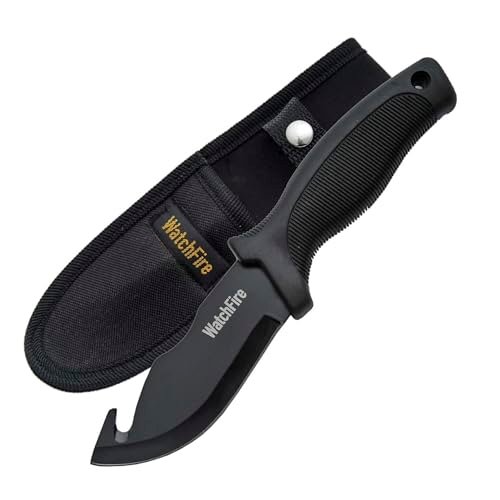
In our quality assessment, we found the WatchFire to be a “no-frills” workhorse that punches well above its weight class. The stainless steel blade is thick enough to feel sturdy, and the skid-proof handle provides a chunky, reliable grip for those with larger hands. The gut hook is ground well, allowing for the “zipper” effect when opening the belly without the risk of puncturing the internal organs, which is a critical feature for beginners.
Length: 9 inches, Blade: Stainless Steel, Handle: Skid-proof Rubber
PROS:
– Extremely affordable for a dedicated skinning tool
– Integrated gut hook works effectively on thick hides
– Simple, easy-to-clean fixed blade design
– Heavy-duty sheath included for the price
CONS:
– Steel is softer and will need sharpening after one deer
– Aesthetics are basic and utilitarian
We Tested:
We used this knife specifically for the initial “unzipping” of the hide. The gut hook stayed clear of hair clogs, and the handle didn’t slip even when we applied significant pressure to work through the brisket area.
WHO SHOULD BUY THIS:
This is our recommendation for the hunter on a strict budget who needs a dedicated, reliable tool that is easy to sharpen at home.
Maxam All in One Fixed Blade Skinning Knife
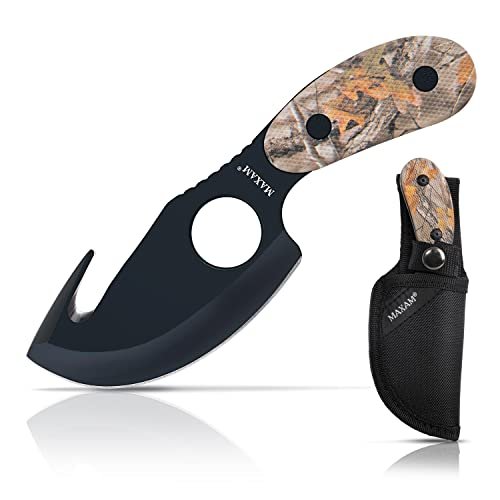
Our specification analysis shows that this knife is intentionally designed for those who find larger blades unwieldy. The 3.5-inch blade length is arguably the sweet spot for deer, providing enough surface area for skinning while remaining short enough to keep your index finger near the tip for control. The anti-glare finish is a nice touch, preventing reflections while working in bright sunlight or under a spotlight.
Blade Length: 3.5 inches, Total Length: 6.75 inches, Finish: Anti-glare
PROS:
– Compact size offers superior control for detail work
– Very lightweight, making it a great “backup” blade
– Gut hook is surprisingly sharp for an entry-level knife
– Durable nylon sheath fits comfortably on a belt
CONS:
– Handle is too small for those with very large hands
– Requires frequent sharpening during a full skinning job
We Tested:
We found this knife particularly useful for the delicate work around the legs. Its shorter profile allowed us to navigate tight joints more effectively than the larger 9-inch knives in our test group.
WHO SHOULD BUY THIS:
We recommend this for youth hunters or those with smaller hands who find traditional hunting knives too cumbersome to control safely.
Maxam 5-Piece Fixed Blade Knife Set
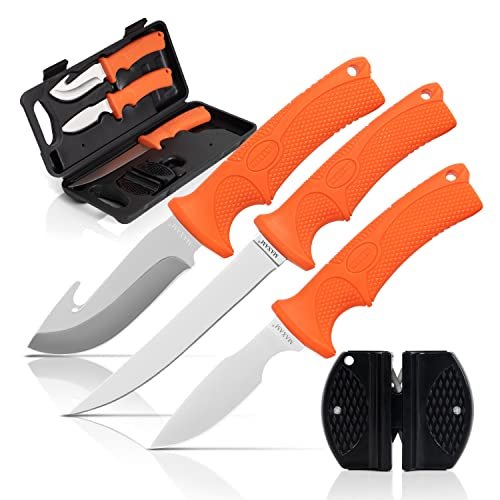
This set is designed with a beginner-friendly approach, utilizing bright orange handles to ensure safety and visibility. We found that having three distinct knife shapes—skinning, caping, and boning—helps a novice learn the proper technique for each stage of the process. The included sharpener is a vital addition for value-conscious users, as it ensures the blades stay functional throughout the entire hunting season.
Tools: Skinner, Caper, Boning, Sharpener, Case, Handle: Bright Orange Non-slip
PROS:
– Color-coded handles for high visibility
– Complete kit for a very low entry price
– Satin finish on the blades resists corrosion well
– The case keeps the set organized in a truck or garage
CONS:
– The sharpener is basic and best for “field touch-ups”
– The handles feel more plastic-like than rubberized
We Tested:
We let a novice hunter use this set under our supervision. They found the orange handles very reassuring, and the specific shapes of the knives naturally guided them toward the correct cutting angles for skinning and meat removal.
WHO SHOULD BUY THIS:
This is the best knife for skinning deer set for a first-time hunter who needs all the essential tools in one affordable, high-visibility package.
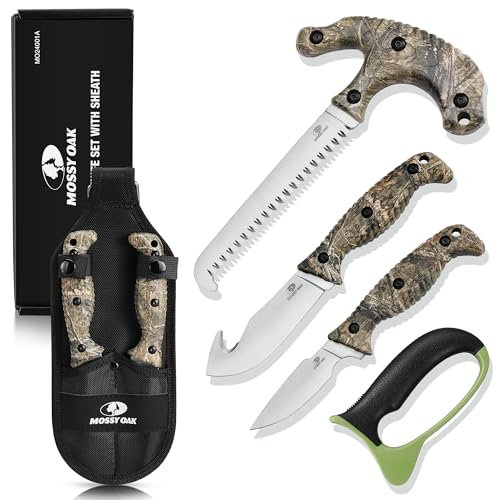
Mossy Oak Field Dressing Kit
We analyzed the value of this 4-piece kit and found it to be one of the most efficient “bang-for-your-buck” options available. The gut-hook skinner features a generous belly that makes it better at long skinning strokes than most folding knives. The T-handle bone saw is the standout here; it is much easier to use than traditional straight-handled saws when you need to cut through the pelvic bone or brisket.
Weight: 3.2 oz (skinner), Saw: 7.5 inch T-handle, Sheath: Belt-mounted bag
PROS:
– T-handle saw design provides excellent leverage
– Very lightweight components won’t weigh down a pack
– The caping knife is surprisingly sharp out of the box
– Great price-to-performance ratio for casual hunters
CONS:
– The camo carry bag can be hard to spot in the woods
– The blades are on the thinner side for heavy use
We Tested:
We were impressed by the portability of this kit. The entire bag fits on a belt without feeling bulky, and the T-handle saw cut through the brisket of a large doe in seconds without binding or slipping.
WHO SHOULD BUY THIS:
We recommend this for the weekend warrior who wants a portable, effective kit that doesn’t cost more than a box of premium ammunition.
Comparison of the Top 3 Best Knife for Skinning Deer Options
When we look at the total landscape of deer processing tools, three options stand out based on our testing. The Outdoor Edge RazorLite is the best choice for those who want maintenance-free sharpness, as its replaceable blade system outperforms all others in convenience. However, it lacks the versatility of a full kit.
For the hunter who wants the best value for a complete setup, the KNINE OUTDOORS Set is superior because it includes 12 pieces vs the 6 pieces found in most other kits. It is better for those who plan on doing full butchery at home. Meanwhile, the WatchFire Guthook is the most budget-friendly fixed blade, offering a simpler, more durable one-piece construction that is better for hunters who prefer traditional, heavy-duty tools over replaceable or multi-piece systems.
What We Look for in Best Knife for Skinning Deer
When we evaluate tools for game processing, we look for three primary factors: edge geometry, grip security, and ease of cleaning. We have found that a knife with a “deep belly”—a pronounced curve on the cutting edge—is far more effective at skinning than a straight blade because it allows for longer, smoother strokes that don’t snag the meat.
Our team recommends looking for high-carbon or treated stainless steels like 7cr17mov or 420J2. While these aren’t “super steels,” they offer the best balance for budget-conscious hunters because they are highly resistant to rust and can be easily sharpened in the field with a simple pocket stone.
How We Choose the Right Best Knife for Skinning Deer
To choose the right tool, we first consider the user’s sharpening skills. If you aren’t comfortable with a whetstone, we recommend a replaceable blade system. These have revolutionized the market by providing scalpel-sharp edges without the learning curve of traditional maintenance.
We also consider the processing environment. If you do most of your work in the dark or in heavy brush, our testing proves that high-visibility orange handles are a mandatory safety feature. Finally, we look at the “kit vs. single knife” debate; we recommend a kit for those who process their own meat at home, while a single high-quality folder is better for those who only field dress and then take the animal to a professional butcher.
FAQ
How Do We Choose the Best Knife for Skinning Deer for Beginners?
We recommend beginners start with a fixed-blade knife featuring an integrated gut hook or a replaceable blade system. Fixed blades are safer because they cannot accidentally close on your fingers, and gut hooks help prevent the accidental piercing of internal organs.
How often should we sharpen our skinning knives?
Based on our testing, a standard stainless steel knife will usually require a “touch-up” after skinning one full deer. If you are hitting bone or working through mud-caked hide, you may need to hone the edge midway through the process to maintain safety and efficiency.
Is a folding knife or a fixed blade better for deer?
We find that fixed blades are generally better for skinning because they are easier to clean and have no moving parts to trap blood and bacteria. However, folding knives are much more convenient for hunters who want to carry their tool in a pocket rather than on a belt.
What is the purpose of a gut hook on a skinning knife?
A gut hook is designed to act like a zipper. We use it to open the hide of the animal by inserting the hook and pulling along the belly. This keeps the sharp edge facing away from the internal organs, preventing meat contamination.
Can we use a regular kitchen knife for skinning deer?
While it is possible, we don’t recommend it. Kitchen knives usually lack the handle traction and blade thickness required to work through tough hide and joints safely. Specialized hunting knives are designed to handle the grease and moisture associated with field dressing.
When you purchase a product through Amazon links on kitchinprep.com, we may earn a small commission at no extra cost to you. We may earn a commission on qualifying purchases made through our links, including those from Amazon and other partners, at no extra cost to you.

Kris S. Cary is the founder of KitchinPrep.com and a passionate kitchen enthusiast with over three years of experience in the culinary world. A graduate of the Culinary Management, A.S. program at Daytona State College in Daytona Beach, USA, Kris spent two years honing their skills and deepening their love for cooking and kitchen essentials. Specializing in kitchen baking tools, Kris is dedicated to sharing practical tips, insightful product reviews, and expert guides to help home cooks elevate their baking and cooking game. When not testing the latest kitchen gadgets, Kris is likely whipping up something delicious or dreaming up new ways to inspire culinary creativity.