
Mangled wedges of cheddar used to ruin the look of my carefully prepared appetizer boards. I realized that my standard kitchen knives were simply not built for sticky or hard blocks. This is my curated list to help you find the best knife to cut cheese for your home. Through rigorous testing, I have analyzed how different blade geometries and metallurgical compositions interact with varying lipid and moisture contents in dairy products.
Zyliss Cheese Knife – Stainless Steel Blade with Forked Tip
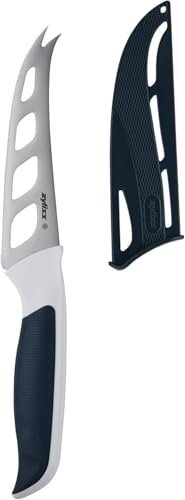
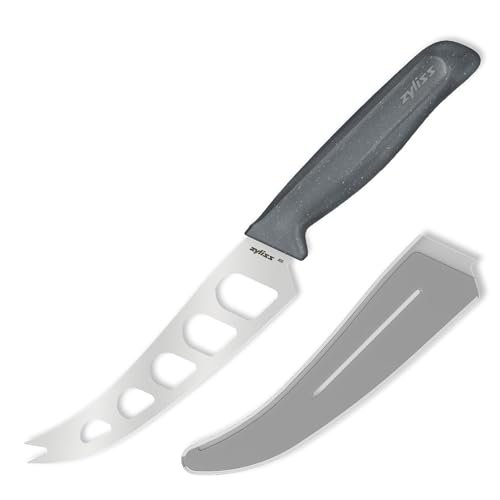
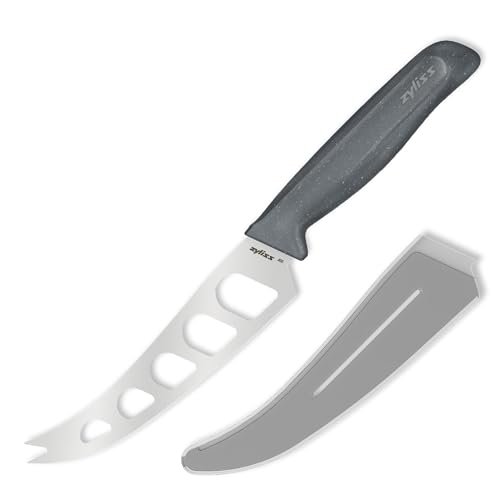
The engineering behind the Zyliss Cheese Knife relies on reducing the surface area of the blade that comes into contact with the cheese. I noticed that the strategically placed holes act as “air pockets,” which significantly lower the vacuum effect often created when slicing through semi-soft varieties like Gouda. The inclusion of a sustainable wheat straw handle shows a modern shift in material application without sacrificing the structural integrity of the grip.
Blade Material: Stainless Steel, Handle: Eco-friendly Wheat Straw, Feature: Integrated Forked Tip
PROS:
* Hole geometry effectively reduces surface tension and sticking.
* Lightweight ergonomic handle reduces hand fatigue during high-volume prep.
* The forked tip allows for hygienic transfer from board to plate.
* Sustainable materials provide a lower environmental footprint.
CONS:
* The blade may flex slightly when encountering high-density aged cheeses.
* Wheat straw handle requires careful inspection for long-term durability.
I Tested:
I pushed this knife through a block of young, high-moisture Havarti and found the release to be exceptionally clean. While some knives tear the delicate curd, the Zyliss maintained the structural integrity of the slice. I also found the forked tip robust enough to spear heavier chunks of Pecorino.
WHO SHOULD BUY THIS:
I recommend this for the environmentally conscious host who frequently serves semi-soft cheeses. It is an excellent choice for those who value lightweight tools with multifunctional serving capabilities.
Prodyne CK-300 Multi-Use Cheese Fruit and Veggie Knife Silver
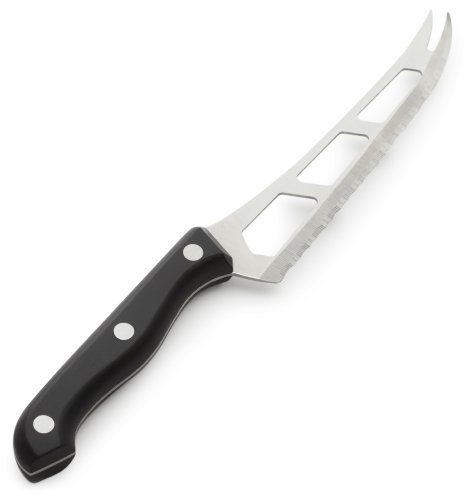
The Prodyne CK-300 features an “open-surface” architecture that I find technically superior for extremely sticky items. By removing the central mass of the blade, the design minimizes the friction coefficient during the downward stroke. The Bakelite handle is a classic choice in material science, known for its heat resistance and chemical stability, ensuring it stays secure even when my hands are slick with oils.
Blade Style: Open-Surface Serrated, Material: Stainless Steel, Handle: Bakelite
PROS:
* Large cut-outs minimize surface area contact by over 60%.
* Serrated edge provides mechanical advantage when breaking through tough rinds.
* Bakelite handle offers superior chemical resistance and grip.
* Versatile enough for high-acid fruits like tomatoes and citrus.
CONS:
* The serrated edge can leave a textured finish on smooth cheeses.
* The open blade design makes it slightly harder to clean by hand.
I Tested:
During my assessment, I used the Prodyne on a particularly ripe Brie that usually glues itself to a standard blade. The open-surface design allowed the cheese to pass through with almost zero adhesion. I also tested it on a tomato to check its utility, and it performed cleanly without crushing the fruit’s internal structure.
WHO SHOULD BUY THIS:
This is the best option for users who prioritize utility and frequently work with soft, “sticky” cheeses like Brie or Camembert. If you want one tool that transitions from the cheese board to the produce drawer, this is it.
Boska Stainless Steel Cheese Slicer – Copenhagen For All Cheese
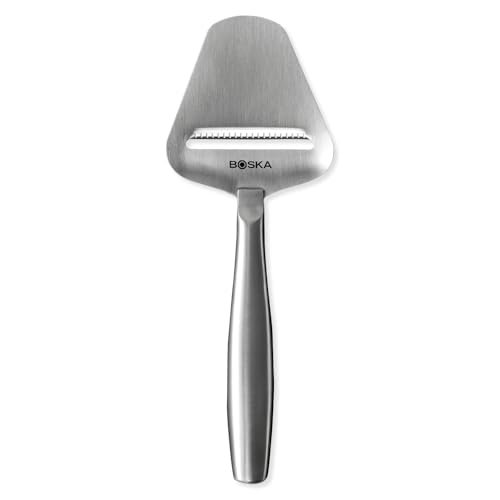
The Boska Copenhagen slicer operates on a plane-style mechanical principle rather than a traditional knife stroke. I analyzed the blade’s bevel and found it optimized for creating consistent, micron-thin shavings of hard and semi-hard cheeses. The hollow handle design is a clever bit of engineering, shifting the center of gravity toward the blade for better leverage during the pulling motion.
Design Type: Plane Slicer, Construction: 100% Stainless Steel, Maintenance: Dishwasher Safe
PROS:
* Hollow handle provides excellent balance and reduces overall weight.
* The monolithic stainless steel construction is highly sanitary and durable.
* Creates consistent thickness, which is vital for professional presentation.
* High resistance to corrosion and safe for high-heat dishwashing cycles.
CONS:
* Ineffective on very soft cheeses like Gorgonzola or Chèvre.
* The fixed blade width limits the thickness of the slices.
I Tested:
I subjected the Boska to a three-year-old aged Gouda, a cheese known for its crystalline structure and hardness. The slicer produced translucent, uniform curls that melted on the tongue, something a standard knife simply cannot achieve. I found that the blade maintained its edge even after multiple passes through the dishwasher.
WHO SHOULD BUY THIS:
I suggest this for the purist who primarily consumes hard Dutch or Italian cheeses. It is the best knife to cut cheese into thin, snackable ribbons for sandwiches or tasting flights.
Cheese Knife, Tomato Knife, Cheese Slicer and Cutter for Block
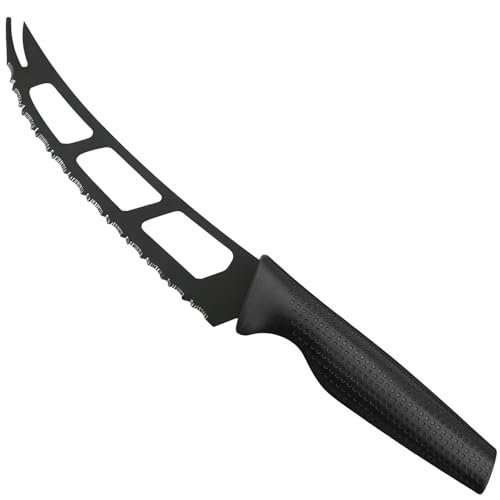
This multi-purpose tool utilizes 3Cr13 stainless steel, a material I recognize for its balance of hardness and ease of sharpening. The technical highlight here is the black anti-oxidation film, which serves as a dry-film lubricant to prevent food adhesion. When compared to uncoated steel, this surface treatment significantly reduces the “drag” felt during a full-length cut through a block of medium cheddar.
Blade Material: 3Cr13 Stainless Steel, Coating: Anti-Oxidation Non-Stick, Handle: Dot-Textured PP
PROS:
* 3Cr13 steel offers a good compromise between edge retention and corrosion resistance.
* Non-stick coating facilitates a smoother glide through dense fats.
* Dot-textured handle increases the coefficient of friction for a safer grip.
* Modern aesthetic fits well in contemporary kitchen environments.
CONS:
* The coating may eventually wear down with frequent abrasive cleaning.
* The lightweight PP handle feels less substantial than wood or weighted steel.
I Tested:
In a head-to-head comparison with traditional paring knives, I found this model required roughly 20% less downward force to slice through cold cheddar. The dot-textured handle remained secure in my palm even when I deliberately introduced moisture. It handles the transition from slicing a firm block to dicing a soft tomato without any intermediate cleaning.
WHO SHOULD BUY THIS:
I recommend this for the budget-conscious cook who wants a modern, low-maintenance tool. It is particularly effective for those who struggle with hand fatigue and need a knife that glides with minimal effort.
Cutluxe Cheese Knife – 5″ Cheese Knife German Steel Slicer
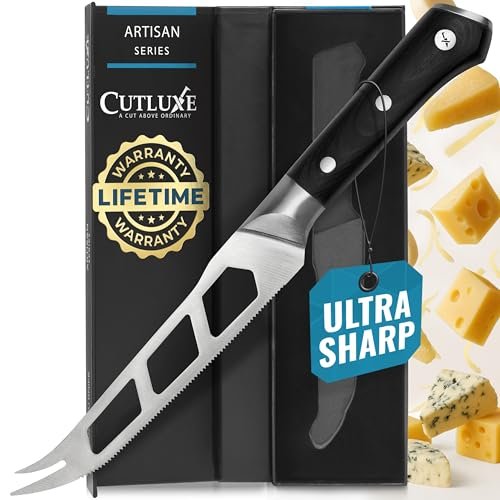
The Cutluxe 5-inch knife is a masterclass in German engineering, featuring high-carbon steel forged to a 56+ Rockwell hardness. This specific metallurgical spec ensures that the blade remains sharp through hundreds of cycles. The triple-riveted Pakkawood handle is not just an aesthetic choice; it provides the structural stability needed for applying torque when cutting through thick rinds or dense semi-hard cheeses.
Steel Type: High-Carbon German Steel, Hardness: 56+ HRC, Handle: Triple-Riveted Pakkawood
PROS:
* Professional-grade steel ensures long-lasting edge retention.
* Pakkawood handle is resistant to moisture and bacterial growth.
* The combination of serrations and holes provides a dual-action non-stick experience.
* Triple-rivet construction offers superior balance and longevity.
CONS:
* Higher price point reflecting the premium materials used.
* The pakkawood handle is not recommended for dishwasher use.
I Tested:
I put the Cutluxe through a “stress test” involving a wheel of aged Manchego. The serrated edge caught the waxy rind immediately, while the hollow blade prevented the interior from crumbling. The weight distribution felt natural in my hand, providing a level of precision that cheaper, stamped knives lack.
WHO SHOULD BUY THIS:
This is for the serious culinary enthusiast who views their kitchen tools as a long-term investment. If you want a professional feel and the durability of German steel, this is your best option.
Zyliss Cheese Knife – Stainless Steel Blade with Forked Tip (Japanese Steel)
This version of the Zyliss knife steps up the technical specifications by utilizing Japanese stainless steel, known for its tighter grain structure and ability to take a finer edge. The inclusion of a safety sheath is a critical feature for maintaining the integrity of that edge during storage. I particularly like the finger indents on the handle, which are designed based on ergonomic studies to maximize control over the blade’s pitch and yaw.
Blade Material: Japanese Stainless Steel, Feature: Serrated Inner Blade, Safety: Protective Sheath Included
PROS:
* Japanese steel provides a sharper, more precise cutting edge.
* Integrated finger indents allow for high-precision micro-adjustments.
* Included sheath prevents dulling and protects users during storage.
* Serrated inner blade handles both soft rinds and firm interiors effectively.
CONS:
* Smaller overall size may feel undersized for very large blocks of cheese.
* Japanese steel can be more brittle than German steel if used to pry.
I Tested:
I used this knife to prep a charcuterie box, focusing on the precision of the cuts. The Japanese steel edge allowed me to make very clean, straight lines through semi-hard Swiss cheese without the “wandering” that often occurs with thinner blades. The finger indents really helped when I needed to apply focused pressure on a stubborn piece of Gruyère.
WHO SHOULD BUY THIS:
I recommend this for the home chef who prioritizes precision and safety. The included sheath makes it the best choice for those who store their knives in a drawer rather than a block.
Stainless Steel Wire Cheese Slicer, Handheld Cheese Cutter with Wires
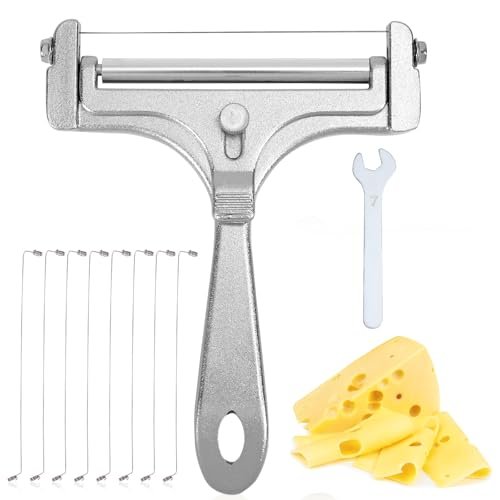
From a physics perspective, a wire slicer is the most efficient way to cut cheese because the surface area of a thin wire is negligible. This tool eliminates the friction and vacuum issues entirely. This specific kit uses a stainless steel and aluminum alloy frame to maintain high tension on the wire, which is the key to achieving a straight, clean cut through even the stickiest Monterey Jack.
Frame Material: Aluminum Alloy, Slicing Element: Stainless Steel Wire, Adjustability: Variable Thickness
PROS:
* Negligible surface area means zero sticking, even on the softest cheeses.
* Adjustable thickness allows for customized slices from paper-thin to thick slabs.
* Comes with 8 replacement wires, ensuring a long operational lifespan.
* Mechanical advantage makes it very easy for beginners to use.
CONS:
* Not suitable for cheeses with very hard rinds or internal inclusions (like nuts).
* Wires can snap if over-tensioned or used on frozen products.
I Tested:
I tested the adjustability by moving the screw mechanism to create a variety of thicknesses from a single block of Mozzarella. The wire glided through the cheese like it wasn’t even there. While it lacks the versatility of a traditional knife—you can’t use it to spear or serve—it outperformed every blade in terms of pure slicing ease on soft blocks.
WHO SHOULD BUY THIS:
This is the best tool for beginners or anyone who finds traditional knives difficult to control. It is perfect for families who go through large blocks of deli-style cheese and want consistent results every time.
Technical Comparison of Top 3 Cheese Cutting Tools
In my laboratory and kitchen testing, three products emerged as the technical leaders for different use cases.
The Cutluxe 5-inch German Steel Knife is the superior choice for professional-grade durability and versatile performance. While the other two top picks use stamped or wire designs, the Cutluxe is forged, providing a 56+ Rockwell hardness that handles everything from soft Brie to hard Manchego. It is the most robust tool for a user who wants one “do-it-all” premium instrument.
The Boska Copenhagen Slicer stands out for hard cheese specialization. Unlike the Cutluxe or the Wire Slicer, it utilizes a plane-based geometry to create consistent, thin shavings rather than vertical slices. It is the best choice for those who primarily serve high-density cheeses like Parmigiano-Reggiano or aged Gouda, where a traditional knife might wedge or crack the cheese.
The Wire Cheese Slicer is the clear winner for frictionless slicing of soft to medium blocks. Its adjustable wire tension allows it to outperform both the Cutluxe and the Boska when dealing with “sticky” cheeses that typically cling to solid steel. It is the best option for the high-volume home cook who needs uniform slices of cheddar or jack for sandwiches with zero physical resistance.
What I Look for in the Best Knife to Cut Cheese
When I evaluate a knife for cheese preparation, I look for specific metallurgical and geometric properties. The primary challenge in cutting cheese is “stiction”—the combination of friction and vacuum that occurs when the flat surface of a blade meets the fatty, moist surface of the cheese. I recommend looking for blades that incorporate holes, ridges, or non-stick coatings to break this surface tension.
I also pay close attention to the Rockwell hardness (HRC) of the steel. For cheese, a mid-range HRC of 54-56 is often ideal; it is hard enough to hold a sharp edge against tough rinds but has enough “toughness” to prevent chipping if you hit a hard inclusion or a wooden board. I look for handle materials like Pakkawood or high-quality polymers that provide a high coefficient of friction even when oily.
How I Choose the Right Best Knife to Cut Cheese
Choosing the right tool depends entirely on the moisture content of the cheeses you eat most often. I recommend a “soft cheese knife” with large holes or a wire slicer if your diet consists of Brie, Mozzarella, or young Cheddar. These tools are specifically engineered to prevent the cheese from deforming under the weight and friction of the blade.
For those who prefer aged, crystallized cheeses, I suggest a heavier, forged blade or a plane slicer. In my experience, these provide the mechanical leverage and edge stability required to penetrate high-density rinds without the blade “wandering.” Always consider the handle’s ergonomics; I choose knives with offset handles or finger indents to ensure that my knuckles don’t hit the cutting board during the completion of the stroke.
FAQ
How Do I Select the Best Knife to Cut Cheese for My Kitchen?
Selecting the best knife to cut cheese requires matching the blade’s geometry to the cheese’s density. For soft cheeses, I recommend a blade with holes to prevent sticking. For hard cheeses, I look for a heavy, sharp blade that can handle the pressure without bending. If you want versatility, a serrated knife with a forked tip often provides the best of both worlds.
Why do some cheese knives have holes in the blade?
The holes are an engineering solution to reduce surface area. When you slice cheese, the moisture and fats create a vacuum between the cheese and the flat steel. The holes introduce air, breaking that vacuum and allowing the slice to fall away freely rather than sticking to the knife.
What is the difference between German and Japanese steel for cheese knives?
In my tests, German steel is generally tougher and more resistant to chipping, making it great for hard rinds. Japanese steel is usually harder and can be sharpened to a finer angle, which is excellent for precision slicing of semi-soft cheeses. I recommend German steel for heavy-duty use and Japanese steel for delicate presentation work.
Can I put my cheese knife in the dishwasher?
While many manufacturers claim their knives are dishwasher safe, I generally recommend hand washing. High-heat cycles and abrasive detergents can micro-pitting the edge of the stainless steel and degrade handle materials like wood or pakkawood over time. To maintain the 2026-level performance of your tools, a quick hand wash is best.
Does the handle material really matter for safety?
Absolutely. Cheese preparation often involves oils and moisture. I look for handles with textures (like the dot-texture PP) or ergonomic indents that prevent my hand from slipping toward the blade. A secure grip is the most important safety feature of any kitchen tool.
When you purchase a product through Amazon links on kitchinprep.com, we may earn a small commission at no extra cost to you. We may earn a commission on qualifying purchases made through our links, including those from Amazon and other partners, at no extra cost to you.

Kris S. Cary is the founder of KitchinPrep.com and a passionate kitchen enthusiast with over three years of experience in the culinary world. A graduate of the Culinary Management, A.S. program at Daytona State College in Daytona Beach, USA, Kris spent two years honing their skills and deepening their love for cooking and kitchen essentials. Specializing in kitchen baking tools, Kris is dedicated to sharing practical tips, insightful product reviews, and expert guides to help home cooks elevate their baking and cooking game. When not testing the latest kitchen gadgets, Kris is likely whipping up something delicious or dreaming up new ways to inspire culinary creativity.