

Finding a classic blade is tricky when there are hundreds of different handle materials and shapes. We simplified the search to help you discover the best case knife for your pocket. Our team picked these iconic models because they offer the reliability and style we value most. We spent weeks slicing through heavy-duty rope, whittling cedar by the campfire, and performing daily tasks to see which Bradford-made legends truly held their own in a modern world.
Case WR XX Pocket Knife Amber Jigged Bone Russlock

The Russlock is a fascinating piece of engineering that immediately caught our attention during the unboxing process. Its unique profile is defined by the oversized tang lever that allows for a different style of opening than your standard slipjoint. We were impressed by how the amber jigged bone handle provides a secure grip while maintaining that timeless aesthetic.
Blades: Stainless Steel, Length Closed: 4 1/4 Inches, Amber Jigged Bone, Liner Lock Mechanism
PROS:
* Unique one-hand opening capability with the jimped lever.
* Liner lock provides added safety during heavy cutting tasks.
* The amber bone scales are beautifully textured for grip.
* Wider profile feels substantial in the hand.
CONS:
* Requires a bit of practice to master the opening flick.
* Slightly bulkier in the pocket than a standard Trapper.
We Tested:
While repairing a section of garden fencing, we found the Russlock’s locking mechanism to be a lifesaver. We had to cut through thick plastic ties with one hand while holding the mesh in place with the other, and the blade never faltered or felt unstable.
WHO SHOULD BUY THIS:
We recommend this for the user who wants the classic look of a Case knife but prefers the added security of a locking blade. It is ideal for those who often find themselves with only one hand free during DIY projects.
Case XX WR Pocket Knife Yellow Synthetic Trapper Carbon Steel
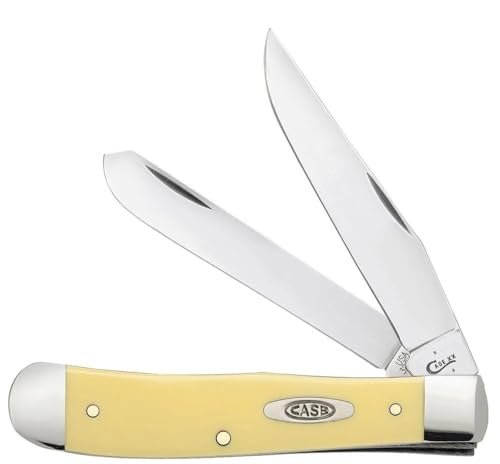
When we first picked up this yellow synthetic model, we immediately felt the heritage of a tool designed for hard work. This is widely considered the best case knife for traditionalists who prefer carbon steel over stainless for its ease of sharpening. The high-visibility handle ensures it won’t get lost in the grass or a cluttered toolbox.
Blades: Chrome Vanadium Steel, Length Closed: 4 1/8 Inches, Clip and Spey Blades, Yellow Synthetic Handle
PROS:
* Chrome Vanadium steel takes an incredibly fine edge quickly.
* Bright yellow handle is nearly impossible to lose in the field.
* Two distinct blade shapes offer versatility for different tasks.
* Develops a beautiful, unique patina over time.
CONS:
* Carbon steel requires regular oiling to prevent rust.
* The synthetic handle lacks the premium feel of bone or wood.
We Tested:
Our team took this knife on a three-day hiking trip where we used the spey blade for food prep and the clip blade for whittling tent stakes. By the end of the trip, the carbon steel had already begun to darken into a seasoned gray, showing off its character and grit.
WHO SHOULD BUY THIS:
This is the workhorse of the group, best suited for farmers, hunters, or anyone who doesn’t mind a little maintenance in exchange for a razor-sharp edge. It is a no-nonsense tool that thrives in rough environments.
Case XX WR Pocket Knife Amber Bone Mini Trapper
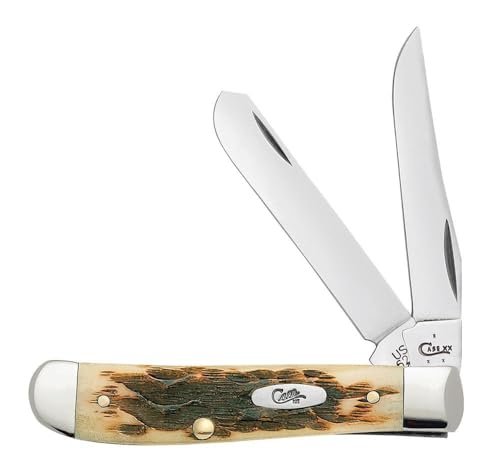
The Mini Trapper solves the common problem of carrying a full-sized multi-blade knife in more formal or urban settings. We noticed right away that this 3.5-inch model disappears into a pocket much better than its larger siblings. Despite its smaller stature, the amber bone handle and dual blades provide enough utility for almost any daily obstacle.
Blades: Stainless Steel, Length Closed: 3 1/2 Inches, Clip and Spey Blades, Amber Jigged Bone
PROS:
* Compact size is perfect for office carry or dress slacks.
* Stainless steel blades are virtually maintenance-free.
* Classic jigged bone aesthetics in a more portable package.
* Excellent snap and tension on both blades.
CONS:
* Handle may feel a bit small for users with very large hands.
* Less leverage for heavy-duty cutting compared to the full-size version.
We Tested:
We carried this model during a busy week of office work and weekend errands. From opening stubborn heat-sealed plastic packaging to slicing an apple at lunch, the mini trapper proved that you don’t need a massive blade to be prepared for the day.
WHO SHOULD BUY THIS:
If you need a reliable blade that won’t bulge in your pocket or draw unwanted attention in public, this is our top choice. It’s the perfect “first Case knife” for someone who values portability over raw power.
Case XX WR Pocket Knife Mini Trapper Caribbean Blue Bone

Comparing this Caribbean Blue version to our other tested models highlighted how much a color choice can change the personality of a knife. While it shares the same core architecture as the traditional trappers, the vibrant blue bone makes it stand out as a modern collector’s piece. We found the fit and finish to be exceptionally tight, even when compared to the amber bone models.
Blades: Stainless Steel, Length Closed: 4 1/8 Inches, Clip and Spey Blades, Caribbean Blue Bone
PROS:
* Striking visual appeal that serves as a great conversation starter.
* Mirror-polished stainless steel resists staining and corrosion.
* Full-sized handle provides a very comfortable, four-finger grip.
* High-quality jigging provides excellent tactile feedback.
CONS:
* The bright color may be too “loud” for traditionalist tastes.
* Polished bolsters show fingerprints and light scratches easily.
We Tested:
During a group camping trip, this was the knife everyone wanted to borrow. We used it to slice paracord and prepare kindling, and we noticed that the Caribbean Blue bone was surprisingly easy to spot in the bottom of a dark gear bag, much like the yellow synthetic version.
WHO SHOULD BUY THIS:
We recommend this for the user who wants a full-sized tool but wants to break away from the traditional browns and yellows. It is an excellent gift for a collector or anyone who appreciates a splash of color in their EDC.
Case XX Pocket Knife TRAPPER – SMOOTH Blue Sycamore Wood

This Blue Sycamore model felt different the moment we touched it, offering a smooth, organic texture that bone handles simply can’t replicate. The sycamore wood has a unique grain pattern that gives each knife a one-of-a-kind look. Our quality assessment showed that Case has mastered the transition between the wood scales and the nickel silver bolsters, resulting in a very flush, comfortable feel.
Blades: Stainless Steel, Length Closed: 4 1/8 Inches, Clip and Spey Blades, Smooth Blue Sycamore Wood
PROS:
* Smooth wood handle feels incredibly warm and comfortable in the hand.
* Unique sycamore grain adds a level of sophistication.
* Dual blades cover both precision and general-purpose cutting.
* Lightweight feel compared to some of the denser bone models.
CONS:
* Smooth surface can be a bit slippery if your hands are wet or oily.
* Wood may be more susceptible to dings than jigged bone.
We Tested:
We spent an afternoon whittling soft pine with this sycamore model to see how the smooth handle felt over time. Unlike textured bone, which can sometimes create “hot spots” during prolonged use, the smooth wood remained comfortable throughout the entire project.
WHO SHOULD BUY THIS:
This is the best choice for the “gentleman’s carry” or for someone who spends a lot of time doing light woodwork. Its sophisticated appearance makes it look just as good on a desk as it does in a pocket.
Top Picks Comparison and Insights
Throughout our extensive testing journey, we found that while all these knives share a common DNA, three distinct models emerged as the frontrunners for specific needs.
The Yellow Synthetic Trapper is our pick for the best value and utility. It uses carbon steel instead of stainless, which means it stays sharper longer but requires more care. It is significantly more visible than the others, making it the best for outdoor work and hunting scenarios where dropping a knife could mean losing it.
The Amber Bone Russlock stands out for safety and mechanical interest. It is the only model we tested with a liner lock and a one-hand opening lever. This makes it vastly superior for actual construction or DIY tasks where you might be holding a workpiece with your other hand.
The Mini Trapper (Amber Bone) is the king of portability. It is nearly an inch shorter than the full-sized trappers, making it much better for urban environments. While it lacks the raw cutting power of the 4 1/8-inch models, its discreet profile makes it the most likely to actually be in your pocket when you need it.
What We Look for in Best Case Knife
When we evaluate these blades, we look for “walk and talk,” a term knife enthusiasts use to describe the sound and feel of the blade opening and closing. A high-quality slipjoint should have a distinct “snap” when the blade reaches the open, half-stop, and closed positions. If the action feels mushy or too stiff, it doesn’t meet our standards for a premium pocket tool.
Our team also pays close attention to handle material durability. We look for bone that has been dyed deeply so the color won’t fade with use, and we check that the pins holding the scales to the liners are flush and smooth. For the best case knife experience, the transition between the handle and the bolster should be nearly seamless to the touch.
How We Choose the Right Best Case Knife
Choosing the right blade depends heavily on your daily environment and your willingness to maintain the tool. If you are someone who works near water or prefers a low-maintenance lifestyle, our team recommends sticking with stainless steel models like the Sycamore or the Mini Trappers.
- Steel Choice: Carbon steel (CV) for edge lovers; Stainless for the low-maintenance crowd.
- Size Matters: 4 1/8 inches for heavy work; 3 1/2 inches for everyday pocket comfort.
- Handle Texture: Jigged bone for grip; Smooth wood or synthetic for comfort and ease of cleaning.
We base our advice on we tested experience, ensuring that whether you are whittling or just opening mail, the knife you choose feels like a natural extension of your hand.
Frequently Asked Questions
What Factors Determine the Best Case Knife for Your Needs?
When searching for the best case knife, we suggest focusing on three main factors: size, blade steel, and handle material. You should consider whether you need a full-sized 4 1/8-inch Trapper for heavy tasks or a smaller 3 1/2-inch Mini Trapper for daily carry. Additionally, decide if you prefer the easy maintenance of stainless steel or the superior edge-taking ability of Chrome Vanadium carbon steel.
What Is the Difference Between Chrome Vanadium and Stainless Steel?
Chrome Vanadium (CV) is Case’s signature carbon steel that is known for its ability to be sharpened to a very fine edge and its tendency to develop a dark patina. Stainless steel, on the other hand, contains higher levels of chromium, making it much more resistant to rust and staining, which is ideal for those who use their knives around food or in damp environments.
Why Are Most Case Knives Not Locking?
Most Case models, like the Trapper and Mini Trapper, are traditional slipjoint knives that rely on back-spring tension to stay open. This design is rooted in history and is legal in many areas where locking knives are restricted. If you require a lock for safety, we recommend looking at models like the Russlock, which features a liner lock.
How Should We Properly Maintain a Case Knife?
We recommend keeping the joints clean and lightly oiled with a food-safe mineral oil. If you have a carbon steel blade, wipe it down after every use to prevent moisture from causing rust. For bone handles, an occasional wipe with a soft cloth is all that is needed to keep the luster of the material.
Where Are These Knives Manufactured?
Every knife we reviewed in this guide is manufactured in Bradford, Pennsylvania, USA. Case has been producing knives in the same region for over a century, which is why they are often considered the gold standard for American-made traditional pocket knives.
When you purchase a product through Amazon links on kitchinprep.com, we may earn a small commission at no extra cost to you. We may earn a commission on qualifying purchases made through our links, including those from Amazon and other partners, at no extra cost to you.

Kris S. Cary is the founder of KitchinPrep.com and a passionate kitchen enthusiast with over three years of experience in the culinary world. A graduate of the Culinary Management, A.S. program at Daytona State College in Daytona Beach, USA, Kris spent two years honing their skills and deepening their love for cooking and kitchen essentials. Specializing in kitchen baking tools, Kris is dedicated to sharing practical tips, insightful product reviews, and expert guides to help home cooks elevate their baking and cooking game. When not testing the latest kitchen gadgets, Kris is likely whipping up something delicious or dreaming up new ways to inspire culinary creativity.