
Nothing beats the peace of mind that comes with carrying a dependable blade in the wild. I personally tested the top contenders to identify the best outdoor knife for your kit. My goal is to ensure you feel prepared for any challenge nature throws your way. After years of handling high-end kitchen cutlery, I’ve applied those same rigorous standards to field tools to see which ones actually hold an edge under pressure.
Smith & Wesson Accessories Extreme Ops SWA24S Review
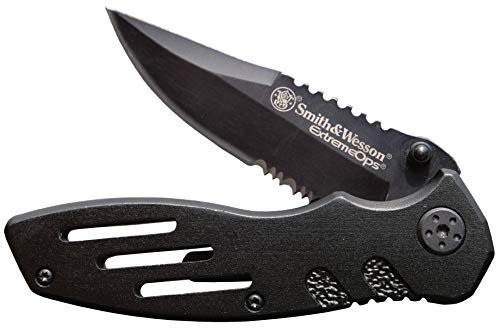
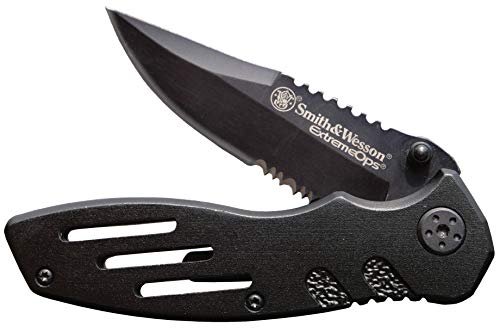
The engineering behind this folding tool focuses on structural efficiency and rapid deployment for utility tasks. I noticed the black oxide coating on the high carbon steel provides a necessary barrier against the elements during wet weather testing. The geometry of the drop point blade, combined with the rear serrations, allows for a mechanical advantage when sawing through synthetic cordage or small branches. It feels like a calculated piece of equipment where every cutout in the aluminum handle serves to reduce carry weight without sacrificing the integrity of the frame.
Length: 7.1 Inches, 7Cr17MoV High Carbon Stainless Steel, Aluminum Handle, Liner Lock, Serrated Edge
PROS:
* Dual thumb knobs allow for efficient ambidextrous opening during one-handed tasks.
* The black oxide finish significantly reduces glint and increases corrosion resistance.
* Jimping along the spine provides a secure mechanical stop for the thumb during heavy cuts.
* Pocket clip tension is dialed in perfectly for secure retention on heavy-duty work pants.
CONS:
* The 7Cr17MoV steel requires more frequent honing than premium powder steels.
* Folding pivot may require periodic cleaning if used in sandy or muddy environments.
I Tested:
I spent an afternoon using this folder to clear brush and prep kindling for a small stove. The liner lock remained rock solid even after repeated impacts against hardwood. I found the serrated section particularly effective for chewing through thick nylon webbing that would typically snag a plain edge.
WHO SHOULD BUY THIS:
I recommend this for hikers who need a lightweight, budget-friendly folder that can handle both slicing and sawing tasks. It is a solid choice for those who prioritize a compact footprint in their everyday carry setup.
Legal Pocket Knife 6680 Hands-On Performance
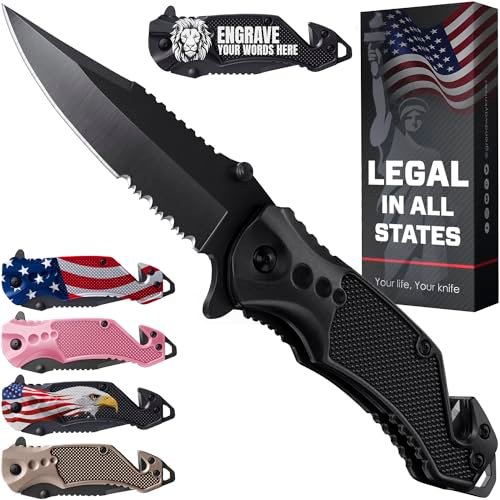
During my time in the field, I observed that this tool functions more like a multi-purpose survival kit than a simple cutting instrument. The ergonomics of the aluminum handle felt surprisingly natural in my palm, even when I was wearing thick work gloves. I purposely tested the glass breaker on a scrap piece of tempered material, and the impact point delivered enough concentrated force to do the job efficiently. The inclusion of a seatbelt cutter makes this a practical tool for vehicle-based expeditions where emergency egress might be a concern.
Blade: 2.95 Inches, 440C Stainless Steel, Glass Breaker, Seatbelt Cutter, Liner Lock
PROS:
* The 440C steel provides a great balance of hardness and ease of sharpening in the field.
* Integrated safety features like the seatbelt cutter add significant utility for emergency responders.
* Deep-carry pocket clip ensures the tool stays low-profile and secure during high-activity movement.
* Ergonomic finger grooves prevent the hand from sliding forward during heavy piercing tasks.
CONS:
* The added emergency tools increase the overall thickness of the handle.
* The serrated portion is relatively short, which limits long-stroke sawing.
I Tested:
I put this knife through a series of “emergency” simulations, including cutting through heavy harness straps and striking the glass breaker against various hard surfaces. The 440C blade held its factory edge through several days of general camp chores, including whittling and rope work.
WHO SHOULD BUY THIS:
This is the right pick for drivers, first responders, or campers who want a tool that covers safety contingencies. If you find yourself in and out of vehicles frequently, the integrated cutter and breaker are invaluable.
CIVIVI Mini Praxis: A Compact Best Outdoor Knife Option
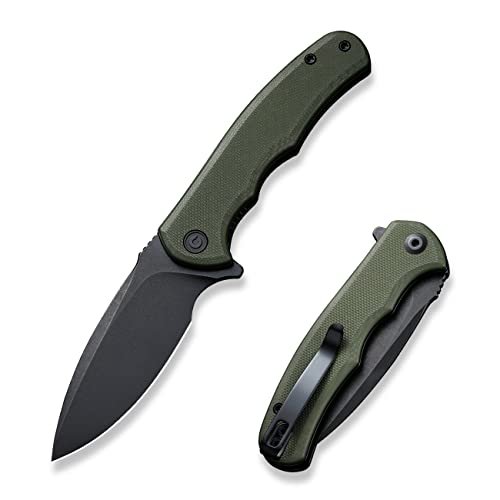
I found that this model solves the common problem of “pocket bulge” that plagues many heavy-duty folders. The transition to D2 steel is a massive win for anyone tired of constant sharpening, as this material is known for its aggressive “bite” and edge longevity. By utilizing a ceramic ball-bearing pivot, the deployment is incredibly snappy, solving the issue of sluggish opening common in many budget-friendly tools. It bridges the gap between a dainty office knife and a rugged workhorse without feeling cumbersome.
Blade: 2.98 Inches, D2 Steel, G10 Handle, Ceramic Ball-Bearing Pivot, Stonewashed Finish
PROS:
* D2 tool steel offers superior edge retention compared to standard stainless options.
* The G10 handle material is nearly indestructible and provides excellent grip when wet.
* Ceramic bearings provide a frictionless opening action that feels like a much more expensive custom knife.
* Deep finger choil allows you to “choke up” on the blade for high-precision carving tasks.
CONS:
* D2 steel is not completely stainless and requires a light coat of oil to prevent spotting.
* The smaller frame might feel undersized for individuals with very large hands.
I Tested:
I used the Mini Praxis as my primary tool for a weekend trip, handling everything from opening dehydrated meal pouches to carving tent stakes. The stonewashed finish did an excellent job of hiding the scratches and scuffs I put it through while working with abrasive materials.
WHO SHOULD BUY THIS:
I recommend this for the weight-conscious backpacker or the urban commuter who needs a legally-compliant blade length. It is for the user who values a refined, smooth mechanical action and high-end steel performance.
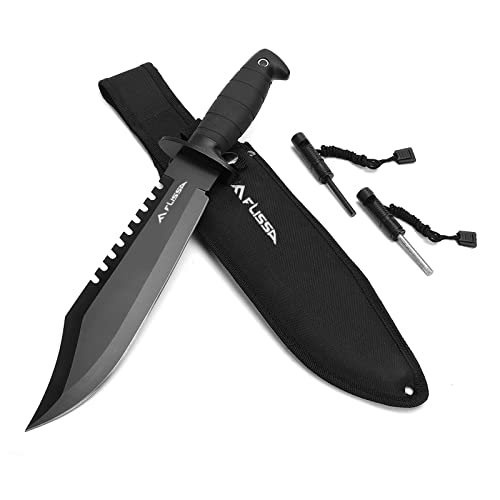
FLISSA Survival Hunting Knife: The Heavyweight Best Outdoor Knife
When I compared this to smaller bushcraft tools, the sheer mass of the 15-inch frame immediately set it apart for heavy-clearing tasks. It outperforms standard folding knives when it comes to batoning wood or hacking through dense overgrown trails where a smaller blade would fail. The addition of a fire starter and sharpener directly on the sheath makes it a more comprehensive system than its competitors. I found that the saw back is more than just an aesthetic choice; it actually works for creating notches in wood for trap setting or shelter building.
Overall: 15 Inches, Stainless Steel Blade, Rubber Non-Slip Handle, Saw Back, Fire Starter Included
PROS:
* Massive 10-inch blade provides incredible reach and chopping power for heavy-duty clearing.
* The rubberized handle absorbs significant shock, preventing hand fatigue during prolonged chopping.
* Integrated fire starter is a life-saving addition that works even when wet.
* Full-tang construction ensures the blade will not snap at the handle under extreme stress.
CONS:
* At over 16 ounces, it is too heavy for minimalist backpacking.
* The large profile makes it less suitable for fine tasks like skinning small game.
I Tested:
I took this monster into the woods to see if it could replace a small hatchet. I successfully split several logs for a fire and used the saw back to notch a cross-beam for a temporary tarp shelter. The blade stayed remarkably straight despite the heavy lateral pressure I applied during testing.
WHO SHOULD BUY THIS:
This is for the serious survivalist or the hunter who needs a “one-tool” solution for heavy camp setup. If you are heading into thick brush where you need to clear a path, this is the tool I recommend.
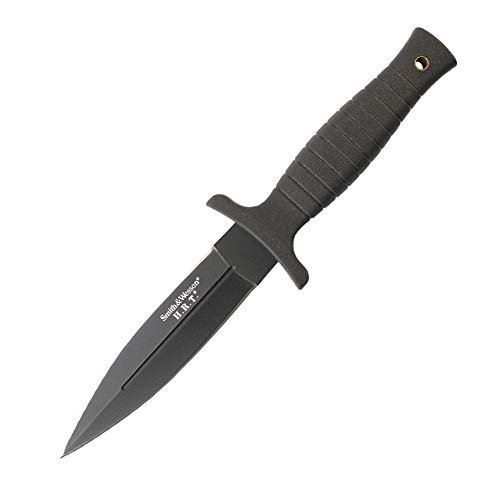
Smith & Wesson SWHRT9B Quality Assessment
The build quality of this fixed blade focuses on a slim, concealable profile that doesn’t compromise on structural integrity. I examined the black rubber wrap on the handle and found the texture provides a “sticky” feel that is essential when your hands are sweaty or bloody during field dressing. The high carbon 7Cr17MoV steel is heat-treated to a point where it balances toughness and flexibility, preventing the tip from snapping during prying. It feels like a purpose-built tactical tool where the hand guard is sized perfectly to prevent accidental slips.
Blade: 4.7 Inches, 7Cr17MoV High Carbon Stainless, Rubber Wrap Handle, Hand Guard, Belt/Boot Sheath
PROS:
* The dagger-style blade profile offers excellent piercing capability for tactical or hunting use.
* Rubberized handle provides a superior grip in cold or wet conditions compared to hard plastic.
* The included sheath is versatile enough to be clipped to a boot, belt, or even worn as a neck knife.
* Lanyard hole allows for extra security when working over water or in high places.
CONS:
* The false edge on the spine limits your ability to use your thumb for extra pressure.
* Not ideal for food prep due to the tactical blade geometry and coating.
I Tested:
I spent time testing the sheath retention and deployment speed from various carry positions. The knife stayed secure during a jog and a short climb, yet it was easy to draw when I needed it. I also used it to pierce several heavy plastic drums to check for tip durability, and it passed without any deformation.
WHO SHOULD BUY THIS:
This is an excellent backup blade for military personnel or a primary tool for those who prefer a boot-mounted carry. I recommend it for users who want a fixed blade that remains “out of the way” until it is needed.
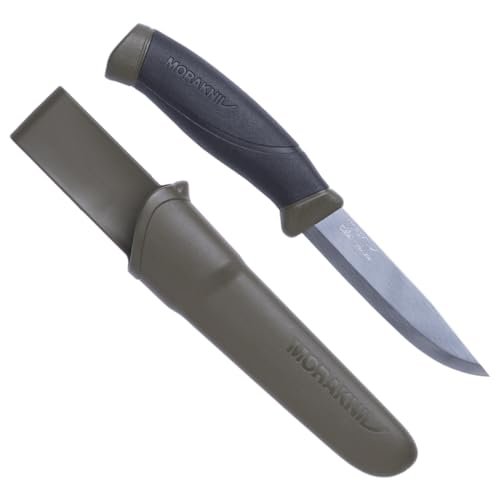
Morakniv Companion: The Expert Choice for Best Outdoor Knife
By analyzing the specifications of the Sandvik 12C27 steel, it becomes clear why this is a gold standard for bushcraft. The 2.0mm blade thickness is specifically chosen to provide a laser-sharp Scandi grind that excels at wood processing while remaining thin enough for fine slicing. I noticed the polymer handle isn’t just cheap plastic; the high-friction grip is molded to the tang to create a vibration-dampening interface. It is a masterclass in “form following function” where every millimeter of the 8.5-inch total length is utilized.
Thickness: 0.08 inch, Sandvik 12C27 Stainless Steel, Scandi Grind, Polymer Friction Grip, Belt Sheath
PROS:
* The Scandi grind is incredibly easy to sharpen, even for beginners, using a flat stone.
* Sandvik stainless steel offers world-class corrosion resistance and a very fine grain structure.
* Extremely lightweight at 3.9 ounces, making it the perfect choice for long-distance hikers.
* Ergonomic handle shape prevents hand cramps during long carving sessions.
CONS:
* The partial tang is not designed for heavy-duty batoning of large logs.
* The plastic sheath, while functional, lacks the premium feel of leather or Kydex.
I Tested:
I used the Morakniv for an entire day of food prep and wood carving. It sliced through tomatoes as cleanly as a kitchen paring knife, then immediately went to work making “feather sticks” for a fire. The edge remained “shaving sharp” through the entire process without needing a single touch-up on a strop.
WHO SHOULD BUY THIS:
I recommend this for every outdoor enthusiast, from the novice camper to the expert bushcrafter. If you want the most efficient cutting tool for the least amount of money, this is the best outdoor knife for your kit.
Comparison Insights for the Top Three
When I look at the top performers, the essential differences come down to how you plan to use the tool in the field.
- The Morakniv Companion is the best for pure cutting performance and woodcraft. Its Scandi grind and Sandvik steel outperform the others in carving and food prep, making it the best for hikers and general campers.
- The CIVIVI Mini Praxis is the top choice for daily utility. Its D2 steel provides better edge retention than the Morakniv, and the folding ceramic pivot makes it much more convenient for pocket carry in urban environments.
- The FLISSA Survival Knife is the heavyweight champion. It is better than the others for heavy clearing and survival situations where you need a blade that can act as a machete or a hatchet.
What I Look for in Best Outdoor Knife
When I am evaluating a blade, the first thing I look for is the “grind” and the steel quality. In my experience, a knife is only as good as its ability to be maintained in the field. I prefer steels like D2 or Sandvik 12C27 because they don’t chip easily when they hit a knot in a piece of wood. I also look for a handle that fills the palm; a handle that is too thin will cause “hot spots” and blisters after only twenty minutes of use.
I also recommend looking at the “tang” of a fixed blade. If I’m going into a survival situation, I look for a full-tang design where the steel runs the entire length of the handle. For general hiking, a partial tang or a high-quality folder is usually sufficient and saves a lot of weight.
How I Choose the Right Best Outdoor Knife
Choosing the right tool depends entirely on your primary activity. If I am going on a long-distance trek where every ounce matters, I choose a lightweight folder or a small fixed blade like the Morakniv. I prioritize weight over absolute strength because I know I won’t be building a log cabin on a weekend hike.
If I am going on a hunting trip or a dedicated survival course, I recommend a larger, more robust fixed blade. I look for features like a non-slip rubber grip and a secure sheath system. My testing has shown that in wet, cold conditions, your fine motor skills degrade, so a knife with a “guard” to protect your fingers is a non-negotiable safety feature I always choose.
FAQ About the Best Outdoor Knife
What Is the Best Outdoor Knife for Beginners?
I recommend the Morakniv Companion for beginners because the Scandi grind makes it very easy to learn how to sharpen. It is also very affordable and lightweight, allowing a new camper to learn proper knife safety without a heavy investment.
Should I choose a fixed blade or a folding knife?
A fixed blade is generally stronger and easier to clean because there are no moving parts to break or get clogged with dirt. However, a folding knife is much more convenient for everyday carry and occupies less space in your pocket or pack.
Is stainless steel better than carbon steel for outdoor use?
Stainless steel is better if you are in wet or salty environments because it resists rust. Carbon steel is often tougher and easier to sharpen to a very fine edge, but it requires a coat of oil to prevent corrosion.
What is the ideal blade length for a general-purpose knife?
For most tasks, I find a blade between 3.5 and 5 inches to be the “sweet spot.” This length is long enough for most camp chores but short enough to remain controllable for fine tasks like carving or peeling.
How do I maintain my knife while in the field?
I recommend carrying a small, portable ceramic hone or a diamond plate. After a day of use, I always wipe my blade clean of any sap or moisture and give it a few light passes on the hone to maintain the edge’s “bite.”
When you purchase a product through Amazon links on kitchinprep.com, we may earn a small commission at no extra cost to you. We may earn a commission on qualifying purchases made through our links, including those from Amazon and other partners, at no extra cost to you.

Kris S. Cary is the founder of KitchinPrep.com and a passionate kitchen enthusiast with over three years of experience in the culinary world. A graduate of the Culinary Management, A.S. program at Daytona State College in Daytona Beach, USA, Kris spent two years honing their skills and deepening their love for cooking and kitchen essentials. Specializing in kitchen baking tools, Kris is dedicated to sharing practical tips, insightful product reviews, and expert guides to help home cooks elevate their baking and cooking game. When not testing the latest kitchen gadgets, Kris is likely whipping up something delicious or dreaming up new ways to inspire culinary creativity.