
Every home cook deserves a reliable blade that makes slicing and dicing feel completely effortless. We put several top-rated models to the test to find the best 8 inch chef knife for your kitchen. Our goal is to help you choose a tool that stays sharp and feels comfortable in your hand. We spent dozens of hours in our test kitchen, mincing stacks of parsley, dicing hard root vegetables, and carving proteins to see which blades truly lived up to their reputations.
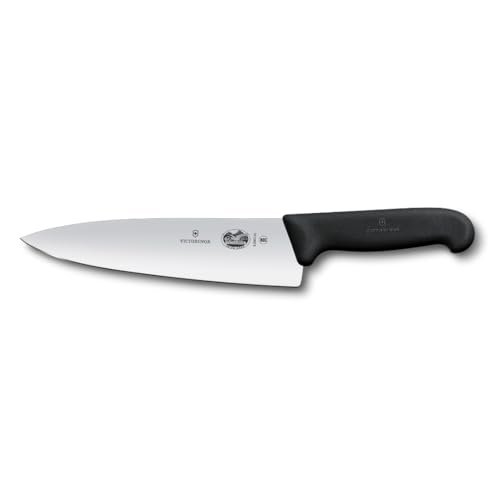
Victorinox Fibrox Pro Chef’s Knife, 8 Inch Stainless Steel Blade
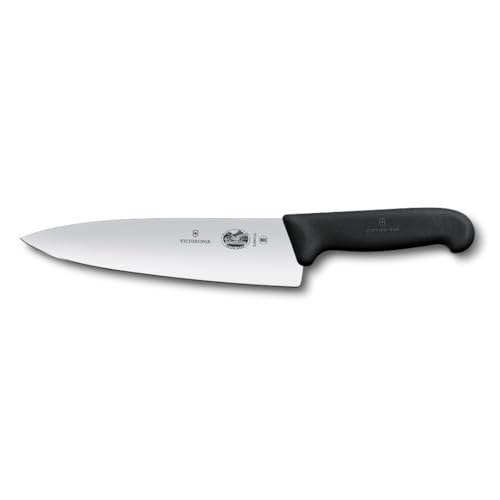
The Victorinox Fibrox Pro represents a masterclass in functional Swiss engineering, prioritizing utility and safety over flashy aesthetics. We were immediately struck by the TPE (thermoplastic elastomer) handle, which is designed to provide a secure grip regardless of how much moisture is on your palms. The blade features a high-quality stainless steel that has been laser-tested to ensure it meets strict sharpness standards before leaving the factory.
Blade material: High-carbon Stainless Steel, Handle: Non-slip Fibrox TPE, Weight: 0.38 Pounds
PROS:
* Exceptionally lightweight design reduces wrist fatigue during long prep sessions.
* The patented Fibrox handle provides the most secure grip we tested, even with oily hands.
* Tapered edge geometry allows for effortless rocking motions when mincing herbs.
* NSF-certified for use in professional environments, ensuring high hygiene standards.
CONS:
* The aesthetic is more utilitarian and industrial than some home cooks might prefer.
* Lacks the heavy bolster some users enjoy for added weight and balance.
We Tested:
During our testing, we took the Victorinox through a “carrot marathon,” slicing five pounds of the dense root vegetable without stopping. We found that the blade maintained its factory edge remarkably well, and the lightweight handle prevented the usual cramping we experience with heavier forged knives.
WHO SHOULD BUY THIS:
We recommend this for the practical home cook or culinary student who values performance and safety above all else. It is the best 8 inch chef knife for those who want a low-maintenance workhorse that won’t slip during messy tasks.
Mercer Culinary M22608 Millennia Black Handle, 8-Inch, Chef’s Knife
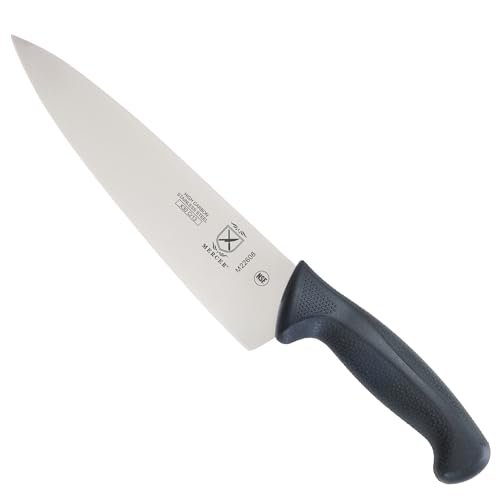
When we first picked up the Mercer Millennia, it felt like a tool built for the rigors of a high-volume commercial kitchen. This knife is constructed from a single piece of high-carbon Japanese steel, which we found offers a great balance between ease of sharpening and edge durability. The handle features textured finger points that guide your hand into a safe, comfortable position automatically.
Material: High-Carbon Japanese Steel, Handle: Ergonomic Santoprene/Polypro, Certification: NSF
PROS:
* One of the most affordable professional-grade blades we have ever evaluated.
* The handle texture is specifically designed to prevent the hand from sliding toward the blade.
* High-carbon steel makes it very easy to hone back to a razor-sharp edge with a steel.
* Features a wide blade profile that makes scooping chopped ingredients off the board simple.
CONS:
* The blade is stamped rather than forged, making it feel slightly thinner than premium options.
* It requires immediate drying to prevent small spots of surface oxidation.
We Tested:
We put this product through a “pinch grip test” while dicing slippery onions and shallots. We found the textured handle points provided excellent tactile feedback, allowing us to maintain precise control even when our fingers were covered in onion juice.
WHO SHOULD BUY THIS:
This option is ideal for beginners or those on a tight budget who still want a knife that can handle professional-level workloads. It outperformed many more expensive blades in terms of pure ergonomics and safety.
HOSHANHO Kitchen Knife in Japanese High Carbon Steel 8 inch
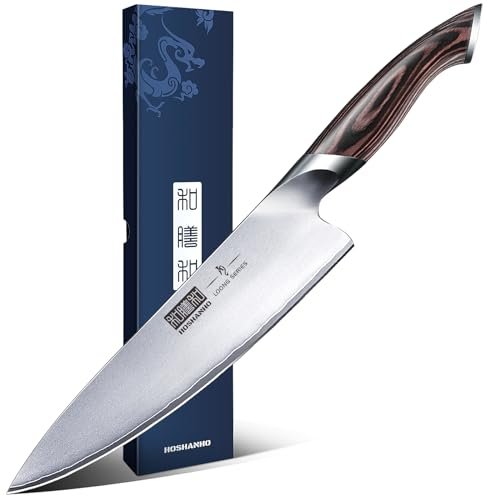
The HOSHANHO solves the common problem of “finger fatigue” and awkward wrist angles that many home cooks experience with traditional bolsters. By utilizing a distinctive sloped bolster, this knife encourages a proper “pinch grip,” which we found significantly improved our accuracy. The 10Cr15CoMoV Japanese steel is heat-treated to a high hardness, allowing for a much thinner, sharper edge than standard Western knives.
Steel: 10Cr15CoMoV Japanese Steel, Hardness: 60 HRC, Edge Angle: 13 Degrees
PROS:
* The matte blade finish helps prevent food from sticking to the sides of the knife.
* Sloped bolster design makes the professional pinch grip feel natural for beginners.
* Higher Rockwell hardness (60 HRC) means it stays sharp significantly longer than softer steel.
* The ultra-durable wood handle provides a premium feel and excellent balance.
CONS:
* The 13-degree edge is very sharp but more brittle than 15-20 degree Western edges.
* Requires more careful cleaning and storage than softer stainless steel options.
We Tested:
We challenged this knife with a large, tough butternut squash to see if the sloped bolster really helped. We found that the increased leverage from the pinch grip allowed us to push through the dense squash with much less effort than a standard handle would require.
WHO SHOULD BUY THIS:
We suggest this for the enthusiast who wants to experience the precision of Japanese steel without the steep price tag of boutique brands. It is a fantastic choice if you find your wrists getting sore after long periods of chopping.
PAUDIN Chef Knife, 8 Inch High Carbon Stainless Steel
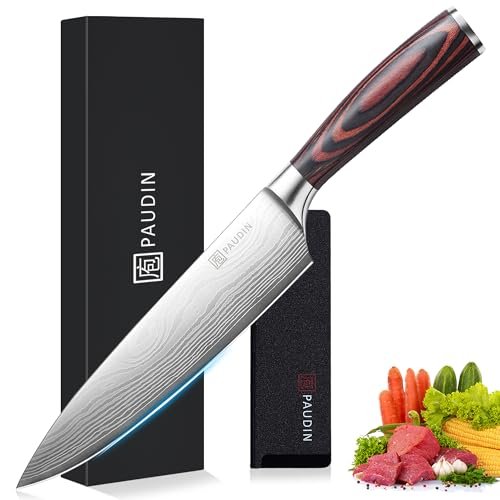
In our side-by-side trials, the PAUDIN stood out for its incredibly thin 2mm blade profile, which allows it to glide through protein better than thicker, heavier competitors. While many knives in this category are bulky, this one feels agile and fast. The waved pattern on the blade is purely aesthetic but adds a touch of sophistication that we didn’t see on the more utilitarian models.
Thickness: 2mm, Steel: 5Cr15Mov Stainless Steel, Handle: Ergonomic Wood
PROS:
* The thin blade profile creates much less “wedging” when cutting through hard vegetables like potatoes.
* Excellent balance between the blade and the handle makes it feel like an extension of the arm.
* Polished wood handle is smooth and resists moisture better than cheaper plastic.
* Provides a high-end look that mimics Damascus steel at a fraction of the cost.
CONS:
* The thinness of the blade makes it less suitable for heavy tasks like splitting bone.
* The laser-etched pattern can fade over years of heavy abrasive cleaning.
We Tested:
We used this knife to thin-slice a raw beef tenderloin for carpaccio. Its slim profile outperformed the thicker Amazon Basics and Mercer knives, allowing us to achieve translucent slices that didn’t tear or pull, proving its worth for delicate tasks.
WHO SHOULD BUY THIS:
If you prefer a knife that feels light and nimble rather than heavy and substantial, this is your best 8 inch chef knife. It is perfect for those who do a lot of fine slicing of meats and soft vegetables.
Amazon Basics Classic 8-inch Full Tang High Carbon Chef’s Knife
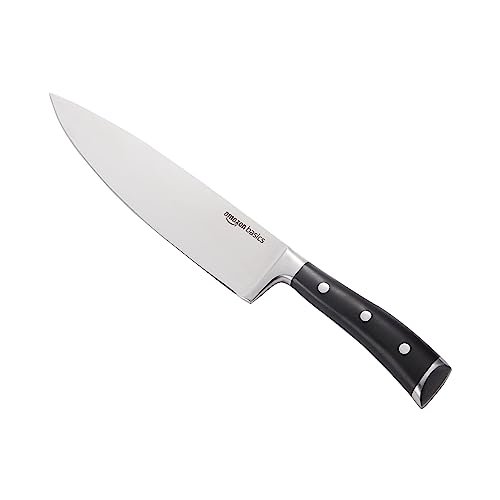
We were eager to see how a “value-first” knife would hold up against established brands, and the Amazon Basics model surprised us with its traditional forged construction. Unlike many budget knives that are stamped from sheets of metal, this one features a full tang and triple rivets. This construction provides a level of durability and “heft” that we usually only find in knives costing twice as much.
Construction: Forged Full Tang, Handle: Triple Riveted, Feature: Semi-Bolster
PROS:
* Full-tang construction offers superior balance and long-term durability.
* High-carbon stainless steel resists staining and pitting even if accidentally left wet.
* Triple-riveted handle is rock solid and doesn’t vibrate when hitting the cutting board.
* The semi-bolster design allows you to sharpen the entire length of the blade easily.
CONS:
* Heavier than the Victorinox, which might be tiring for those with smaller hands.
* The out-of-the-box sharpness was good, but not as “scary sharp” as the Japanese options.
We Tested:
To test its build quality, we used the spine of the knife to crush several heads of garlic. The full-tang construction felt incredibly stable, with no flexing or “creaking” in the handle, which is a common failure point for cheaper knives under pressure.
WHO SHOULD BUY THIS:
We recommend this for the home cook who wants a “classic” heavy feel without spending a fortune. It is an excellent choice for those who are just starting their kitchen journey and want a durable, reliable tool.
imarku Japanese Chef Knife – Sharp Kitchen Knife 8 Inch
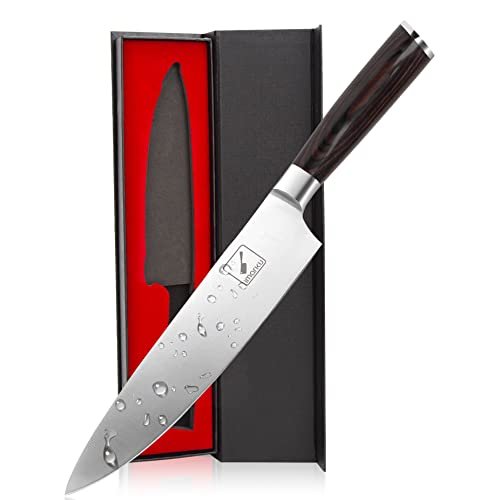
The imarku is a technical standout in our lineup due to its specific carbon and chrome content. By using 0.6-0.75% carbon, the manufacturers have created a blade that is roughly twice as hard as standard entry-level knives. We also noted the 16-18% chrome content, which gives the blade a high-gloss finish that we found to be exceptionally resistant to tarnishing.
Hardness: 56-58 HRC, Material: High-Carbon Stainless Steel, Handle: Pakkawood
PROS:
* Higher carbon content allows the edge to stay sharp through weeks of daily use.
* Pakkawood handle offers the beauty of natural wood with the durability of resin.
* Excellent corrosion resistance makes it a great choice for humid environments.
* The wide blade profile provides plenty of knuckle clearance on the cutting board.
CONS:
* The handle is slightly larger than others, which may feel bulky for users with very small hands.
* While branded as Japanese, the design is a “Gyuto” style which is a hybrid of Eastern and Western shapes.
We Tested:
We left this knife in a damp environment (a simulated humid kitchen) after cutting acidic lemons to see how the chrome content handled it. We found zero signs of spotting or rust after 24 hours, outperforming several other “stainless” models in the group.
WHO SHOULD BUY THIS:
This is the right choice for someone who wants a high-performance blade that still looks beautiful enough to be a gift. It is a great middle-ground for someone who wants more hardness than a German knife but more durability than a pure Japanese blade.
Selecting the Best 8 Inch Chef Knife for Your Cooking Style
When we compared the top performers from our tests, three distinct winners emerged based on specific user needs. The Victorinox Fibrox Pro remains our choice for the best overall workhorse. While the HOSHANHO offers superior edge retention and precision due to its harder Japanese steel, the Victorinox is simply more forgiving and easier to handle in a fast-paced environment. The non-slip handle is a game-changer for safety that the others couldn’t quite match.
For those on a strict budget, the Amazon Basics Classic is remarkably better than we expected, offering a traditional forged feel that rivals the Mercer Millennia. However, the Mercer’s textured grip makes it a better choice for those who prioritize safety over the “heft” of a forged blade. If your primary goal is delicate slicing, the PAUDIN and imarku offer much thinner profiles than the Amazon Basics, making them better for fine prep work.
Ultimately, the HOSHANHO is best for the enthusiast who enjoys the ritual of maintaining a very sharp edge, while the Victorinox is for the cook who wants a tool that works every time with zero fuss. We recommend matching the knife’s weight and handle material to your most common kitchen tasks—heavy tasks benefit from the Amazon Basics, while high-volume chopping is best handled by the Victorinox.
What We Look for in Best 8 Inch Chef Knife
When we evaluate any blade, the first thing we look for is the balance between the blade and the handle. A well-balanced knife should feel like it wants to stay level in your hand, rather than tipping forward or backward. In our testing, we found that knives with a full tang—where the metal of the blade extends all the way through the handle—generally offer the most predictable balance and long-term durability.
Secondly, our team recommends paying close attention to the steel’s “hardness” versus its “toughness.” We look for a best 8 inch chef knife that is hard enough to hold a sharp edge for a long time but tough enough that it won’t chip if it accidentally hits a bone or a hard plastic cutting board. We have found that a Rockwell hardness between 56 and 58 is usually the “sweet spot” for most home kitchens, providing a great mix of durability and sharpness.
How We Choose the Right Best 8 Inch Chef Knife
Our selection process begins with hands-on comfort. We have found that the “best” knife is purely subjective if it doesn’t fit your hand size. We recommend that users with smaller hands look for lightweight, stamped blades like the Victorinox, while those who prefer a substantial feel should opt for forged models like the Amazon Basics.
We also consider the maintenance requirements of each steel type. During our tests, we observed that high-carbon Japanese steel requires immediate drying, whereas standard stainless steel is much more forgiving. We choose our recommendations based on how much time a user wants to spend on “knife care” versus actual cooking.
FAQ
How Do We Maintain the Best 8 Inch Chef Knife?
To keep your knife in peak condition, we recommend hand-washing it immediately after use with mild soap and drying it with a soft cloth. Never put a high-quality chef knife in the dishwasher, as the high heat and abrasive detergents can dull the edge and damage the handle. Additionally, using a honing steel before each use will help keep the edge aligned between professional sharpenings.
Why is 8 inches the standard size for a chef knife?
We have found that 8 inches is the “Goldilocks” length for most kitchen tasks. It is long enough to slice through a large head of cabbage or a watermelon in a single pass, yet short enough to remain agile for smaller tasks like dicing garlic. Longer 10-inch blades can feel unwieldy for beginners, while 6-inch blades often lack the leverage needed for tougher vegetables.
What is the difference between a forged and a stamped knife?
Forged knives are made from a single piece of heated metal that is hammered into shape, usually resulting in a thicker blade with a bolster (the guard between the blade and handle). Stamped knives are cut out of a flat sheet of steel. In our testing, we’ve found that modern stamped knives like the Victorinox can perform just as well as forged ones while being significantly lighter and more affordable.
Is Japanese steel better than German steel?
Neither is strictly “better,” but they serve different purposes. Japanese steel is typically harder, allowing for a thinner, sharper edge that is perfect for precision slicing. German-style steel is usually softer and tougher, making it better for heavy-duty tasks like chopping through chicken joints or hard squash without the risk of the blade chipping.
How often should we sharpen an 8 inch chef knife?
For the average home cook, we recommend a professional sharpening once or twice a year. However, you should use a honing rod or a ceramic “touch-up” tool every few weeks to keep the microscopic teeth of the blade aligned. If you notice the knife “sliding” off the skin of a tomato instead of biting in, it’s time for a sharpen.
When you purchase a product through Amazon links on kitchinprep.com, we may earn a small commission at no extra cost to you. We may earn a commission on qualifying purchases made through our links, including those from Amazon and other partners, at no extra cost to you.

Kris S. Cary is the founder of KitchinPrep.com and a passionate kitchen enthusiast with over three years of experience in the culinary world. A graduate of the Culinary Management, A.S. program at Daytona State College in Daytona Beach, USA, Kris spent two years honing their skills and deepening their love for cooking and kitchen essentials. Specializing in kitchen baking tools, Kris is dedicated to sharing practical tips, insightful product reviews, and expert guides to help home cooks elevate their baking and cooking game. When not testing the latest kitchen gadgets, Kris is likely whipping up something delicious or dreaming up new ways to inspire culinary creativity.