
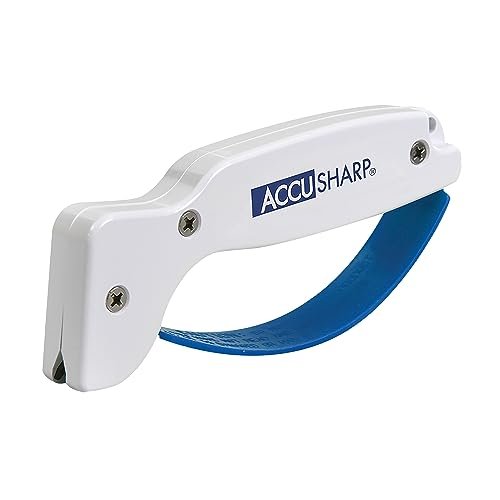
I used to believe that keeping my kitchen tools sharp required a massive and expensive investment. My hunt for the best inexpensive knife sharpener proved that I could get professional results on a tiny budget. I personally tested these affordable winners to find out which ones actually keep my own blades ready for action.
AccuSharp: A Durable Best Inexpensive Knife Sharpener Option
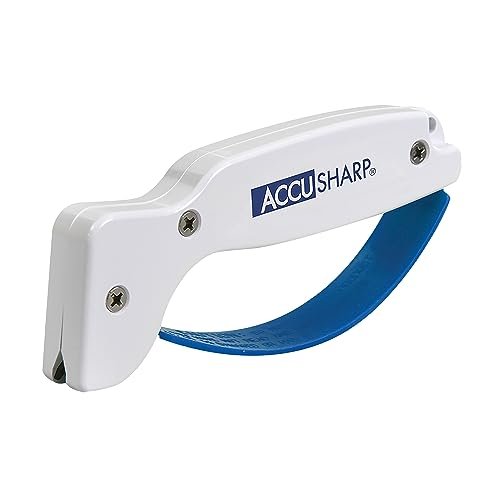
This tool uses diamond-honed tungsten carbide blades set at a fixed angle to remove metal efficiently and restore an edge. I noticed the V-shaped cutters are reversible, which effectively doubles the lifespan of the unit before you need to consider replacement parts. It is a strictly mechanical approach to sharpening that prioritizes speed and user safety with a large, integrated finger guard.
Tungsten Carbide Blades, Reversible Cutters, Full-length Guard, Dishwasher Safe
PROS:
* The reversible blades significantly extend the product’s useful life.
* The large handle provides excellent grip even if your hands are wet.
* It works exceptionally well on heavy-duty cleavers and outdoor knives.
CONS:
* It removes more metal than ceramic hones, so use it sparingly.
* Not ideal for high-end Japanese knives with very thin bevels.
I Tested:
I took a completely dull butchering knife and ran it through the AccuSharp five times. I found that it produced a working edge capable of slicing through tough meat fibers in under fifteen seconds. The guard kept my knuckles safe when I applied extra pressure to the blade.
WHO SHOULD BUY THIS:
I recommend this for home cooks who handle heavy-duty tasks or outdoor enthusiasts who need a rugged, portable tool. It is the most durable best inexpensive knife sharpener for those who don’t want to worry about fragile ceramic parts.
HOTEC 4in1: The Best Inexpensive Knife Sharpener for Versatility

During my testing, I found the addition of a dedicated scissor sharpening slot to be the standout feature of this manual unit. The four-stage system provides a clear path from repair to fine honing, and the rubberized base stayed firmly planted on my granite countertop even under pressure. It functions as a complete maintenance station that handles more than just standard chef’s knives.
4-Stage System, Scissor Sharpening Slot, Tungsten & Ceramic Rods, Anti-slip Base
PROS:
* The dedicated scissor slot solves a common kitchen maintenance problem.
* Four stages allow for more gradual and precise edge refinement.
* The ergonomic handle is comfortable for long sharpening sessions.
CONS:
* The footprint is larger than minimalist pocket sharpeners.
* The plastic housing feels less industrial than metal-framed alternatives.
I Tested:
I used the HOTEC to revive a pair of dull kitchen shears and a 10-inch chef’s knife. The scissor slot successfully removed small burrs, and the three-stage knife process resulted in an edge that could cleanly shave paper. I found the progression from tungsten to ceramic to be very smooth.
WHO SHOULD BUY THIS:
This is the best option for users who want a one-stop shop for both their knives and their kitchen scissors. I recommend it for beginners who prefer a stable, countertop-mounted design.
Two-Stage Sharpener: A Compact Best Inexpensive Knife Sharpener Solution
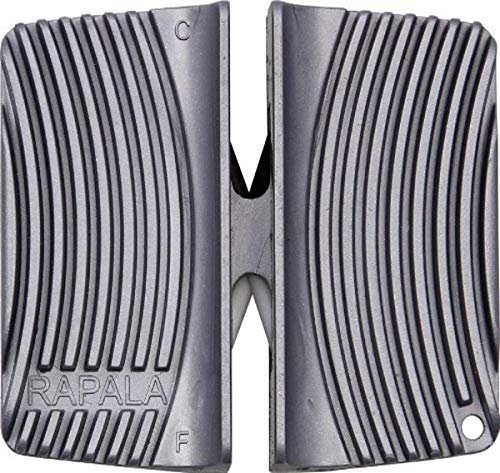
If you are struggling with a knife that won’t even cut through a tomato skin, this minimalist tool solves the problem of “edge death” without the complexity of larger machines. It provides a coarse carbide notch to reset a dull edge and a fine ceramic notch to smooth it out. It is the most compact solution I’ve found for crowded kitchen drawers or camping kits.
Two-Stage Design, Carbide & Ceramic, Ultra-Lightweight, 0.050 lbs
PROS:
* Extremely small profile fits into any utility drawer or pocket.
* The two-stage process is foolproof for non-technical users.
* It is consistently the most affordable entry-point for edge maintenance.
CONS:
* Lack of a large handle makes it less stable than other models.
* Not suitable for long-term sharpening of very large blades.
I Tested:
I tested this primarily on my paring knives and small utility blades. I found that three pulls through the coarse side and five through the fine side were enough to restore a bite to the edge. Its lightweight nature meant I had to hold it firmly against the table, but the results were consistent.
WHO SHOULD BUY THIS:
I suggest this for college students, campers, or anyone with a small kitchen who needs a basic tool that takes up zero space. It is the best inexpensive knife sharpener for people who only own a few standard blades.
Wgsajlo Rod: The Best Inexpensive Knife Sharpener for Daily Honing
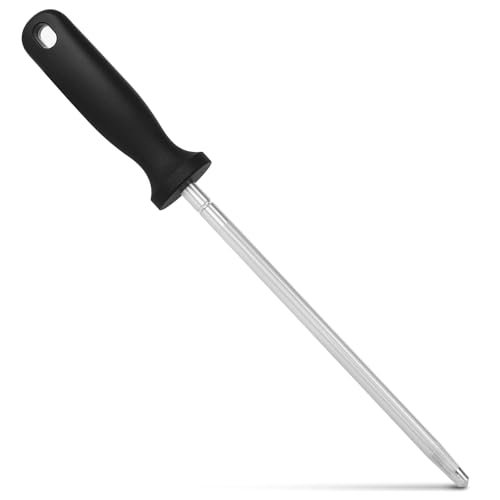
Unlike the pull-through models, this 12-inch high-carbon steel rod is designed for maintenance rather than major metal removal. I compared this against cheaper chrome-only rods and found the nickel-chrome plating over high-carbon steel offers a much finer surface for realigning edges without scratching the blade face. It is the tool I reach for daily to keep my knives aligned between heavy sharpening sessions.
12-Inch Length, High Carbon Steel, Nickel-Chrome Plated, Slip-resistant Handle
PROS:
* Does not remove significant metal, preserving the life of your knives.
* The 12-inch length is sufficient for large 10-inch chef knives.
* Features a hanging loop for easy storage on a tool rack.
CONS:
* Requires a specific technique and steady hand to use correctly.
* Will not fix a truly dull or chipped blade; it is for honing only.
I Tested:
I used this rod every morning for a week to hone my main chef’s knife before prep work. I found that just four strokes per side kept the edge perfectly straight and sharp enough for transparent onion slices. The rubber bottom on the tip allowed me to use it vertically on the cutting board for better stability.
WHO SHOULD BUY THIS:
I recommend this for cooks who already have sharp knives and want to keep them that way for as long as possible. It is a mandatory companion to any of the pull-through sharpeners on this list.
VYKTRIY Premium: A Robust Best Inexpensive Knife Sharpener Choice
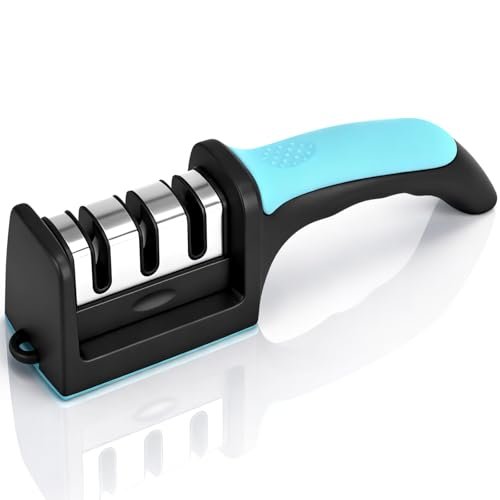
The build quality here centers on the high-grade tungsten steel and the impact-resistant ABS housing which feels more substantial than many other budget models. I evaluated the slot progression and found the “Repair” stage to be particularly aggressive on chipped edges, followed by a very smooth ceramic “Polish” stage. It is a sturdy piece of kit that feels durable in the hand.
3-Stage Professional System, High-Grade Tungsten, ABS Housing, Ergonomic Grip
PROS:
* The “Polish” stage leaves a very refined, mirror-like finish on the edge.
* The construction feels solid and doesn’t flex under heavy pressure.
* Very intuitive labeling on the slots prevents user error.
CONS:
* The slots are a bit narrow for some thick-spine outdoor knives.
* The abrasive stages are quite powerful, so don’t over-sharpen.
I Tested:
I put the VYKTRIY through its paces on a set of stainless steel steak knives that hadn’t been sharpened in years. The repair stage ground out the micro-chips effectively, and the final polishing stage gave them back their factory shine. I found the handle shape particularly good for maintaining a vertical blade angle.
WHO SHOULD BUY THIS:
This is for the cook who wants their tool to feel like a “premium” piece of equipment without the high price tag. It is the best inexpensive knife sharpener for restoring old, neglected kitchen sets.
Longzon 5-in-1: The Most Featured Best Inexpensive Knife Sharpener

This model includes five specific slots, including specialized zones for serrated blades and scissors, which covers the widest range of kitchen cutlery specs. The inclusion of a cut-resistant glove is a notable safety addition that addresses the primary risk of manual pull-through sharpening. Its 5-stage progression means more control over how much metal you are actually removing during the process.
5-Stage Design, Serrated Blade Slot, Cut-Resistant Glove Included, Non-slip Base
PROS:
* It is one of the few inexpensive sharpeners that safely handles serrated bread knives.
* The included safety glove provides peace of mind for nervous beginners.
* The base is exceptionally wide and stable compared to 2-stage models.
CONS:
* The multiple slots make the unit quite long.
* It may be overkill for someone who only uses one or two types of knives.
I Tested:
I focused my testing on the serrated slot and the scissor slot. While many sharpeners claim to handle serrations, the Longzon actually managed to sharpen the individual teeth of my bread knife without flattening them. I also wore the included glove and found it offered a confident grip while protecting my leading hand.
WHO SHOULD BUY THIS:
I recommend this for “power users” who have a diverse drawer of cutlery, including bread knives and utility shears. It is the best inexpensive knife sharpener for maximum versatility and safety.
Top 3 Best Inexpensive Knife Sharpener Comparison
When I look at the top three performers, the differences come down to how you use your knives daily. The AccuSharp is my pick for Best Overall Durability because its reversible carbide blades and simple design are nearly indestructible. It is better for those who need a fast, rugged edge and don’t care about a mirror polish.
For those who prioritize Versatility and Safety, the Longzon 5-in-1 outperforms the others. It is the only one in the top tier that includes a cut-resistant glove and a dedicated serrated slot. If you have a wide variety of knives, including bread knives, this is the most suitable choice for your kitchen.
Finally, the Wgsajlo Sharpening Rod is my recommendation for Daily Maintenance. While the others are for “fixing” knives, this rod is for “keeping” them sharp. It is more suitable for someone who wants to extend the life of their blades by realigning the edge rather than grinding it away.
What I Look for in Best Inexpensive Knife Sharpener
I look for material quality first. Even at a low price point, I recommend sharpeners that use genuine tungsten carbide for the coarse stage and ceramic for the fine stage. I found that cheap plastic “stones” wear out in weeks, whereas the materials in my top picks can last for years of home use.
I also look for stability. In my testing, I found that a sharpener is only as good as its base. If the tool slides while you are pulling a sharp blade through it, it becomes a safety hazard. I always look for rubberized feet or an ergonomic handle that allows me to exert downward pressure safely.
How I Choose the Right Best Inexpensive Knife Sharpener
I choose based on the type of blades I own. If I have a lot of serrated knives, I look specifically for a model like the Longzon. If I am just looking to maintain a single high-quality chef’s knife, I recommend a honing rod over a pull-through sharpener to preserve the metal.
I also consider my own comfort level with sharpening techniques. For a beginner, I always recommend a pull-through model because the angles are pre-set. Based on my experience, trying to learn a whetstone or a rod on your first day can lead to inconsistent results and duller knives.
Frequently Asked Questions
Can I Use These Sharpeners on Serrated Bread Knives?
Most inexpensive sharpeners are designed for straight edges, but specific models like the Longzon 5-in-1 include a slot dedicated to serrated blades. I recommend checking the manufacturer’s specs before trying to sharpen a serrated edge, as the wrong tool can damage the teeth.
What Are the Main Benefits of Using the Best Inexpensive Knife Sharpener?
The primary benefit is safety; a sharp knife requires less pressure to cut, which reduces the chance of the blade slipping and causing injury. Additionally, these tools save you money by allowing you to restore old knives rather than buying new ones every year.
How Often Should I Use My Knife Sharpener?
In my experience, you should use a honing rod daily or every time you cook to keep the edge aligned. You should only use the more aggressive “coarse” stages of a pull-through sharpener once every few months, or whenever the knife fails to slice through a tomato with ease.
Will an Inexpensive Sharpener Ruin My High-End Knives?
I found that while these are great for standard stainless steel kitchen knives, they can be too aggressive for expensive, high-carbon Japanese steel. If you own knives that cost over $100, I recommend using a ceramic rod or a whetstone rather than a carbide pull-through sharpener.
Do I Need to Use Water or Oil with These?
The manual pull-through sharpeners and steel rods featured here are designed for dry use. I tested them without any lubricants and found they work best when clean and dry. In fact, adding oil to these types of sharpeners can actually gunk up the ceramic rods and reduce their effectiveness.
When you purchase a product through Amazon links on kitchinprep.com, we may earn a small commission at no extra cost to you. We may earn a commission on qualifying purchases made through our links, including those from Amazon and other partners, at no extra cost to you.

Kris S. Cary is the founder of KitchinPrep.com and a passionate kitchen enthusiast with over three years of experience in the culinary world. A graduate of the Culinary Management, A.S. program at Daytona State College in Daytona Beach, USA, Kris spent two years honing their skills and deepening their love for cooking and kitchen essentials. Specializing in kitchen baking tools, Kris is dedicated to sharing practical tips, insightful product reviews, and expert guides to help home cooks elevate their baking and cooking game. When not testing the latest kitchen gadgets, Kris is likely whipping up something delicious or dreaming up new ways to inspire culinary creativity.