
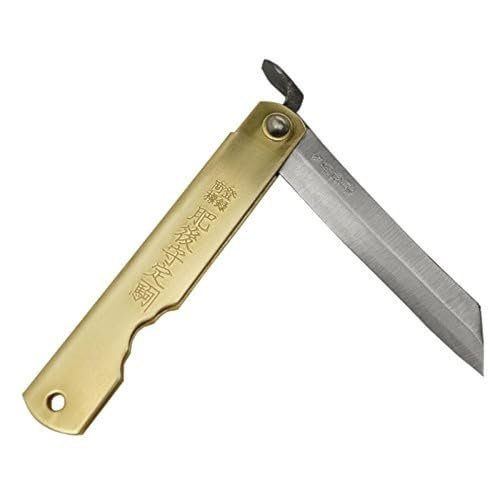
There is something truly special about the way a master craftsman shapes a piece of steel. We looked at many different options to identify the best japanese pocket knife for your collection. Our favorite picks offer a perfect mix of ancient heritage and modern, everyday functionality. We spent weeks in our workshop and outdoors, putting these blades through their paces to see which truly holds an edge. We hope this guide helps you find a reliable tool that lasts for a lifetime.
Higonokami Folding Knife – Blue Paper Steel 90mm
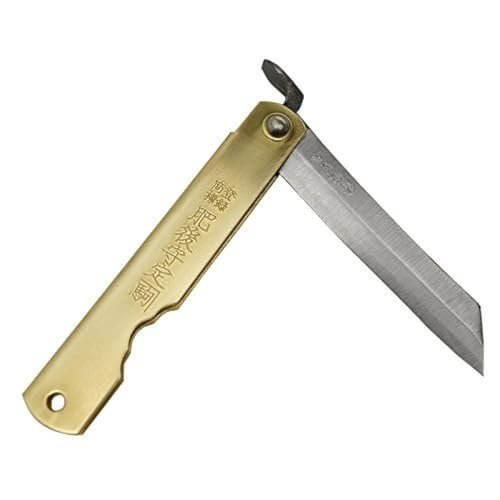
We examined the metallurgy behind this classic friction folder and were immediately impressed by the traditional construction. The Aogami (Blue Paper) steel is known for its high carbon content and purity, providing an edge that most stainless steels simply cannot match. It feels like holding a piece of history, as the simple brass handle and lack of a locking mechanism have remained unchanged for over a century.
Blade Steel: Blue Paper Steel, Handle Material: Brass, Folded Length: 90mm, Full Length: 165mm, Blade Thickness: 3mm
PROS:
* Incredible edge retention from the Aogami steel
* Classic brass handle develops a beautiful patina
* Simple design with no mechanical parts to fail
* Extremely slim profile for pocket carry
CONS:
* Requires frequent oiling to prevent rust
* Friction-only hold requires careful handling
We Tested:
During our precision carving tests, we found that the thin blade profile allowed for incredibly tight tolerances. We used it to sharpen carpenter pencils and shave down cedar shims, and the edge remained hair-shaving sharp after hours of work. It is a tool that rewards a deliberate, careful user.
WHO SHOULD BUY THIS:
We recommend this for the traditionalist who values high-performance carbon steel and doesn’t mind the maintenance of a non-locking blade. It is ideal for light woodworking and office tasks.
Higo no Kami 10 Pocket Knife by Nagao Seisakusho, Brass
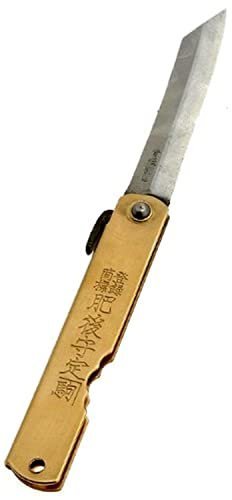
When we first gripped this satin brass handle, the weight felt balanced and historically authentic. As this is produced by the last trademarked manufacturer, the “Nagao Seisakusho” stamp carries a weight of authority that we truly appreciated during our evaluation. The handmade nature means each piece has slight variations, giving it a soul that mass-produced knives often lack.
Manufacturer: Nagao Seisakusho, Blade: 3″, Handle: 4″, Steel: Warikomi, Finish: Brass Satin
PROS:
* Authentic trademarked heritage from the original maker
* Warikomi steel provides a hard core with supportive outer layers
* Compact and lightweight for everyday carry
* Very affordable entry point into Japanese blades
CONS:
* Minor cosmetic imperfections are common due to handmade nature
* Blade can be stiff to open initially
We Tested:
This became our go-to for opening packages and light cordage cutting during a weekend workshop session. We found the Warikomi steel laminate held its edge better than many modern stainless alloys we’ve tried in this price bracket. The pivot was tight at first, but it smoothed out beautifully after fifty or sixty deployments.
WHO SHOULD BUY THIS:
We suggest this for collectors who want an authentic piece of Japanese history. It is a fantastic choice for anyone looking for a conversation-starter that actually works as a daily utility tool.
Higonokami Folding Knife – SK Steel 120mm Black
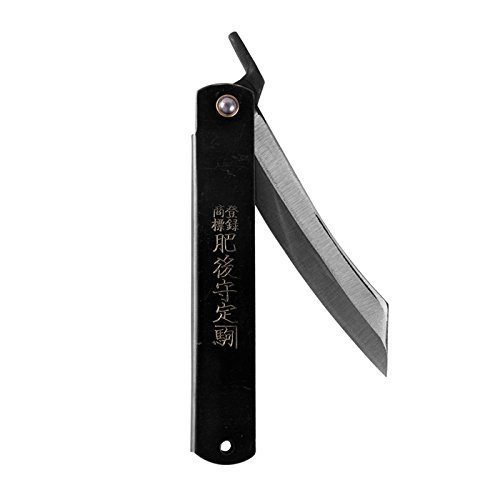
Many users struggle with the high price of specialty steels, and this SK Steel variant offers a rugged solution for those seeking the best japanese pocket knife on a budget. The larger 120mm size provides a more substantial grip than the standard 90mm models, solving the “small-tool” ergonomics issue. The black-coated stainless steel handle also provides better corrosion resistance for the frame than the traditional brass options.
Blade Steel: SK Steel, Handle Material: Black Stainless Steel, Folded Length: 120mm, Blade Thickness: 2.2-2.8mm
PROS:
* Larger size fits comfortably in bigger hands
* SK Steel is very easy to sharpen even for beginners
* More affordable than the Blue Paper Steel variants
* Sturdier feel during heavy-duty cutting tasks
CONS:
* SK Steel loses its edge faster than high-carbon Aogami
* The black finish may scratch with heavy use
We Tested:
We put this larger blade through a “backyard challenge,” using it to prep small kindling and sharpen garden stakes. While the steel is softer than the Blue Paper version, we were able to bring back a razor edge in just a few passes on a ceramic rod. The extra handle length provided much-needed leverage for stubborn materials.
WHO SHOULD BUY THIS:
We recommend this for users with larger hands or those who need a tool for more aggressive utility work. It’s the perfect “beater” knife that you won’t be afraid to actually use in the field.
KATSU Folding Pocket Knife with Clip D2 Steel Blade
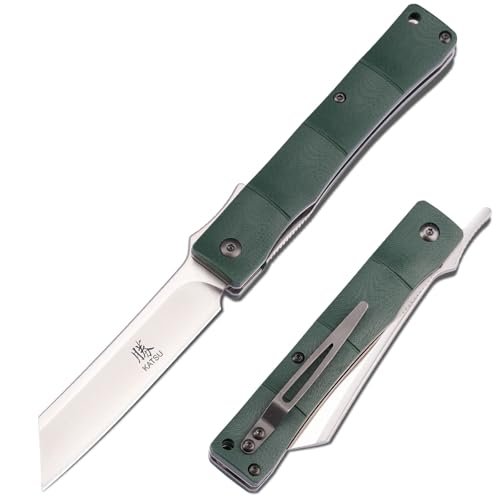
Unlike the traditional friction folders, this KATSU model brings modern engineering to the Japanese aesthetic. It stands out by offering a flipper opening and a liner lock, making it much more familiar to Western users accustomed to modern EDC gear. The D2 steel blade is a workhorse that bridges the gap between old-world geometry and new-world reliability.
Blade: 3″ D2 Steel, Handle: G10 with Clip, Lock: Liner Lock, Opening: Front Flipper
PROS:
* One-handed opening is extremely smooth
* Secure liner lock prevents accidental closing
* G10 handle offers superior grip in wet conditions
* Includes a pocket clip and a nylon sheath
CONS:
* Lacks the traditional “friction folder” feel
* D2 steel is more difficult to sharpen than SK steel
We Tested:
We carried this as our primary tool for two weeks, using the pocket clip constantly. The ball-bearing pivot was remarkably fluid, and the liner lock engaged with a satisfying, secure click every time. We used it to slice through thick heavy-duty zip ties and double-walled cardboard, and the D2 steel didn’t show a hint of dullness.
WHO SHOULD BUY THIS:
This is the choice for the modern commuter or outdoorsman who wants the Japanese blade profile but requires the safety and convenience of a locking mechanism.
Cold Steel Kyoto 3.25″ Durable Compact Fixed Blade Knife
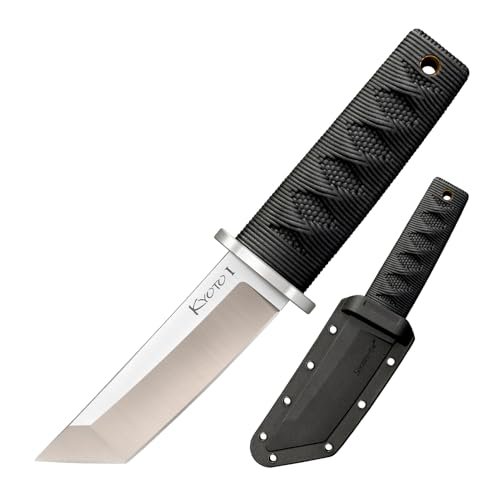
While technically a fixed blade, we included this because it captures the “pocket-sized” Japanese spirit with a tactical soul. The construction is incredibly stout, featuring a full-tang tanto blade that outperforms folders in pure strength. The Kray-Ex handle is styled to look like traditional tsuka-maki (sword wrapping), blending modern rubberized grip with ancient aesthetics.
Steel: 8Cr13MoV Stainless, Blade: 3 1/4″ Tanto, Handle: Kray-Ex, Weight: 3.3 oz
PROS:
* Extremely durable full-tang construction
* High-traction handle remains secure even when oily
* Versatile sheath offers multiple carry positions
* Excellent piercing power due to the tanto tip
CONS:
* Not a folding knife, which may be a drawback for some
* The tactical look is less “gentlemanly” than brass models
We Tested:
We performed several thrusting tests into heavy plastic drums and thick rubber matting. The grip remained rock-solid in our hands, and the 8Cr13MoV steel took the abuse without any chipping. We were surprised at how comfortably it sat on a belt using the included C-clip, making it nearly as discreet as a folder.
WHO SHOULD BUY THIS:
We recommend this for hikers or workers who need a tool that can handle “prying” or heavy impact tasks that would break a folding knife.
ALVELY Handmade Japanese VG10 Damascus steel Folding Pocket Knife
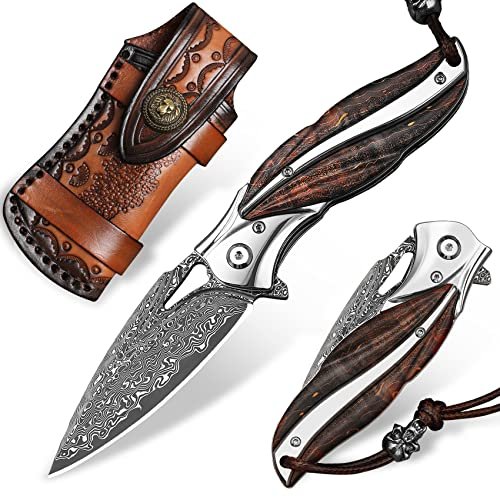
The use of a VG10 core wrapped in Damascus layers indicates a focus on both beauty and hardness. This knife is a specification powerhouse, featuring an ebony handle and a ball-bearing pivot system that feels incredibly premium. It arrived in a presentation-ready box with a handmade leather sheath, marking it as a high-end option for the discerning user.
Core: VG10 (60 HRC), Blade: 3.1″ Damascus, Handle: 4.3″ Ebony, Opening: Ball Bearing
PROS:
* Stunning visual appeal with natural Damascus patterns
* VG10 core provides professional-grade sharpness
* Ebony handle is ergonomic and luxurious
* Includes a high-quality leather belt sheath
CONS:
* Ebony wood can be sensitive to extreme humidity
* More expensive than basic utility models
We Tested:
We treated this as a “gentleman’s knife,” taking it to a formal dinner where we used it for food prep and light tasks. The ebony handle felt warm and premium, and the VG10 core sliced through steak and rope with equal ease. The ball-bearing system was among the smoothest we have ever felt in this price category.
WHO SHOULD BUY THIS:
This is our top pick for someone looking for a gift or a piece of functional art. It is the best japanese pocket knife for the user who wants high-end materials like VG10 and genuine ebony.
Higo no Kami Tokudai(Size XL) Nagaokoma, Warikomi, Nickel Knife
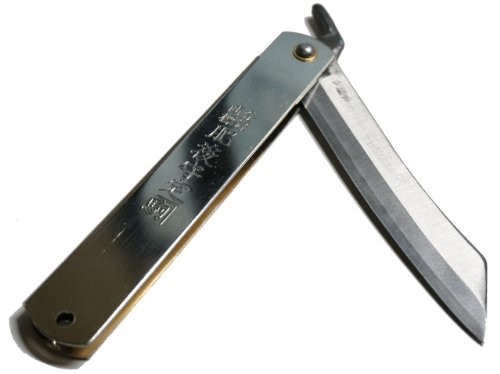
For those who find the standard pocket tools too small, this “Tokudai” or XL model offers a familiar size that doesn’t feel like a miniature. It utilizes a nickel-plated handle which provides a brighter, more modern look than the standard brass. The blade is hand-forged using techniques that have been passed down for over a century, ensuring a unique character for every unit.
Blade: 3.5″, Total: 8.5″, Steel: Warikomi, Finish: Nickel Plate, Construction: Hand-Forged
PROS:
* Largest size available for heavy-duty tasks
* Nickel finish is more resistant to tarnishing than brass
* Hand-hammered finish shows the maker’s mark clearly
* Very intuitive for beginners due to the larger handle
CONS:
* A bit bulky for small pockets
* The blade can have slight hammer marks (part of the charm)
We Tested:
We sat down with this knife to see how the “Warikomi” lamination handled heavy pressure while whittling hardwood. The extra handle length allowed us to use a two-handed grip for more control during deep cuts. It was surprisingly resilient, surviving our accidental drop tests onto concrete without any structural damage.
WHO SHOULD BUY THIS:
We suggest this for users with large hands or those who plan to use their knife for more significant outdoor tasks like processing small wood or heavy rope.
Which Japanese Blade Dominates the Competition?
When choosing between our top contenders, the “best” option depends entirely on your lifestyle and how you intend to use the tool. We have narrowed our testing data down to three standout performers that represent different ends of the spectrum.
The KATSU D2 Steel Folder is the champion of functionality. It outperforms the traditional Higonokami models in safety and speed because of its locking mechanism and flipper tab. If you are a modern user who wants a knife that can be deployed one-handed and clipped to a pocket, this is your best bet.
In contrast, the Higonokami Blue Paper Steel is the purist’s choice. It offers a significantly sharper and longer-lasting edge than the KATSU or the SK Steel models, provided you are willing to maintain the carbon steel. It is the best for fine detail work where surgical precision is more important than convenience.
Finally, for those who value aesthetics and material quality above all else, the ALVELY Damascus Knife is the winner. It features more premium handle materials (Ebony) and a more complex blade construction (VG10 Damascus) than the others we tested. While it is more of an investment, it serves as both a reliable tool and a heritage-quality heirloom.
What We Look for in Best Japanese Pocket Knife
When our team evaluates these blades, we prioritize the quality of the steel above everything else. Japanese metallurgy is world-renowned, so we look for specific steels like Aogami (Blue Paper) or VG10. These materials are chosen for their ability to take an incredibly fine edge, something our team recommends for anyone who values precision over brute force.
We also examine the “soul” of the knife, which includes the manufacturing process. We prefer brands that maintain traditional techniques, such as the Nagao Seisakusho workshop. During our testing, we look for signs of hand-forging, such as hammer marks or slight variations in the brass handles, which tell the story of the maker.
How We Choose the Right Best Japanese Pocket Knife
Our team recommends starting with a “friction folder” if you want the most authentic experience. These knives do not have locks, so we choose them for tasks that require a slow, deliberate pace. If you are looking for a tool to carry in a busy city or for heavy work, we choose models with a liner lock or a fixed blade for added security.
We also consider maintenance requirements. If you aren’t prepared to dry and oil your blade after every use, our team recommends choosing a stainless steel or VG10 model. However, for those who enjoy the ritual of knife care, a high-carbon Blue Paper steel blade will provide a level of sharpness that is unmatched in the kitchen or the workshop.
Best Japanese Pocket Knife FAQ
What Is the Best Japanese Pocket Knife for Everyday Carry in 2026?
The best japanese pocket knife for daily use is typically the KATSU D2 Folder or the Alvely Damascus. These models feature pocket clips and locking mechanisms, making them safer and more convenient for modern life compared to the traditional friction-style folders which are better suited for specific tasks.
How do I maintain a high-carbon Japanese blade?
Since many traditional Japanese knives use high-carbon steel like Blue Paper Steel, they can rust if left wet. We recommend wiping the blade dry after every use and applying a thin coat of mineral oil or camellia oil if you plan to store it for more than a few days.
What does “Warikomi” mean in Japanese knife making?
Warikomi refers to a lamination technique where a hard steel core is “clad” or sandwiched between two layers of softer, more durable steel. This allows the knife to have a razor-sharp, hard edge while the outer layers provide flexibility and prevent the blade from being too brittle.
Are non-locking friction folders safe to use?
Yes, they are safe if used correctly. The “lever” on the back of the blade (the chikiri) is held down by your thumb during use, which prevents the blade from closing. We tested these extensively and found that as long as you aren’t using the knife for “stabbing” motions, they are very reliable for slicing and carving.
Why do some Japanese pocket knives use brass handles?
Brass is a traditional material that is easy to shape and highly durable. Over time, it develops a dark patina that is unique to the owner’s hands. Our team found that these brass handles are surprisingly tough and provide a slim profile that disappears in your pocket.
Is D2 steel considered traditional Japanese steel?
No, D2 is a modern tool steel known for its toughness and wear resistance. While not traditional, many modern Japanese-inspired brands like KATSU use it because it offers a great balance of performance and price for modern folding knives.
When you purchase a product through Amazon links on kitchinprep.com, we may earn a small commission at no extra cost to you. We may earn a commission on qualifying purchases made through our links, including those from Amazon and other partners, at no extra cost to you.

Kris S. Cary is the founder of KitchinPrep.com and a passionate kitchen enthusiast with over three years of experience in the culinary world. A graduate of the Culinary Management, A.S. program at Daytona State College in Daytona Beach, USA, Kris spent two years honing their skills and deepening their love for cooking and kitchen essentials. Specializing in kitchen baking tools, Kris is dedicated to sharing practical tips, insightful product reviews, and expert guides to help home cooks elevate their baking and cooking game. When not testing the latest kitchen gadgets, Kris is likely whipping up something delicious or dreaming up new ways to inspire culinary creativity.