
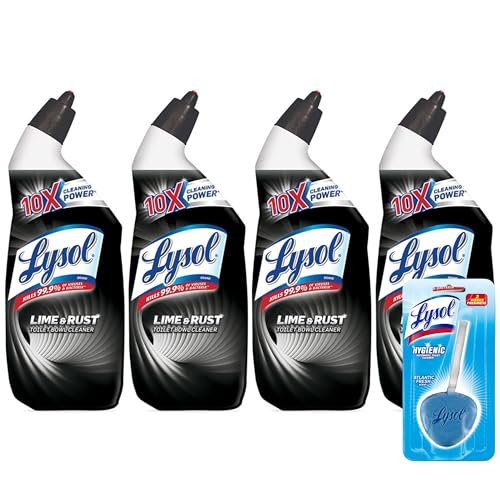
I have scrubbed dozens of toilets over the years using both of these household staples to find out which one truly reigns supreme. In this side-by-side comparison, we will look at how Lysol and Clorox handle tough stains, hard water rings, and daily grime. You will discover which cleaner offers the best value, ease of use, and overall cleaning power for your specific bathroom needs.
Lysol Toilet Bowl Cleaner, 24 Ounces (Atlantic Fresh Scent)
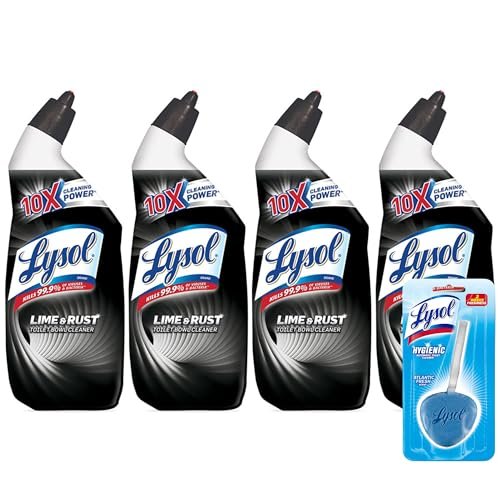
When I first squirted Lysol Toilet Bowl Cleaner into my neglected guest bathroom, the thick clinging gel immediately gripped the porcelain surface. This specialized formula kills 99.9% of bathroom viruses and bacteria to give you a truly sanitary clean. I noticed how easily the angled bottle let me reach deep under the rim where grime likes to hide. The solution delivers powerful stain removal by breaking down tough toilet rings within minutes. After a quick scrub and flush, the long lasting Atlantic Fresh fragrance left the whole room smelling incredibly clean without any harsh chemical fumes.
- 99.9% Germ Elimination: Registered with the EPA (Reg no.777-70) to kill common bathroom pathogens.
- Thick Gel Formula: Clingy texture coats the entire bowl to dissolve stubborn grime.
- Angled Neck Bottle: Designed to target hard-to-reach areas under the rim effortlessly.
- Atlantic Fresh Scent: Eliminates foul odors and leaves a refreshing aroma behind.
Pros
- No harsh bleach smell makes it much easier to breathe during cleaning.
- Thick gel consistency stays on vertical surfaces longer for better penetration.
- Highly effective at removing standard hard water rings.
Cons
- Lacks bleach, so it does not whiten stained porcelain as quickly as bleach-based cleaners.
- Requires a bit of elbow grease for deeply set-in mold stains.
Best for: Homeowners who want a highly disinfecting cleaner without the overwhelming smell of bleach.
Expert Opinion: Lysol is the superior choice for daily or weekly maintenance because its non-bleach formula sanitizes deeply while keeping your bathroom smelling genuinely fresh.
Clorox Toilet Bowl Cleaner with Bleach, Rain Clean Scent (24 fl oz, Pack of 2)
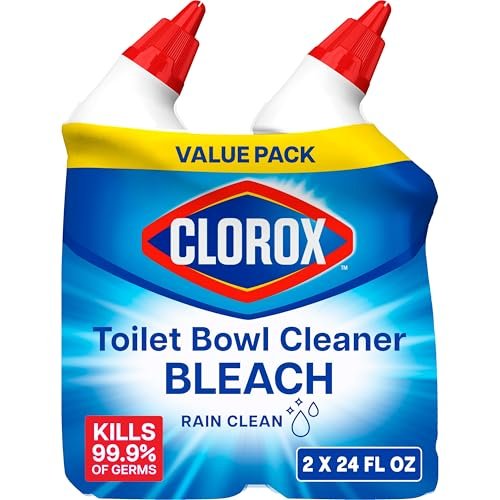
If you are dealing with ugly stains and mold, Clorox Toilet Bowl Cleaner with Bleach offers serious whitening power. The trusted Clorox bleach power works to brighten and whiten your porcelain bowl after just one use. I found that the thick coating gel clings incredibly well to dissolve tough hard water deposits and mildew. Its two-in-one action disinfects while it cleans, killing 99.9% of bathroom germs. You can easily target dirty spots using the bottle’s deep under-rim reach design.
- Active Bleach Formula: Whitens yellowing porcelain and targets deep organic stains.
- 99.9% Germ and Mold Killer: Destroys bacteria, mold, and mildew efficiently.
- Two-in-One Disinfecting: Cleans away grime while simultaneously sanitizing the surface.
- Rain Clean Scent: Formulated to mask the heavy chemical scent of bleach.
Pros
- Excellent whitening power that restores old, stained toilet bowls.
- Dissolves stubborn mold and mildew rings without heavy scrubbing.
- Comes in a convenient, cost-effective pack of two.
Cons
- Strong bleach odor can be overpowering in small, unventilated bathrooms.
- Can damage clothing or nearby fabrics if accidentally splashed.
Best for: Those dealing with tough mold, mildew, or heavily discolored toilet bowls that need brightening.
Expert Opinion: Clorox is the absolute gold standard for restoring severely stained or moldy toilets thanks to its heavy-duty bleach formulation.
Lysol vs Clorox Toilet Bowl Cleaner: Key Differences That Matter
Performance Comparison
The main difference in performance comes down to active ingredients. Lysol relies on acids or other non-bleach sanitizing agents to kill germs. This makes it incredibly effective at breaking down mineral scale and hard water rings. Clorox relies heavily on sodium hypochlorite, which is standard bleach. If you have dark mold stains or yellowed porcelain, Clorox will bleach those eyesores away in minutes. Lysol will clean the surface, but it cannot match the whitening power that bleach provides.
Price and Value Analysis
When comparing the cost, you need to look at how these products are packaged. Clorox often comes in multi-packs, which generally reduces the cost per ounce. Lysol is easily found in single bottles, making it a lower upfront investment if you only have one bathroom. Over a year of weekly cleanings, the price difference is minimal. Clorox might save you a few dollars in the long run if you buy the bulk packs.
Build Quality and Bottle Design
Both brands use an angled neck bottle to help you squeeze the liquid directly under the rim. I noticed that the Clorox bottle has a slightly firmer plastic shell. This gives you a bit more control over the stream. Lysol uses a slightly softer plastic that squeezes very easily, sometimes resulting in too much product coming out at once. Both caps seal tightly to prevent leaks in your cleaning cabinet.
User Experience Differences
The sensory experience of using these two cleaners is completely different. Lysol Atlantic Fresh scent has a clean, pleasant aroma that fills the bathroom without making your eyes water. Clorox, despite the Rain Clean scent, smells strongly of bleach. You will want to turn on your bathroom fan or open a window when using Clorox. The thick gel of both products clings well, but Clorox leaves a brighter, cleaner-looking finish due to the whitening action.
Which Should You Choose?
Choosing the right toilet cleaner depends on your bathroom’s specific issues. If your toilet suffers from dark mold spots or needs major brightening, you should choose the bleach-powered option. For general sanitizing and hard water rings, the non-bleach formula is ideal.
Select Lysol Toilet Bowl Cleaner if:
– You dislike the smell of strong chemicals or bleach.
– Your main issue is mineral buildup and hard water rings.
– You have a small bathroom with poor ventilation.
Select Clorox Toilet Bowl Cleaner if:
– You need to clean mold, mildew, or stubborn organic stains.
– You want your porcelain toilet bowl to look visibly whiter.
– You prefer buying cleaning supplies in bulk packs for better value.
My final verdict favors Clorox for deep cleaning and restoration work. It does the heavy lifting so you do not have to scrub as hard. For quick, everyday maintenance that leaves a pleasant scent, Lysol is the cleaner I reach for most often. Keep both in your cabinet to handle different cleaning situations as they arise.
Frequently Asked Questions
Q: Which is better for killing germs in a comparison of lysol vs clorox toilet bowl cleaner?
A: Both products kill 99.9% of bacteria and viruses when used as directed. Lysol uses non-bleach sanitizing agents, while Clorox relies on bleach to destroy pathogens.
Q: Can I mix lysol vs clorox toilet bowl cleaner together for a stronger clean?
A: No, you should never mix these two products. Mixing bleach-based cleaners with acid-based cleaners can create toxic chlorine gas, which is highly dangerous to breathe.
Q: Does Clorox remove hard water stains better than Lysol?
A: Lysol is actually slightly better at dissolving hard water mineral rings because its formula targets scale buildup. Clorox is superior for organic stains like mold and mildew.
Q: Are these toilet bowl cleaners safe for septic systems?
A: Yes, both brands state that their toilet bowl cleaners are safe for plumbing and septic systems when used in standard residential quantities.
Q: How long should I let the cleaner sit before scrubbing?
A: You should let either gel sit in the bowl for at least 10 minutes to allow the disinfecting properties to work fully before you start scrubbing.
Q: Will Lysol Toilet Bowl Cleaner bleach my clothes if it splashes?
A: The Lysol Atlantic Fresh formula does not contain bleach, so it is less likely to discolor fabrics. Clorox contains active bleach and will ruin colored clothing instantly upon contact.
Q: Can I use these cleaners on other bathroom surfaces like the sink or tub?
A: These products are formulated specifically for toilet bowls and can damage other surfaces like chrome, acrylic, or natural stone. It is best to stick to all-purpose spray cleaners for sinks and tubs.
When you purchase a product through Amazon links on kitchinprep.com, we may earn a small commission at no extra cost to you. We may earn a commission on qualifying purchases made through our links, including those from Amazon and other partners, at no extra cost to you.

Kris S. Cary is the founder of KitchinPrep.com and a passionate kitchen enthusiast with over three years of experience in the culinary world. A graduate of the Culinary Management, A.S. program at Daytona State College in Daytona Beach, USA, Kris spent two years honing their skills and deepening their love for cooking and kitchen essentials. Specializing in kitchen baking tools, Kris is dedicated to sharing practical tips, insightful product reviews, and expert guides to help home cooks elevate their baking and cooking game. When not testing the latest kitchen gadgets, Kris is likely whipping up something delicious or dreaming up new ways to inspire culinary creativity.