
I have spent years testing different household cleaners in my own home, constantly switching between natural alternatives and heavy-duty chemical agents. In this comparison, you will learn how Iberia All Natural Distilled White Vinegar and Clorox Disinfecting Bleach perform head-to-head across various cleaning, disinfecting, and household tasks. By the end, you will know exactly when to reach for the gentle power of acid and when to deploy the sanitizing strength of chlorine.
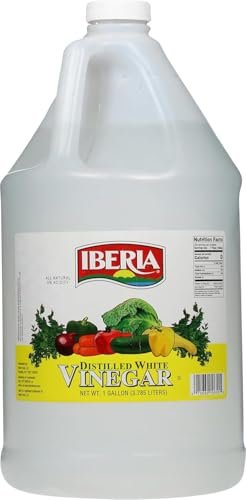
Iberia All Natural Distilled White Vinegar, 1 Gallon (5% Acidity)
Over the past few months, I have put the Iberia All Natural Distilled White Vinegar through its paces in both my kitchen and laundry room. This all-natural & pure liquid contains a standard 5% acidity level that cuts through grease and hard water buildup with surprising ease. As a powerful multi-purpose cleaner, it replaces several specialty sprays under my sink without introducing harsh chemical fumes into my living space. The bulk size for more value means I do not have to worry about running out during heavy canning season or large-scale spring cleaning projects. Choosing this product guarantees trusted quality from Iberia, providing a dependable, food-safe substance that is equally useful for culinary creation and deep cleaning.
Key Features
- 5% Acidity: Standard strength for safe, effective household descaling and food preservation.
- All-Natural Formulation: Made from 100% distilled white vinegar without artificial preservatives.
- Bulk 1-Gallon Jug: Generous volume offers a cost-effective solution for high-volume cleaning and cooking.
- Food-Grade Safety: Perfectly safe for pickling, marinating, and dressing salads.
Pros
- Completely non-toxic and safe to use around pets and young children.
- Neutralizes tough odors rather than just masking them with synthetic perfumes.
- Excellent at dissolving hard water stains and soap scum on bathroom fixtures.
Cons
- The strong, pungent acetic acid smell can linger in enclosed spaces for an hour.
- Cannot be used on natural stone countertops like marble or granite due to acid etching.
Best for: Anyone looking for a budget-friendly, non-toxic cleaner for daily household tasks, descaling, and food preparation.
Expert Opinion: This vinegar is an indispensable asset for green cleaning. Its natural acidity breaks down mineral deposits beautifully without damaging the environment.
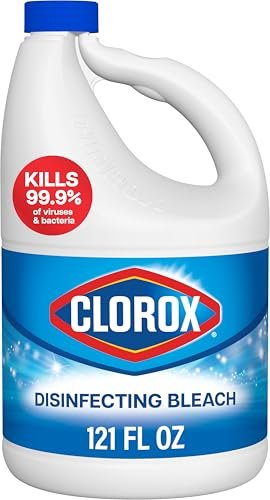
Clorox Disinfecting Bleach, 121 Fluid Ounces
When a stomach bug hit my household last winter, I relied heavily on Clorox Disinfecting Bleach to sanitize every high-touch surface. This classic formula utilizes five-in-one technology to clean, whiten, brighten, deodorize, and sanitize laundry and hard surfaces. It functions as an incredibly powerful mold cleaner that obliterates bathroom mildew on tiles and grout almost instantly. Because it kills strep, E. coli, salmonella, and flu virus, it offers peace of mind that milder, natural alternatives simply cannot match. I also keep this bottle on standby as a dedicated bleach for laundry to keep my white sheets looking crisp and pristine.
Key Features
- Disinfecting Bleach: Kills 99.9% of common household bacteria, viruses, and fungi.
- 121 Fluid Ounces: Large-capacity bottle provides plenty of concentrate for dilution.
- Multi-Surface Sanitizer: Approved for disinfecting more than 30 different hard surfaces.
- Anti-Yellowing Laundry Technology: Formulated to prevent fabrics from yellowing while maximizing white brightness.
Pros
- Unmatched germ-killing power for sanitizing contaminated surfaces.
- Highly effective at removing stubborn mold and mildew stains.
- Restores stained white fabrics to their original brightness.
Cons
- Produces strong chemical fumes that require excellent room ventilation.
- Will ruin colored fabrics and can damage sensitive skin on contact.
Best for: Homeowners needing heavy-duty disinfection, deep bathroom cleaning, or high-performance laundry whitening.
Expert Opinion: Clorox remains the gold standard for clinical-grade disinfection in the home. You should always use it diluted and with protective gloves for safety.
vinegar vs bleach for cleaning: Key Differences That Matter
Performance Comparison
In my testing, the difference in how these two liquids clean comes down to chemistry. Iberia vinegar relies on acetic acid to dissolve mineral deposits, cut through grease, and lift light dirt. It shines when I use it to clean windows, wipe down countertops, or descale my coffee maker.
On the other hand, Clorox bleach is a powerful oxidizing agent. It destroys organic matter, which makes it incredibly effective at killing bacteria, viruses, and mold spores. While vinegar can kill some pathogens, it is not a registered disinfectant. When I need to sanitize a cutting board after prepping raw chicken, bleach is the only choice I trust to get the job done safely.
Price and Value Analysis
Both of these products offer outstanding value, but they serve different budget needs. The Iberia vinegar comes in a massive one-gallon jug that costs very little. Because you can use it straight out of the bottle for most cleaning tasks, you go through it faster.
Clorox bleach comes in a slightly smaller 121-ounce bottle but is highly concentrated. You must dilute bleach with water for almost all cleaning applications. A single bottle of bleach lasts for months because a few tablespoons go a long way. Ultimately, vinegar is cheaper per ounce, but bleach provides more active cleaning power per dollar spent due to its dilution ratio.
Formulation and Stability
The physical characteristics of these products dictate how you store and use them. Iberia vinegar is highly stable. A bottle of distilled white vinegar can sit in your pantry for years without losing its acidic strength.
Clorox bleach is much more temperamental. Once opened, bleach begins to degrade after about six months, losing its disinfecting potency. The plastic bottle of Clorox is sturdy and features a secure, splash-free cap design. Iberia uses a simpler, lightweight plastic jug that can sometimes glug when pouring, though the handle is sturdy enough for the heavy liquid.
User Experience Differences
Using these two liquids presents completely different sensory experiences. When I clean with Iberia vinegar, the strong salad-like scent fills the room immediately. It is sharp, but it is completely non-toxic and dissipates quickly once dry.
Working with Clorox bleach requires real care and preparation. I have to wear old clothes to prevent accidental bleach spots, put on rubber gloves, and open the windows to handle the fumes. The chemical smell is powerful and can cause headaches if the area is not well ventilated. Vinegar offers a relaxed, casual cleaning experience, while bleach demands your full attention and safety precautions.
Which Should You Choose?
Choose Iberia All Natural Distilled White Vinegar if:
– You want a safe, non-toxic natural household cleaner for daily maintenance around pets and children.
– You need to remove hard water stains, descale appliances, or clean windows without streaking.
– You want a multi-purpose liquid that double-tasks as a cooking and pickling ingredient.
Choose Clorox Disinfecting Bleach if:
– You require a powerful registered disinfectant spray alternative to kill cold and flu viruses.
– You are dealing with stubborn mold or mildew growth in damp areas like the bathroom.
– You want to whiten dingy laundry or sanitize white linens.
Final Verdict
I keep both of these products in my utility closet because they do not replace one another. Vinegar is my daily workhorse for wiping down surfaces, cleaning glass, and keeping minerals at bay. Bleach is my heavy artillery, reserved for weekly bathroom sanitizing, laundry whitening, and deep disinfection during illness. If you want a safe, everyday cleaner, buy the vinegar. If you need true sanitizing power, keep the bleach on hand. Never mix the two, as combining acid and bleach creates toxic chlorine gas.
Frequently Asked Questions
Q: Is vinegar vs bleach for cleaning better for removing mold from drywall?
A: Bleach is highly effective at killing mold on non-porous surfaces like tile, but it cannot penetrate deep into porous drywall. For drywall mold, vinegar is often a better choice because its acid can penetrate the material to kill the mold at the root, though severe cases require professional remediation.
Q: What is the main safety difference when comparing vinegar vs bleach for cleaning?
A: Vinegar is non-toxic and safe to touch or inhale in normal quantities, whereas bleach is a corrosive chemical that requires gloves, eye protection, and good ventilation. You must never mix vinegar and bleach together, because the combination creates highly toxic chlorine gas.
Q: Can I use white vinegar to sanitize my kitchen cutting boards?
A: Vinegar can reduce some bacteria, but it is not a registered disinfectant. For cutting boards used with raw meat, a diluted bleach solution is much safer for killing dangerous pathogens like salmonella and E. coli.
Q: Will white vinegar ruin my washing machine?
A: Occasional use of white vinegar is excellent for removing odors and buildup in washing machines. However, using it constantly can degrade the rubber seals and hoses over time, so use it sparingly.
Q: Why does bleach lose its cleaning power over time?
A: Bleach is chemically unstable and begins to break down into salt and water after six months of storage. Vinegar remains stable and effective almost indefinitely.
Q: Can I use Clorox bleach on colored clothing?
A: No, standard Clorox Disinfecting Bleach will strip the color out of fabrics and leave permanent white spots. Only use it on white fabrics or color-safe materials as directed.
Q: Which product is better for removing hard water deposits on faucets?
A: Vinegar is far superior for removing mineral deposits. Acetic acid dissolves calcium and lime easily, whereas bleach does not dissolve mineral scale at all.
When you purchase a product through Amazon links on kitchinprep.com, we may earn a small commission at no extra cost to you. We may earn a commission on qualifying purchases made through our links, including those from Amazon and other partners, at no extra cost to you.

Kris S. Cary is the founder of KitchinPrep.com and a passionate kitchen enthusiast with over three years of experience in the culinary world. A graduate of the Culinary Management, A.S. program at Daytona State College in Daytona Beach, USA, Kris spent two years honing their skills and deepening their love for cooking and kitchen essentials. Specializing in kitchen baking tools, Kris is dedicated to sharing practical tips, insightful product reviews, and expert guides to help home cooks elevate their baking and cooking game. When not testing the latest kitchen gadgets, Kris is likely whipping up something delicious or dreaming up new ways to inspire culinary creativity.