
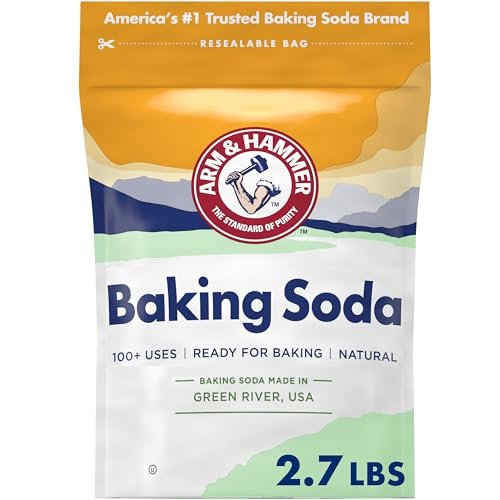
I have used both of these products in my home for years to tackle everything from stubborn kitchen grease to dirty laundry. In this comparison, I will share my firsthand experience with ARM & HAMMER Baking Soda and Iberia White Vinegar to help you decide which one deserves a permanent spot on your shelves. You will learn how their chemical properties differ and how to use them safely for the best results.
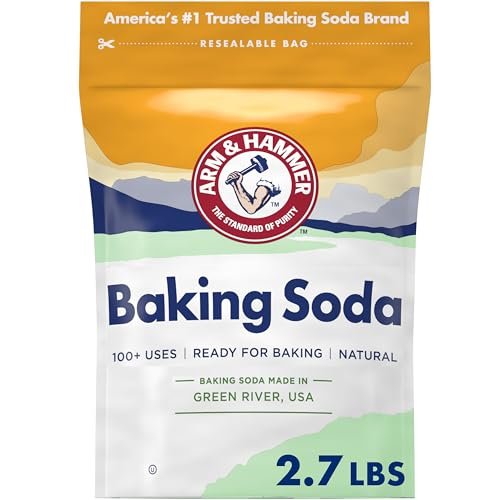
ARM & HAMMER Baking Soda, 2.7 Lbs
I always keep a bag of this pure and natural baking soda in my pantry because it handles so many different tasks. This particular 2.7 lb bag comes in a resealable bag that prevents clumping and keeps moisture out. Because it is food-grade USP-grade 1, I use it safely for baking fluffy breads and cookies. It also serves as a fantastic DIY home hacks essential for scrubbing sinks, deodorizing carpets, and clearing slow drains. I love that it is sustainably made in the USA in Green River, Wyoming, using renewable energy.
- Packaged in a 2.7 lb resealable bag to maintain freshness.
- Pure and natural formula with no additives, cornstarch, or fragrances.
- Food-grade USP-grade 1 crystals suitable for vegan, organic, and gluten-free baking.
- Multi-purpose utility for DIY home hacks including cleaning and crafting.
-
Sustainably made in the USA using 100% certified renewable energy.
-
Highly effective at absorbing tough odors instead of just masking them.
- Mild abrasive texture safely scrubs away grime without scratching delicate surfaces.
- Food-grade purity means it is entirely safe around children and pets.
-
Resealable packaging prevents spills and keeps the powder dry.
-
Powder can leave a white residue if not rinsed thoroughly.
- Can clump up if stored in extremely humid environments.
Best for: Homeowners who need a gentle abrasive cleaner, a reliable deodorizer, and a high-quality baking ingredient all in one package.
Expert Opinion: Baking soda is a mild alkali that excels at neutralizing acidic odors and physically lifting dirt. Its crystalline structure provides just enough friction to scrub surfaces without causing damage.
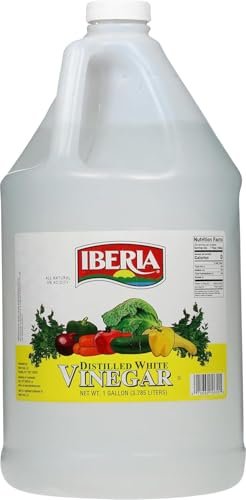
Iberia All Natural Distilled White Vinegar, 1 Gallon
This one-gallon jug is a versatile pantry staple that I rely on for both culinary and cleaning tasks. The formula is all-natural and pure, containing zero artificial additives or preservatives. With its 5% acidity, it works as a powerful multi-purpose cleaner that cuts through limescale and grease with ease. I find the bulk size highly economical because one gallon lasts for months even with daily household use. Iberia has built a reputation for trusted quality over generations, making this a reliable product for canning, pickling, or sanitizing.
- Generous 1-gallon bulk size offers excellent long-term value.
- Standard 5% acidity perfect for both cooking and heavy cleaning.
- All-natural and pure distilled white vinegar free of artificial preservatives.
- Powerful multi-purpose cleaner that naturally disinfects and deodorizes.
-
Trusted quality from a long-standing, reputable brand.
-
Dissolves hard water deposits and soap scum rapidly.
- Excellent natural weed killer and fabric softener alternative.
- Very cost-effective when purchased in the large one-gallon volume.
-
Multi-use capability spans from pickling recipes to laundry sanitization.
-
Strong, pungent scent can be overwhelming during indoor use.
- Plastic handle on the large jug can feel flimsy when completely full.
- High acidity can damage natural stone countertops like marble or granite.
Best for: People who want an affordable, eco-friendly liquid descaler, sanitizer, and culinary ingredient in bulk.
Expert Opinion: The acetic acid in white vinegar makes it a superb solvent for mineral deposits and grease. It acts as a mild disinfectant while remaining safe for food preparation surfaces.
Baking soda vs vinegar for cleaning: Key Differences That Matter
Performance Comparison
Let us look at how they clean. Baking soda is a base with a pH of around 9. Vinegar is an acid with a pH of around 2 to 3. This chemical difference dictates their performance.
Baking soda uses its alkaline nature and physical grit to lift grease and scrub away stuck-on food. Vinegar relies on its acidity to dissolve mineral buildup, cut through soap scum, and kill certain bacteria. When you mix them, they neutralize each other, producing carbon dioxide gas. This fizzing action can physically dislodge dirt in a drain, but the resulting leftover liquid is just salty water with no real cleaning power. For best results, use them sequentially rather than mixing them into a single solution.
Price and Value Analysis
Evaluating the cost of baking soda vs vinegar for cleaning reveals a clear picture. The Iberia gallon jug gives you an enormous volume of liquid for a very low price per ounce. The ARM & HAMMER bag is also highly affordable, but you get less physical volume. Since you typically use vinegar in larger liquid quantities, the bulk gallon size is highly practical. For scrubbing jobs, a small sprinkle of baking soda goes a long way, making both products incredibly cost-effective compared to specialized chemical cleaners.
Build and Material Quality
The quality of these household staples comes down to packaging and purity. ARM & HAMMER excels with its heavy-duty, moisture-resistant resealable bag. This design is a major upgrade over the traditional cardboard boxes that spill easily and absorb damp kitchen air.
Iberia packages its vinegar in a standard lightweight plastic jug. The plastic is somewhat thin, which saves on shipping weight but can flex when you pour. Both brands maintain exceptionally high purity standards, offering food-grade quality free of synthetic contaminants.
User Experience Differences
The user experience is completely different due to their physical states. Baking soda is a dry, odorless powder that feels soft to the touch. It is easy to control, though it requires thorough rinsing to avoid leaving a white, powdery film on dark surfaces.
Vinegar is a highly volatile liquid. The biggest user experience challenge is the sharp, sour odor. While the smell dissipates quickly as it dries, some users find it highly unpleasant during application. It also requires careful handling around sensitive materials, as the acid can etch stone or corrode certain metals over time.
Which Should You Choose?
Pick ARM & HAMMER Baking Soda if you need to tackle oily baked-on grease in your oven, neutralize refrigerator odors, or scrub delicate bathroom porcelain without scratching. It is also the correct choice if you enjoy baking or need a safe ingredient for children’s science crafts.
Choose Iberia Distilled White Vinegar if you are dealing with hard water stains on glass, mineral buildup in your coffee maker, or stubborn soap scum on your shower tiles. It is the superior option for natural laundry softening and bulk pickling.
You do not actually have to choose just one of these products. They work best as a tag team in your household maintenance routine. Use the baking soda for mechanical scrubbing and odor absorption, then follow up with the white vinegar to rinse away residues and dissolve hard water deposits. Keeping both on hand gives you a complete, chemical-free cleaning toolkit for pennies.
Frequently Asked Questions
Q: Which is better when comparing baking soda vs vinegar for cleaning ovens?
A: Baking soda is far superior for ovens because its alkaline nature breaks down baked-on grease and its gritty texture helps scrub away carbonized food without scratching the enamel.
Q: How does baking soda vs vinegar for cleaning drains actually work?
A: When you pour baking soda down a drain followed by vinegar, the acid-base reaction creates foaming carbon dioxide gas. This physical fizzing action can help loosen hair and grime clogs, but you must flush it with boiling water afterward to clear the pipe.
Q: Can I mix baking soda and vinegar together in a spray bottle for later use?
A: No. Mixing them in a closed bottle neutralizes both ingredients, leaving you with a solution of water and sodium acetate that has virtually no cleaning power. Use them separately to maximize their individual chemical strengths.
Q: Is white vinegar safe to use on hardwood floors?
A: You should avoid using vinegar on hardwood floors because the acid can gradually dull and break down the protective polyurethane finish over time.
Q: Will baking soda scratch my glass cooktop?
A: No. Baking soda is exceptionally mild on the Mohs hardness scale. It will safely clean grease off a glass cooktop when mixed with a little water to form a paste.
Q: Can I use Iberia white vinegar as a laundry fabric softener?
A: Yes. Adding half a cup of white vinegar to your washing machine’s softener dispenser helps break down detergent residue, leaving clothes feeling softer without any chemical scents.
Q: How should I store ARM & HAMMER baking soda to keep it from clumping?
A: Keep the resealable bag tightly sealed in a cool, dry pantry. Avoid storing it under the sink or in other high-humidity areas where moisture can seep into the package.
When you purchase a product through Amazon links on kitchinprep.com, we may earn a small commission at no extra cost to you. We may earn a commission on qualifying purchases made through our links, including those from Amazon and other partners, at no extra cost to you.

Kris S. Cary is the founder of KitchinPrep.com and a passionate kitchen enthusiast with over three years of experience in the culinary world. A graduate of the Culinary Management, A.S. program at Daytona State College in Daytona Beach, USA, Kris spent two years honing their skills and deepening their love for cooking and kitchen essentials. Specializing in kitchen baking tools, Kris is dedicated to sharing practical tips, insightful product reviews, and expert guides to help home cooks elevate their baking and cooking game. When not testing the latest kitchen gadgets, Kris is likely whipping up something delicious or dreaming up new ways to inspire culinary creativity.