
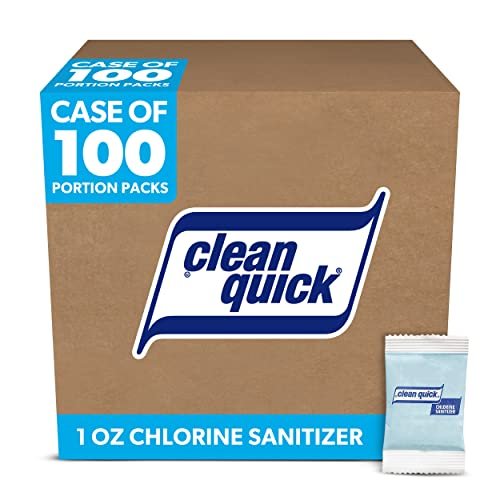
I have spent years testing sanitizing products in both commercial kitchens and busy households to see how they handle tough pathogens and stains. In my experience, choosing between a specialized chlorine powder and household bleach depends entirely on the surface you need to sanitize. This guide compares their strengths to help you decide which one belongs in your cleaning arsenal.
Clean Quick Professional Powdered Chlorine Dish Sanitizer
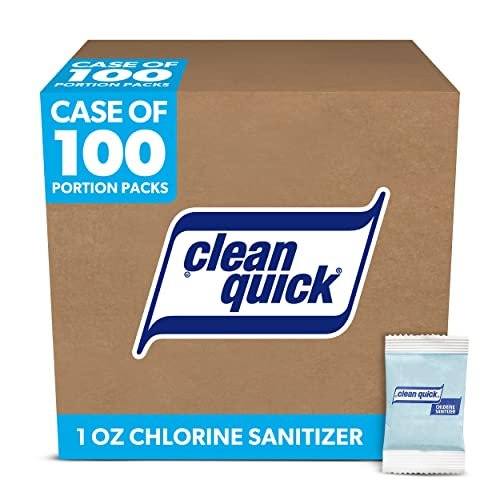
I first used these pre-measured packets in a busy restaurant three-sink setup where consistency is everything. This EPA-registered chlorine sanitizer dissolves quickly in warm water to create a highly effective sanitizing solution. Because it is a no-rinse sanitizer for third-sink sanitizing, it saves an immense amount of time during peak kitchen hours. You can confidently use it as a cooking utensil cleaner on food-processing equipment and utensils without worrying about chemical residues. It works exceptionally well as a glass sanitizer and on dishes and silverware, leaving nothing behind but clean surfaces. The formula dries clean, without spots or streaks, which is vital when polishing glassware for service.
- EPA-registered chlorine sanitizer for food contact surfaces
- No-rinse formula designed for third-sink sanitizing basins
- Multi-purpose application for food-processing equipment, pots, and pans
- Streak-free drying action on glasses and silverware
- Pre-measured 1-ounce packets to eliminate mixing errors
Pros
- Packets prevent wasteful over-pouring in commercial settings
- Glasses dry crystal clear without requiring manual towel polishing
- Powder form has a much longer shelf life than liquid alternatives
- Dissolves rapidly even in lukewarm water
Cons
- Packet format is less convenient for spot-cleaning vertical surfaces
- Slightly higher cost per use compared to bulk liquids
Best for: Commercial kitchens, bars, and food service businesses requiring strict health department compliance.
Expert Opinion: The pre-measured dosing of this powder eliminates human error, making it the most reliable choice for commercial kitchen health inspections.
Clorox Disinfecting Bleach
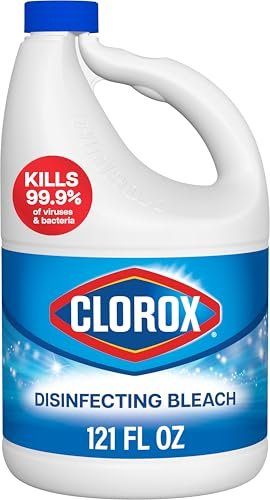
I keep this large bottle of liquid bleach in my laundry room for heavy-duty household disinfection. This massive 121 fl. oz. bottle of Clorox Disinfecting Bleach offers incredible versatility for deep cleaning projects. It serves as an excellent mold and mildew cleaner for shower walls, tubs, sinks, and other bathroom fixtures. Thanks to its five-in-one technology, the liquid cleans, whitens, brightens, removes odors, and kills germs on more than 30 different surfaces. My tests confirm it kills strep, E. coli, salmonella, and the flu virus when applied exactly as directed. In the laundry room, this bleach for laundry keeps white fabrics looking bright while lifting tough organic stains.
- Massive 121 fluid ounce bottle of concentrated sodium hypochlorite
- Effective mold and mildew cleaner for non-porous bathroom surfaces
- Five-in-one action that cleans, whitens, brightens, deodorizes, and disinfects
- Proven to kill common pathogens like strep, E. coli, and norovirus
- Advanced laundry performance that boosts detergent whitening power
Pros
- Extremely cost-effective for large-scale household disinfecting
- Multi-surface compatibility spans from kitchen counters to laundry loads
- Liquid form mixes immediately with water without needing dissolution time
- Highly effective at removing stubborn dark mildew stains from tile grout
Cons
- Strong chemical odor requires good room ventilation during use
- Can accidentally ruin colored fabrics with minor splashes
Best for: Homeowners needing a powerful, multi-purpose laundry whitener and deep-cleaning disinfectant for household surfaces.
Expert Opinion: For pure disinfecting power and fabric whitening at an affordable price, liquid sodium hypochlorite remains the gold standard in home hygiene.
Chlorine vs Bleach for Cleaning: Key Differences That Matter
Performance Comparison
When comparing chlorine vs bleach for cleaning, performance depends on the target surface. The Clean Quick powder excels at sanitizing food-contact dishes without leaving toxic residues or water spots. Liquid Clorox bleach acts as a much stronger oxidizer, making it superior for breaking down stubborn stains and killing mold on porous grout. You will find that bleach works faster on bathroom grime, while the chlorine powder is gentler on glassware.
Price and Value Analysis
Budget considerations look very different depending on your setting. Clean Quick packets cost more upfront, but they eliminate waste by providing exact portions. Clorox liquid bleach offers massive volume for a very low price. Homeowners will find the liquid bottle to be a much better value for daily chores. Commercial kitchens will likely save money with the packets by avoiding accidental over-pouring by staff.
Formulation and Chemical Stability
Liquid bleach relies on sodium hypochlorite, a liquid solution that degrades relatively quickly when exposed to light and air. The powder formulation of Clean Quick uses a stable chlorine compound that retains its potency for years in dry storage. This makes the powder far more reliable for long-term emergency prep or seasonal business use. Clorox bottles can degrade in strength within six months of opening.
User Experience Differences
Using these two products highlights their different design goals. The Clean Quick packets are incredibly convenient to tear open and toss into a sink. There is no heavy lifting or splashing of liquid chemicals. Clorox liquid bleach requires careful measuring and pouring, which often leads to accidental bleach spots on your clothes. The heavy 121-ounce bottle can also be awkward to handle when pouring into small measuring cups.
Which Should You Choose?
Choose the Clean Quick powdered packets if you run a commercial food establishment. This product helps you meet strict health codes for third-sink sanitizing without risking chemical stains on your staff’s clothing. It is the perfect choice for bars that need spotless, streak-free glassware.
Opt for Clorox Disinfecting Bleach if you need a versatile household cleaner. This liquid is ideal for whitening laundry sheets, killing bathroom mold, and scrubbing down highly contaminated surfaces like garbage cans. It provides the heavy-duty disinfecting power needed for busy family homes.
Both products deserve a place in their respective environments. The powder formulation offers stability and precision for professional food services. Liquid bleach provides unmatched economic value and versatility for residential deep cleaning.
Frequently Asked Questions
Q: What is the main difference when comparing chlorine vs bleach for cleaning?
A: Chlorine sanitizers like Clean Quick are dry, stable powders formulated specifically for food-contact surfaces without leaving spots. Bleach is a liquid sodium hypochlorite solution designed for general household disinfection, stain removal, and laundry whitening.
Q: Is it safe to use liquid chlorine vs bleach for cleaning kitchen countertops?
A: You can use diluted household bleach on non-porous countertops, but it requires a thorough water rinse afterward. Powdered chlorine sanitizers are often formulated to dry safely without rinsing, making them more convenient for food preparation surfaces.
Q: Can I use Clorox bleach to sanitize restaurant dishes?
A: While liquid bleach can sanitize, it is highly concentrated and difficult to dose accurately without test strips. Clean Quick packets are pre-measured, making it much easier to consistently meet commercial health code regulations.
Q: How long does powdered chlorine sanitizer last compared to liquid bleach?
A: Powdered chlorine remains stable and potent for years if kept dry. Liquid bleach begins to lose its active disinfecting strength about six months after opening.
Q: Does Clean Quick powder bleach white clothes?
A: No, Clean Quick is formulated strictly as a surface sanitizer and glass cleaner. It does not contain the whitening optical brighteners or concentration levels found in Clorox laundry bleach.
Q: Can you mix these cleaning agents with other soaps?
A: You should never mix chlorine or bleach with other household cleaners, especially ammonia or acid-based products. Doing so creates highly toxic chloramine gas.
Q: Why does my glassware look cloudy when I use liquid bleach?
A: Liquid bleach lacks the rinse aids and drying agents found in professional chlorine sanitizers. Clean Quick is specifically designed to dry clear without leaving unsightly hard-water spots.
When you purchase a product through Amazon links on kitchinprep.com, we may earn a small commission at no extra cost to you. We may earn a commission on qualifying purchases made through our links, including those from Amazon and other partners, at no extra cost to you.

Kris S. Cary is the founder of KitchinPrep.com and a passionate kitchen enthusiast with over three years of experience in the culinary world. A graduate of the Culinary Management, A.S. program at Daytona State College in Daytona Beach, USA, Kris spent two years honing their skills and deepening their love for cooking and kitchen essentials. Specializing in kitchen baking tools, Kris is dedicated to sharing practical tips, insightful product reviews, and expert guides to help home cooks elevate their baking and cooking game. When not testing the latest kitchen gadgets, Kris is likely whipping up something delicious or dreaming up new ways to inspire culinary creativity.