
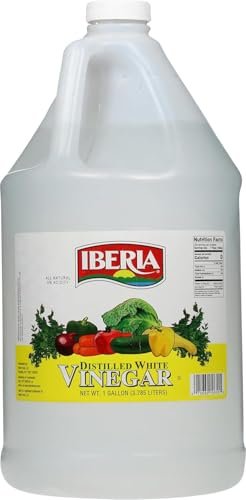
I have spent years testing household staples to see which ones actually deliver on their promises. In this guide, I will break down how Iberia Distilled White Vinegar and Amazon Basics Hydrogen Peroxide compare in real-world testing. You will learn exactly when to use each liquid for cleaning, disinfecting, and first aid tasks without wasting your money.
Iberia All Natural Distilled White Vinegar, 1 Gallon
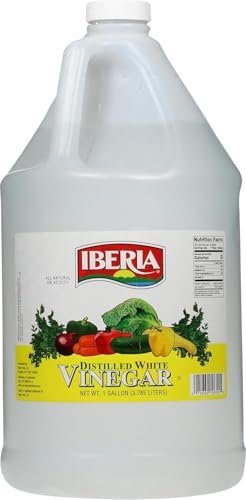
I keep a gallon of Iberia All Natural Distilled White Vinegar under my sink at all times because its utility stretches far beyond the kitchen. This all-natural & pure liquid contains a standard 5% acidity level, making it strong enough to cut through stubborn grease and mineral buildup without damaging your surfaces. When I used it to descale my coffee maker last week, the hard water buildup dissolved in minutes. Because it is a versatile pantry staple, you can transition instantly from cleaning countertops to pickling vegetables or whipping up salad dressings. The bulk size for more value means you get a massive one-gallon jug that lasts for months, even with daily household chores. Choosing this product ensures you are getting the trusted quality from Iberia without any artificial additives or preservatives.
- Versatile pantry staple for cooking, pickling, and marinating
- All-natural & pure 100% distilled white vinegar with 5% acidity
- Powerful multi-purpose cleaner that deodorizes and removes grease
- Bulk size for more value with a generous 1-gallon jug
-
Trusted quality from Iberia offering a clean, preservative-free taste
-
Incredibly cost-effective for large-scale household tasks
- Safe for food preparation and chemical-sensitive households
- Dissolves limescale and soap scum exceptionally well
-
Long shelf life without losing its acidic strength
-
Strong, pungent odor that lingers for a few hours
- Not suitable for natural stone countertops like marble or granite
Best for: Homeowners who want a budget-friendly, non-toxic cleaner for descaling, deodorizing, and basic food preparation.
Expert Opinion: Iberia White Vinegar excels at mineral removal and deodorizing, making it the ultimate natural alternative to harsh chemical descalers.
Amazon Basics Hydrogen Peroxide Topical Solution USP, 32 fl oz
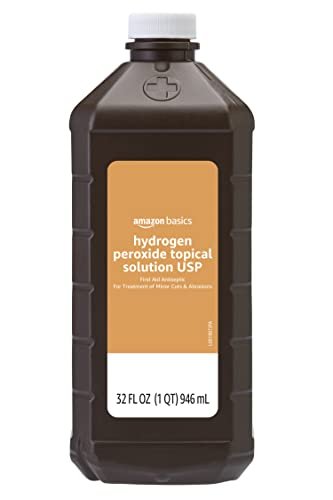
For situations that require actual sanitization, Amazon Basics Hydrogen Peroxide serves as a reliable first aid antiseptic in my cabinet. This 3% hydrogen peroxide formula is ideal for treating minor cuts, scrapes, and burns by bubbling away impurities. Unlike many other brands, this solution is paraben and phthalate free to ensure you are not applying unnecessary chemicals to compromised skin. It contains no rubber latex, which is a relief for anyone with sensitive skin or allergies. If you usually buy Swan Hydrogen Peroxide, this budget-friendly alternative offers the exact same clinical performance for a fraction of the cost. The brown bottle protects the active ingredients from light, keeping the solution potent and ready for action.
- First aid antiseptic to prevent infection in minor wounds
- Stable 3% hydrogen peroxide formula
- Paraben and phthalate free for cleaner skin application
- Contains no rubber latex to prevent allergic reactions
-
Budget-friendly alternative to Swan Hydrogen Peroxide
-
Excellent at lifting organic stains like blood and wine
- Actively disinfects wounds and non-porous surfaces by killing bacteria
-
Leaves no strong odors or chemical residues behind
-
Degrades quickly into plain water when exposed to light and air
- Can bleach dark fabrics if applied carelessly
Best for: Anyone needing a reliable, low-cost first aid kit essential that doubles as an organic stain remover and sanitizing agent.
Expert Opinion: Amazon Basics Hydrogen Peroxide is a clinical-grade disinfectant that excels at destroying pathogens on skin and hard surfaces.
peroxide vs vinegar for cleaning: Key Differences That Matter
Performance Comparison
When evaluating these two household liquids, you must look at their chemical behaviors. Vinegar is an acid. It thrives at breaking down mineral deposits, soap scum, and hard water stains. When I spray Iberia vinegar on a crusty showerhead, the acid goes to work, dissolving calcium deposits on contact.
Hydrogen peroxide operates as an oxidizer. Instead of dissolving minerals, it destroys organic matter. When you pour it onto a bloodstain or organic spill, it bubbles furiously as it releases oxygen. This bubbling action physically lifts stains out of carpet fibers and destroys the cell walls of bacteria. If your goal is killing germs, peroxide is the clear winner. Vinegar can kill some bacteria, but it is not registered as a hospital-grade disinfectant.
Price and Value Analysis
Comparing the cost of these two products reveals a massive gap in long-term value. The Iberia white vinegar comes in a massive one-gallon container. This bulk size costs very little per ounce, making it incredibly cheap to use as a daily floor cleaner or fabric softener.
Amazon Basics hydrogen peroxide is sold in smaller 32-fluid-ounce bottles. While the individual bottle is highly affordable, the cost per ounce is significantly higher than bulk vinegar. You will burn through a small bottle of peroxide quickly if you use it to mop floors or clean large surfaces.
Shelf Life and Packaging Stability
Iberia vinegar is incredibly stable. You can store vinegar in a clear plastic jug for years without it losing its strength. It does not degrade when exposed to sunlight or air.
Hydrogen peroxide is highly unstable. Light exposure breaks the molecule down into plain water and oxygen. This chemical sensitivity is the reason Amazon Basics packages their solution in an opaque brown bottle. Once you open a bottle of peroxide, it starts losing its potency. Within six months to a year, that bottle of peroxide will essentially turn into plain water, whereas your vinegar will remain just as acidic as the day you bought it.
User Experience Differences
Using these two liquids provides completely different sensory experiences. Vinegar has a sharp, sour smell that can overwhelm a small room. The scent dissipates once the liquid dries, but the initial application can be unpleasant for sensitive noses.
Peroxide is virtually odorless. It is much more pleasant to use in confined spaces like bathrooms. However, you must handle peroxide with care. Even a mild 3% solution can temporarily bleach your skin white and cause a mild stinging sensation if you have micro-cuts on your hands. Vinegar is much gentler on bare skin, though it will sting if it gets directly into an open wound.
Which Should You Choose?
If you are looking for a daily household workhorse to scrub away hard water spots, clean windows, and deodorize your refrigerator, choose the Iberia Distilled White Vinegar. Its acidic properties make it unmatched for dealing with mineral buildup, and the large one-gallon jug provides massive savings for heavy users.
If your priority is disinfecting kitchen cutting boards, sanitizing bathroom surfaces, removing stubborn organic stains, or stocking a first aid kit, grab the Amazon Basics Hydrogen Peroxide. It is an exceptional germ-killer that leaves zero lingering odor behind.
In my home, I keep both on hand because they solve entirely different problems. I use the Iberia vinegar to tackle hard water scale in the bathroom sink, and I follow up with Amazon Basics peroxide on the cutting board after prepping raw chicken to ensure everything is sanitary.
Frequently Asked Questions
Q: Can I mix hydrogen peroxide and vinegar together in one bottle to make a stronger cleaner?
A: No, you should never mix them in the same container. Combining them creates peracetic acid, which is a highly corrosive substance that can irritate your eyes, skin, and respiratory system. You can use them sequentially on the same surface, but always wipe the surface clean between applications.
Q: Which is better, peroxide vs vinegar for cleaning mold on bathroom walls?
A: Vinegar is generally better for porous surfaces because it penetrates deep into the material to kill the mold membrane at the root. Peroxide works incredibly well on non-porous surfaces and has the added benefit of bleaching the dark mold stains, but it may not penetrate as deeply as vinegar.
Q: Is white vinegar safe to use on hardwood floors?
A: You should avoid using vinegar on finished hardwood floors. The acid can slowly eat away at the protective polyurethane finish over time, leaving your floors looking dull and unprotected.
Q: How can I tell if my old bottle of hydrogen peroxide is still active?
A: Pour a small amount of the liquid into your sink. If it fizzes and bubbles, it is still active. If it pours out like flat water without any bubbling action, the compound has degraded and needs to be replaced.
Q: When comparing peroxide vs vinegar for cleaning kitchen counters, which is safer for food contact surfaces?
A: Both are safe, but they serve different roles. Vinegar is food-safe and excellent for removing grease and food residue. Peroxide is better if you need to sanitize the area after prepping raw meat, though you should wipe the counter down with water afterward to remove any residue.
Q: Can hydrogen peroxide bleach my clothes if I use it to remove stains?
A: Yes, even a 3% concentration can act as a mild bleaching agent. It is highly effective at removing blood and sweat stains from white fabrics, but you should spot-test it on a hidden area of colored clothing before applying it directly.
When you purchase a product through Amazon links on kitchinprep.com, we may earn a small commission at no extra cost to you. We may earn a commission on qualifying purchases made through our links, including those from Amazon and other partners, at no extra cost to you.

Kris S. Cary is the founder of KitchinPrep.com and a passionate kitchen enthusiast with over three years of experience in the culinary world. A graduate of the Culinary Management, A.S. program at Daytona State College in Daytona Beach, USA, Kris spent two years honing their skills and deepening their love for cooking and kitchen essentials. Specializing in kitchen baking tools, Kris is dedicated to sharing practical tips, insightful product reviews, and expert guides to help home cooks elevate their baking and cooking game. When not testing the latest kitchen gadgets, Kris is likely whipping up something delicious or dreaming up new ways to inspire culinary creativity.