
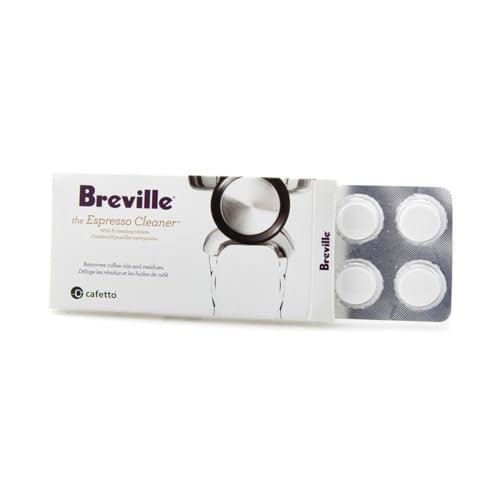
Having maintained dozens of coffee setups over the years, I have tested both the Breville Espresso Cleaner and various descaling solutions extensively on my own gear. You will learn the crucial differences between backflushing coffee oils and dissolving hard water scale so you can keep your machine running perfectly. Understanding how these two distinct maintenance steps protect your espresso maker will save you from costly repairs and ruined morning brews.
Breville BEC250 Espresso Machine Cleaning Tablets
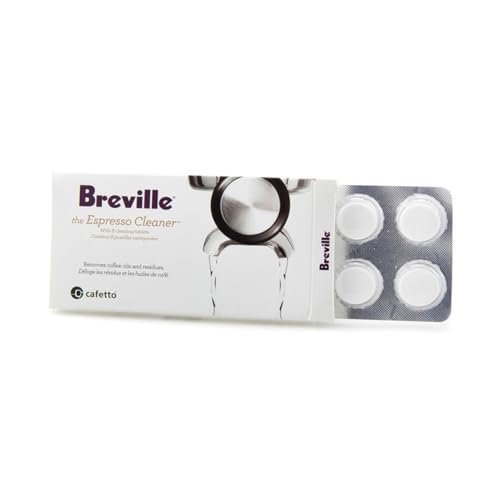
I rely on these official Breville cleaning tablets to keep the group head and internal valves of my Breville machine completely free of rancid coffee residue. They are specifically engineered for thorough cleaning by dissolving at a precise rate during the machine’s backflush cycle. The gentle and safe non-corrosive formulation relies on pharmaceutical and food-grade ingredients to protect sensitive internal metal components from damage. Regular use ensures consistency is key to maintaining clean shower screens and filter baskets. This targeted cleaning action directly prevents bitter, stale oils from souring your daily espresso extractions.
- Specifically designed for Breville espresso machines to target coffee oil buildup
- Precision dissolution time ensures optimal contact and cleaning performance during cycles
- Safe, non-corrosive formula made with pharmaceutical and food-grade ingredients
-
Perfect for cleaning group head shower screens, internal valves, and filter baskets
-
Fits perfectly into the cleaning disc of all Breville espresso models
- Leaves zero chemical aftertaste or odor when properly rinsed
-
Extends the lifespan of the three-way solenoid valve by removing sticky residues
-
Only designed to clean coffee oils and will not remove mineral scale buildup
- Slightly more expensive per cycle compared to generic cleaning powders
Best for: Owners of Breville espresso machines who need to perform regular backflushing to remove bitter coffee oils and residue.
Expert Opinion: These tablets are essential for maintaining the taste integrity of your shots, as they target the sticky coffee oils that standard descaling solutions simply glide over.
IMPRESA Coffee Descaler, 2-Pack
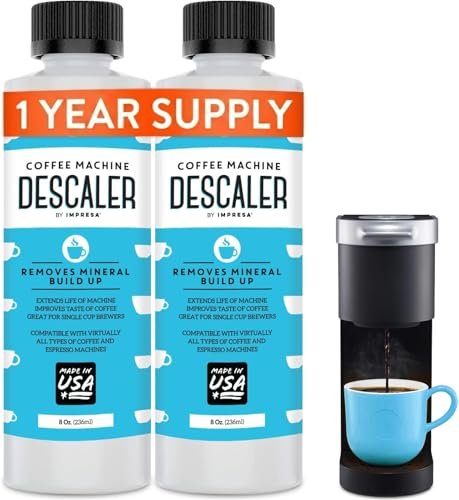
When hard water minerals start slowing down my water flow, I turn to this highly effective, Made in USA formula to dissolve scale buildup inside the heating element. This 2-Pack Coffee Descaler and Cleaner provides enough concentrated liquid for four complete maintenance cycles. It works by targeting calcium and magnesium deposits, which preserves your machine and keeps the heating components operating at peak thermal efficiency. The solution is highly compatible with a massive range of brands, from Breville and Nespresso to Keurig pod machines. Utilizing this citric-acid-based liquid every few months prevents permanent corrosion damage and maintains proper water temperature.
- Concentrated citric acid formula removes stubborn calcium and limescale deposits
- Highly compatible with Keurig, Nespresso, Breville, DeLonghi, and many other brands
- Liquid formulation mixes instantly with water for uniform descaling throughout the boiler
-
Proudly made in the USA with odorless and non-toxic ingredients
-
Extremely versatile and works on kettles, drip makers, and espresso machines
- Delivers four full cleaning sessions in one affordable two-pack purchase
-
Helps restore proper heating times and silent operation to older machines
-
Does not clean coffee oils or residue from the group head area
- Requires extensive rinsing to ensure all acidic solution is fully flushed out
Best for: Coffee lovers living in hard water areas who need to protect their machine’s boilers and internal heating elements from limescale.
Expert Opinion: Limescale is the number one killer of espresso machine heating elements, making this descaling solution an absolute necessity for preventing catastrophic hardware failures.
breville espresso cleaner vs descaler: Key Differences That Matter
Performance comparison
The functional difference between these two products comes down to chemistry. Breville cleaning tablets are designed to break down organic matter like stubborn coffee oils and fatty residues. This happens in the group head where the espresso is extracted. The Impresa descaler targets mineral deposits inside the heating boilers, thermocoils, and internal water lines. I noticed that using the cleaning tablets does absolutely nothing for mineral buildup. Conversely, running a descaler through your system will not dissolve the baked-on coffee oils clogging your shower screen. You need both to keep your machine in top condition.
Price/Value analysis
Looking at the long-term maintenance costs reveals some interesting numbers. The Breville tablets come in an eight-pack, which translates to eight cleaning cycles. Since backflushing is typically required every 200 shots, a single pack can easily last a moderate coffee drinker over a year. The Impresa descaler comes in a two-pack of eight-ounce bottles, offering four descaling sessions total. Hard water areas require descaling every three months, meaning this pack lasts about a year as well. Both products are highly cost-effective insurance policies against expensive repair technician fees.
Build quality comparison
While we are comparing chemical solutions rather than physical appliances, the formulation quality of both brands is outstanding. Breville manufactures their tablets with precise dissolution rates. They dissolve slowly during the backflush pressure cycles to maximize contact time with the coffee oils. Impresa utilizes a highly concentrated citric acid base that is gentle on internal copper, brass, and plastic lines. It avoids the harsh sulfamic acids found in some industrial descalers, which can damage the delicate seals of residential espresso machines.
User experience differences
The actual process of using these products feels very different. Performing a backflush cycle with the Breville tablets is largely automated on newer Breville machines. You place the tablet in the cleaning disc, lock in the portafilter, and press a couple of buttons. Descaling with the Impresa liquid requires more manual involvement. You must empty the water reservoir, mix the solution with water, run it through both the steam wand and the brew head, and then perform multiple full-reservoir flushes to remove any remaining acidic taste.
Which Should You Choose?
The choice between these two maintenance products depends entirely on the specific alert light your coffee machine is showing.
Choose Breville Espresso Cleaner tablets if:
– Your machine’s “Clean Me” or “Flush” light is blinking on the control panel.
– You notice a bitter, rancid taste in your espresso shots despite using fresh beans.
– You need to perform a backflush to clear the group head and three-way solenoid valve.
Choose IMPRESA Coffee Descaler if:
– Your machine has a “Descale” indicator light illuminated or water flow has slowed to a crawl.
– You live in a region with hard tap water and want to prevent limescale buildup on heating elements.
– You own multiple coffee appliances, like a Keurig or a Nespresso, and want a single solution for all of them.
Ultimately, this is not a traditional head-to-head match where one product replaces the other. You absolutely need both of these items in your maintenance cabinet if you own a Breville espresso machine. The cleaning tablets handle the front-end extraction path by stripping away bitter coffee oils. The descaling solution takes care of the back-end water heating path by dissolving mineral scale. Skipping either of these steps will eventually lead to poor-tasting espresso or a dead heating element.
Frequently Asked Questions
Q: What is the main difference when comparing breville espresso cleaner vs descaler?
A: The cleaner targets organic coffee oils and residues in the group head, while the descaler dissolves calcium and mineral buildup inside the boiler and heating elements.
Q: Can I use vinegar instead of these specialized products?
A: Vinegar is not recommended because it contains acetic acid, which can leave a persistent smell and damage the internal copper heating systems or rubber seals inside your espresso machine.
Q: How often do I need to run a breville espresso cleaner vs descaler cycle?
A: You should run a cleaning tablet cycle roughly every 200 cups when your machine prompts you, while descaling should be done every three to four months depending on the hardness of your water.
Q: Will the descaler fix a machine that is not heating up?
A: If the heating element is completely coated in thick limescale, a descaling cycle can help restore heat. However, if the element has already burned out due to scale insulation, you will need a replacement part.
Q: Can I use the Breville tablets inside the water reservoir?
A: No. The tablets must go directly into the portafilter basket with a cleaning disc for a backflush cycle, as they are not meant to be run through the water tank or boiler.
Q: Is the Impresa descaler safe for the internal plastic parts of my espresso machine?
A: Yes. The formula uses citric acid, which is highly effective at dissolving calcium but gentle on plastics, silicone seals, and rubber gaskets.
Q: What happens if I never clean or descale my machine?
A: Your espresso will taste increasingly bitter and burnt, the water flow will eventually choke to a drip, and the heating element will overheat and fail.
When you purchase a product through Amazon links on kitchinprep.com, we may earn a small commission at no extra cost to you. We may earn a commission on qualifying purchases made through our links, including those from Amazon and other partners, at no extra cost to you.

Kris S. Cary is the founder of KitchinPrep.com and a passionate kitchen enthusiast with over three years of experience in the culinary world. A graduate of the Culinary Management, A.S. program at Daytona State College in Daytona Beach, USA, Kris spent two years honing their skills and deepening their love for cooking and kitchen essentials. Specializing in kitchen baking tools, Kris is dedicated to sharing practical tips, insightful product reviews, and expert guides to help home cooks elevate their baking and cooking game. When not testing the latest kitchen gadgets, Kris is likely whipping up something delicious or dreaming up new ways to inspire culinary creativity.