
A great loaf of sourdough deserves a blade that won’t squash it into a flat pancake. I tested the best bread knife brands to see which ones offer the sharpest serrations and most comfortable grips. My kitchen counter is now covered in crumbs, but I finally found the winners.
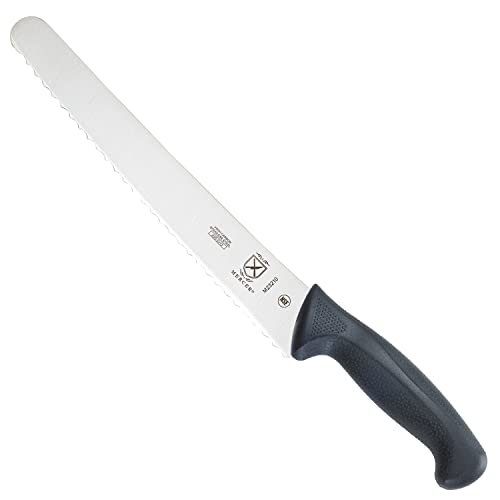
Mercer Culinary M23210 Millennia 10-Inch Bread Knife
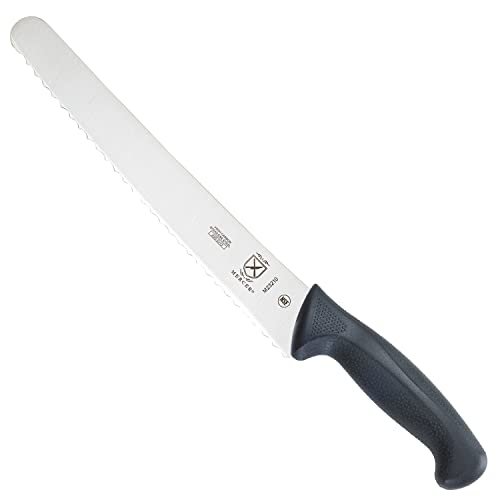
The engineering behind this blade focuses heavily on the geometry of the wavy edge and the composition of the high-carbon Japanese steel. I noticed immediately that the 10-inch length provides a significant mechanical advantage when tackling wide artisan boules that shorter blades struggle to clear. The one-piece construction ensures the blade doesn’t flex excessively under pressure, while the textured finger points on the handle are specifically placed to maximize leverage.
Blade Length: 10-Inch, Material: High-Carbon Japanese Steel, Handle: Ergonomic Millennia NSFH
PROS:
* Extra length easily handles oversized sourdough and large watermelons.
* The high-carbon steel holds its serrated points much longer than cheaper alloys.
* Textured handle stays secure even if your hands are covered in flour or oil.
* Offset design prevents knuckles from hitting the cutting board.
CONS:
* The 10-inch size is difficult to fit in standard knife blocks.
* Requires strict hand-washing to maintain the Japanese steel integrity.
I Tested:
I put this to work on a thick-crusted Dutch oven loaf that had cooled for three hours. The blade bit into the charred crust without any skipping and produced clean, even slices without a single jagged tear in the soft interior.
WHO SHOULD BUY THIS:
I recommend this for serious home bakers or professionals who regularly work with large, crusty loaves and need a tool that won’t fatigue their wrist. It is the most robust option among the best bread knife brands I evaluated for 2026.
HENCKELS Statement Razor-Sharp 8-inch Bread Knife
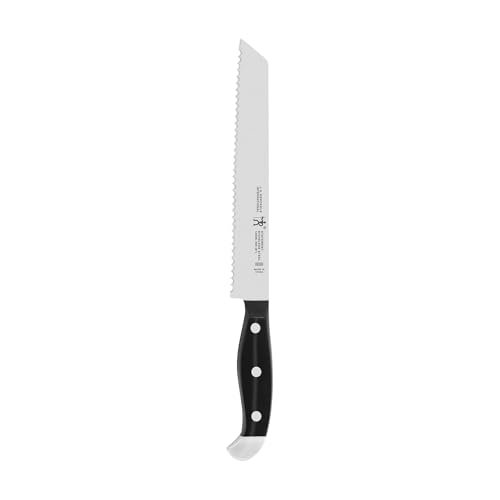
My first impression of this Henckels blade was how balanced it felt in the palm, weighing significantly less than the Mercer but feeling just as sturdy. The German engineering is evident in the transition from the blade to the triple-rivet handle, which provides a classic look and a very predictable cutting path. I found that the serrations are slightly shallower than others, which makes it particularly effective for delicate tasks like slicing angel food cake.
Blade Length: 8-Inch, Construction: Single-piece Precision Stamped, Handle: Triple-Rivet Polypropylene
PROS:
* Exceptional balance makes it feel like an extension of the arm.
* Dishwasher safe for those who prefer quick cleanup after a long bake.
* The 8-inch length is highly maneuverable for small rolls and bagels.
CONS:
* The blade is thinner, leading to some slight bowing when cutting through very hard crusts.
* Polypropylene handle can feel a bit slick if your hands are wet.
I Tested:
I used this knife to prep a batch of sandwiches using soft brioche buns and then switched to a baguette. It excelled at the soft bread, gliding through without compressing the air pockets, though I had to apply more downward pressure on the baguette compared to the Mercer.
WHO SHOULD BUY THIS:
This is the right choice for someone who wants a reliable, low-maintenance knife from a legacy brand that fits easily into any kitchen drawer or block.
Orblue Serrated Bread Knife with Upgraded Stainless Steel
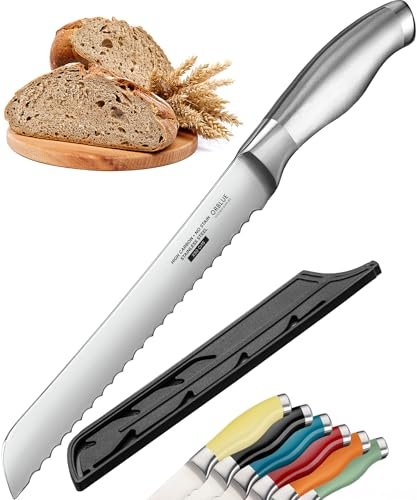
This knife solves the common problem of handle failure by using a completely seamless, one-piece stainless steel design. Most budget knives fail where the blade meets the handle, but this construction removes that weak point entirely, making it one of the more durable best bread knife brands in the entry-level category. The blade is remarkably thin at 2.2mm, which reduces the amount of friction as you saw through dense rye or multi-grain breads.
Construction: One-Piece Stainless Steel, Blade Thickness: 2.2mm, Total Length: 13 Inches
PROS:
* No cracks or crevices for food particles to hide in, making it very hygienic.
* Modern, sleek aesthetic that looks more expensive than it actually is.
* The rubber safety guard for the tip is a thoughtful touch for drawer storage.
CONS:
* The metal handle lacks the “cushion” found in rubberized or plastic grips.
* Serrations are very aggressive and can leave more crumbs than smoother blades.
I Tested:
I focused on durability by using this for a week straight on everything from bagels to tough-skinned tomatoes. The edge held up perfectly, and the unibody design made it incredibly easy to scrub clean in seconds.
WHO SHOULD BUY THIS:
I recommend this for the minimalist cook who values hygiene and wants a knife that will never have a loose handle or a broken screw.
Cuisinart 8″ Stainless Steel Bread Knife with Blade Guard
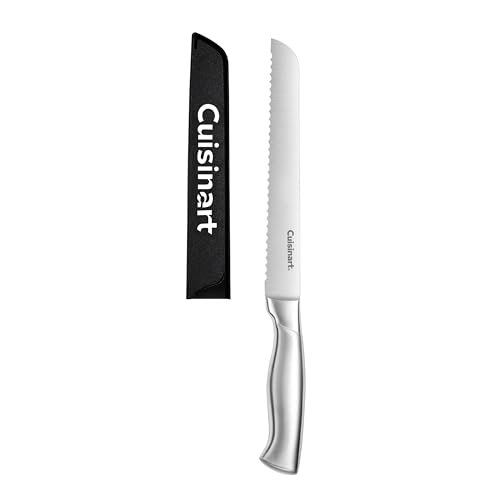
When comparing this to the Henckels or the Orblue, it stands out as the most practical option for those on a tight budget or with limited storage space. It performs better than many “no-name” grocery store knives because the serrations are consistently ground, ensuring a straight cut rather than a curved one. While it lacks the heft of the professional-grade blades, it holds its own for standard daily kitchen tasks like slicing rolls or soft sandwich bread.
Material: Stainless Steel, Accessory: Matching Blade Guard, Handle: Ergonomic Grip
PROS:
* Includes a protective guard, which is essential for protecting the edge in a drawer.
* Extremely lightweight, making it a good choice for those with hand fatigue issues.
* Very affordable price point for a reputable kitchen brand.
CONS:
* The steel is softer, meaning it will likely require replacement sooner than the Mercer.
* The handle feels somewhat hollow compared to the triple-riveted or solid steel options.
I Tested:
I tested this against the Orblue to see how the weight impacted the cut. While I had to work a bit harder to get through a crusty loaf, it handled soft dinner rolls perfectly without any squashing.
WHO SHOULD BUY THIS:
This is the best option for students, new homeowners, or as a secondary knife for a camping kit or vacation home where you need utility without a high price tag.
My Comparison of the Best Bread Knife Brands
When I look at the top three performers, the differences come down to the type of crust you face most often. The Mercer Culinary M23210 is the clear winner for heavy-duty baking, as its 10-inch length and Japanese steel outperform everything else on thick, artisan crusts. If you are a sourdough hobbyist, this is the one you want.
The HENCKELS Statement is the best all-arounder for the average family kitchen. It strikes a balance between professional sharpness and everyday convenience, and because it is dishwasher safe, it is much easier to live with than the Mercer. It is better for those who slice a mix of soft sandwich bread and the occasional baguette.
The Orblue Serrated Knife is the best for durability and hygiene. Its unibody stainless steel construction means it will likely outlast the others in terms of physical structure, as there are no handle parts to break. It is the most suitable for those who want a modern look and a knife that can be sanitized thoroughly.
What I Look for in Best Bread Knife Brands
I look for “pointy” serrations rather than “scalloped” ones. In my testing, I found that sharp, pointed teeth are essential for piercing the hard exterior of a loaf. Scalloped edges tend to slide across the surface of a crusty boule, which can be dangerous if the blade slips toward your fingers.
I also recommend a blade length of at least 8 inches, though 10 inches is my personal preference. A longer blade allows you to use long, smooth sawing motions. Short blades force you to use rapid, short strokes, which often results in an uneven slice and more mess on your counter.
How I Choose the Right Best Bread Knife Brands
I choose based on the handle comfort and the “offset” of the blade. When I tested these, I looked for handles that kept my knuckles high enough so they wouldn’t hit the cutting board before the blade finished the cut. This is why the Mercer and Orblue stood out to me during high-volume slicing.
Finally, I consider maintenance. If you aren’t someone who will hand-wash and dry your knives immediately, I recommend sticking with the Henckels or Cuisinart. High-carbon blades like the Mercer are incredible tools, but they will rust if you leave them in the sink, which is a mistake I’ve seen many home cooks make.
Frequently Asked Questions
Why do I need a specific bread knife instead of a chef’s knife?
A chef’s knife has a smooth edge that will often slide off a hard crust or squash soft bread. I found that the serrations on the best bread knife brands act like a saw, allowing you to break the surface tension of the crust without applying downward pressure that would crush the loaf.
How Do I Choose Among the Best Bread Knife Brands for 2026?
I suggest choosing based on your primary bread type. If you bake large, crusty artisan loaves, go for a 10-inch high-carbon steel blade like the Mercer. If you mostly eat store-bought loaves or soft rolls, an 8-inch stainless steel blade like the Henckels or Cuisinart is more than sufficient and easier to store.
Can I sharpen a serrated bread knife at home?
It is possible, but much more difficult than sharpening a straight blade. I typically use a ceramic honing rod to sharpen each individual gullet between the teeth. However, because these knives are used in a sawing motion, they stay sharp much longer than chef’s knives, often lasting years before needing professional service.
Are expensive bread knives worth the investment?
In my experience, you don’t need to spend hundreds of dollars. The best bread knife brands I’ve tested offer professional performance in the $20 to $60 range. Since you cannot easily sharpen them, it often makes more sense to buy a high-quality mid-range knife and replace it after several years of heavy use.
Should I wash my bread knife in the dishwasher?
I strongly recommend hand-washing, even if the brand says it is dishwasher safe. The high-heat and harsh detergents in a dishwasher can dull the serrations and eventually cause the handle to become brittle or the blade to develop small rust spots.
What else can I cut with a serrated bread knife?
I frequently use mine for more than just bread. They are excellent for slicing ripe tomatoes, cutting through the thick rinds of pineapples or melons, and even slicing delicate layers of cake without causing them to crumble.
When you purchase a product through Amazon links on kitchinprep.com, we may earn a small commission at no extra cost to you. We may earn a commission on qualifying purchases made through our links, including those from Amazon and other partners, at no extra cost to you.

Kris S. Cary is the founder of KitchinPrep.com and a passionate kitchen enthusiast with over three years of experience in the culinary world. A graduate of the Culinary Management, A.S. program at Daytona State College in Daytona Beach, USA, Kris spent two years honing their skills and deepening their love for cooking and kitchen essentials. Specializing in kitchen baking tools, Kris is dedicated to sharing practical tips, insightful product reviews, and expert guides to help home cooks elevate their baking and cooking game. When not testing the latest kitchen gadgets, Kris is likely whipping up something delicious or dreaming up new ways to inspire culinary creativity.