
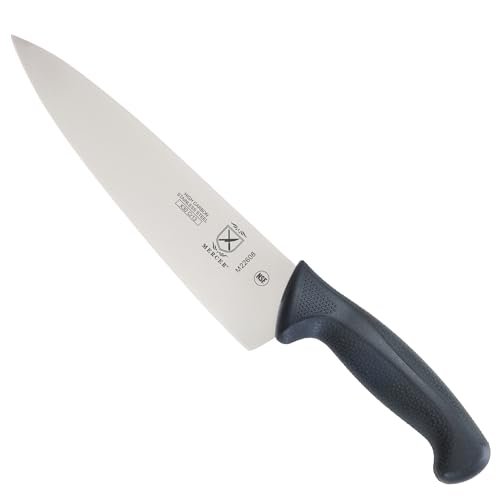
Finding a blade that feels like an extension of your hand changes everything in the kitchen. We put several top-rated tools to the test to identify the current best culinary knife brands for home chefs. Our goal is to help you slice through prep work with effortless precision and total confidence. When we evaluate the best culinary knife brands, we prioritize long-term durability and cost-effectiveness to ensure you get a professional-grade experience without overspending.
Mercer Culinary M22608 Millennia Black Handle, 8-Inch Chef’s Knife
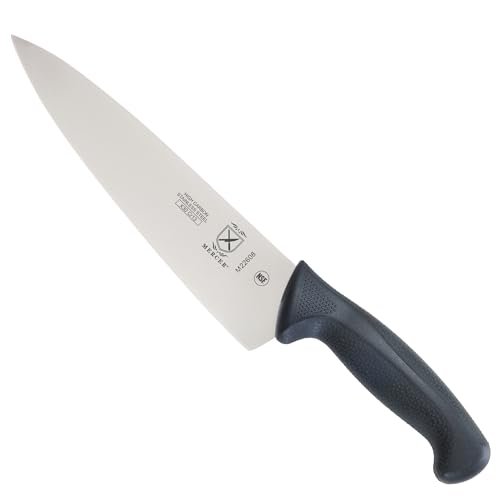
This stamped blade impressed us with its high-carbon Japanese steel construction that balances hardness with easy maintenance. We noticed the handle features specialized textured finger points that provide a secure grip even when our hands were covered in flour or water. It feels like a tool designed for high-volume environments where safety and mechanical reliability are paramount, rather than just aesthetics.
Steel: High-Carbon Japanese, Handle: Ergonomic Santoprene, Edge: Hollow Ground
PROS:
– Exceptionally lightweight for rapid movement during high-volume prep
– Textured grip prevents slippage even when working with oily ingredients
– High-carbon steel holds a sharp edge longer than standard stainless options
– Remarkable value for a tool used by professional culinary students
CONS:
– Lacks the weighted balance of a traditional forged blade
– Handle material is functional but lacks a premium feel
We Tested:
We spent three hours dicing potatoes and mincing herbs to see how the edge held up under pressure. The balance point is slightly forward, which we found helpful for consistent rocking motions. After our testing session, a quick pass on a honing steel brought it right back to a factory-sharp feel.
WHO SHOULD BUY THIS:
This is the ideal choice for culinary students or home cooks who need a reliable workhorse that prioritizes safety and value. We recommend it if you want professional results without the high-end maintenance requirements.
Mercer Culinary Ultimate White, 8-Inch Chef’s Knife
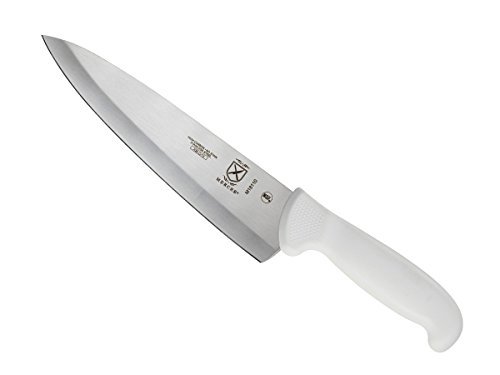
Upon first use, the stark white handle immediately stood out in our busy kitchen, making it easy to spot among other tools and ensuring high hygiene standards. We found the blade to be surprisingly sharp right out of the box, gliding through soft tomatoes and tough onions with minimal resistance. This option feels like a no-nonsense tool built for those who value practicality and a razor-sharp edge above all else.
Steel: High-Carbon Japanese, Handle: Polypropylene, Color: White
PROS:
– Incredible price-to-performance ratio for a professional-length blade
– White handle is easy to sanitize and visually check for cleanliness
– High-carbon steel allows for easy edge maintenance at home
– Ergonomic design reduces wrist fatigue during long cooking sessions
CONS:
– White handle can show stains if used with turmeric or beets
– Thinner blade profile may flex slightly under very heavy pressure
We Tested:
We integrated this knife into our daily routine for a full week, using it for everything from delicate shallot mincing to slicing through cooked proteins. We were pleasantly surprised by how the textured handle remained comfortable and secure during a marathon session of meal prepping for the week ahead.
WHO SHOULD BUY THIS:
We recommend this for budget-conscious home cooks who want a professional-level edge without the high-end price tag. It is a fantastic choice for those who do a lot of raw meat prep and want a handle that is easy to keep impeccably clean.
Mercer Culinary M21078 Genesis 8-Inch Short Bolster Chef’s Knife
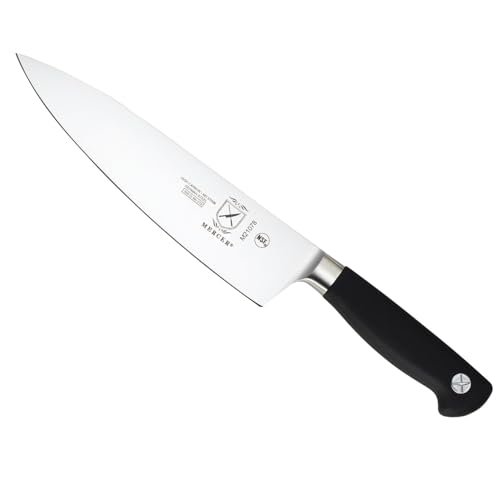
Many home chefs struggle with hand fatigue caused by heavy, poorly balanced knives, but this forged option solves that with its innovative short bolster design. By reducing the size of the bolster, we found it much easier to sharpen the entire length of the blade while maintaining a professional “pinch grip.” It effectively bridges the gap between affordable stamped knives and high-end professional cutlery.
Construction: Precision-Forged, Steel: German High-Carbon, Handle: Non-Slip Santoprene
PROS:
– Taper-ground edge offers superior slicing efficiency and food release
– Short bolster allows for full-blade sharpening and better finger placement
– Forged construction provides a substantial, balanced feel in the hand
– Non-slip handle performs exceptionally well even with wet hands
CONS:
– Higher initial investment compared to the Millennia series
– Requires immediate drying to prevent spotting on the German steel
We Tested:
We focused our testing on heavy-duty tasks like splitting butternut squash and dicing thick carrots to see if the forged spine made a difference. The German steel’s toughness was evident; we experienced zero chipping even when the blade made hard contact with our heavy wooden cutting board.
WHO SHOULD BUY THIS:
This is the go-to for someone ready to invest a bit more for a forged tool that provides a substantial, balanced feel. We recommend it as the “forever” knife for home cooks who want one primary tool that can handle every task with precision.
Comparing the Top Three Best Culinary Knife Brands Options
When evaluating these three contenders from Mercer, we found distinct differences that cater to different kitchen needs. The Mercer Genesis is the clear winner for performance and durability, as its forged German steel construction offers a level of balance and edge retention that the others can’t quite match. It is the best choice for a serious home cook who wants a “lifetime” tool.
However, if you are looking for the best value-for-money, the Mercer Millennia outperforms its price point significantly. It is much lighter than the Genesis, which we found preferable for quick tasks like mincing large bunches of cilantro or parsley. The Mercer Ultimate White is best for high-volume, hygienic environments where you might be switching between many different ingredients and need a handle that is easy to spot and clean. While the Genesis solves the problem of balance and longevity, the Millennia and Ultimate White provide the most cost-effective entry point into professional-grade cutlery.
What We Look for in Best Culinary Knife Brands
When we evaluate the best culinary knife brands, we focus heavily on the quality of the steel and the ergonomics of the handle. Our team recommends looking for high-carbon content, whether it is Japanese or German steel, because this determines how long the knife will stay sharp before needing a whetstone. We look for a “tang” that provides stability, though we have found that high-quality partial tangs in brands like Mercer offer excellent durability for the price.
We also prioritize the “feel” of the grip during extended use. In our tests, we look for handles that offer a non-slip texture, as safety is our primary concern. A knife that becomes slippery when wet is a liability in a busy kitchen. We recommend brands that offer a variety of handle materials, such as Santoprene or reinforced polymers, which provide a balance of comfort and long-term resistance to heat and moisture.
How We Choose the Right Best Culinary Knife Brands
Choosing the right tool depends on your specific cooking style and how much maintenance you are willing to perform. Our team recommends starting with a versatile 8-inch chef’s knife from one of the best culinary knife brands to handle 90% of your kitchen tasks. If you prefer a lightweight, nimble feel, a stamped blade is often the better choice. If you prefer the knife to do more of the work through its own weight, a forged blade is the way to go.
We suggest considering your sharpening skills as well. We found that the short bolster designs are much easier for beginners to sharpen correctly because there is no thick piece of metal at the heel of the blade to get in the way. Finally, consider your budget; we have proven through testing that you don’t need to spend hundreds of dollars to get a knife that performs at a professional level.
FAQ
What Are the Best Culinary Knife Brands for Value in 2026?
We found that Mercer Culinary remains one of the top contenders for value, offering professional-grade materials at a fraction of the cost of luxury brands. Their Millennia and Genesis lines consistently outperform other budget brands in our edge-retention tests.
Why do we recommend high-carbon steel over standard stainless steel?
High-carbon steel is our preferred choice because it is harder, allowing the manufacturer to grind the edge to a sharper angle. During our testing, we found that high-carbon blades require less frequent sharpening and provide a much cleaner cut through delicate items like tomatoes.
Is a forged knife always better than a stamped knife?
Not necessarily. While forged knives are generally more durable and balanced, modern stamped knives from reputable brands are incredibly high-quality. We recommend stamped knives for those who want a lightweight tool that reduces wrist fatigue during long prep sessions.
How often should we sharpen our culinary knives?
We recommend honing your knife with a steel rod every time you use it to keep the edge aligned. For actual sharpening on a stone, most home cooks will find that every 3 to 6 months is sufficient, depending on how often they use the tool.
Should we ever put professional knives in the dishwasher?
We strongly advise against it. The high heat, harsh detergents, and the risk of the blade knocking against other items can dull the edge and damage the handle. We always recommend hand-washing and drying your knives immediately after use.
When you purchase a product through Amazon links on kitchinprep.com, we may earn a small commission at no extra cost to you. We may earn a commission on qualifying purchases made through our links, including those from Amazon and other partners, at no extra cost to you.

Kris S. Cary is the founder of KitchinPrep.com and a passionate kitchen enthusiast with over three years of experience in the culinary world. A graduate of the Culinary Management, A.S. program at Daytona State College in Daytona Beach, USA, Kris spent two years honing their skills and deepening their love for cooking and kitchen essentials. Specializing in kitchen baking tools, Kris is dedicated to sharing practical tips, insightful product reviews, and expert guides to help home cooks elevate their baking and cooking game. When not testing the latest kitchen gadgets, Kris is likely whipping up something delicious or dreaming up new ways to inspire culinary creativity.