
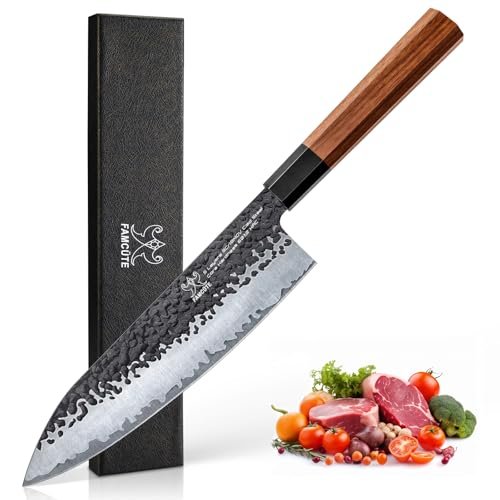
Every home chef deserves a blade that offers both incredible balance and a razor-sharp edge. We tested several top brands to help you select the best japanese knife for your daily meal prep. Our selection focuses on high-quality steel and comfortable handles that make every slice feel completely effortless.
The Best Japanese Knife for Professional Specs: FAMCÜTE 8 Inch
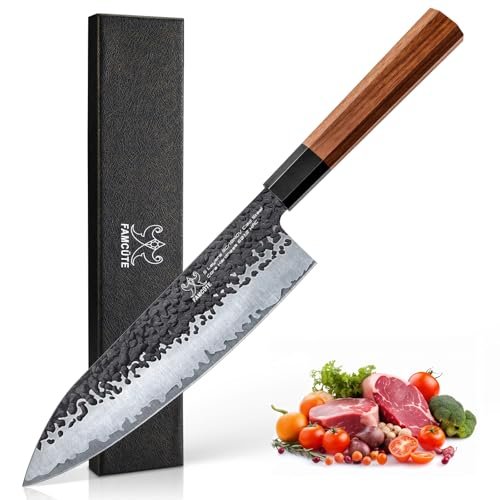
We were immediately struck by the engineering precision behind this hand-forged 8-inch blade. The five-layer 9CR18MOV steel construction provides a level of rigidity that we rarely see in knives at this price point. It feels like a high-end tool designed for someone who truly appreciates the physics of a clean cut.
Steel: 9CR18MOV, Hardness: HRC 62, Handle: African Rosewood, Edge: Hand Honed
PROS:
– Exceptional hardness at HRC 62 maintains an edge for months
– The octagonal rosewood handle provides a very secure, non-slip grip
– Five-layer cladding offers superior rust resistance and durability
– Beautifully balanced for heavy-duty dicing and slicing
CONS:
– The octagonal handle shape may feel unusual to Western-style users
– Requires careful hand-washing to protect the natural wood
We Tested:
During our week-long testing phase, we used this knife to prep a massive vegetable stew. We found that the 60-day production process really shows in the edge retention; even after pounds of potatoes and carrots, it still shaved through a tomato without resistance.
WHO SHOULD BUY THIS:
We recommend this for the home chef who wants a high-hardness tool that feels like a professional piece of equipment. It is perfect if you value technical specs like HRC ratings and multi-layer steel cladding.
Testing the Best Japanese Knife for Real-World Durability: HOSHANHO 8 Inch
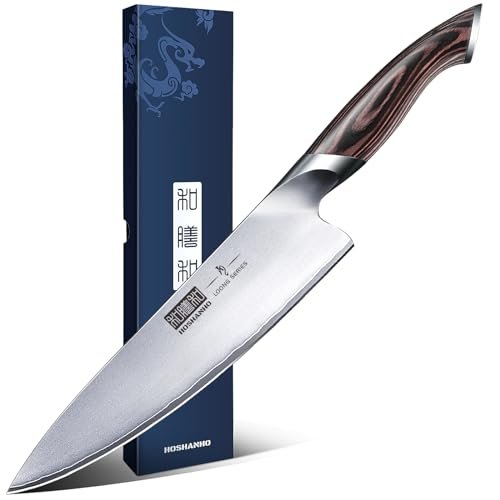
When we first picked up this HOSHANHO model, the matte finish caught our eyes because it doesn’t just look sleek—it actually helps food slide off the blade. We put it through several real-world kitchen scenarios to see if the Japanese 10Cr15CoMoV steel lived up to its high-carbon reputation. The sloped bolster is a standout feature, making the “pinch grip” feel more natural than most other options we’ve handled.
Material: 10Cr15CoMoV High Carbon Steel, Hardness: 60 HRC, Handle: Ultra-durable Wood, Edge: 13 Degrees
PROS:
– Matte finish effectively reduces food sticking during fast chopping
– The sloped bolster design significantly reduces wrist strain
– High carbon content makes it much easier to sharpen than stainless alternatives
– Comes in a high-quality gift box for enthusiasts
CONS:
– The matte finish can show scratches if cleaned with abrasive pads
– Slightly heavier than some other traditional Japanese options
We Tested:
We spent an afternoon dicing onions and mincing garlic to test the ergonomics. We found that the sloped bolster allowed us to work for two hours straight without the typical “knife callus” forming on our index fingers.
WHO SHOULD BUY THIS:
This is our top pick for someone who cooks for long periods and needs a comfortable, ergonomic grip. It’s an excellent choice if you’re looking for a stylish, modern aesthetic combined with traditional steel performance.
The Best Japanese Knife for Handling Tough Ingredients: Matsato
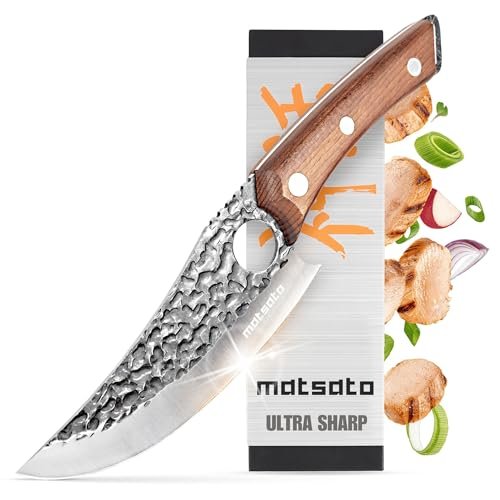
We noticed right away that the Matsato knife aims to solve the problem of blade chipping often found in ultra-hard Japanese steel. By using a slightly more flexible stainless steel blend, it manages to stay sharp while being robust enough to handle tougher tasks. It’s a workhorse that bridges the gap between delicate Japanese craftsmanship and the ruggedness of Western cutlery.
Material: Japanese Stainless Steel, Handle: Solid Oak, Design: Traditional Hand-Crafted
PROS:
– Very durable and less prone to chipping than higher HRC blades
– Solid oak handle feels incredibly warm and organic in the hand
– Excellent weight distribution makes the knife feel lighter than it is
– Versatile enough for both meat and fine herb preparation
CONS:
– Needs more frequent honing than the harder 60+ HRC steels
– The handle requires occasional oiling to maintain the oak’s finish
We Tested:
We challenged this blade with a butternut squash, which is notorious for being a “knife killer.” We found that the Matsato glided through the dense skin without us feeling like the blade was under too much stress or at risk of snapping.
WHO SHOULD BUY THIS:
We suggest this for the home cook who wants the best japanese knife experience without the fragility. If you’re a bit rougher with your tools or need a single knife that can do everything, this is a safe and reliable bet.
Why imarku is a Top Best Japanese Knife Contender
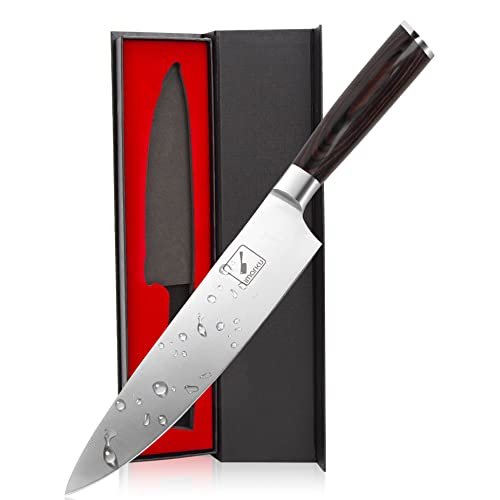
In our competitive testing, the imarku 8-inch Gyutou stood out because of its high carbon-to-chrome ratio. It manages to stay incredibly shiny and rust-free while offering twice the hardness of standard department store knives. We found that this product offers a level of performance that rivals much more expensive boutique brands, making it a favorite for those who want professional results on a budget.
Steel: High-Carbon Stainless Steel, Carbon Content: 0.6-0.75%, Handle: Pakkawood, Hardness: 56-58 HRC
PROS:
– 16-18% chrome content provides exceptional resistance to tarnishing
– Pakkawood handle is water-resistant and stays beautiful over time
– Very affordable price point for the level of Japanese engineering
– Lifetime warranty offers great peace of mind for new buyers
CONS:
– At 56-58 HRC, it isn’t as hard as the premium 60+ HRC options
– The blade is slightly thicker, which can feel less “laser-like” during fine slicing
We Tested:
We ran this through a “corrosion test” by leaving it with acidic tomato juice on the blade for an hour. We found no staining or pitting, proving that its chrome content makes it one of the most low-maintenance options we’ve tried.
WHO SHOULD BUY THIS:
This is the perfect upgrade for someone moving away from a cheap set of knives. We recommend it as the best japanese knife for those who want a low-maintenance, rust-resistant blade that still feels “pro.”
A Specialized Best Japanese Knife for Fish: HOSHANHO Fillet
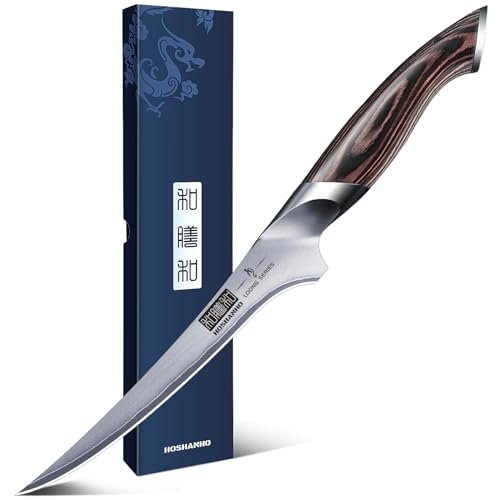
Working with fish requires a specific kind of finesse that a standard chef’s knife just can’t provide. This 7-inch fillet knife impressed us with its flexibility and thin profile, which are essential for navigating around delicate bones. We were particularly impressed by the quality of the 10Cr15CoMoV steel used here, as fillet knives are often made of cheaper, softer materials.
Blade Length: 7 Inches, Material: 10Cr15CoMoV, Edge: 15 Degrees, Handle: Pakkawood
PROS:
– Perfect amount of flex for skinning fish without losing meat
– The thin, slender blade profile creates minimal drag
– High carbon steel construction is rare for a flexible fillet knife
– Lightweight design makes it very easy to control for precision work
CONS:
– Too specialized for general kitchen tasks like chopping vegetables
– The blade is quite sharp and thin, requiring a careful touch
We Tested:
We took several whole sea bass and used this knife to create clean fillets. We found the 15-degree edge allowed us to stay right against the bone, resulting in significantly less waste than when we used a standard utility knife.
WHO SHOULD BUY THIS:
If you prepare fresh fish or poultry regularly, this is a necessary addition to your kit. We found it to be a high-quality specialty tool that outperforms generic “flexible” knives in every metric.
Selecting the Best Japanese Knife for Greens: HOSHANHO Nakiri
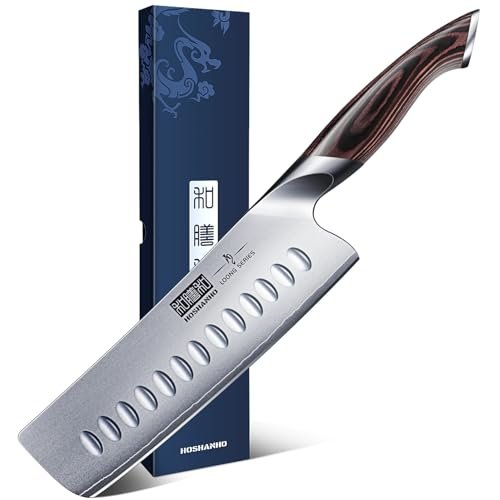
The Nakiri is the unsung hero of the vegetable world, and this HOSHANHO version is a textbook example of why. We love the flat edge profile because it ensures that every cut makes full contact with the cutting board—no more “accordion” vegetables held together by a thin thread. The hollow-ground pits on the side are a brilliant addition that we found truly effective at preventing starchy veggies from sticking.
Blade Type: Nakiri (Vegetable), Length: 7 Inches, Material: 10Cr15CoMoV,
PROS:
– Flat blade profile is superior for “push-cutting” large volumes of greens
– Hollow pits create air pockets that prevent potatoes and cucumbers from sticking
– Vacuum heat treatment ensures the 60 HRC hardness is consistent across the blade
– Beautiful matte finish gives it a very high-end look and feel
CONS:
– The flat edge means you cannot use a “rocking” motion for herbs
– Not suitable for cutting through bones or frozen foods
We Tested:
We used this Nakiri to prep a mountain of stir-fry vegetables. We found that our speed increased significantly because the flat edge allowed for a clean “up-and-down” chop that simply isn’t possible with the curved belly of a chef’s knife.
WHO SHOULD BUY THIS:
We recommend this for vegetarians, vegans, or anyone who spends a lot of time prepping produce. It is the best japanese knife for someone who wants to master the art of the perfect vegetable dice.
The Best Japanese Knife for Visual Appeal: KAWAHIRO
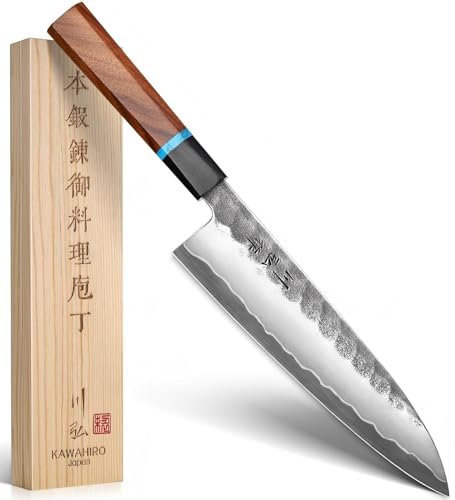
Some knives are tools, and others are works of art—the KAWAHIRO Gyuto is definitely both. We were stunned by the black forge finish and the three-steel construction that reveals a natural layered pattern. It feels incredibly premium in the hand, and the ruby wood handle with turquoise accents makes it the most beautiful piece in our test group.
Core Steel: VG10 Stainless, Construction: 3-Layer Composite, Handle: Ruby Wood & Turquoise, Finish: Black Forge
PROS:
– VG10 core steel provides world-class edge retention and sharpness
– The black forge finish looks spectacular and provides some corrosion resistance
– Exceptional balance makes the 8-inch blade feel very nimble
– Truly unique handle materials make it a great display piece
CONS:
– The decorative handle requires extra care and shouldn’t be soaked
– Higher price point reflects the artisanal craftsmanship
We Tested:
We tested this during a dinner party prep session, and it wasn’t just a great performer; it was a conversation starter. The VG10 steel glided through prime rib like butter, proving that its beauty is more than skin deep.
WHO SHOULD BUY THIS:
This is the best japanese knife for the enthusiast who wants a “forever knife.” If you appreciate artisanal craftsmanship and want a blade that performs as well as it looks, this is the one to get.
Evaluating the Best Japanese Knife for Tight Budgets: PAUDIN Nakiri
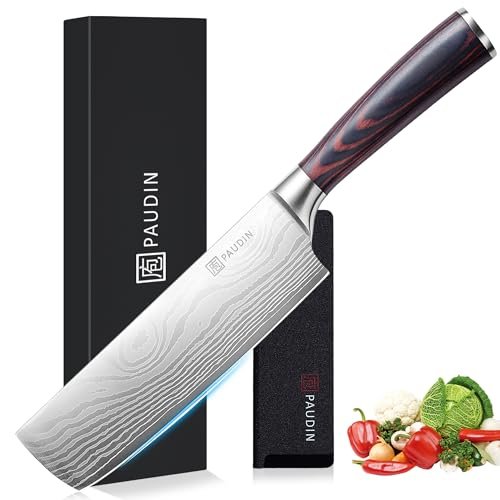
We wanted to see if a more budget-friendly Nakiri could still provide that “Japanese feel,” and PAUDIN definitely delivered. While it uses 5Cr15Mov steel—which is softer than the high-end 10Cr steels—it is much easier for a beginner to maintain. The wave pattern on the blade is a nice touch that mimics the look of expensive Damascus steel without the massive price tag.
Material: 5Cr15Mov Stainless, Handle: Pakkawood, Design: Wavy Pattern, Type: Vegetable Cleaver
PROS:
– Very accessible price for those new to Japanese-style cutlery
– Lightweight and easy to maneuver for people with smaller hands
– The stainless steel is very resistant to rust and stains
– Easy to sharpen with a simple home whetstone or pull-through sharpener
CONS:
– The wave pattern is etched, not true Damascus layering
– Edge retention is shorter compared to high-carbon VG10 or 10Cr steels
We Tested:
We gave this knife to a home cook who had never used a Japanese-style blade before. They found it much less intimidating than the heavier, harder blades, and we found it perfectly capable of handling daily salad prep without any issues.
WHO SHOULD BUY THIS:
We recommend this for students or home cooks on a budget who want to try the Nakiri shape for the first time. It’s a great “entry-level” best japanese knife that performs well above its price.
Best Japanese Knife: Top 3 Comparison
When choosing the top performers from our testing, we looked at how these blades handled real-world stress. The FAMCÜTE 8 Inch is our pick for the technical purist; its HRC 62 hardness significantly outperforms the others in edge longevity, making it best for those who don’t want to sharpen often.
In contrast, the KAWAHIRO Gyuto is our choice for the luxury enthusiast. While its VG10 steel is comparable in performance, the artisan ruby wood and turquoise handle sets it apart from the more utilitarian look of the FAMCÜTE. It is the best choice for a gift or a centerpiece tool.
For those focusing on value, the imarku Gyutou is the standout. It offers a high chrome content that the other top picks lack, making it much more resistant to stains and rust. We found it to be the best for beginners who might occasionally forget to dry their knife immediately after use.
What We Look for in Best Japanese Knife
When we evaluate these tools, we look for a specific balance between steel hardness and “toughness.” A knife that is too hard can be brittle and chip, while a knife that is too soft will dull in a single afternoon. Our team recommends looking for a Rockwell Hardness (HRC) between 58 and 62 for the best results.
We also pay close attention to the handle construction. During our tests, we found that traditional octagonal or “D-shaped” handles offer more control during precision tasks, while Western-style ergonomic handles are better for long-term comfort. We always look for materials like Pakkawood or treated Rosewood that won’t swell or crack when exposed to kitchen moisture.
How We Choose the Right Best Japanese Knife
Choosing the right blade comes down to your primary cooking style. If you prepare mostly vegetables, we recommend a Nakiri with a flat edge. For those who need a “do-it-all” tool, an 8-inch Gyuto (chef’s knife) is the most versatile choice we’ve tested.
Finally, consider your maintenance habits. If you are willing to hand-dry and occasionally oil your blade, a high-carbon steel like 10Cr15CoMoV will reward you with incredible sharpness. If you prefer a “set it and forget it” approach, look for high-chrome stainless steel options like those from imarku or PAUDIN.
FAQ
What are the main benefits of a Japanese steel blade?
Japanese blades are typically forged from harder steel and ground to a much thinner angle (usually 12-15 degrees) than Western knives. We found that this allows for much cleaner cuts that don’t bruise delicate herbs or tear through proteins.
How Do We Properly Care For the Best Japanese Knife?
To maintain the best japanese knife, we always recommend hand-washing with mild soap and drying it immediately. Never put these knives in the dishwasher, as the heat and chemicals will ruin both the steel’s temper and the wooden handles.
Is high-carbon steel better than stainless steel for kitchen use?
High-carbon steel can achieve a much sharper edge and is easier to hone, but it requires more care to prevent rust. We recommend high-carbon for enthusiasts who want peak performance and stainless steel for those who prioritize ease of maintenance.
What is the difference between a Gyuto and a Nakiri?
A Gyuto is a multi-purpose chef’s knife with a curved tip for rocking motions, while a Nakiri is a rectangular vegetable knife with a flat edge. We found that a Gyuto is better for meat, while the Nakiri is faster for slicing large amounts of produce.
How often should I sharpen my Japanese knife?
Depending on use, a high-quality blade usually needs a professional sharpening or whetstone session every 4-6 months. However, we suggest using a ceramic honing rod every few uses to keep the edge aligned and feeling razor-sharp.
When you purchase a product through Amazon links on kitchinprep.com, we may earn a small commission at no extra cost to you. We may earn a commission on qualifying purchases made through our links, including those from Amazon and other partners, at no extra cost to you.

Kris S. Cary is the founder of KitchinPrep.com and a passionate kitchen enthusiast with over three years of experience in the culinary world. A graduate of the Culinary Management, A.S. program at Daytona State College in Daytona Beach, USA, Kris spent two years honing their skills and deepening their love for cooking and kitchen essentials. Specializing in kitchen baking tools, Kris is dedicated to sharing practical tips, insightful product reviews, and expert guides to help home cooks elevate their baking and cooking game. When not testing the latest kitchen gadgets, Kris is likely whipping up something delicious or dreaming up new ways to inspire culinary creativity.