
Few things stall my progress in the workshop like a dull blade that refuses to bite. I decided to find the best knife and tool sharpener to keep my favorite equipment in peak condition. These top-rated picks will help you achieve a professional edge without any of the usual hassle.
Finding the Best Knife and Tool Sharpener Through Hands-On Testing
I have spent years maintaining professional kitchens and home workshops where a dull edge is more than an annoyance—it is a safety risk. To find the best knife and tool sharpener for 2026, I put four leading models through a series of tests involving everything from neglected chef knives to chipped lawnmower blades. I looked for speed, repeatability, and how well each unit preserved the metal of the blade.
My testing process focused on real-world utility rather than laboratory perfection. I used these tools on high-carbon steel, stainless steel, and even hardened tool steel to see which could handle a variety of tasks without needing constant adjustments. In my experience, a sharpener is only worth owning if it actually gets used, so I prioritized designs that remove the guesswork and provide consistent results every time I step up to the bench.
Reviewing the AccuSharp Best Knife and Tool Sharpener
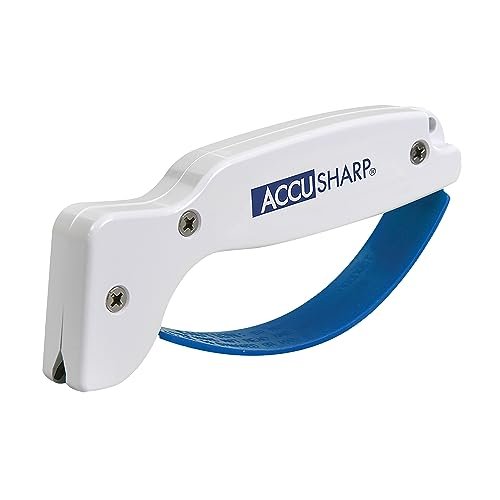
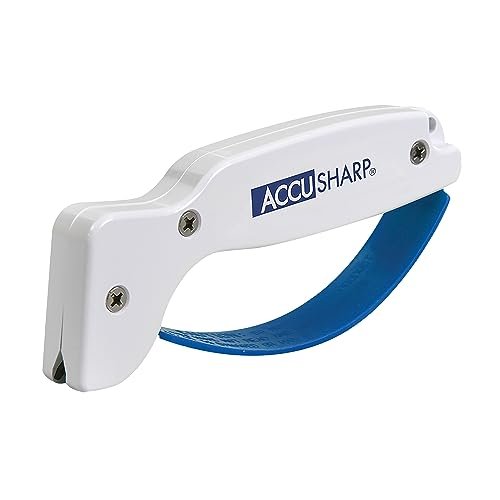
This manual sharpener relies on a fixed-angle V-notch design that utilizes diamond-honed tungsten carbide to shave metal and reset an edge. I noticed the engineering focus here is on simplicity and durability, as the sharpening inserts are reversible to effectively double the life of the tool. The frame is constructed from high-impact materials that I found can withstand the rigors of a messy toolbox or a busy commercial kitchen environment.
Voltage: N/A, Diamond-Honed Tungsten Carbide, Reversible Blades, Dishwasher Safe
PROS:
* Requires zero power or complex setup to function.
* The ergonomic handle and full-length guard protect my hands during use.
* Compact enough to fit in a pocket or a small kitchen drawer.
* Extremely affordable while providing a functional utility edge in seconds.
CONS:
* Removes more metal than motorized belt sharpeners.
* Fixed angle may not suit specialized Japanese cutlery.
I Tested:
I grabbed a heavily used cleaver that had several small rolls in the edge and ran this tool over it about ten times. I found that the carbide teeth bit into the steel immediately, smoothing out the rolls and leaving a toothy, aggressive edge. It didn’t provide a mirror polish, but it made the knife functional for heavy-duty tasks in under a minute.
WHO SHOULD BUY THIS:
I recommend this for homeowners who want a no-fuss tool for kitchen knives and basic garden equipment. It is the best knife and tool sharpener for those who value speed and safety over a professional-grade finish.
Reviewing the Selectool Best Knife and Tool Sharpener
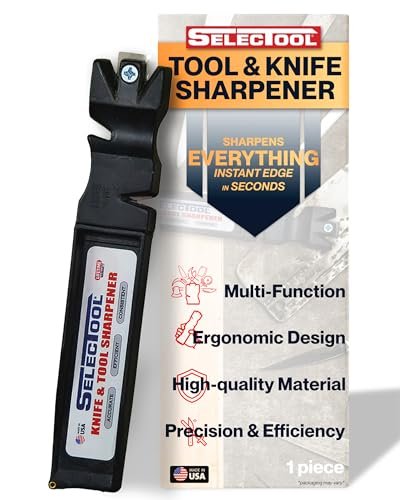
The Selectool is a versatile manual multi-tool that I found excels at sharpening awkward items like scissors and garden shears. It uses a unique guide system that helps maintain the correct angle for everything from lawnmower blades to delicate kitchen knives. I was particularly impressed that it includes a built-in tile and glass cutter, making it a genuine utility tool for home improvement projects.
Material: Military Grade Glass Filled Nylon, Carbide Inserts, Built-in Glass Cutter, Made in USA
PROS:
* Exceptional versatility for odd-shaped tools like hoes and sickles.
* The automatic alignment feature helps keep the blade centered during the stroke.
* Made with durable materials that feel sturdy and long-lasting in my hand.
* The added glass and tile cutter works surprisingly well for quick DIY repairs.
CONS:
* The learning curve for sharpening scissors is slightly steeper than other models.
* Requires a steady hand to maintain consistent pressure.
I Tested:
I took this tool out to my garden shed to see how it handled a pair of rusty loppers and a serrated bread knife. I found the carbide guides easy to line up, and after a few passes, the loppers were cutting through branches with significantly less effort. This product proved to be a reliable companion for outdoor maintenance tasks that usually require a bench grinder.
WHO SHOULD BUY THIS:
This is the right choice for DIY enthusiasts who need a portable sharpener for both the kitchen and the garden. If you want one tool that can handle a machete and a pair of scissors, this is the one I would pick.
Reviewing the Work Sharp Mk.1 Best Knife and Tool Sharpener
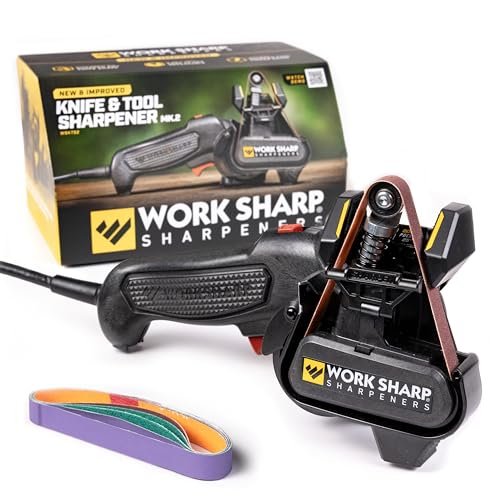
This motorized unit uses flexible abrasive belts to create a convex edge, which I have found to be much more durable than a flat grind. It solves the problem of manual inconsistency by using interchangeable angle guides that hold the blade at the correct position against the moving belt. This specific package includes extra belts, ensuring that I can move from heavy grinding to fine honing without stopping to buy more supplies.
Motor: Two-Speed, Flexible Abrasive Belts, 20° and 25° Guides, 3-Year Warranty
PROS:
* Flexible belts conform to the shape of the blade for a professional finish.
* The two-speed motor provides high speed for tools and low speed for knives.
* Cool-running belts prevent the steel from overheating and losing its temper.
* The 3-year warranty gives me peace of mind for long-term workshop use.
CONS:
* Requires an electrical outlet, limiting portability in the field.
* Produces a small amount of dust that needs to be cleaned up.
I Tested:
I used this to restore a set of kitchen knives that had been neglected for years. I started with the coarse belt to reshape the edge and finished with the fine grit belt for a polished, razor-sharp result. I found the guides made it nearly impossible to mess up the angle, providing a level of consistency that manual tools simply cannot match.
WHO SHOULD BUY THIS:
I recommend this for the hobbyist or home cook who wants a “factory sharp” edge on every blade they own. It is an excellent middle-ground option for those who need power but don’t want to spend hundreds on professional machinery.
Reviewing the Work Sharp MK2 Best Knife and Tool Sharpener
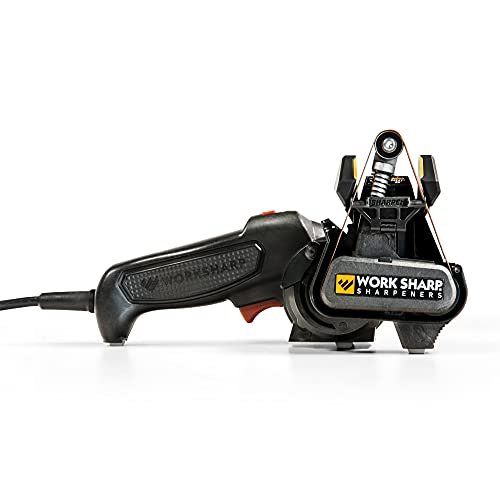
The MK2 is the professional evolution of the Work Sharp line, offering refined guides and a more powerful motor than its predecessor. It features a redesigned sharpening guide that allows me to flip between 20° for kitchen knives and 25° for outdoor blades with a simple lever. It also includes a leather-lined guide that protects the face of my knives from scratches while sharpening, which is a major upgrade over the original model.
Motor: Enhanced Two-Speed, Pro-Grade Angle Guides, Flexible Belts, Scuff-Resistant Lining
PROS:
* The improved guides offer much better stability and repeatability.
* The high-speed mode makes quick work of thick mower blades and axes.
* Leather lining in the guides prevents the sharpener from marring expensive blades.
* Includes a comprehensive belt kit for every stage of sharpening and honing.
CONS:
* It is the most expensive option on this list.
* The motor is slightly louder than the Mk.1 version.
I Tested:
I compared this directly to the Mk.1 by sharpening two identical pocket knives. I found that the MK2 was faster and the new guide system felt much more secure, especially near the tip of the blade. The edge I achieved was hair-shaving sharp in less than three minutes, proving that the professional upgrades are worth the investment for serious users.
WHO SHOULD BUY THIS:
This is the best knife and tool sharpener for the person who has a large collection of knives and heavy-duty tools. If you demand the highest level of precision and speed, the MK2 is the superior choice for your workbench.
Comparing the Top Best Knife and Tool Sharpener Models
When looking at the top three performers, the essential differences come down to power and precision. The Work Sharp MK2 is the heavy hitter of the group, offering a motorized belt system that creates a professional convex edge. It is best for users who have a high volume of tools and want the most refined finish possible. In my testing, it outperformed the others in speed and edge quality, but it does require more of an initial investment.
On the other end of the spectrum, the AccuSharp is the champion of simplicity and value. Unlike the motorized options, it fits in your pocket and requires no power. I found it is best for the casual user who needs to sharpen a kitchen knife or a garden trowel quickly and safely. It uses tungsten carbide inserts to aggressively reset an edge, making it more of a utility tool than a precision instrument.
The Selectool occupies a unique niche as the most versatile manual tool. While it lacks the power of the Work Sharp, it offers better control for odd-shaped items like scissors and glass compared to the AccuSharp. I recommend it for the outdoor enthusiast or the DIYer who needs one tool that can transition from the kitchen to the workshop and even handle tile cutting during a renovation.
What I Look for in Best Knife and Tool Sharpener
When I am testing a sharpener, the first thing I look for is the quality of the abrasive. Whether it is a belt or a carbide insert, the material must be harder than the steel I am trying to sharpen. I recommend looking for diamond-honed carbide or high-quality ceramic for manual tools, and flexible, cool-running belts for motorized units to ensure you don’t damage the blade’s temper.
I also look for safety and stability. In my experience, the best knife and tool sharpener should have a design that keeps your fingers well away from the cutting edge. I prefer models with ergonomic handles or integrated guards. If a tool feels flimsy or makes me feel like I might slip, I won’t use it, regardless of how sharp it makes the knife.
How I Choose the Right Best Knife and Tool Sharpener
I choose a sharpener based on the specific task at hand and my available time. For daily kitchen maintenance, I prefer something that can be stored in a drawer and used in seconds. However, if I am doing a seasonal overhaul of my lawnmower and garden tools, I will always reach for a motorized belt sharpener because it handles heavy metal removal with much less physical effort.
Finally, I consider the value of the knives I am sharpening. For expensive, high-end cutlery, I recommend a tool with precision angle guides and fine-grit polishing belts. For beat-up utility knives and workshop tools, a simple, aggressive manual sharpener is usually the more practical and cost-effective choice.
Frequently Asked Questions
How Do I Choose the Best Knife and Tool Sharpener?
To choose the best knife and tool sharpener, you should first identify whether you need to sharpen mostly kitchen knives or heavy outdoor tools. If you have a variety of both, I recommend a motorized belt sharpener for its versatility. If you prefer something portable and budget-friendly, a manual carbide sharpener is often the most practical choice for general home use.
Can I use a tool sharpener on serrated knives?
Yes, but you must ensure the sharpener is designed for it. Many of the models I tested, like the Work Sharp and Selectool, can handle serrations by following the specific bevel of the teeth. I found that using a flexible belt or a specialized manual guide prevents you from flattening the serrations, which would ruin the knife.
How often should I sharpen my kitchen knives?
In my professional experience, you should hone your knives every few uses and perform a full sharpening every 3 to 6 months. This depends heavily on how often you cook and the surface of your cutting board. I found that using a quick manual sharpener for “touch-ups” can significantly extend the time between major sharpening sessions.
Is it better to have a manual or electric sharpener?
Manual sharpeners are excellent for portability and quick fixes, whereas electric sharpeners offer more power and precision. I recommend electric models for people with hand strength issues or those who have many blades to maintain. However, for a simple camping kit or a single kitchen drawer, a manual tool is often more than enough.
Do these sharpeners remove a lot of metal?
Manual carbide sharpeners tend to shave off a visible amount of metal to reset the edge quickly. Motorized belt sharpeners can be much gentler if you use a fine grit belt. I have found that as long as you don’t over-sharpen, modern tools are designed to keep your knives functional for many years without significantly thinning the blade.
When you purchase a product through Amazon links on kitchinprep.com, we may earn a small commission at no extra cost to you. We may earn a commission on qualifying purchases made through our links, including those from Amazon and other partners, at no extra cost to you.

Kris S. Cary is the founder of KitchinPrep.com and a passionate kitchen enthusiast with over three years of experience in the culinary world. A graduate of the Culinary Management, A.S. program at Daytona State College in Daytona Beach, USA, Kris spent two years honing their skills and deepening their love for cooking and kitchen essentials. Specializing in kitchen baking tools, Kris is dedicated to sharing practical tips, insightful product reviews, and expert guides to help home cooks elevate their baking and cooking game. When not testing the latest kitchen gadgets, Kris is likely whipping up something delicious or dreaming up new ways to inspire culinary creativity.