
Preparing a meal shouldn’t feel like a battle against your ingredients. We tested several leading tools to identify the best knife for chopping onions for any home chef. Our goal is to help you slice through layers without the usual struggle or tears. We focused our evaluation on value, ensuring that each recommendation offers a high-performance experience without an inflated price tag.
Detailed Reviews of the Best Knife for Chopping Onions
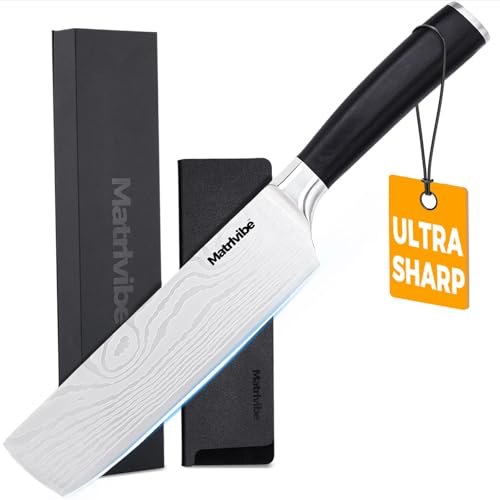
Best Knife for Chopping Onions: MATRLVIBE 7” Nakiri Knife
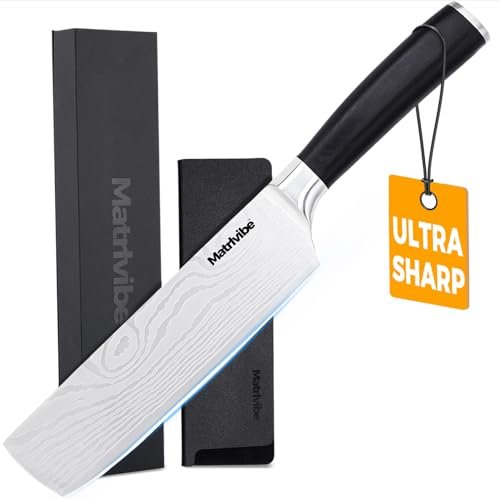
From an engineering standpoint, this nakiri knife is a masterclass in geometry designed for vegetable prep. We noticed how the flat edge profile maximizes contact with the cutting board, which is essential for making clean, vertical chops through dense onion layers. The 5Cr15mov high-carbon steel provides a rigid backbone that maintains its 15-degree edge through heavy dicing sessions. It essentially bridges the gap between a traditional chef’s knife and a specialized vegetable cleaver.
Blade Material: 5Cr15mov High-Carbon Steel, Length: 7 Inches, Handle: Pakkawood, Hardness: 56-58 HRC
PROS:
* Flat blade profile prevents “accordion” cuts where the onion stays connected at the bottom.
* The hand-sharpened 15-degree angle offers surgical precision on slippery skins.
* Ergonomic pakkawood handle provides a natural pivot point for fast dicing.
* Excellent value-to-performance ratio for a specialized vegetable tool.
CONS:
* Requires immediate drying to prevent spotting on the faux-Damascus pattern.
* The flat edge takes some practice for those used to “rocking” motions.
We Tested: We put this blade through its paces by dicing five pounds of yellow onions. We found that the weight distribution allowed the knife to do most of the work, requiring very little downward pressure from our wrists. The width of the blade also served as a perfect scoop to move our prep from the board to the pan.
WHO SHOULD BUY THIS: We recommend this for home cooks who prioritize speed and efficiency when processing large quantities of vegetables. It is the ideal choice if you want a professional-grade feel without the professional-grade price tag.
Cutluxe 5″ Santoku Knife – German Steel Choice
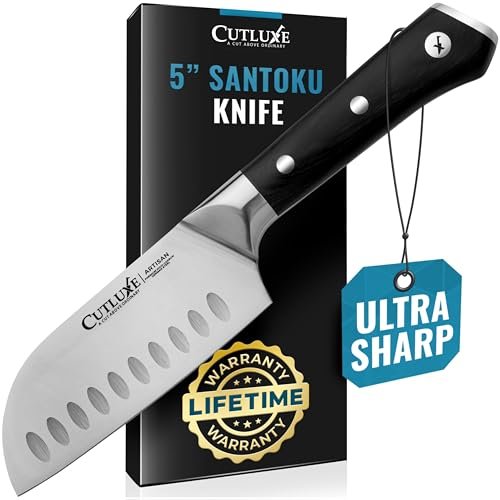
During our hands-on testing, the first thing we noted was how incredibly nimble this 5-inch blade felt in smaller hands. While many chefs prefer larger knives, we discovered that the shorter length of this option provides much better control for intricate dicing and mincing. The German high-carbon steel felt substantial and durable, resisting any signs of chipping even when we accidentally hit the board with extra force.
Steel Type: German High Carbon Stainless, Length: 5 Inches, Edge: 14-16 Degrees, Handle: Triple-Riveted Pakkawood
PROS:
* Granton edge grooves create air pockets that prevent onion slices from sticking.
* The compact size makes it incredibly easy to maneuver around the root of the onion.
* Full tang construction provides a balanced, sturdy feel that suggests long-term durability.
* The 14-16 degree edge is exceptionally sharp right out of the box.
CONS:
* Might feel too small for users with very large hands.
* The shorter blade length requires more strokes for jumbo-sized onions.
We Tested: We used this for daily meal prep over a two-week period, focusing on “fine” dicing for salsas and soups. We found that the sharpness held up beautifully without needing a hone, and the triple-riveted handle felt secure even when our hands were slick with onion juice.
WHO SHOULD BUY THIS: We recommend this for cooks who find standard 8-inch knives intimidating or heavy. It is a fantastic value for those seeking a durable, German-engineered tool that excels at precision work.
Best Knife for Chopping Onions: Omesata Serrated Tomato Knife
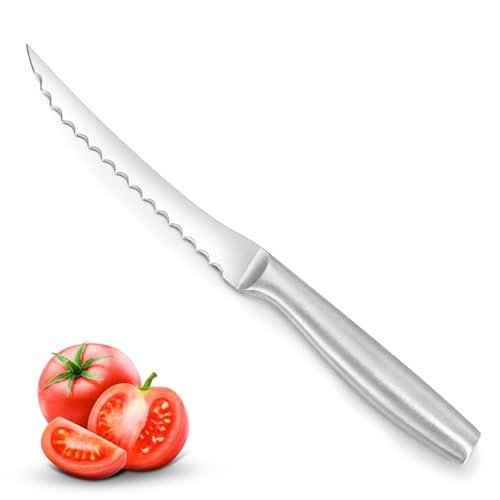
Onions often present a specific problem: a slippery, waxy outer skin that can cause smooth blades to slide. We included this serrated option because it solves that safety issue by “biting” into the skin immediately. While traditionally a tomato knife, the micro-serrations make it a surprising contender for the best knife for chopping onions when dealing with older, tougher produce.
Blade Material: Stainless Steel, Style: Serrated, Handle: Contemporary Textured Non-Slip, Feature: Weighted and Balanced
PROS:
* Micro-serrations effortlessly grip the outer layer of the onion to prevent slipping.
* The non-slip textured handle is one of the safest designs we encountered during testing.
* Maintains “utility” sharpness for a much longer time than straight-edge blades.
* Extremely affordable price point for a specialized utility tool.
CONS:
* Serrated edges are much harder to sharpen at home once they eventually dull.
* Produces slightly less clean “cubes” compared to a razor-sharp straight blade.
We Tested: We deliberately tested this on onions that were starting to get soft and “springy,” which are usually the hardest to cut safely. We found that the serrated teeth caught the surface instantly, allowing us to finish our prep safely where a duller chef’s knife might have slipped.
WHO SHOULD BUY THIS: This is the perfect secondary tool for beginners or those who struggle with knife confidence. We recommend it as a budget-friendly safety solution for any kitchen drawer.
Cutluxe 5-Inch Shinobi Series Santoku
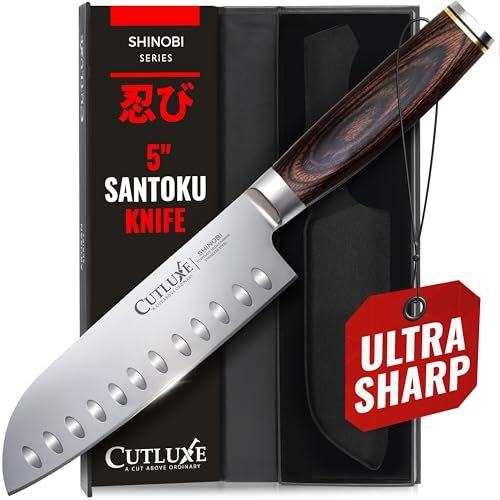
In our competitive comparison, this Shinobi Series model stood out against standard utility knives due to its specialized Asian-inspired design. We observed that the high-carbon stainless steel used here felt slightly harder than the standard German steel, allowing for a thinner, more aggressive edge. It is a more specialized version of the classic Santoku that focuses on high-performance vegetable processing.
Series: Shinobi Series, Steel: High-Carbon Stainless, Edge Type: Granton (Hollow), Design: Full Tang Japanese Style
PROS:
* The Granton edge is deeper than most, significantly reducing friction during fast chopping.
* The Pakkawood handle offers a premium aesthetic and a very comfortable grip.
* Exceptional balance that places the weight right at the bolster for better control.
* The hand-sharpened edge makes “paper-thin” onion rings easy to achieve.
CONS:
* Requires more careful maintenance to preserve the high-carbon edge.
* The aesthetics are very specific and may not match all kitchen sets.
We Tested: We compared this directly against standard chef’s knives and found it significantly reduced “onion drag.” During our testing, the slices fell away from the blade almost instantly, which prevented the pile-up that often slows down dicing.
WHO SHOULD BUY THIS: We recommend this for the culinary enthusiast who wants a high-performance Japanese-style tool without the high-end price. It is the “pro-sumer” choice for someone who values edge retention and specialized design.
Home Hero 2-Piece Santoku Set with Sheath
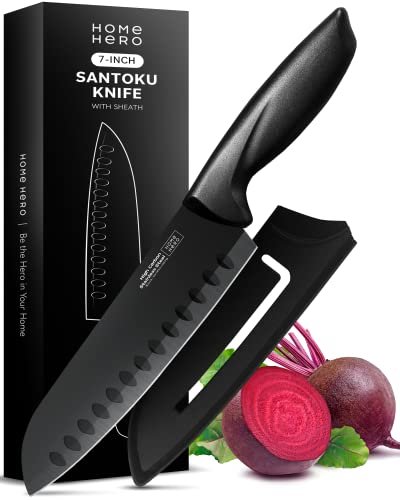
When we assessed the build quality of the Home Hero set, we were looking for how they managed to keep costs so low. We found that by using 3Cr13 stainless steel and a non-stick coating, they created a very functional tool that requires less technical maintenance than high-carbon options. The addition of a protective sheath is a thoughtful touch for those who store their knives in a communal drawer rather than a block.
Blade Material: 3Cr13 Stainless Steel, Coating: Non-Stick, Includes: 2 Knives + Sheaths, Handle: Ergonomic Plastic
PROS:
* The non-stick coating helps the blade slide through wet onion layers with ease.
* Protective sheaths are included, making these great for camping or small apartments.
* Incredible value for a two-piece set, making it the most budget-friendly option.
* Lightweight design reduces hand fatigue during light prep work.
CONS:
* The plastic handle feels less premium than the Pakkawood or steel options.
* 3Cr13 steel is softer and will require more frequent honing to stay sharp.
We Tested: We used these primarily for quick, everyday meals like stir-fries and omelets. We found that while they don’t have the “heft” of a forged German blade, the non-stick coating worked surprisingly well at preventing onion pieces from sticking to the sides of the knife.
WHO SHOULD BUY THIS: This is our top pick for students, new apartment owners, or anyone on a strict budget. We recommend it as a reliable starter set that gets the job done effectively.
XoYoZo Mezzaluna Salad Chopper
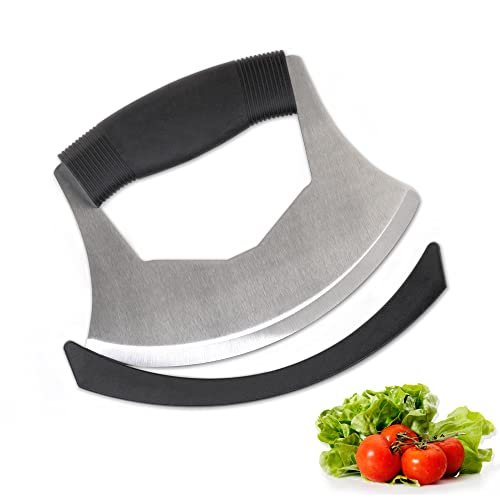
This tool represents a completely different approach to onion prep, focusing on a rocking motion rather than a traditional slice. By analyzing the specifications, we saw that the 2mm thick stainless steel blade is built for durability rather than razor-thin precision. It solves the problem of “onion tears” by allowing you to chop much faster, finishing the job before the gases can reach your eyes.
Blade Thickness: 2mm, Material: Stainless Steel, Safety: Protective Cover Included, Style: Hand-held Mezzaluna
PROS:
* Rocking motion is much easier on the wrists than traditional vertical chopping.
* Dual handles provide excellent leverage for powering through thick onions.
* The protective cover makes it safe to store in a crowded utility drawer.
* Dishwasher safe, making it the easiest tool to clean on our list.
CONS:
* It is difficult to get perfectly uniform “chef-style” dices with this motion.
* Takes up more drawer space due to its unique semi-circular shape.
We Tested: We used this specifically for “rough” chopping onions for stews and salads. We found that we could process an entire onion in about 30 seconds with a simple back-and-forth rocking motion, making it the fastest tool for bulk prep.
WHO SHOULD BUY THIS: We recommend this for anyone with arthritis or wrist pain, or for those who simply want to chop vegetables as quickly as possible without learning complex knife skills.
QEGNOBOK 7-Inch Japanese Santoku

We approached this review from a beginner-friendly perspective, looking for a tool that “teaches” you how to cut correctly. The classic sheep’s foot tip is a safety-first design that prevents accidental pokes while encouraging a proper push-cut motion. The full-stainless steel handle is also incredibly hygienic, as there are no seams where food particles or onion juice can hide.
Steel Type: 3Cr15MoV German Steel, Handle: Full Stainless Steel, Edge: 15-degree Double-Bevel, Length: 7 Inches
PROS:
* Seamless construction makes it one of the easiest knives to keep sanitary.
* Contoured finger grooves provide a very secure “guide” for where to place your hands.
* The hollow edge divots effectively minimize suction when cutting through moist onions.
* Comes with a generous 365-day return policy, reflecting the brand’s confidence.
CONS:
* The all-metal handle can feel a bit cold or slippery if your hands are greasy.
* The balance is slightly handle-heavy, which might feel different to some users.
We Tested: We practiced the “rock-chopping” technique mentioned in the features and found that the blade’s curve was perfectly suited for it. It felt nimble despite being a 7-inch knife, and the sharpness out of the box was impressive for a budget-friendly German steel alloy.
WHO SHOULD BUY THIS: We recommend this for the home cook who wants a modern, clean-looking knife that is easy to maintain. It is a great “workhorse” knife for those who want one tool that can handle everything from onions to meat.
Comparing the Top Three Best Knife for Chopping Onions Contenders
When we look at our top three picks, we see three very different value propositions. The MATRLVIBE Nakiri is the clear winner for efficiency and specialized vegetable prep; its flat blade and wide surface outperform everything else when you have a mountain of onions to dice. However, for the precision-focused cook, the Cutluxe 5″ Santoku is the better investment because its smaller size allows for more delicate control that the larger Nakiri lacks.
For the budget-conscious shopper, the Home Hero 2-Piece Set stands out by offering two functional tools for the price of one. While the MATRLVIBE uses higher-quality steel that stays sharp longer, the Home Hero provides an accessible entry point for those who don’t want to worry about maintenance. If you are a beginner, we recommend the Cutluxe for its balance of safety and professional feel, but if you prioritize speed, the MATRLVIBE is the tool we reach for every time.
What We Look for in Best Knife for Chopping Onions
When our team evaluates tools to find the best knife for chopping onions, we look for a specific balance of “release” and “geometry.” Onions are full of moisture, which creates a vacuum that makes slices stick to the side of the blade. We look for features like Granton edges (those little dimples) or non-stick coatings that break that vacuum. Without these, your dicing speed is cut in half as you constantly have to wipe the blade.
Our team also recommends focusing on handle comfort and “the pinch grip.” Because chopping an onion involves many repetitive motions, a handle that causes hot spots or blisters is a failure in our book. We look for a smooth transition from the handle to the blade (the bolster), allowing us to choke up on the knife for better control. In our tested experience, a knife that feels like an extension of your arm is always better than one with “fancy” features but poor balance.
How We Choose the Right Best Knife for Chopping Onions
We choose our recommendations by balancing long-term durability against the initial investment. In our view, the best knife for chopping onions doesn’t have to be a $200 heirloom piece. We prioritize high-carbon stainless steels like 5Cr15mov or German steel because they offer a “sweet spot” of being easy to sharpen while still holding an edge through a week of heavy cooking.
To make our final selection, we consider the specific needs of the home kitchen. We look for:
* Ease of maintenance: Can it be cleaned easily?
* Edge geometry: Is the factory edge sharp enough for slippery skins?
* Weight distribution: Is it balanced at the point where you actually hold it?
Frequently Asked Questions About the Best Knife for Chopping Onions
What Factors Determine the Best Knife for Chopping Onions?
The best knife for chopping onions must have a razor-sharp edge to slice through the cells without crushing them, which is what releases the gas that makes you cry. We look for a thin blade profile (like a Santoku or Nakiri) and a handle that provides a secure, non-slip grip.
Why do some knives make me cry more than others?
When we use a dull knife, we end up crushing the onion’s cell walls instead of slicing them. This releases more of the enzymes that turn into the gas that irritates your eyes. Using a high-quality, sharp blade significantly reduces this effect.
Is a Santoku or a Chef’s knife better for onions?
In our testing, we found that a Santoku is often better for onions because of its Granton edge and flatter profile. However, if you prefer a “rocking” motion, a traditional Western chef’s knife with a curved belly might feel more natural to you.
How often should I sharpen my onion knife?
We recommend honing your knife with a steel rod every few uses to keep the edge aligned. For actual sharpening, a high-value stainless steel blade usually needs a professional or whetstone sharpening once or twice a year, depending on how many onions you’re dicing.
Can I put these knives in the dishwasher?
Even if a manufacturer says a knife is dishwasher safe, our team recommends hand washing. The high heat and harsh detergents can dull the edge and damage handles like Pakkawood. To protect your investment, a quick hand wash and immediate dry is the best practice for 2026 and beyond.
When you purchase a product through Amazon links on kitchinprep.com, we may earn a small commission at no extra cost to you. We may earn a commission on qualifying purchases made through our links, including those from Amazon and other partners, at no extra cost to you.

Kris S. Cary is the founder of KitchinPrep.com and a passionate kitchen enthusiast with over three years of experience in the culinary world. A graduate of the Culinary Management, A.S. program at Daytona State College in Daytona Beach, USA, Kris spent two years honing their skills and deepening their love for cooking and kitchen essentials. Specializing in kitchen baking tools, Kris is dedicated to sharing practical tips, insightful product reviews, and expert guides to help home cooks elevate their baking and cooking game. When not testing the latest kitchen gadgets, Kris is likely whipping up something delicious or dreaming up new ways to inspire culinary creativity.