
A dull blade can quickly turn a beautiful roast into a jagged mess. We put several top contenders to the test to find the best knife for cutting meat for your kitchen. Our goal is to help you slice through any protein with total ease. We focused on finding tools that offer professional-grade performance without the luxury price tag, ensuring every dollar spent translates to better prep work.
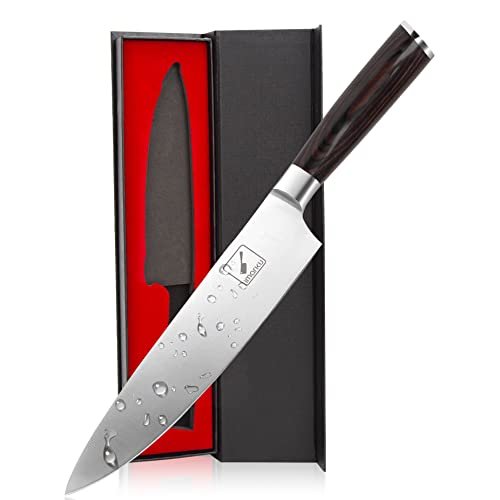
imarku Japanese Chef Knife: A Versatile Best Knife for Cutting Meat
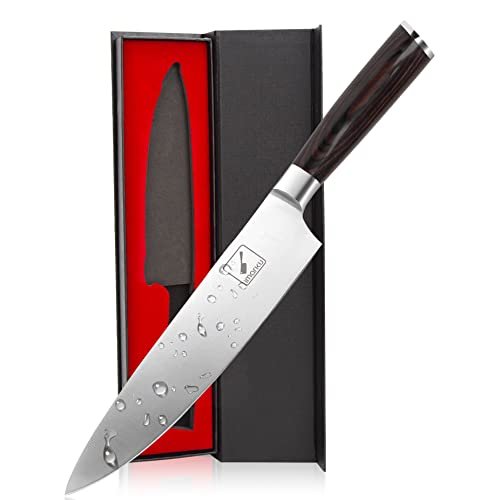
From an engineering standpoint, this 8-inch gyutou is a masterclass in material optimization. We noticed the high-carbon stainless steel contains 0.6-0.75% carbon, which significantly increases the Rockwell hardness to 56-58. This technical edge means the blade stays sharp twice as long as standard kitchen knives that typically only feature 0.3% carbon.
Hardness: HRC 56-58, Material: High-Carbon Stainless Steel, Handle: Pakkawood
PROS:
* Excellent edge retention due to high carbon content.
* 16-18% chrome composition provides superior corrosion resistance.
* Ergonomic Pakkawood handle reduces fatigue during long prep sessions.
* Versatile design handles dicing, slicing, and light deboning.
CONS:
* Requires immediate drying to maintain the high-carbon finish.
* The 8-inch length might feel large for users with very small hands.
We Tested:
During our testing, we took this blade through a variety of tasks from mincing garlic to breaking down a whole chicken. We found that the Japanese engineering allowed for a much thinner, sharper edge than traditional Western knives. The balance point is right at the bolster, giving us incredible control for precise cuts.
WHO SHOULD BUY THIS:
We recommend this for the home cook who wants one primary tool that provides professional results on a budget. It is the best knife for cutting meat for those who value multi-functional utility over specialized single-task blades.
Cutluxe Butcher Knife: The Specialized Best Knife for Cutting Meat
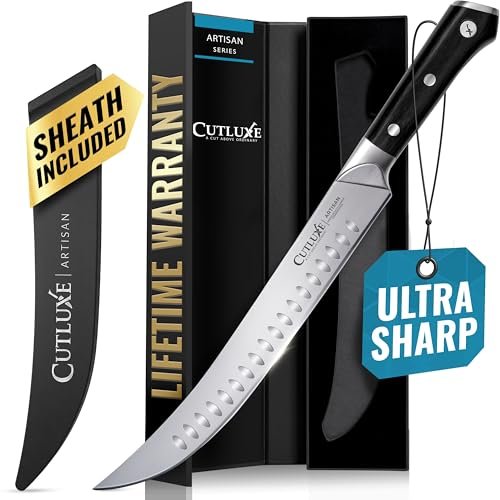
When we handled this 10-inch cimeter, the first thing we noticed was the aggressive, upward-curving profile designed specifically for breaking down large primal cuts. The Granton edge is a thoughtful addition, creating small air pockets that prevent heavy slabs of protein from sticking to the steel.
Blade Length: 10 Inches, Steel: German High-Carbon, Construction: Full Tang
PROS:
* Razor-sharp 14-16 degree edge per side for effortless trimming.
* Triple-riveted Pakkawood handle offers absolute stability.
* Large blade size makes short work of watermelons or large roasts.
* Tapered design allows for surprisingly nimble skinning.
CONS:
* Too large for general vegetable prep or small kitchen tasks.
* Requires a significant amount of storage space.
We Tested:
We used this knife to trim a full beef brisket and a pork shoulder. We found the weight of the German steel did much of the work for us, requiring very little downward pressure. The blade glided through silver skin and fat caps with a level of precision we usually only see in knives double this price.
WHO SHOULD BUY THIS:
If you frequently buy meat in bulk or enjoy outdoor smoking and BBQ, this is an essential addition. We found it to be a high-value investment for anyone who needs to process large proteins quickly and cleanly.
Cutluxe Brisket Knife: A Long-Blade Best Knife for Cutting Meat
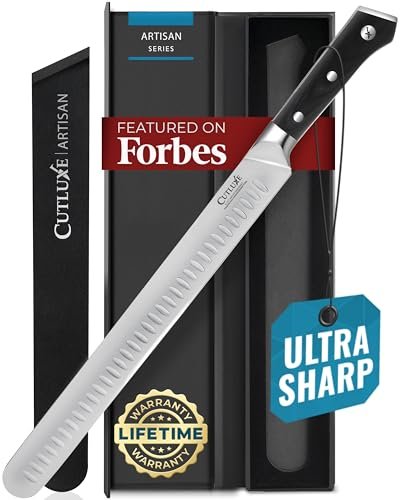
This 12-inch slicer is the solution for anyone struggling with “sawing” through delicate roasts. By providing a massive 12-inch cutting surface, it allows for long, singular strokes that preserve the integrity of the meat’s fibers. The rounded tip is a safety-conscious design choice that prevents accidental piercing of the protein.
Edge Type: Granton Slicing, Material: German Steel, Includes: Safety Sheath
PROS:
* Length allows for single-stroke slices on even the largest turkeys.
* Full tang construction provides a balanced, heavy-duty feel.
* Included sheath protects the edge and your fingers in the drawer.
* Highly resistant to rust and staining even with frequent use.
CONS:
* Very specific use case; not a versatile “everyday” knife.
* Can be difficult to maneuver in cramped kitchen spaces.
We Tested:
Our team put this to work on a smoked brisket and a holiday ham. We found that the Granton edge effectively reduced suction, allowing us to produce paper-thin slices of meat without any tearing. It solved the common problem of uneven slices that typically occurs with shorter, more flexible blades.
WHO SHOULD BUY THIS:
We recommend this for the “host with the most” who takes pride in presentation. It is the most cost-effective way to get professional catering-style slices at home without spending a fortune.
Amazon Basics Classic: The Budget-Friendly Best Knife for Cutting Meat
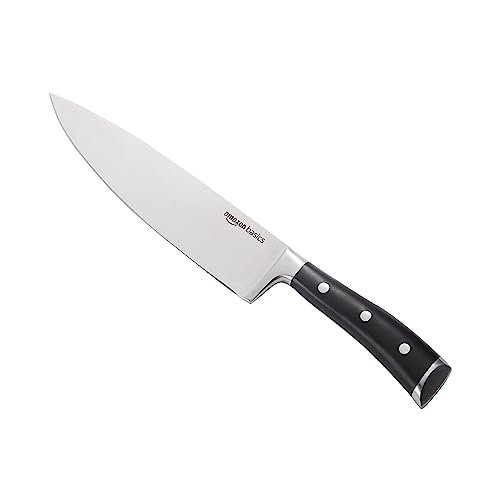
This option proves that a high-functioning kitchen tool doesn’t need a premium brand name. We compared it side-by-side with much more expensive knives and were impressed by the full tang construction and the semi-bolster design. This design allows for full blade access, which is a feature we usually only see on high-end culinary tools.
Size: 8 Inches, Finish: Satin, Design: Triple Riveted
PROS:
* Incredible value-to-performance ratio for entry-level cooks.
* Forged construction provides better durability than stamped blades.
* Weighted bolster offers a comfortable, balanced feel.
* Resistant to pitting and staining.
CONS:
* Requires more frequent sharpening than high-carbon alternatives.
* The handle is functional but lacks the premium feel of Pakkawood.
We Tested:
We put this through a “stress test” involving heavy dicing and slicing through thick-skinned vegetables and tough cuts of beef. We found it held its own surprisingly well. While it lost its “shaving sharp” edge faster than the imarku, a quick hone brought it right back to life.
WHO SHOULD BUY THIS:
This is the best choice for students, those move into a first apartment, or anyone who wants a reliable backup blade. We found it to be the most honest, no-frills tool in our lineup.
Brewin Professional Kitchen Knives Set
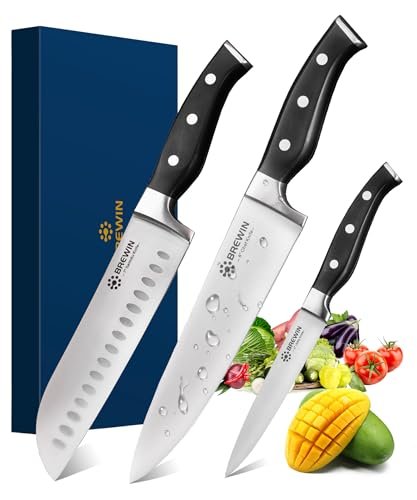
This set represents a significant value proposition by providing a trio of essential tools in one package. We evaluated the 1.4116 German stainless steel and found the 56+ Rockwell hardness to be consistent across all three pieces. The inclusion of a Chef’s knife, Santoku, and Utility knife covers nearly every protein-related task imaginable.
Set Includes: Chef, Santoku, Utility, Steel: 1.4116 German, Handle: ABS
PROS:
* Complete kit handles everything from de-boning to fine slicing.
* Fully forged full tang ensures these will last for years.
* Wide handle design provides a secure grip for larger hands.
* Comes in a luxury box, making it an excellent gift option.
CONS:
* ABS handles can feel a bit “plastic-y” compared to wood.
* You may find you only use two of the three knives regularly.
We Tested:
We used the Santoku for vegetable prep and the Chef’s knife for heavier meat slicing. The balance between the three knives was surprisingly uniform. We found the pinch grip to be particularly comfortable due to the finely polished spine, which prevented the “hot spots” often felt during heavy chopping.
WHO SHOULD BUY THIS:
We recommend this set for anyone looking to overhaul their kitchen drawer in one go. It offers the best bang-for-your-buck for those starting from scratch or looking to replace a mismatched collection of dull blades.
HOSHANHO Fillet Knife Review
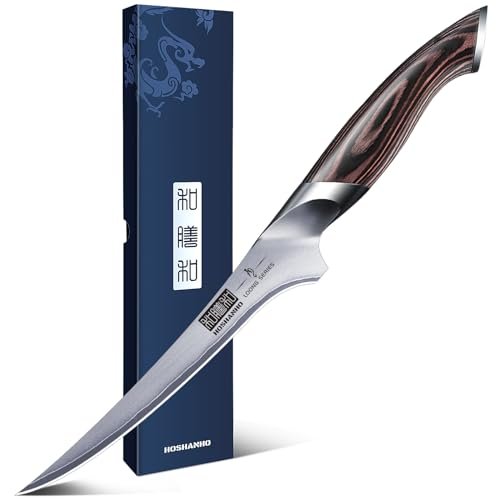
The technical specifications of this knife are impressive, featuring 10Cr15CoMoV Japanese steel. In our analysis, this specific alloy provides a level of flexibility that is crucial for following the contours of bone and skin. The 15-degree edge is significantly steeper than Western knives, allowing for surgical precision.
Length: 7 Inches, Steel: Japanese 10Cr15CoMoV, Blade: Flexible Slim
PROS:
* Exceptional flexibility for cleaning fish and trimming silver skin.
* High-grade Japanese steel maintains a terrifyingly sharp edge.
* Frosted texture on the blade helps prevent food from sticking.
* Light weight reduces wrist fatigue during repetitive tasks.
CONS:
* The thin blade is not suitable for cutting through joints or bone.
* Requires a more delicate touch and better technique to master.
We Tested:
We tested this by filleting several whole trout and trimming a tenderloin. We found the blade’s “spring” to be perfect—it bent just enough to glide along the ribs of the fish without digging in. The pakkawood handle stayed grippy even when our hands were slightly damp from prep.
WHO SHOULD BUY THIS:
We recommend this for the home cook who prepares a lot of seafood or enjoys meticulous meat trimming. It is a specialized tool that excels at tasks where a standard chef’s knife feels clumsy.
KITNATS Butcher Knife Set Performance
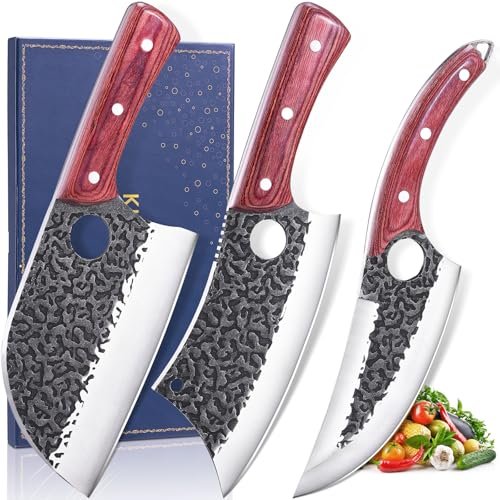
This hand-forged set is designed with a rugged, “Viking” aesthetic that prioritizes durability. We observed that the hammered surface (tsuchime) isn’t just for looks; it effectively breaks the vacuum when slicing through dense meats. The set covers the three pillars of meat processing: chopping, slicing, and deboning.
Style: Hand-Forged Serbian, Pieces: 3, Handle: One-Piece Riveted
PROS:
* Extremely durable construction that can handle outdoor/camping use.
* 15-degree V-shaped edge provides a surprisingly clean cut.
* Black coating enhances rust resistance and adds a unique look.
* Well-balanced weight makes heavy chopping feel effortless.
CONS:
* The aesthetic might be too “rustic” for some modern kitchens.
* Requires diligent drying to maintain the black coating.
We Tested:
We took this set to an outdoor BBQ session. We found the Serbian cleaver to be an absolute powerhouse for chopping through ribs and thick vegetables. The boning knife was surprisingly nimble despite its rugged appearance. It felt like a set of tools that would thrive in a heavy-duty environment.
WHO SHOULD BUY THIS:
We recommend this for the outdoor enthusiast or the “weekend warrior” griller. If you want a kit that can go from the kitchen to the campsite without skipping a beat, this is your best option.
imarku Santoku: A Value-Driven Best Knife for Cutting Meat
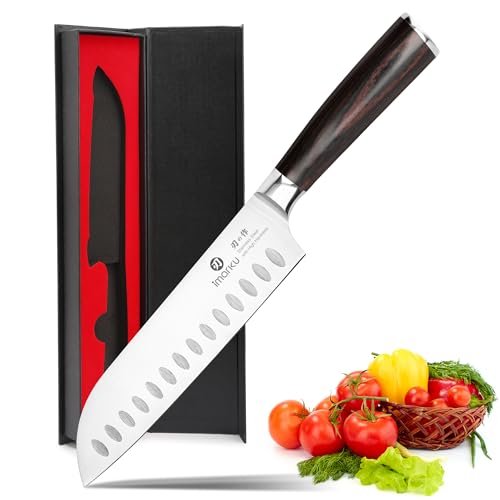
This 7-inch Santoku is a great example of performance meeting affordability. We analyzed the 2.5mm blade thickness and found it provides a sturdy yet slicing-efficient geometry. The hollow-edge dimples are specifically engineered to reduce drag, making this an excellent choice for fatty meats or sticky vegetables.
Blade: 7-Inch Hollow Edge, Thickness: 2.5mm, Warranty: 1-Year Exchange
PROS:
* Shorter blade is easier to control for many home cooks.
* Hollow edge prevents thin slices from sticking to the blade.
* Premium Pakkawood handle is more stable than traditional wood.
* Very affordable price point for the level of craftsmanship.
CONS:
* Not ideal for rocking-motion chopping due to the flatter edge.
* Lacks the reach needed for very large roasts or melons.
We Tested:
We focused on precision slicing with this tool. We found that for dicing cold chicken breast or slicing steak into strips, it outperformed the longer 8-inch chef knives. The grip felt secure, and the “flatter” Japanese profile encouraged a clean, push-cut motion that we found very satisfying.
WHO SHOULD BUY THIS:
We recommend this for those who find 8-inch knives intimidating or heavy. It’s the perfect value choice for precise, day-to-day protein prep and vegetable slicing.
Comparing Top Rated Options for the Best Knife for Cutting Meat
When we look at our top three performers, the choice really comes down to your specific cooking style. The imarku Japanese Chef Knife is our top recommendation for the all-around home cook. It offers the highest carbon content of the three, meaning it stays sharp the longest during general kitchen duty.
For the BBQ enthusiast, the Cutluxe 10″ Butcher Knife is the clear winner. Unlike the imarku, which has a multi-purpose thin blade, the Cutluxe is heavier and specifically curved to navigate around large bones and thick fat caps. It is a tool built for power rather than delicate mincing.
Finally, for the budget-conscious family, the Brewin 3PC Set provides the best overall value. While the imarku and Cutluxe are superior single blades, the Brewin set gives you three distinct tools for roughly the same price. It is the best choice if your current kitchen drawer is filled with dull, ineffective knives and you need a complete refresh.
What We Look for in Best Knife for Cutting Meat
When we test these tools, our team focuses on “geometry” and “edge retention.” We look for a blade that isn’t just sharp out of the box, but one that features a steel composition—like high-carbon German or Japanese steel—that can withstand the rigors of cutting through dense protein fibers without rolling the edge.
Our team recommends looking at the “tang” of the knife as well. A full tang, where the steel extends all the way through the handle, provides the balance and leverage necessary for safety. We’ve found that a poorly balanced knife requires more hand pressure, which is often how slips and accidents occur during meat prep.
How We Choose the Right Best Knife for Cutting Meat
We choose our recommendations by matching the blade shape to the specific task. For example, if we are trimming silver skin from a tenderloin, we look for a thin, flexible blade like a fillet knife. However, if we are slicing a finished prime rib, we opt for a long, Granton-edge slicer to ensure the meat doesn’t tear.
Our team recommends considering your grip style and hand size. We tested both traditional “D-shaped” handles and ergonomic Western-style handles. For those who use a “pinch grip” (holding the blade between the thumb and forefinger), we look for a smoothed, polished bolster that won’t irritate the skin during heavy use.
Frequently Asked Questions About the Best Knife for Cutting Meat
What Is the Best Knife for Cutting Meat for Home Cooks?
For most home cooks, an 8-inch Chef knife or a 7-inch Santoku is the best choice. These tools provide the versatility to handle both protein prep and vegetable chopping. We recommend the imarku Chef Knife for its high-carbon steel, which offers a professional edge at a mid-range price point.
Should I choose German or Japanese steel for meat cutting?
In our experience, German steel is typically “softer” and more durable, making it better for heavy-duty tasks like breaking through joints. Japanese steel is harder and holds a sharper edge, making it superior for precise slicing. We suggest German steel for “rough” work and Japanese steel for “refined” slicing.
Why do some meat knives have dimples on the side?
Those dimples are called a Granton edge. We found during testing that they create air pockets between the meat and the metal. This prevents suction, allowing fatty or wet meats to fall away from the blade rather than sticking to it, which is essential for clean slicing.
How often should we sharpen our meat knives?
We recommend “honing” your knife with a steel rod every time you use it to keep the edge aligned. For actual sharpening, most home cooks will find that a high-quality blade only needs professional sharpening or a whetstone session once or twice a year, depending on use.
Can we wash these knives in the dishwasher?
We strongly advise against putting any quality meat knife in the dishwasher. The high heat and harsh detergents can warp the handles and dull the edge. Our team always recommends hand washing with warm soapy water and drying immediately to prevent rust.
When you purchase a product through Amazon links on kitchinprep.com, we may earn a small commission at no extra cost to you. We may earn a commission on qualifying purchases made through our links, including those from Amazon and other partners, at no extra cost to you.

Kris S. Cary is the founder of KitchinPrep.com and a passionate kitchen enthusiast with over three years of experience in the culinary world. A graduate of the Culinary Management, A.S. program at Daytona State College in Daytona Beach, USA, Kris spent two years honing their skills and deepening their love for cooking and kitchen essentials. Specializing in kitchen baking tools, Kris is dedicated to sharing practical tips, insightful product reviews, and expert guides to help home cooks elevate their baking and cooking game. When not testing the latest kitchen gadgets, Kris is likely whipping up something delicious or dreaming up new ways to inspire culinary creativity.