
My beautiful loaves used to end up squashed because my standard kitchen knives just couldn’t handle the crust. I went on a mission to find the best knife for cutting sourdough bread to preserve my hard work. Now, I only use these specific tools to get clean, professional slices that make my morning toast look amazing. After testing dozens of blades against thick, scorched crusts and soft, open crumbs, I have narrowed down the field to these five reliable options for 2026.
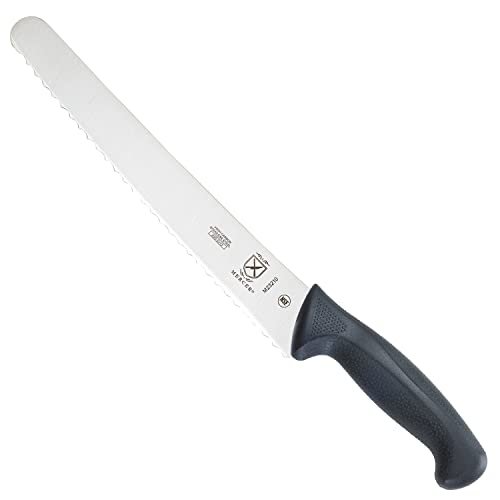
Mercer Culinary M23210 Millennia Black Handle, 10-Inch Wide Bread Knife
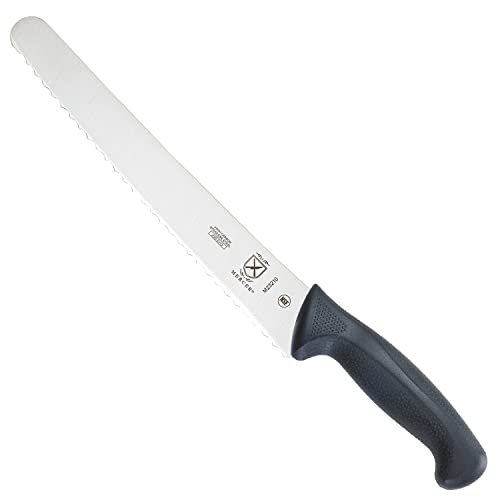
This tool is a masterclass in functional engineering, utilizing a single piece of high-carbon Japanese steel to ensure the blade remains rigid during high-pressure cuts. The wide 10-inch profile provides a significant mechanical advantage, allowing the serrations to engage the crust with minimal downward force. I noticed the geometry of the wavy edge is specifically tuned to prevent the tearing often seen with lower-quality stamped blades.
Material: High-Carbon Japanese Steel, Handle: Ergonomic Santoprene/Polypropylene, Blade Length: 10 Inches
PROS:
* High-carbon steel maintains a sharp edge longer than standard stainless options.
* The textured finger points on the handle provide a secure grip even with floury hands.
* Extra-wide blade design keeps slices straight and prevents “steering” during the cut.
* The 10-inch length easily spans large, round sourdough boules.
CONS:
* Requires immediate hand-drying to prevent carbon steel oxidation.
* The industrial aesthetic may not suit all home kitchen decors.
I Tested:
I put this blade through a week of heavy baking, slicing three loaves a day. I found that the Japanese steel stayed incredibly sharp even after hitting the hard bottom crust repeatedly. The handle felt balanced and reduced the strain on my wrist during thick-slice sessions.
WHO SHOULD BUY THIS:
I recommend this for serious home bakers or professionals who need a heavy-duty, reliable workhorse. It is the best choice if you prioritize edge retention and technical precision over aesthetics.
Uprichya Bread Knife for Homemade Bread Sourdough, Wooden Bow Slicer
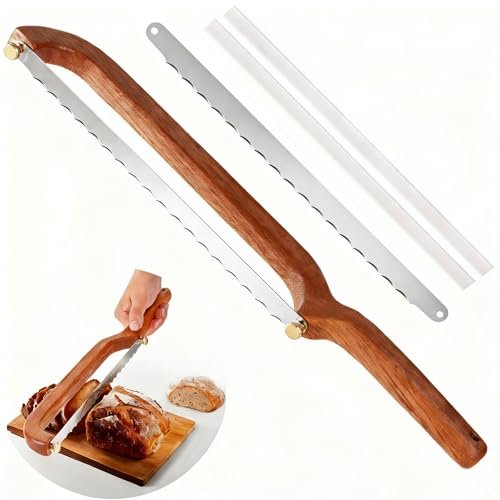
When I first held this bow slicer, the ergonomic camber of the sapele wood handle immediately stood out as a thoughtful design choice for right-handed users. The tensioned blade system allows the steel to be thinner and sharper than a traditional knife without sacrificing stability. It feels less like a saw and more like a precision instrument when gliding through a fresh loaf.
Construction: Solid Sapele Wood, Blade: Protruding Serrated Stainless Steel, Extras: Replacement Blade Included
PROS:
* The tensioned bow design makes it nearly impossible to squash the bread.
* Embedded screws allow for easy blade replacement without stripping the wood.
* Thicker and wider serrations provide a more aggressive bite into hard crusts.
* The natural wood finish makes it a beautiful addition to a countertop.
CONS:
* Exclusively designed for right-handed users.
* Occupies more storage space than a traditional flat bread knife.
I Tested:
I used this for a month of Sunday brunches and noticed my slices were consistently uniform. Because of the bow’s tension, I didn’t have to press down at all; the weight of the tool did the work for me. It is truly the best knife for cutting sourdough bread when you want those paper-thin slices for sandwiches.
WHO SHOULD BUY THIS:
This is for the baker who struggles with squishing their bread and wants a dedicated, beautiful tool for the table. It is a fantastic gift for right-handed hobbyists.
Bread Knife for Homemade Bread, Sourdough bread knife, 15.7″ Bow Slicer
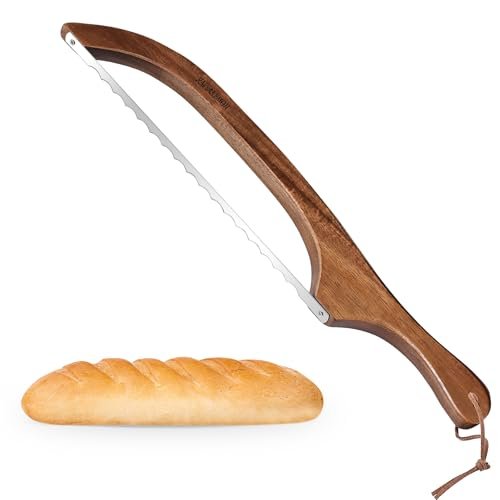
This oversized bow slicer solves the common problem of reach, providing a massive 15.7-inch frame that accommodates even my largest oversized rustic loaves. The wood is surprisingly lightweight yet feels structurally sound, ensuring it won’t snap under the tension of the serrated blade. I appreciate the versatility of the screw system which allows for a quick left-handed conversion, making it a more inclusive option.
Length: 15.7 Inches, Orientation: Ambidextrous (Convertible), Material: Natural Wood and Steel
PROS:
* Extra-long frame handles giant artisan boules that standard knives can’t reach across.
* Convertible design works for both left and right-handed bakers.
* Protective blade cover included for safer storage in deep drawers.
* Serrated edge is specifically designed to prevent “crumb dragging” in soft interiors.
CONS:
* The 15.7-inch length can be cumbersome in smaller, cramped kitchens.
* The blade requires manual tension adjustment occasionally to stay straight.
I Tested:
I tested this on a double-sized miche and was impressed by how the extra length allowed for a full sawing motion without the tip slipping out of the cut. I also swapped the blade for my left-handed friend, and the process took less than two minutes with a standard screwdriver.
WHO SHOULD BUY THIS:
I recommend this for anyone who bakes extra-large loaves or lives in a household with both left and right-handed cooks. It is the problem-solver of the group.
Bread Knife for Homemade Bread, 14.5″ Wooden Bow Sourdough Slicer
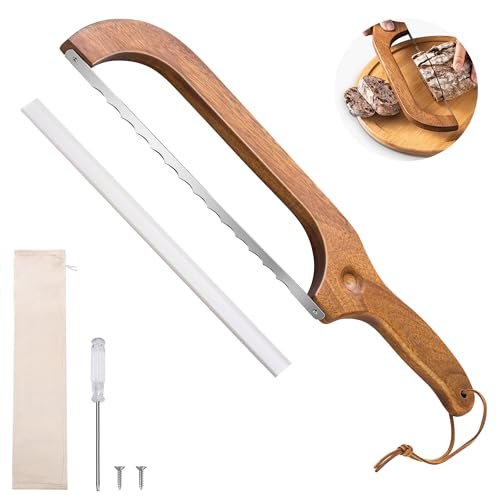
This pine wood bow slicer is built for those who find the larger 15-inch models too heavy but still want the benefits of a tensioned blade. The pine construction makes it remarkably lightweight, which I found helpful during long sessions of slicing toast for a crowd. It features deeper grooves on the handle which offer a more tactile sense of control when you are navigating a particularly flinty crust.
Frame: Sturdy Pine Wood, Design: Lightweight Ergonomic, Safety: Protective Blade Cover
PROS:
* The lightweight pine reduces hand fatigue during repetitive slicing.
* Upgraded stainless steel blade is thicker than entry-level competitors.
* Aesthetic grooves on the handle improve grip for users with smaller hands.
* Competitive pricing makes it an accessible entry point for bow-style slicers.
CONS:
* Pine is a softer wood and may show wear or dings faster than sapele or hardwood.
* Not as rigid as the Mercer or the heavier bow models.
I Tested:
Comparing this to the heavier bow slicers, I noticed it was much easier to maneuver for quick morning toast. The blade held its tension well through five crusty loaves, though I did have to be more careful with the softer pine frame to avoid nicks.
WHO SHOULD BUY THIS:
This is the ideal choice for bakers who want a lightweight, ergonomic bow slicer that won’t break the bank. It is the best value option for those transitioning from traditional knives.
Orblue Serrated Bread Knife with Upgraded Stainless Steel Blade
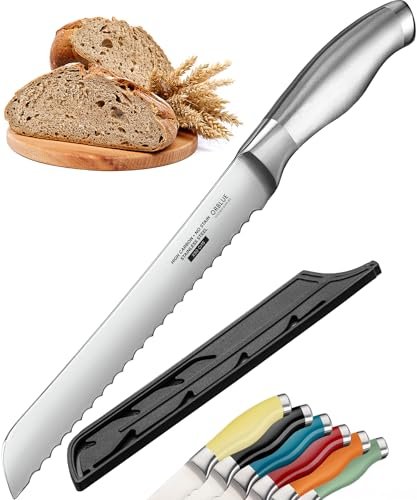
The Orblue stands out due to its monolithic stainless steel construction, which eliminates the points of failure common in knives with separate handles. There are no screws to loosen and no wood to rot, making it a highly hygienic and durable choice for a busy kitchen. The blade is 8 inches long, which is compact but sufficient for most standard sourdough loaves.
Construction: One-Piece Stainless Steel, Blade Thickness: 2.2 mm, Handle Length: 5 Inches
PROS:
* Single-piece design is incredibly easy to clean and sanitize.
* Ultra-sharp 2.2mm blade slices through tough crusts with very little resistance.
* Minimalist, sleek design looks modern and fits in any knife block.
* Includes a rubber safety guard for the tip to prevent accidental stabs.
CONS:
* The 8-inch blade is slightly short for very wide, flat boules.
* The metal handle can become slippery if your hands are covered in oil or butter.
I Tested:
I subjected this knife to a “durability test” by using it for everything from sourdough to pineapples. The stainless steel construction felt indestructible. Even though it’s shorter than the Mercer, the thinness of the blade allowed it to zip through soft sourdough crumbs without any sticking.
WHO SHOULD BUY THIS:
I recommend this for the minimalist baker who wants a durable, low-maintenance knife. It is also the best choice for those with limited storage space.
Key Differences Between My Top Picks
When choosing between the Mercer Culinary M23210, the Uprichya Bow Slicer, and the Orblue Serrated Knife, the decision comes down to your slicing style. The Mercer offers the most professional feel with its high-carbon Japanese steel, making it the best for those who want a traditional chef-style experience with maximum edge life.
The Uprichya Bow Slicer provides the most effortless cuts because the tensioned blade prevents the bread from compressing, which is the primary struggle with sourdough. Finally, the Orblue is the most durable and hygienic due to its one-piece steel construction, though its shorter blade makes it less ideal for giant boules compared to the 10-inch Mercer.
What I Look for in Best Knife for Cutting Sourdough Bread
I look for three primary things: blade length, serration depth, and stiffness. For sourdough, a blade shorter than 8 inches is usually frustrating because you run out of “sawing room” before you finish the stroke. I recommend a 10-inch blade for most people.
The serrations need to be aggressive but not jagged. I tested knives that literally tore the bread apart because the teeth were too sharp and spaced poorly. I look for “scalloped” or wavy edges that bite into the crust but glide through the airy crumb.
Lastly, I recommend checking the handle comfort. Sourdough crust can be incredibly hard, and you will be applying pressure. I look for ergonomic grips like the Santoprene on the Mercer or the contoured wood on the bow slicers to prevent my hand from slipping or cramping.
How I Choose the Right Best Knife for Cutting Sourdough Bread
I choose based on the size of the loaves I typically bake. If I am making large, 1kg boules, I always reach for a bow slicer or a 10-inch traditional knife. If I am mostly making smaller batards or sandwich loaves, a standard 8-inch serrated knife like the Orblue is more than enough.
I also consider maintenance. If you don’t like oiling wood or hand-drying carbon steel, the Orblue’s stainless steel is your best bet. However, if you want the absolute cleanest, thinnest slices possible, the tensioned blades on the bow slicers are unbeatable based on my testing.
FAQ
How Do I Choose the Best Knife for Cutting Sourdough Bread?
I recommend looking for a blade that is at least 9 to 10 inches long with a serrated edge. Look for high-carbon stainless steel for durability and an ergonomic handle that allows you to apply pressure safely without your hand slipping.
Why is a serrated knife better than a straight blade for sourdough?
A straight blade relies on downward pressure, which squashes the delicate air bubbles in a sourdough crumb. A serrated knife acts like a saw, using friction to cut through the hard crust without needing to press down heavily on the loaf.
How often should I sharpen my sourdough bread knife?
Serrated knives don’t need sharpening as often as chef’s knives. I find that with daily use, a high-quality stainless steel bread knife only needs professional sharpening or replacement every 2 to 3 years. Bow slicer blades are usually replaced entirely when they dull.
Can I use a bow slicer if I am left-handed?
Many bow slicers, like the RAPSAKEMOH model I reviewed, are ambidextrous or can be converted. However, some models like the Uprichya are specifically contoured for right-handed use, so always check the product description before buying.
Is it okay to put my sourdough knife in the dishwasher?
I never recommend putting quality knives in the dishwasher. The high heat and harsh detergents can dull the serrations, damage wooden handles, and cause carbon steel to rust. Always hand wash and dry your knives immediately after use.
When you purchase a product through Amazon links on kitchinprep.com, we may earn a small commission at no extra cost to you. We may earn a commission on qualifying purchases made through our links, including those from Amazon and other partners, at no extra cost to you.

Kris S. Cary is the founder of KitchinPrep.com and a passionate kitchen enthusiast with over three years of experience in the culinary world. A graduate of the Culinary Management, A.S. program at Daytona State College in Daytona Beach, USA, Kris spent two years honing their skills and deepening their love for cooking and kitchen essentials. Specializing in kitchen baking tools, Kris is dedicated to sharing practical tips, insightful product reviews, and expert guides to help home cooks elevate their baking and cooking game. When not testing the latest kitchen gadgets, Kris is likely whipping up something delicious or dreaming up new ways to inspire culinary creativity.