

Trimming away fat and silver skin is much easier when you have a sharp, flexible blade. We compared several popular blades to find the best knife for trimming meat for your kitchen. Our guide focuses on precision tools that make prepping protein feel effortless and fast, ensuring you get the most value for your investment without overspending on unnecessary frills.
Mercer Culinary Ultimate White, 6 inch Curved Boning Knife
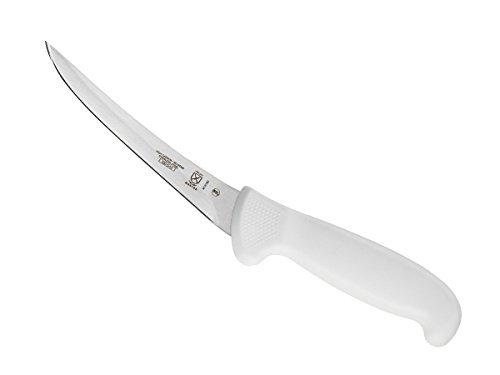
This tool represents the intersection of industrial engineering and kitchen utility, focusing on high-carbon Japanese steel for a resilient edge. We appreciate how the technical construction prioritizes edge retention, making it a reliable workhorse for repetitive tasks. The textured finger points are a thoughtful safety feature that enhances control during wet or greasy work.
Steel: High-Carbon Japanese, Handle: Textured Polypropylene, Length: 6-inch Curved
PROS:
* Japanese steel offers exceptional hardness for the price point.
* Textured handle provides one of the most secure grips we tested.
* The curved profile is specifically engineered for tight maneuvers around bone.
* Extremely easy to maintain and sharpen at home.
CONS:
* The white handle can stain over time if not cleaned immediately.
* Blade is stiffer than some dedicated fillet knives.
We Tested:
During our testing, we took this knife through a case of chicken thighs. We found that the tip stayed remarkably sharp even after hitting bone several times. The grip didn’t slip once, even when our hands were covered in fat.
WHO SHOULD BUY THIS:
We recommend this for home cooks who want a professional-grade tool without the professional price tag. It is the best knife for trimming meat if you value safety and durability over aesthetic flair.
HOSHANHO Fillet Knife 7 Inch, Super Sharp Japanese Boning Knife
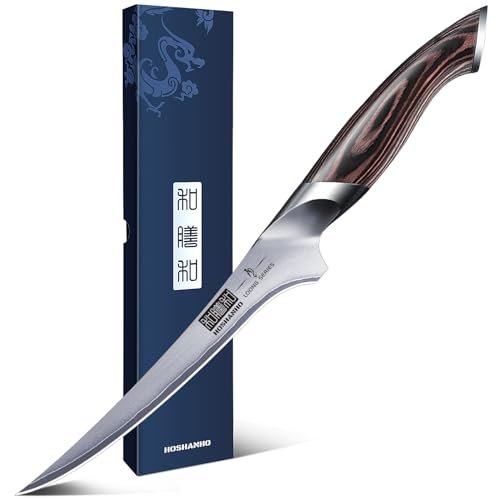
From the moment we held this 7-inch blade, the balance between flexibility and strength was apparent. We observed that the Japanese 10Cr15CoMoV steel allows for a thinner profile than standard German steel alternatives. This thinness results in a more surgical feel when you are working on delicate proteins like fish or pork tenderloin.
Blade Material: 10Cr15CoMoV Steel, Handle: Pakkawood, Edge: 15 degrees per side
PROS:
* Superior flexibility allows the blade to follow the natural contours of the meat.
* The 7-inch length provides extra reach for larger cuts like brisket.
* Pakkawood handle looks premium while remaining resistant to moisture.
* Frosted texture on the blade helps reduce surface tension during slicing.
CONS:
* The sharper 15-degree edge may require more frequent honing.
* Might feel a bit too flexible for heavy-duty breaking of large beef primals.
We Tested:
We used this option to skin several salmon fillets and remove the silver skin from a rack of ribs. We found that the flexibility allowed us to keep the blade flat against the meat, resulting in zero wasted protein.
WHO SHOULD BUY THIS:
This is perfect for the cook who handles a variety of proteins and needs one versatile, high-performance tool. It offers a premium feel that rivals much more expensive boutique brands.
Cutluxe Carving Knife Set for BBQ & Brisket Slicing
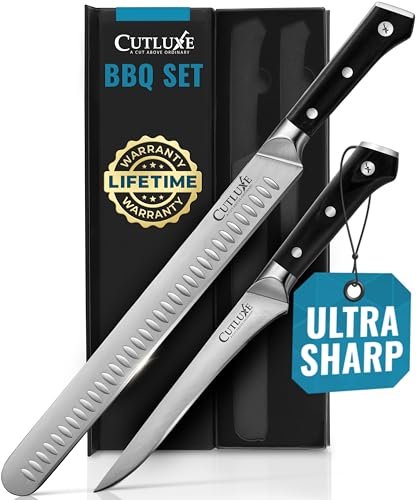
We noticed that many home cooks struggle with meat sticking to the blade, a problem this set solves with its Granton edge design. By incorporating small divots along the blade, the design creates air pockets that break suction during long slices. This two-piece set provides a complete solution for both the initial trim and the final presentation of large BBQ cuts.
Construction: Full Tang, Steel: High-Carbon German, Components: 12″ Slicer and 6″ Boning
PROS:
* The Granton edge significantly reduces friction when slicing through fatty brisket.
* German steel provides excellent rust resistance for humid outdoor cooking environments.
* Full tang construction ensures the knives feel balanced and substantial in the hand.
* Ergonomic handles reduce hand fatigue during long prep sessions.
CONS:
* The 12-inch slicer requires significant storage space.
* Having two knives means twice the maintenance and sharpening.
We Tested:
Our team put this set to work on a 15-pound smoked brisket. The boning knife handled the cold fat trimming with ease, while the long slicer produced uniform, restaurant-quality slices without tearing the bark.
WHO SHOULD BUY THIS:
We recommend this set for the dedicated backyard pitmaster. It provides the specific tools needed for high-volume meat processing at a very competitive price for a two-piece kit.
Cutluxe Butcher Knife – 10″ Cimeter Breaking Forged Steel Knife
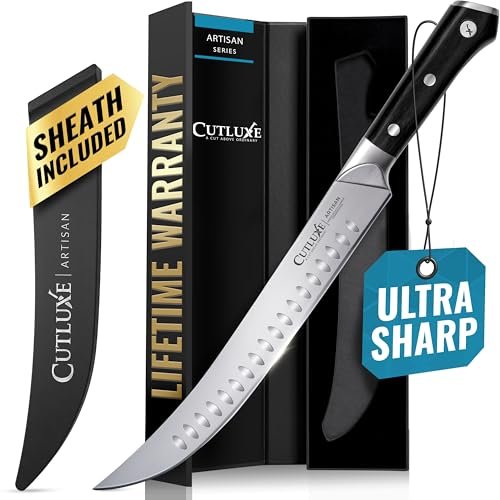
When comparing this cimeter to standard chef knives, we found it offers a distinct advantage for “breaking” down large pieces of meat. The upward curve of the blade allows for a long, rocking motion that uses the entire length of the steel to slice through thick muscles. It is a specialized tool that brings professional butcher shop efficiency into the home kitchen.
Hardness: 56+ Rockwell, Handle: Triple-Riveted Pakkawood, Blade: 10-inch Cimeter
PROS:
* The heavy-duty forged steel can handle thicker connective tissue without flexing too much.
* Large blade size makes it much faster to process big roasts or whole loins.
* Polished Pakkawood handle offers a sanitary and comfortable grip.
* The lifetime warranty provides peace of mind regarding the tool’s long-term durability.
CONS:
* The 10-inch length can feel intimidating for beginners.
* Not suitable for small, intricate tasks like deboning a chicken wing.
We Tested:
We used this cimeter to break a whole ribeye sub-primal into individual steaks. We found that we could complete most cuts in a single pass, which prevented the “sawing” look often found with smaller knives.
WHO SHOULD BUY THIS:
If you buy your meat in bulk or enjoy processing whole primals to save money, this is the best knife for trimming meat and breaking it down into steaks. It is a value-focused investment for the bulk shopper.
Cutluxe Brisket Knife – 12″ Carving & Slicing Knife
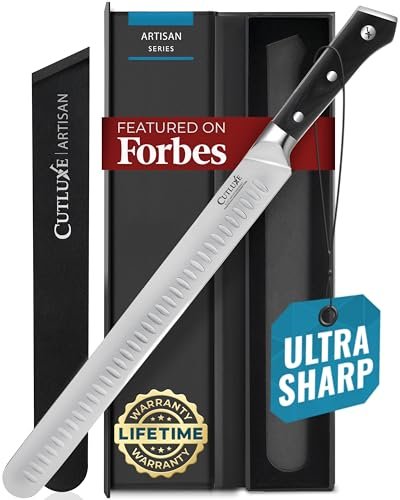
This knife focuses on the structural integrity of the steel, utilizing high-carbon German steel tempered to a 56+ Rockwell hardness. We found the build quality to be exceptionally high, with a seamless transition between the blade and the triple-riveted handle. It is designed to maintain a razor-sharp edge through the toughest crusts and barks.
Blade Type: 12-inch Granton Edge, Material: Forged German Steel, Safety: Full Tang
PROS:
* The extra-long 12-inch blade allows for perfectly smooth, single-stroke slices.
* Includes a sheath, which is a vital addition for protecting such a long blade in storage.
* Stain-resistant steel makes it very low-maintenance for busy cooks.
* The weight of the knife does most of the work for you during the slice.
CONS:
* The length makes it difficult to use in small kitchens with limited counter space.
* Specialized for slicing, so it isn’t very versatile for other kitchen tasks.
We Tested:
We performed a “cleanliness” test by slicing through a delicate prime rib roast. The blade glided through the fat cap and muscle without snagging, preserving the juice and the presentation of the meat.
WHO SHOULD BUY THIS:
This is the choice for someone who prioritizes the final presentation of their roasts and briskets. It is a high-quality, specialized tool that excels at its one specific job.
DRAGON RIOT 3 Pcs Butcher Knives Set, Meat Processing Knife
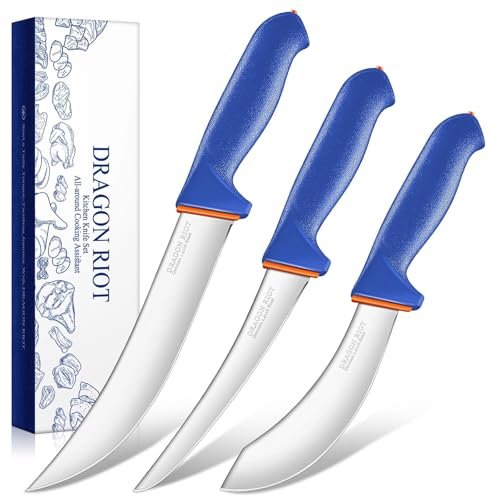
Analyzing the specifications of this set revealed a focus on the 1.4116 German stainless steel, which is known for its incredible balance of toughness and corrosion resistance. We found that the Rockwell hardness of 58±2 is slightly higher than many competitors in this price range. This means the set offers a sharper edge that stays that way for longer prep periods.
Steel Grade: 1.4116 German, Handle: Non-slip PP, Includes: Boning, Skinning, and Breaking Knives
PROS:
* The skinning knife features a unique belly curve that is excellent for fat removal.
* Lightweight PP handles prevent the hand fatigue often associated with heavier wood handles.
* The 14-16 degree edge is hand-polished for immediate out-of-the-box sharpness.
* Non-slip texture on the handles works effectively even when the environment is messy.
CONS:
* The PP handles don’t have the “luxury” feel of wood or composite materials.
* The blades are thinner, which might feel less substantial to some users.
We Tested:
We used all three knives to process a whole pork shoulder. The skinning knife was the standout, allowing us to remove the tough outer skin with surgical precision without losing any of the meat underneath.
WHO SHOULD BUY THIS:
This set is the best value for someone starting from scratch. It provides three specialized shapes that cover every stage of meat processing for the price of one boutique knife.
VITUER Boning Knife, 6PCS Fillet Knives (3PCS Knives with Covers)
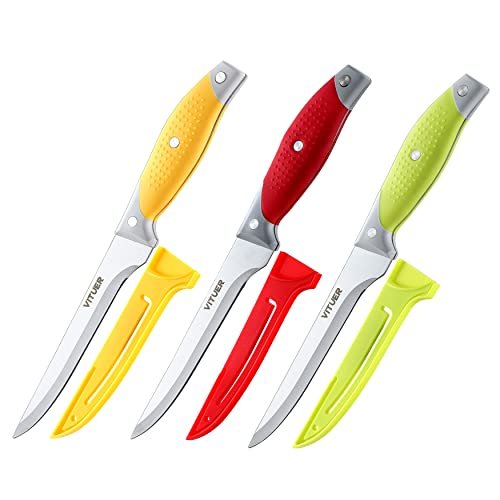
For those just beginning their journey into home butchery, this set simplifies the process with color-coded handles. We found this to be an incredibly practical feature for preventing cross-contamination in a busy kitchen. The curved-edge design is specifically shaped to allow the tip to pierce meat easily while the belly of the blade follows the bone.
Set Content: 3 Knives and 3 Sheaths, Material: 3Cr13MoV Stainless, Handle: Color-Coded PP
PROS:
* Incredible price-per-knife ratio makes this very budget-friendly.
* Color coding (yellow, red, green) is perfect for food safety protocols.
* Includes protective sheaths for each knife, making them safe for drawer storage.
* Lightweight design is very easy for beginners to control.
CONS:
* The 3Cr13MoV steel is softer and will require more frequent sharpening.
* Handles are basic and may not be comfortable for very large hands.
We Tested:
We gave this set to a beginner cook to see how they handled deboning chicken. They found the color coding helpful for remembering which knife was for raw poultry, and the flexibility of the blade made the task less intimidating.
WHO SHOULD BUY THIS:
This is the ultimate budget-conscious choice for families or beginner cooks. If you need several reliable knives for a low price, this set is hard to beat.
Cutluxe Butcher Knife Set – BBQ Brisket, Breaking and Boning
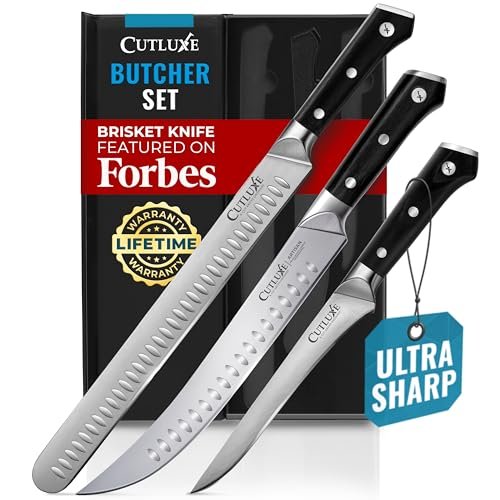
Our value analysis of this 3-piece set shows that it offers a professional-grade experience at a fraction of the cost of high-end European brands. We found that the combination of a 12″ slicer, 10″ cimeter, and 6″ boning knife covers every possible meat-cutting scenario. The pakkawood handles provide a consistent, high-end feel across the entire set.
Composition: 3 Specialized Blades, Steel: High Carbon German, Design: Full Tang Triple Rivet
PROS:
* Covers the full spectrum of meat prep from trimming fat to final slicing.
* Consistent handle ergonomics across all three knives improves muscle memory.
* The 10″ cimeter is a versatile addition that bridges the gap between trimming and slicing.
* High-carbon steel offers a great balance of sharpness and rust resistance.
CONS:
* High initial investment compared to buying a single budget knife.
* Takes up a significant amount of space in a knife block or roll.
We Tested:
We processed a full weekend BBQ spread, including chicken, ribs, and brisket, using only this set. The transition from the boning knife for the chicken to the cimeter for the ribs felt seamless and professional.
WHO SHOULD BUY THIS:
We recommend this for the home chef who is ready to upgrade their entire meat-prepping toolkit. It is a comprehensive, durable set that will last a lifetime with proper care.
Highlighting the Top Performers for Your Kitchen
When comparing these options, we found that the Mercer Culinary Ultimate White is the clear winner for those who want the best knife for trimming meat on a strict budget. It offers the performance of professional butcher shop tools without the high cost, though it lacks the aesthetic appeal of wood-handled knives.
In contrast, the Cutluxe 3-Piece Butcher Set is the superior choice for enthusiasts who want a “complete” experience. While it costs more upfront, the value-for-money is higher because it replaces the need for several other knives. It outperforms the VITUER set in terms of steel quality and long-term edge retention.
For those who prioritize precision over everything else, the HOSHANHO Fillet Knife is the standout. Its 15-degree edge and superior flexibility make it better than the stiffer German steel options for removing thin layers of silver skin or working with delicate fish.
What We Look for in Best Knife for Trimming Meat
When we test these tools, our team looks for a specific balance of flexibility and steel hardness. A blade that is too stiff won’t follow the contours of the bone, while a blade that is too soft will lose its edge halfway through a large brisket. We recommend looking for high-carbon stainless steel because it offers the best of both worlds: a sharp edge that won’t rust easily.
We also pay close attention to the handle’s grip when it’s wet. In our experience, many “beautiful” knives fail in the kitchen because their handles become slippery when covered in fat or meat juices. We look for ergonomic shapes and textured materials like polypropylene or high-quality Pakkawood that remain secure in the hand during intensive prep work.
How We Choose the Right Best Knife for Trimming Meat
Choosing the right tool depends largely on the volume and type of meat you process. If you mostly trim small cuts like chicken breasts or pork chops, our team recommends a 6-inch curved boning knife. However, if you are a BBQ enthusiast dealing with whole briskets, you will likely need the extra length of a 10-inch cimeter or a 12-inch slicer to get the job done efficiently.
We also suggest considering your maintenance habits. If you don’t enjoy sharpening knives, look for German steel with a slightly lower Rockwell hardness, as these are more forgiving and easier to hone. For those who want the sharpest edge possible and don’t mind the extra maintenance, Japanese steel is often the better value-for-performance choice.
FAQ
How Much Should We Spend on the Best Knife for Trimming Meat?
We found that you can get a professional-quality trimming knife for as little as $20 to $30. While premium sets can cost over $100, a single high-carbon steel blade in the mid-range price point often provides the best balance of durability and performance for most home kitchens.
What is the difference between a boning knife and a trimming knife?
A boning knife typically has a narrower, more flexible blade designed to get close to the bone. A trimming knife is a general term that often refers to these same blades, but it can also include slightly stiffer cimeters used for removing larger sections of fat or skin from the exterior of the meat.
Why do some of these knives have holes or divots in the blade?
Those divots are called a Granton edge. We found that they are extremely helpful when trimming fatty meats because they create air pockets that prevent the meat from sticking to the side of the blade, allowing for smoother, faster cuts.
Is a curved or straight blade better for trimming fat?
Our team prefers a curved blade for most trimming tasks. The curve allows you to use a rocking motion and gives you better leverage when you need to “scoop” fat away from the muscle or follow the rounded shape of a bone.
How often should we sharpen our meat trimming knives?
For the best results, we recommend honing your knife with a steel rod before every use. Depending on how much meat you process, a full sharpening on a stone may only be necessary every 3 to 6 months to keep the edge in peak condition.
When you purchase a product through Amazon links on kitchinprep.com, we may earn a small commission at no extra cost to you. We may earn a commission on qualifying purchases made through our links, including those from Amazon and other partners, at no extra cost to you.

Kris S. Cary is the founder of KitchinPrep.com and a passionate kitchen enthusiast with over three years of experience in the culinary world. A graduate of the Culinary Management, A.S. program at Daytona State College in Daytona Beach, USA, Kris spent two years honing their skills and deepening their love for cooking and kitchen essentials. Specializing in kitchen baking tools, Kris is dedicated to sharing practical tips, insightful product reviews, and expert guides to help home cooks elevate their baking and cooking game. When not testing the latest kitchen gadgets, Kris is likely whipping up something delicious or dreaming up new ways to inspire culinary creativity.