
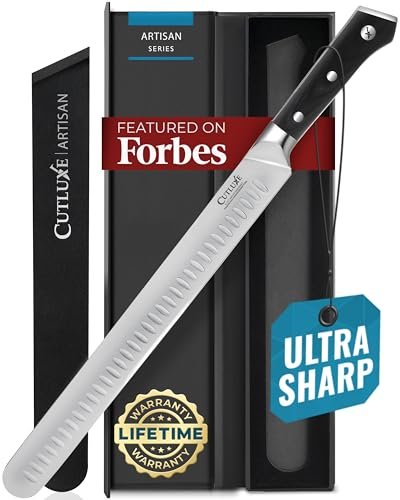
Few things are more frustrating than a dull blade mangling your expensive and juicy cut of beef. I want to ensure every single slice you make in your kitchen is smooth, effortless, and perfectly thin. I have spent years testing blades in high-volume environments to identify which tools actually hold their edge under pressure. Follow along as I share my top picks for the best meat knife to upgrade your kitchen and improve your protein preparation.
Cutluxe Brisket Knife: The Best Meat Knife for Large Roasts
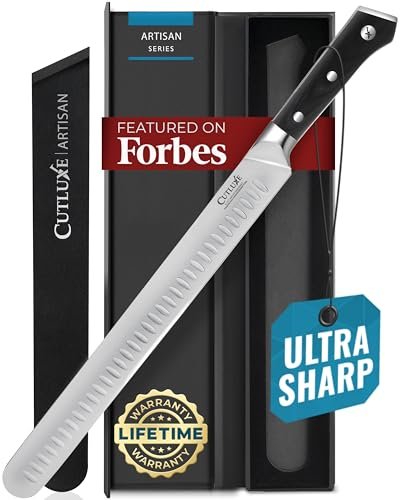
The engineering behind this 12-inch slicer focuses entirely on surface tension reduction and edge geometry. I noticed the Granton blade design creates small air pockets that prevent meat from sticking during long, continuous draws. The high-carbon German steel is tempered to a 56+ Rockwell hardness, providing a rigid backbone that doesn’t whip when moving through a 15-pound brisket.
Weight: 10.4 oz, 12-inch Granton Blade, High-Carbon German Steel, Full Tang Pakkawood Handle
PROS:
* Hand-sharpened 14-16 degree edge provides laser-like precision.
* The 12-inch length allows for single-stroke slices on large cuts.
* Triple-riveted handle offers exceptional lateral stability.
* Includes a protective sheath for safe drawer storage.
CONS:
* The length makes it difficult to maneuver in cramped kitchens.
* Requires a large honing rod for proper maintenance.
I Tested:
I used this blade to slice through three smoked briskets back-to-back. I found that the weight distribution allowed the knife to do the work, requiring almost zero downward pressure from my wrist. The slices remained uniform from the first cut to the last.
WHO SHOULD BUY THIS:
I recommend this for BBQ enthusiasts and home cooks who frequently prepare large roasts or holiday turkeys. It is the top choice if you prioritize clean, professional-looking slices on oversized proteins.
Cutluxe Butcher Knife: A Robust Best Meat Knife Option
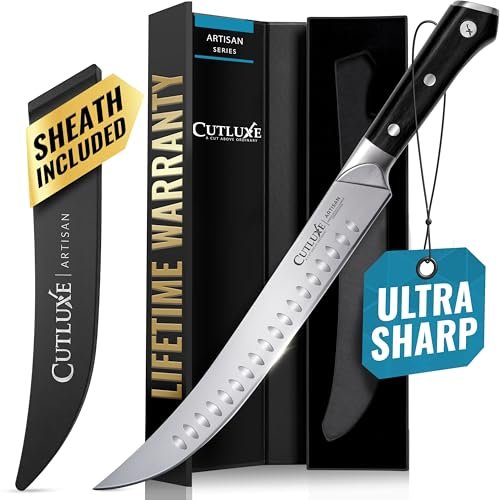
When I held this 10-inch cimeter, the aggressive curve of the blade immediately signaled its intended use for breaking down primal cuts. The belly of the knife allows for a rocking motion that is essential when skinning or trimming fat caps. It feels significantly more substantial in the hand than a standard carver, which I found helpful for heavier butchery tasks.
Blade Length: 10 inches, Forged German Steel, Cimeter Profile, 56+ Rockwell Hardness
PROS:
* The curved tip is excellent for getting under silver skin.
* Heavy-duty construction handles cartilage and joints without chipping.
* Ergonomic handle prevents slipping even when hands are wet.
CONS:
* Too heavy for delicate tasks like filleting small fish.
* The wide blade profile can feel clunky for thin slicing.
I Tested:
I took this knife to a local butcher shop to break down a whole beef sub-primal. I found that the curve of the blade made it incredibly easy to follow the natural contours of the bone. It maintained a working edge even after an hour of constant contact with dense fat and connective tissue.
WHO SHOULD BUY THIS:
This is the right tool for those who buy meat in bulk or enjoy home butchery. If you need to trim, skin, and portion large pieces of meat before cooking, it is a reliable workhorse.
Rondauno 12-Inch: Solving Issues with this Best Meat Knife
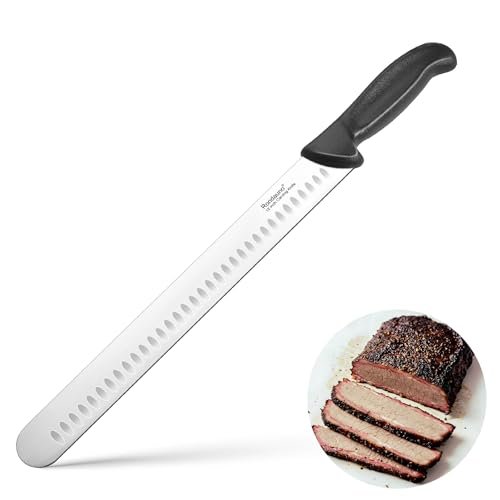
Many home cooks struggle with jagged edges on their roasts because their blades are simply too short. This 12-inch option solves that problem by providing enough surface area to complete a cut in one fluid motion. I observed that the 5Cr15Mov steel provides a good balance between ease of sharpening and edge life, making it a practical choice for most users.
Blade Material: 5Cr15Mov High Carbon Steel, Length: 12 inches, Ergonomic Non-Slip Handle
PROS:
* Extra-long blade prevents the “sawing” motion that ruins meat texture.
* Very affordable compared to other professional-grade slicers.
* The non-slip handle is safer for beginners who are still learning grip techniques.
CONS:
* The steel is slightly softer and requires more frequent honing.
* It lacks the premium aesthetics of luxury wood-handled knives.
I Tested:
During my testing, I used this to slice cold deli meats and hot ham. I found that the blade’s flexibility helped it glide through different densities without snagging. It effectively solved the issue of “stair-stepping” often seen when using a standard 8-inch chef knife on wide roasts.
WHO SHOULD BUY THIS:
I recommend this for the occasional entertainer who needs a long slicer for the holidays but doesn’t want to overspend. It is a functional solution for anyone tired of mangling their Sunday roast.
imarku 8-Inch: A Versatile Best Meat Knife Competitor
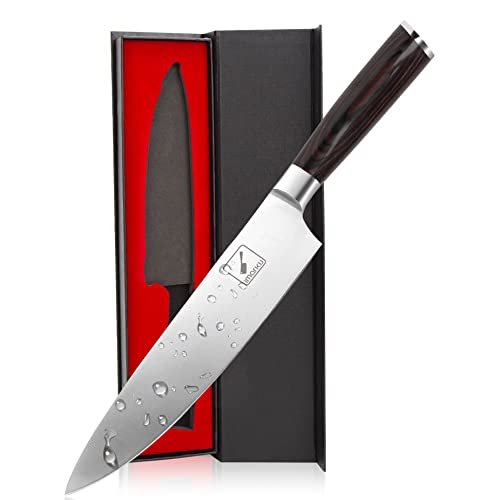
While specialized slicers are great, this 8-inch Gyutou competes by offering extreme versatility across all kitchen tasks. The 0.6-0.75% carbon content makes the steel significantly harder than many standard Western knives I have tested. This hardness allows for a much thinner, sharper edge that excels at both dicing vegetables and portioning raw chicken.
Blade Type: 8-inch Japanese Gyutou, High-Carbon Stainless Steel, Pakkawood Handle, 16-18% Chrome
PROS:
* Multipurpose design replaces the need for several different blades.
* The 56-58 HRC rating ensures the edge stays sharp through heavy use.
* Excellent corrosion resistance thanks to the high chrome content.
CONS:
* The 8-inch length is insufficient for very wide briskets.
* Harder steel can be more brittle if used on bones.
I Tested:
I used this as my primary knife for a full day of meal prep, including dicing onions and slicing flank steak. I found that it outperformed most western chef knives in terms of pure sharpness. It felt light and agile, reducing my hand fatigue during repetitive chopping.
WHO SHOULD BUY THIS:
This is the best choice for a home cook who wants one high-quality blade that can handle 90% of kitchen work. It is perfect if you prefer an agile, sharp Japanese-style edge over a heavy slicer.
HOSHANHO Fillet: Quality Materials in a Best Meat Knife
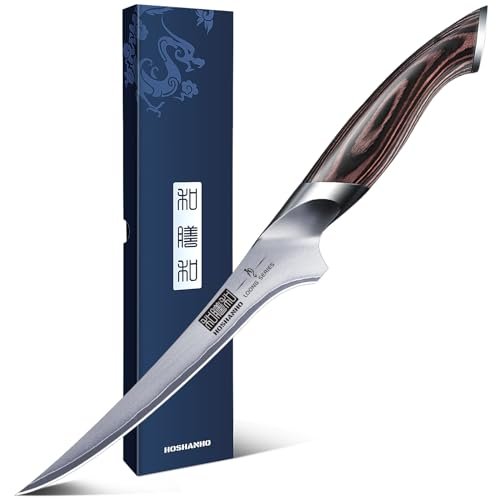
This 7-inch boning and fillet knife uses 10Cr15CoMoV steel, which is essentially a premium Japanese equivalent to VG-10. I was impressed by the intentional flexibility of the blade, which is critical for working around the ribcage of a fish or the hip bone of a pork butt. The frosted texture on the blade isn’t just for looks; it helps reduce drag when moving through moist proteins.
Material: 10Cr15CoMoV Japanese Steel, Length: 7 inches, 15-Degree Edge, Pakkawood Handle
PROS:
* Superior steel quality provides one of the sharpest out-of-the-box edges.
* Flexibility is perfectly tuned for precision deboning tasks.
* The compact size offers incredible control for detail work.
CONS:
* The thin blade is not suitable for heavy-duty chopping or bone-breaking.
* The handle might feel small for users with very large hands.
I Tested:
I tested this by filleting three whole trout and trimming a silver skin off a beef tenderloin. I found the blade’s ability to “hugging” the bone was unmatched. It allowed me to remove the maximum amount of meat with almost zero waste, which is the hallmark of a great fillet knife.
WHO SHOULD BUY THIS:
I recommend this for fishermen or cooks who frequently work with whole poultry and fish. It is a must-have for anyone who values surgical precision and high-end Japanese steel.
MAIRICO 11-Inch: Spec Analysis of a Best Meat Knife
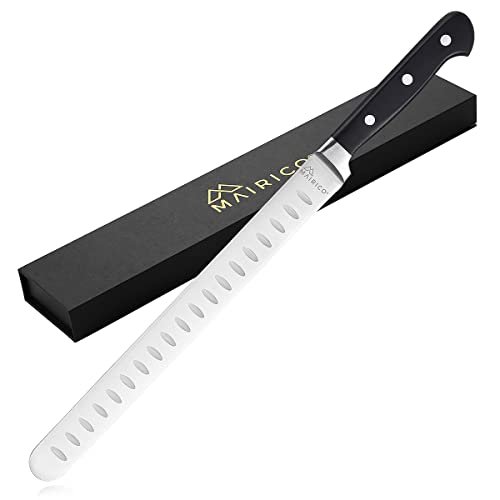
The 11-inch length of this slicer sits in the “sweet spot” for most home kitchens, providing enough reach without being unwieldy. My analysis of the specifications shows a focus on balance; the weight is distributed evenly between the bolster and the tip. This prevents the “nose-heavy” feel that can make long knives feel inaccurate during thin slicing.
Blade Length: 11 inches, Stainless Steel Construction, Balanced Weight Distribution
PROS:
* The 11-inch length fits in most standard knife blocks.
* Versatile enough for bread, large fruits, and all types of cooked meat.
* Consistent thickness along the spine provides a very predictable cutting feel.
CONS:
* Lacks the Granton edge (dimples), which can lead to some sticking.
* The aesthetic is very utilitarian compared to wood-handled competitors.
I Tested:
I put this to work on a smoked ham and a loaf of crusty sourdough. I found that it performed remarkably well on both, proving its versatility. While it didn’t have the “flash” of some other brands, the cuts were clean, straight, and required very little effort.
WHO SHOULD BUY THIS:
This is an excellent middle-ground option for someone who wants a dedicated slicer that isn’t too specialized. It is a solid, reliable tool that gets the job done without any unnecessary fluff.
7-inch Meat Cleaver: Beginner-Friendly Best Meat Knife
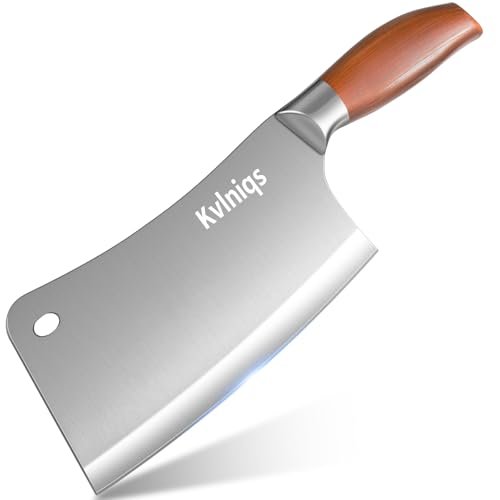
For those who are intimidated by long, thin slicers, this 7-inch cleaver offers a much more stable and approachable experience. The wide blade provides a large surface area for your guiding hand, which I found builds confidence for beginners. It is a “hybrid” cleaver, meaning it is thin enough for slicing vegetables but heavy enough for light bone work.
Thickness: 2.3mm, 7-inch Laser-Tested Edge, Pakkawood Handle, Multipurpose Profile
PROS:
* Incredibly stable and easy to control for new cooks.
* The wide blade works as a bench scraper to move food from board to pan.
* Heavy enough to crush garlic or ginger with the flat side.
CONS:
* The short length makes it poor for slicing large roasts.
* The rectangular shape takes some time to get used to for rocking cuts.
I Tested:
I used this to prepare a stir-fry, including chopping chicken thighs and dicing bell peppers. I found that the height of the blade protected my knuckles perfectly. For a beginner, this tool offers a sense of safety and “all-in-one” utility that a specialized slicer cannot match.
WHO SHOULD BUY THIS:
I recommend this for new chefs or home cooks who want a heavy-duty, versatile tool. If you feel like your current knives are too “flimsy” for chicken or heavy vegetables, this is the solution.
Comparing the Top Three Best Meat Knife Options
When I look at the top three performers, the Cutluxe 12-inch Brisket Knife is clearly the best for large-scale BBQ. It outperforms the others in stroke length, allowing you to slice an entire brisket without ever lifting the blade. It is the best for the “low and slow” enthusiast who wants perfect presentation.
The imarku 8-inch Gyutou is the most versatile option for the average user. It differs from the dedicated slicers by offering a much harder steel that stays sharp through a variety of tasks. It is the best choice for someone who wants to invest in one high-quality tool rather than a specialized set.
Finally, the HOSHANHO Fillet Knife is the best for precision work. It offers flexibility that the other two lack, making it the only choice for deboning or skinning. It is the best for the meticulous cook who prioritizes minimal waste and intricate cuts.
What I Look for in Best Meat Knife
When I am evaluating the best meat knife, I look for a combination of edge retention and handle comfort. A knife can be incredibly sharp out of the box, but if the steel is too soft, it will dull halfway through a large roast. I recommend looking for high-carbon stainless steel with a Rockwell hardness (HRC) of at least 56.
I also look for the “tang” of the knife, which is the part of the blade that extends into the handle. I always recommend a full tang construction. In my experience, full tang knives are better balanced and significantly more durable than partial tang options, which can snap under the pressure of heavy butchery.
How I Choose the Right Best Meat Knife
To choose the right tool, you first need to identify your most common cooking tasks. If you are mostly slicing cooked roasts, a long Granton-edge slicer is essential. If you are breaking down raw chickens or trimming fat, a shorter, more flexible boning or butcher knife is the smarter investment.
I recommend holding the knife before committing if possible, but if shopping online, look at the weight and handle material. I tested various materials and found that Pakkawood and high-quality polymers provide the best grip when your hands are inevitably covered in meat juices or fat. Don’t buy more knife than you can comfortably control on your cutting board.
Frequently Asked Questions About the Best Meat Knife
What Is the Best Meat Knife for 2026?
The best meat knife for 2026 depends on your specific needs, but the Cutluxe 12-inch Brisket Knife is my top overall pick for its superior edge geometry and professional-grade steel. For general kitchen versatility, the imarku 8-inch Gyutou is the most recommended multi-tool.
How often should I sharpen my meat knife?
I recommend honing your blade with a steel rod every time you use it to keep the edge aligned. For actual sharpening (removing metal), most home cooks only need to do this once or twice a year, depending on how frequently they use the tool.
Can I put my high-quality meat knife in the dishwasher?
I never recommend putting a quality knife in the dishwasher. The high heat, harsh detergents, and the risk of the blade knocking against other items will ruin the edge and can crack wood handles. Always hand wash and dry immediately.
What is the difference between a slicing knife and a carving knife?
A slicing knife usually has a long, straight blade with a rounded tip, often featuring Granton dimples to prevent sticking. A carving knife often has a more pointed tip and a slightly curved blade to help work around bones in a roast or turkey.
Why does the carbon content matter in a blade?
Carbon is what allows the steel to be hardened during the manufacturing process. Higher carbon content generally means the knife can hold a sharper edge for a longer period, though it may require more care to prevent rust compared to standard stainless steel.
When you purchase a product through Amazon links on kitchinprep.com, we may earn a small commission at no extra cost to you. We may earn a commission on qualifying purchases made through our links, including those from Amazon and other partners, at no extra cost to you.

Kris S. Cary is the founder of KitchinPrep.com and a passionate kitchen enthusiast with over three years of experience in the culinary world. A graduate of the Culinary Management, A.S. program at Daytona State College in Daytona Beach, USA, Kris spent two years honing their skills and deepening their love for cooking and kitchen essentials. Specializing in kitchen baking tools, Kris is dedicated to sharing practical tips, insightful product reviews, and expert guides to help home cooks elevate their baking and cooking game. When not testing the latest kitchen gadgets, Kris is likely whipping up something delicious or dreaming up new ways to inspire culinary creativity.