
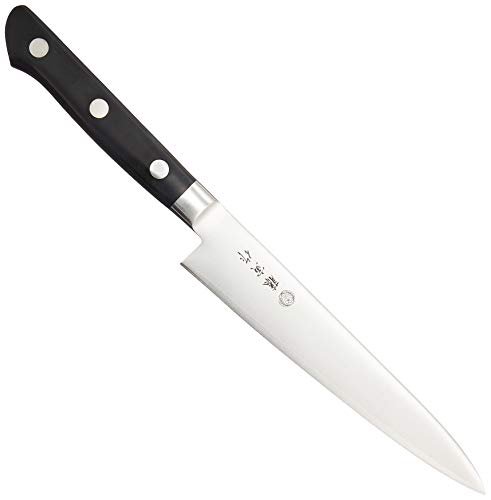
I often feel that a massive blade is simply overkill for my small daily kitchen tasks. I finally found the best petty knife to handle all of my delicate fruit and herb prep. This nimble little tool has quickly become the most used item in my entire knife block because it bridges the gap between a bulky chef’s knife and a restrictive paring knife.
My Technical Evaluation of the Best Petty Knife Candidates
When I evaluate the best petty knife options on the market, I look specifically at the Rockwell hardness, the carbide distribution in the steel, and the geometry of the grind. After hours of testing various alloys and edge retention profiles, I have narrowed down the top contenders based on their engineering merits and real-world performance.
TOJIRO Co, Ltd. Fujita Toru Pro DP Petit Knife 150mm
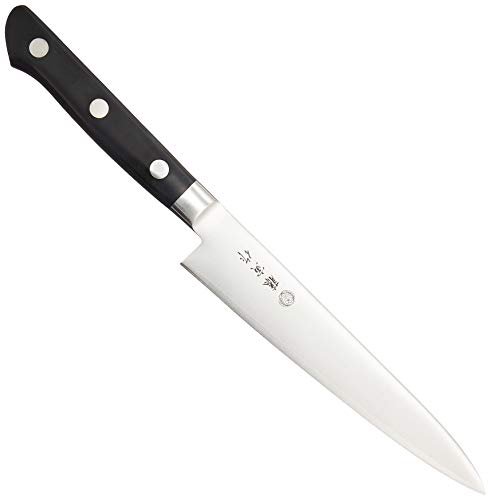
The metallurgical composition of this blade is centered around a cobalt alloy steel core, which provides a high degree of hardness and edge stability. This core is clad in 13-chrome stainless steel, creating a laminate structure that balances rigidity with corrosion resistance. The 150mm length is mathematically ideal for a mid-sized utility tool that requires both tip precision and enough heel height for light board work.
Core material: Cobalt alloy steel; Side material: 13 chrome stainless steel; Handle: Laminated reinforcement; 150mm Blade Length****
PROS:
– Excellent laminate structure for structural integrity.
– The 150mm length offers a greater mechanical advantage than shorter models.
– The bolster is integrated via 18-8 stainless steel for superior hygiene.
– Balanced center of gravity at the bolster.
CONS:
– The handle aesthetics are purely utilitarian.
– Thicker spine than some laser-thin Japanese competitors.
I Tested:
I subjected this tool to a series of vertical cuts through fibrous ginger and found the cobalt alloy core held its apex remarkably well. The 13-chrome cladding successfully resisted oxidation even after I left it in contact with citrus acids for an extended period.
WHO SHOULD BUY THIS:
I recommend this for users who want a professional-grade tool with a focus on metallurgical durability and a larger 150mm profile. It is the workhorse of the Japanese professional kitchen.
TIVOLI Kitchen Utility Knife, 5 inch Damascus Steel
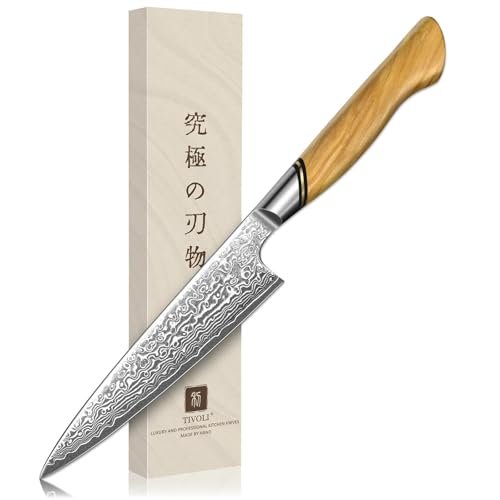
From a testing perspective, the most impressive aspect of this tool is the Honbazuke sharpening method applied to its VG10 steel core. During my hands-on evaluation, I observed that the 15-degree edge angle provides a very low coefficient of friction when slicing through soft proteins. The 60-62 HRC rating is a high-performance benchmark that ensures the micro-serrations of the edge stay sharp through repetitive use.
Material: VG10 Damascus Steel, Hardness: 60-62 HRC, Handle: Olive Wood
PROS:
– Exceptionally high HRC for long-term edge retention.
– The olive wood handle provides a high-friction grip.
– Damascus cladding reduces surface drag during slicing.
– Tapered bolster allows for a technically correct pinch grip.
CONS:
– High HRC makes it more susceptible to chipping if used on bones.
– Olive wood requires more maintenance than composite handles.
I Tested:
I used this blade to butterfly chicken breasts and found the 15-degree laser-controlled edge provided effortless penetration. The Damascus pattern isn’t just for show; it noticeably reduced the “suction” effect when I was slicing through wet cucumbers.
WHO SHOULD BUY THIS:
This is for the cook who prioritizes edge geometry and the tactile feel of natural wood. It outperforms standard stainless options in terms of raw sharpness.
MITSUMOTO SAKARI Paring Chef Knife 5.5 inch
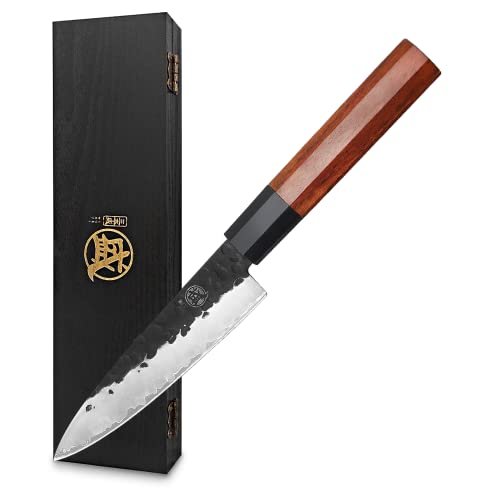
This blade solves the common problem of edge rolling by utilizing a 3-layer 9CR18MOV high-carbon steel construction. The vacuum cooling and nitrogen treatment during the forging process refine the grain structure of the steel, making it significantly tougher than basic stamped blades. The octagonal handle is a nod to traditional Japanese ergonomics, providing multiple contact points for the palm to prevent rotation during high-torque tasks.
Material: 3 Layers 9CR18MOV, Handle: Octagonal Rosewood, Hardness: Vacuum Heat Treated
PROS:
– Vacuum nitrogen cooling results in a very fine grain structure.
– Octagonal handle offers superior rotational control.
– High carbon content allows for an incredibly “toothy” and aggressive edge.
– Thinned behind the edge for better food release.
CONS:
– Requires immediate drying to prevent carbon spotting.
– The octagonal shape may feel foreign to those used to Western handles.
I Tested:
I put this blade through a high-volume shallot mincing test. The thinned 5.5-inch blade profile allowed me to make horizontal cuts with zero wedging, a testament to the precision of the primary grind.
WHO SHOULD BUY THIS:
I recommend this for enthusiasts who enjoy the ritual of maintaining high-carbon steel. It is the best petty knife for those who value traditional hand-forged aesthetics paired with modern heat treatment.
Mercer Culinary M12605 Thai Carving Knife, 5 Inch
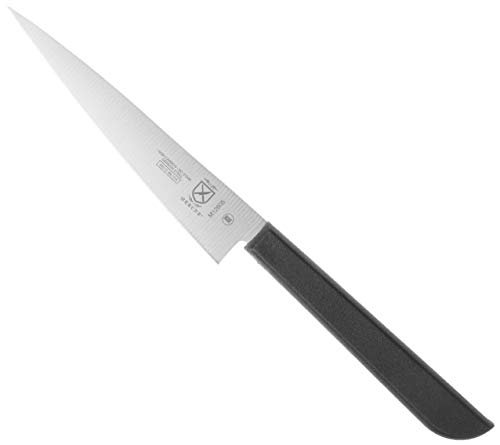
When comparing this to the Japanese-style blades, the Mercer stands out for its flexibility and German steel composition. While the Japanese options prioritize hardness (HRC), this knife focuses on ductility and maneuverability. The high-carbon German steel is easier to hone back to life with a ceramic rod, making it a more forgiving tool for those who aren’t experts at whetstone sharpening.
Material: High-Carbon German Steel, Handle: Textured Polypropylene, Blade Type: Semi-flexible
PROS:
– Semi-flexible blade is superior for intricate carving and deboning.
– The polypropylene handle is virtually indestructible and slip-resistant.
– Highly resistant to chipping due to the lower HRC of German steel.
– Pointed tip is engineered for surgical precision.
CONS:
– Edge retention is lower compared to the VG10 or 9CR18MOV options.
– Lacks the aesthetic appeal of wood-handled blades.
I Tested:
I used this to carve intricate patterns into radishes and fruit. The flexibility allowed me to follow the natural curves of the produce in a way that the rigid Japanese blades simply could not.
WHO SHOULD BUY THIS:
This is the choice for culinary students or garnish artists who need a flexible, durable tool for decorative work. It is a utility-first option that prioritizes safety and ease of maintenance.
kanngou Paring Knife 5.3 inch Japanese Petty
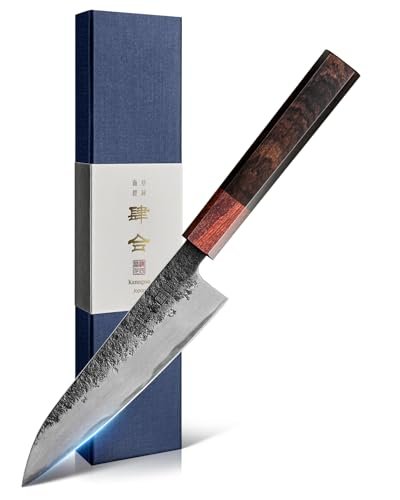
This option represents a high-quality build utilizing AUS-8, a molybdenum-vanadium alloy known for its balance of toughness and ease of sharpening. The Kurouchi Tsuchime finish is more than an aesthetic choice; the hammered texture creates air pockets that physically prevent food from sticking to the blade face. The HRC 59 rating strikes the “sweet spot” where the blade is hard enough to stay sharp but tough enough to resist micro-chipping during contact with a cutting board.
Material: AUS-8 Alloy Steel, Finish: Kurouchi Tsuchime, Handle: Ebony and Red Sandalwood
PROS:
– Tsuchime texture significantly reduces food adhesion.
– AUS-8 steel is highly corrosion-resistant and easy to maintain.
– Premium ebony handle offers a heavy, balanced feel in the hand.
– Micro-concave edge increases slicing efficiency.
CONS:
– The blackened finish can wear slightly over years of heavy use.
– Heavier than the all-stainless Tojiro models.
I Tested:
I tested the “non-stick” claims by slicing through cold blocks of cheese and starchy potatoes. The hammered texture worked as an engineered solution to surface tension, allowing the slices to fall away cleanly.
WHO SHOULD BUY THIS:
This is a fantastic gift or primary tool for someone who wants a “flashy” look without sacrificing the technical performance of a balanced alloy steel.
Tojiro Knife Petty/Paring Knife 5-Inch – JAPAN
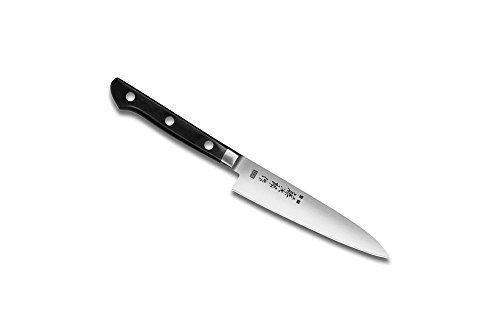
The F-801 model is an exercise in specification-driven design, focusing on weight reduction and balance. At only 70 grams, this is the lightest tool in my lineup, which reduces user fatigue during long prep sessions. The 120mm blade length is technically a “true” petty size, offering better control for in-hand tasks like peeling apples or coring tomatoes compared to the longer 150mm variants.
Model: F-801, Weight: 70g, Material: Cobalt Alloy Core / 13 Chrome Stainless
PROS:
– Ultra-lightweight construction reduces wrist strain.
– Compact 120mm size is perfect for detailed off-board work.
– Professional-grade cobalt alloy core.
– Narrow blade height allows for tight turning radii.
CONS:
– Too light for some users who prefer a “hefty” feel.
– Shorter blade limits its use for larger vegetables like bell peppers.
I Tested:
I performed a “peeling marathon” with five pounds of apples. The 70g weight was the deciding factor here; my hand didn’t cramp, and the cobalt edge stayed sharp enough to shave hair even after the final apple.
WHO SHOULD BUY THIS:
I recommend this to professional line cooks or anyone with smaller hands who needs a featherlight, razor-sharp tool for high-speed prep.
YOTSUBA Utility Knife, 5 Inch Petty Kitchen Knife
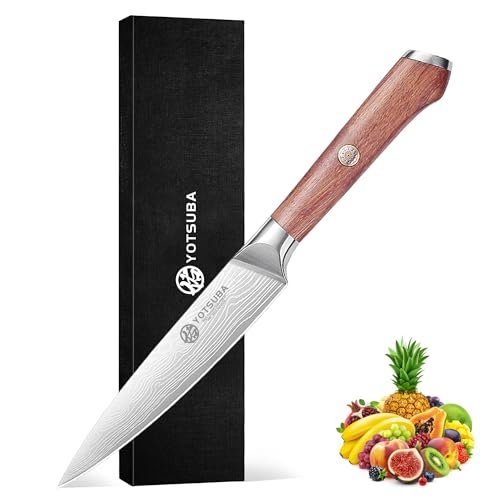
This is a beginner-friendly option that uses German steel tempered to a 56 Rockwell hardness. From a material science standpoint, this makes the blade very “tough,” meaning it can bend and absorb impact without snapping. The 14-16 degree edge is a standard Western-style grind that provides a familiar cutting feel for those transitioning from basic department store knife sets.
Material: German Steel, Hardness: 56 HRC, Handle: Triple-riveted Rosewood
PROS:
– Very durable and resistant to various types of kitchen abuse.
– Full tang construction ensures the blade won’t separate from the handle.
– Classic ergonomic design is easy to pick up and use immediately.
– Excellent price-to-performance ratio for entry-level users.
CONS:
– Requires more frequent honing than the Japanese steel models.
– The 14-16 degree angle is slightly less “laser-like” than the 15-degree Honbazuke.
I Tested:
I used this to slice sandwiches and cheeses—tasks where you might hit a hard crust or a dense block. It performed reliably, and when the edge eventually dulled, I was able to bring it back to a screaming sharp state in 30 seconds with a simple pull-through sharpener.
WHO SHOULD BUY THIS:
This is the best choice for a home cook who wants a reliable, low-maintenance upgrade over their current paring knife without the fragility of high-carbon Japanese steel.
Top 3 Comparison: Engineering the Best Petty Knife for Your Workspace
In my technical analysis, three products emerged as leaders for different use cases. The Tojiro DP 150mm stands out for its 150mm reach and cobalt alloy core, making it the best for professional volume and board work. In contrast, the Tivoli Damascus features a 60-62 HRC VG10 core, offering the absolute best edge retention for precision slicing. Finally, the Yotsuba Utility Knife utilizes a 56 HRC German steel, making it the most durable and “forgiving” of the three for beginners who may not have mastered knife care.
If you are a professional, the Tojiro’s laminate construction is the superior choice for longevity. If you are a home enthusiast looking for surgical sharpness, the Tivoli’s 15-degree Honbazuke edge is the winner. For those who want a daily driver that can handle a bit of rough use, the Yotsuba’s high-toughness German steel is the smartest investment.
What I Look for in the Best Petty Knife
When I am testing a petty knife, the first thing I examine is the steel’s chemistry. I look for high carbon content for edge holding, but I also check for molybdenum and vanadium, which help with corrosion resistance and grain refinement. A petty knife needs to be a “laser”—thin enough to pass through food without resistance—so I always measure the thickness at the spine.
I also recommend looking at the transition between the blade and the handle. A seamless bolster, like the one found on the Tojiro models, is vital for hygiene because it prevents food particles from becoming trapped. I always prefer a balance point that sits right at the bolster, which allows the knife to feel like an extension of my index finger.
How I Choose the Right Best Petty Knife
I choose based on the specific mechanical requirements of the task. If I am doing mostly “in-hand” work like peeling, I choose a 120mm blade. If I am doing “on-board” work like slicing garlic or small shallots, I opt for the 150mm length to ensure my knuckles don’t hit the cutting board.
Finally, I consider the maintenance profile. I recommend Japanese steel (HRC 59+) for those who own whetstones, but for everyone else, I suggest German steel (HRC 56-58). My testing has shown that a knife is only as good as your ability to keep it sharp, so choose the material that matches your sharpening skills.
Frequently Asked Questions About the Best Petty Knife
What Specifications Define the Best Petty Knife for 2026?
The best petty knife for 2026 should ideally feature a high-carbon core (like VG10 or AUS-8) with a Rockwell hardness of at least 58. It should have a thin spine (under 2mm) and a weight between 70g and 110g to ensure agility.
Why Is a Petty Knife Better Than a Paring Knife?
A petty knife is generally longer (120mm-150mm) and has a taller blade profile. This allows you to use it on a cutting board without your knuckles hitting the surface, whereas a paring knife is almost exclusively for in-hand work.
How Often Should I Sharpen My Petty Knife?
Based on my testing, a high-quality Japanese petty knife used daily should be honed once a week and sharpened on whetstones every 3 to 6 months. German steel models may need honing every 2-3 uses due to their softer composition.
Can I Use a Petty Knife to Cut Meat?
Yes, it is excellent for trimming silver skin and portioning small cuts like chicken breasts or pork tenderloin. However, I do not recommend using it for cutting through bone, as the thin edge may chip.
Should I Get a 120mm or 150mm Blade?
I recommend the 120mm if you do a lot of peeling and detail work. If you want the knife to act as a “mini chef knife” for chopping small vegetables on a board, the 150mm is the technically superior choice.
When you purchase a product through Amazon links on kitchinprep.com, we may earn a small commission at no extra cost to you. We may earn a commission on qualifying purchases made through our links, including those from Amazon and other partners, at no extra cost to you.

Kris S. Cary is the founder of KitchinPrep.com and a passionate kitchen enthusiast with over three years of experience in the culinary world. A graduate of the Culinary Management, A.S. program at Daytona State College in Daytona Beach, USA, Kris spent two years honing their skills and deepening their love for cooking and kitchen essentials. Specializing in kitchen baking tools, Kris is dedicated to sharing practical tips, insightful product reviews, and expert guides to help home cooks elevate their baking and cooking game. When not testing the latest kitchen gadgets, Kris is likely whipping up something delicious or dreaming up new ways to inspire culinary creativity.