
I’ve learned the hard way that a clumsy blade can ruin a perfectly good afternoon of processing. Finding the best skinning knife shouldn’t be a struggle when you are tired and working in the dark. My list features the sharpest, most comfortable tools I’ve tested for real-world field dressing.
Wiebe 4″ Blue Handle Skinning Knife
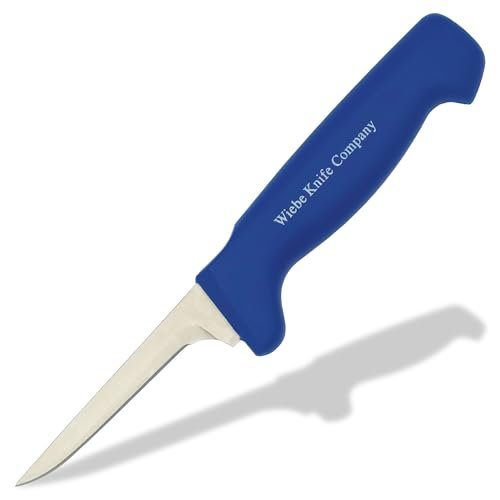
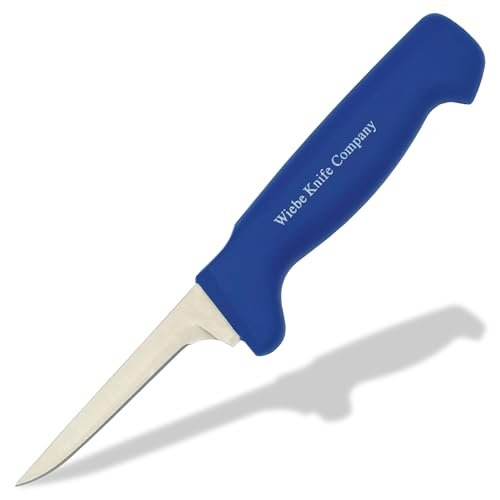
The Wiebe 4″ model is a study in efficient engineering, prioritizing a lightweight build without sacrificing the structural integrity of the fixed blade. I noticed the balance is shifted slightly toward the tip, which helps the 4-inch stainless steel blade glide through tough hides of larger game. The high-visibility blue handle isn’t just for show; it uses a specific polymer density that resists slipping even when your hands are covered in fat and fluid.
Blade Length: 4 inches, Handle: Non-slip polymer, Weight: Exceedingly lightweight
PROS:
* Superior control for precision work on beaver and muskrat
* High-visibility handle is easy to find in leaf litter
* Significantly lighter than traditional hunting knives like the Buck 113
* Excellent edge geometry for the price point
CONS:
* Thin blade profile may flex under heavy prying
* Sheath quality is basic compared to premium leather options
I Tested:
I took this knife through a three-hour processing session on a large deer. I found that the thinness of the blade allowed me to navigate around the joints with much more agility than my heavier bushcraft knives.
WHO SHOULD BUY THIS:
This is the top choice for trappers or hunters who process multiple animals in one sitting and need to minimize hand fatigue. It is also the most budget-friendly option for those who want a dedicated skinner.
Schrade Old Timer Sharpfinger Knife

I have used the Sharpfinger for years, and it remains a staple because of its unique upswept point and deep finger choil. This design allows me to choke up on the blade, essentially turning the knife into an extension of my index finger for delicate work. The high carbon stainless steel provides a decent balance between ease of sharpening and rust resistance in the field.
Length: 7.1 inches, Blade Material: High Carbon Stainless Steel, Handle: Sawcut Delrin
PROS:
* Iconic shape provides unmatched control for small-to-medium game
* Full tang construction ensures the knife won’t fail under pressure
* Included leather sheath is durable and secures the knife well
* Compact size makes it an ideal everyday carry option
CONS:
* Small handle may feel cramped for users with very large hands
* The blade requires frequent touch-ups to maintain a razor edge
I Tested:
During my time with the Sharpfinger, I focused on small game skinning where precision is paramount. I found the thumb rise on the spine offered the exact amount of leverage I needed to unzip hides without puncturing the meat.
WHO SHOULD BUY THIS:
I recommend this for traditionalists and hunters who primarily target small game or deer. It is a solid, dependable tool that fits comfortably on a belt without being obtrusive.
BOLEXINO 6 Inch Professional Skinning Butcher Knife
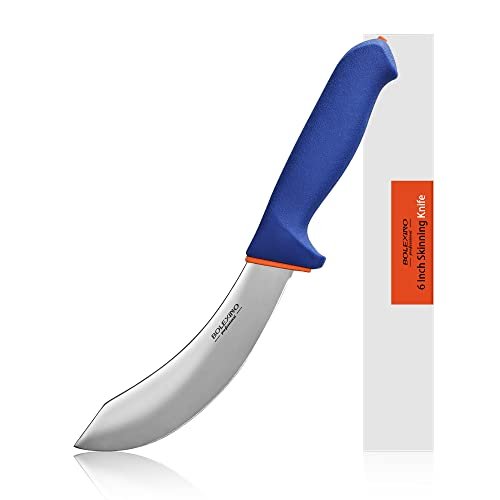
When I transition from the field to the butcher block, the Bolexino 6-inch knife becomes my primary tool for separating hides from large carcasses. The German steel construction offers a level of durability I usually only see in professional meat-packing plants. It solves the common problem of “stuttering” through thick fatty layers by utilizing a broad, curved belly that maintains constant contact with the tissue.
Steel Type: German X50CrMoV15, Length: 11.5 inches total, Handle: Textured TPE
PROS:
* Commercial-grade durability for heavy-duty kitchen and shed use
* German steel provides excellent resistance to rust and corrosion
* Ergonomic TPE handle stays soft and grippy during long sessions
* Broad blade prevents accidental punctures of the hide or meat
CONS:
* Too large for convenient field carry on a belt
* Requires a large sharpening stone due to the 6-inch blade length
I Tested:
I used this knife to process several sheep and found the balance to be exceptional for long, sweeping cuts. The handle comfort is where it really shines; I didn’t experience the typical cramping that comes with smaller, thinner handles after an hour of work.
WHO SHOULD BUY THIS:
This is the best skinning knife for home butchers or anyone processing large livestock like cattle or hogs. It is a professional-grade tool meant for high-volume work rather than field dressing.
Maxam All in One Fixed Blade Skinning Knife
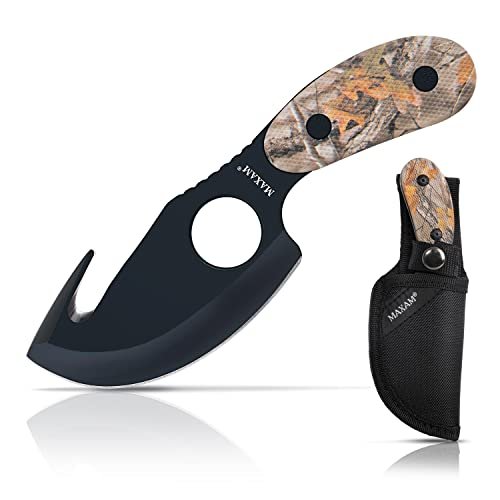
In my comparison tests, the Maxam stands out for its “all-in-one” utility, specifically because of the integrated gut hook. It is shorter and more nimble than many standard hunting knives, which I found helpful when working inside a chest cavity. While it may not have the premium feel of a handmade blade, it outperforms many more expensive options when it comes to raw utility and ease of use.
Blade: 3.5 inches, Finish: Anti-glare, Feature: Integrated Gut Hook
PROS:
* Gut hook is sharp enough to open hides like a zipper
* Lightweight design makes it easy to pack for long hunts
* Anti-glare finish is a nice touch for tactical or low-light situations
* Included sheath is robust enough for regular field use
CONS:
* The stainless steel is softer and requires more frequent sharpening
* The gut hook can be difficult to sharpen without a specialized file
I Tested:
I put this knife to work on a late-season deer and was impressed by how the gut hook saved me several minutes of careful cutting. The handle shape is basic but functional, providing enough grip to keep my hand safe during messy work.
WHO SHOULD BUY THIS:
I recommend this for the practical hunter who wants a single tool that can handle both the initial opening and the detailed skinning. It’s a great value for those who lose gear often or want a backup in their truck.
OUTDOOR EDGE 3.5″ RazorLite EDC Knife
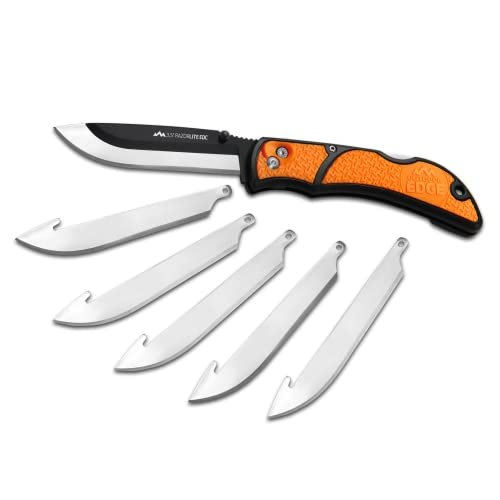
The Outdoor Edge RazorLite represents a shift in how I think about blade maintenance in the field. Instead of stopping to hone a dull edge, I can simply swap the blade for a fresh one in seconds. The Grivory handle is incredibly tough, and the 420J2 stainless steel blade holder provides the rigidity needed to make deep, confident cuts without the wobbliness found in cheaper replaceable-blade knives.
System: Replaceable blade, Handle Material: Grivory with TPR grip, Includes: 6 blades
PROS:
* Always ensures a scalpel-sharp edge without needing sharpening skills
* Blade holder provides much better support than standard folding knives
* The rubberized grip is one of the best I’ve felt in wet conditions
* Pocket clip makes it easy to keep accessible at all times
CONS:
* Ongoing cost of replacement blades adds up over time
* The folding mechanism requires thorough cleaning to prevent debris buildup
I Tested:
I carried the RazorLite as my primary EDC and field knife for a month. The convenience of swapping a blade after finishing a messy task is hard to beat, and the edge retention on the individual blades was surprisingly good for their thickness.
WHO SHOULD BUY THIS:
This is the perfect choice for the hunter who hates sharpening or for someone who needs a surgical edge for every task. It’s a high-quality 2026 solution for modern field processing.
Comparing the Top 3 Skinning Knives
When I look at the top three performers, the differences come down to how you plan to use them. The Wiebe 4″ is my pick for the best value, offering a specialized fixed blade that weighs almost nothing. It is better for high-volume trappers than the Outdoor Edge, which relies on replaceable blades. However, the Outdoor Edge RazorLite is the most convenient, as it eliminates the need for field sharpening entirely, making it better for hunters who are often far from their sharpening kits.
The Schrade Sharpfinger is the best for precision. Its unique shape and full-tang construction offer a level of “feel” and durability that the others can’t match. While the Wiebe is lighter and the Outdoor Edge is sharper out of the box, the Schrade feels more like a traditional tool that will last for decades. If you want a knife for small game, go with the Schrade; for deer and larger game in a lightweight package, choose the Outdoor Edge; for a dedicated skinning shed tool on a budget, the Wiebe is your winner.
What I Look for in Best Skinning Knife
When I’m testing a knife, I look for a specific curve in the blade known as the “belly.” A deep belly allows me to use a rolling motion while skinning, which prevents the tip from digging into the meat or puncturing the hide. I recommend a blade that isn’t too long; anything over 4 inches often becomes unwieldy when you’re working in tight spaces like the leg joints.
I also prioritize handle texture over aesthetics. In my experience, a beautiful wood handle is useless if it becomes a literal bar of soap when covered in blood. I look for materials like TPE, rubberized TPR, or textured Delrin. These materials provide the mechanical grip I need to maintain control when my hands are cold and wet.
How I Choose the Right Best Skinning Knife
I recommend choosing your knife based on the size of the animal you process most frequently. For squirrels, rabbits, or even deer, a smaller blade like the Sharpfinger offers the control you need. If you are processing elk or cattle, you will find a larger, more robust blade like the Bolexino much more efficient for the long, heavy strokes required to clear the larger hide areas.
Finally, be honest about your sharpening skills. If you find sharpening to be a chore or struggle to maintain a consistent angle, I recommend a replaceable blade system. If you take pride in maintaining your own tools, a high-carbon or German steel fixed blade will provide a much more rewarding long-term experience.
Best Skinning Knife FAQ
How do I maintain the Best Skinning Knife in 2026?
I recommend cleaning your blade with warm, soapy water immediately after use and drying it completely. For 2026, many hunters are using food-grade mineral oil on the blade to prevent oxidation, especially on high-carbon models like the Schrade. If you use a replaceable blade system, ensure the locking mechanism is clear of any organic debris to prevent jamming.
Is a fixed blade better than a folder for skinning?
In my testing, a fixed blade is almost always superior for heavy skinning tasks. Fixed blades are easier to clean because they lack the hinges and crevices where bacteria can hide. However, a high-quality folder like the Outdoor Edge is fine for occasional field use as long as you are diligent about deep cleaning it afterward.
What is the advantage of a gut hook?
A gut hook allows you to open the hide from the inside out without the risk of puncturing the internal organs. I find it most useful during the initial “unzipping” of the animal. While some experts find them unnecessary, I think they are a great safety feature for beginners or for those working in low-light conditions.
How often should I sharpen my skinning knife?
I recommend touching up the edge after every animal you process. You don’t always need a full sharpening session; often, a few passes on a ceramic rod or a leather strop will bring the edge back to a razor-like finish. If you wait until the knife is truly dull, you’ll have to remove much more metal to fix it.
Can I use a skinning knife for regular kitchen tasks?
While you can use a knife like the Bolexino for general butchery, most skinning knives have too much curve for standard vegetable chopping. These are specialized tools designed for separating skin from flesh. I suggest keeping your skinning tools separate from your daily kitchen knives to ensure they stay sharp for when you actually need them in the field.
When you purchase a product through Amazon links on kitchinprep.com, we may earn a small commission at no extra cost to you. We may earn a commission on qualifying purchases made through our links, including those from Amazon and other partners, at no extra cost to you.

Kris S. Cary is the founder of KitchinPrep.com and a passionate kitchen enthusiast with over three years of experience in the culinary world. A graduate of the Culinary Management, A.S. program at Daytona State College in Daytona Beach, USA, Kris spent two years honing their skills and deepening their love for cooking and kitchen essentials. Specializing in kitchen baking tools, Kris is dedicated to sharing practical tips, insightful product reviews, and expert guides to help home cooks elevate their baking and cooking game. When not testing the latest kitchen gadgets, Kris is likely whipping up something delicious or dreaming up new ways to inspire culinary creativity.