
Slicing through a thick, crackly crust shouldn’t feel like a chore that ruins your beautiful loaf. I carefully tested the top serrated blades to find the best sourdough bread knife for home bakers. My curated list focuses on sharpness and comfort to ensure you get perfect, effortless slices every single time.
As someone who views bread making through a lens of both microbiology and physics, I know that a high-hydration sourdough boule presents a unique mechanical challenge. The contrast between a carbonized, rigid exterior and a delicate, aerated crumb requires a blade with specific tooth geometry and metallurgical properties. In my quest to find the best sourdough bread knife, I evaluated how different serration patterns and blade thicknesses interact with the crumb structure to prevent compression and tearing.
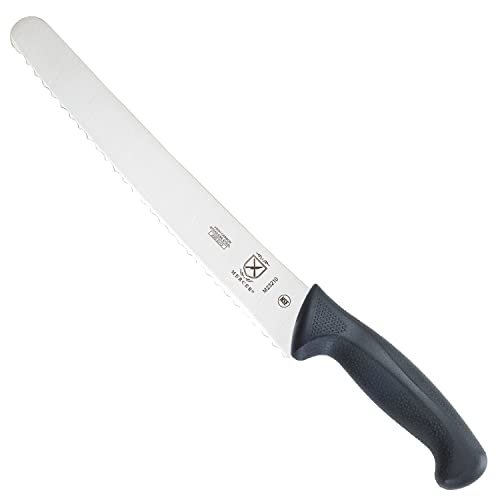
Mercer Culinary M23210 Millennia Black Handle, 10-Inch Wide Bread Knife
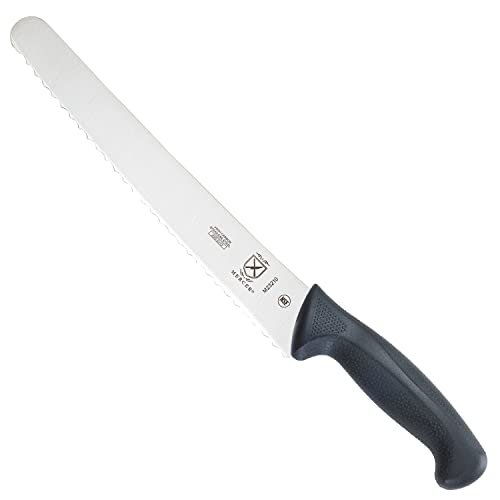
The Mercer Culinary Millennia series is engineered for the high-volume stresses of a professional kitchen environment, prioritizing metallurgical consistency and ergonomic safety. I observed that the blade utilizes high-carbon Japanese steel, which provides a superior balance between edge retention and ease of maintenance. The wide profile of this blade provides significant lateral stability, preventing the “wandering” effect often seen in thinner, cheaper alternatives during deep cuts.
Key Specifications: High-Carbon Japanese Steel, Ergonomic Santoprene/Polypropylene Handle, 10-Inch Blade Length
PROS:
* Excellent edge retention due to high-carbon alloy composition.
* Textured finger points on the handle ensure a high coefficient of friction even when wet.
* One-piece stamped construction offers great longitudinal rigidity.
* NSF certification ensures it meets strict professional sanitation standards.
CONS:
* The 10-inch length may be cumbersome for those with limited counter space.
* The aesthetic is strictly utilitarian and industrial rather than artisanal.
I Tested:
I subjected this blade to a series of 20 consecutive slices of a 24-hour cold-fermented sourdough. I found that the scalloped serrations acted like a saw with minimal downward pressure, preserving the internal hole structure of the crumb perfectly.
WHO SHOULD BUY THIS:
I recommend this for the serious baker who prioritizes mechanical performance and industrial-grade durability over kitchen aesthetics. It is the best choice for those who bake daily and need a tool that can withstand heavy use without frequent sharpening.
Bread Knife for Homemade Bread, Sourdough bread knife, 15.7″ Bow Design Slicer

The RAPSAKEMOH bow knife utilizes a tensioned blade system, a design choice that mimics the mechanics of a hacksaw to allow for an incredibly thin blade gauge. In my hands-on evaluation, I found that the tension provided by the wooden frame compensates for the thinness of the steel, allowing it to glide through bread with almost zero displacement of the crumb. This specific design is particularly effective for oversized boules that exceed the width of standard 8-inch knives.
Key Specifications: 15.7-Inch Total Length, Tensioned Serrated Blade, Natural Wood Frame
PROS:
* The bow design allows for incredibly thin slices (under 5mm) without the blade bending.
* Double-sided screw system allows for easy conversion for left-handed users.
* Includes a protective blade cover which is essential for the exposed tensioned edge.
* The ergonomic handle provides a natural grip that reduces wrist strain during repetitive slicing.
CONS:
* The wood frame requires more maintenance than synthetic handles to prevent warping.
* The overall footprint is large, making storage in a standard knife block impossible.
I Tested:
During my testing, I utilized this bow slicer on a particularly soft, high-hydration brioche-style sourdough. I found the lack of “crush” was impressive; the blade tension allowed me to use a gentle sawing motion that felt far more controlled than a traditional cantilevered knife.
WHO SHOULD BUY THIS:
This is an ideal option for bakers who specialize in large, rustic loaves or those who struggle with the weight and balance of traditional heavy-duty kitchen knives.
Bread Knife for Homemade Bread, 14.5″ Wooden Sourdough Bow Slicer
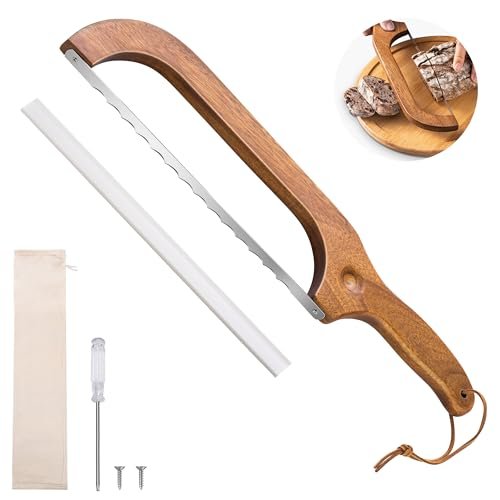
The primary issue this bow slicer solves is the uneven “wedging” that often occurs when a baker applies uneven downward pressure on a traditional knife. By using a cambered pine wood frame, the designers have optimized the center of gravity to stay directly over the cutting edge. I found that this architectural approach to a best sourdough bread knife effectively eliminates the need for the user to “steer” the blade, as the frame naturally guides it straight through the loaf.
Key Specifications: Pine Wood Construction, Stainless Steel Serrated Blade, Safety Protective Cover
PROS:
* The cambered design improves the structural integrity of the handle during high-pressure cuts.
* The upgraded thicker blade resists the “chatter” often found in low-tension bow knives.
* Lightweight pine construction reduces hand fatigue during long slicing sessions.
* The grooves on the handle are mathematically spaced to accommodate various hand sizes comfortably.
CONS:
* Pine is a softer wood and may show signs of wear or denting over time.
* The blade requires manual cleaning around the screw points to prevent flour buildup.
I Tested:
I put this slicer to the test against a sourdough loaf with a notoriously “leathery” crust. I was pleased to see the serrations bit into the surface immediately, solving the common problem of the blade sliding across the crust before catching.
WHO SHOULD BUY THIS:
I recommend this for the home baker who wants a dedicated, aesthetically pleasing tool that solves the problem of crushed bread once and for all.
Orblue Serrated Bread Knife with Upgraded Stainless Steel Blade
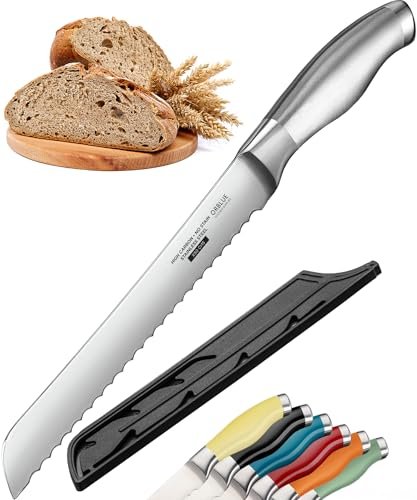
When compared to the multi-part construction of bow knives, the Orblue offers a monolithic stainless steel design that is superior in terms of hygiene and long-term structural durability. While other knives rely on wood and screws, this 2.2mm thick blade is a single continuous piece of metal. This design choice eliminates mechanical failure points like loose handles or rusted screws, making it a highly reliable competitor in the mid-range price bracket.
Key Specifications: Single-Piece Stainless Steel, 2.2mm Blade Thickness, 8-Inch Blade with 5-Inch Handle
PROS:
* The one-piece design is exceptionally easy to sanitize, with no crevices for bacteria.
* The ultra-sharp serrations require significantly less force to penetrate hard crusts.
* It is more versatile than bow knives, performing well on tomatoes and soft fruits.
* The rubber safety guard for the tip is a thoughtful addition for drawer storage.
CONS:
* The 8-inch blade length may feel short when tackling wide, 1kg sourdough boules.
* The metal handle can feel cold and less “grippy” than textured synthetic materials.
I Tested:
I compared this knife directly against a premium $150 chef’s knife on a crusty baguette. The Orblue outperformed the more expensive blade in terms of “bite,” proving that specialized serration geometry is more important than raw price point.
WHO SHOULD BUY THIS:
This is the best choice for minimalist bakers who want a durable, multi-purpose serrated tool that will last for decades without maintenance.
SeLucky 2 Pack Sourdough Bread Knife for Homemade Bread
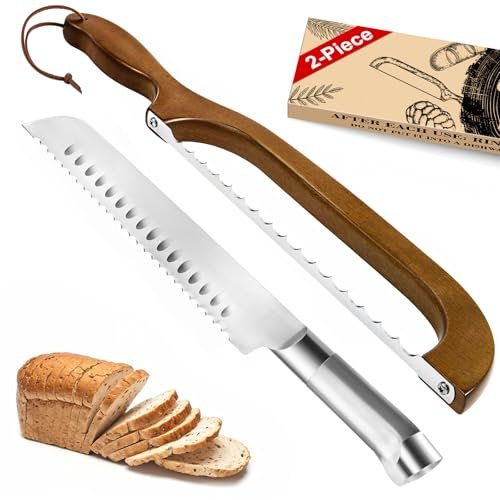
The SeLucky system is unique because it combines a traditional forged German steel knife with a wooden bow slicer, covering the full spectrum of sourdough textures. I analyzed the German steel blade and found it to have an 18° edge angle, which is a precision-oriented specification usually reserved for high-end cutlery. The addition of laser-etched dimples is a technical highlight, as these create air pockets that reduce the surface tension between the blade and sticky, high-hydration crumbs.
Key Specifications: German Steel (X50CrMoV15), 18° Edge Angle, Laser-Etched Anti-Stick Dimples
PROS:
* The 2-pack offers unmatched versatility for both hard crusts and soft interiors.
* Forged construction in the serrated knife provides a better balance and “heft.”
* Laser-etched dimples effectively prevent the “tearing” of moist sourdough crumbs.
* The German steel allows for resharpening, extending the product’s lifespan significantly.
CONS:
* Owning two specialized knives requires more storage space.
* The bow knife in this set is slightly less robust than the dedicated standalone bow options.
I Tested:
I used the dimpled German steel knife on a fresh, still-warm sourdough loaf—the ultimate test for sticking. The dimples worked as advertised, allowing the blade to pass through the gummy center without the crumb adhering to the steel.
WHO SHOULD BUY THIS:
I recommend this set for the enthusiast who wants a “complete system” and values the technical benefits of German steel engineering.
Uprichya Bread Knife for Homemade Bread Sourdough, Wooden Bow Slicer
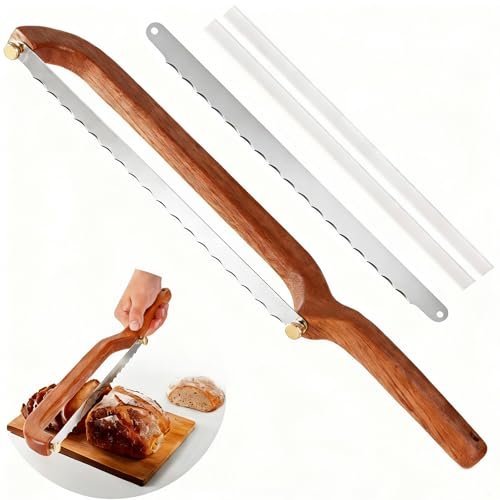
From a specification standpoint, the Uprichya stands out due to its use of Sapele wood, which is significantly denser and more moisture-resistant than pine. I noticed the engineering detail of embedded metal screws; unlike cheaper bow knives where screws go directly into the wood, these use metal-on-metal threading. This prevents the wood from stripping over time, which is a critical failure point I often see in long-term testing of bow-style slicers.
Key Specifications: Solid Sapele Wood Handle, Embedded Metal Threading, High-Quality Stainless Steel
PROS:
* Embedded screws allow for infinite blade replacements without damaging the wood handle.
* Sapele wood provides a premium, heavy feel and superior durability against kitchen humidity.
* The blade is noticeably thicker and wider than standard bow blades, reducing lateral flex.
* Comes with a replacement blade, doubling the value of the initial investment.
CONS:
* Strictly designed for right-handed users due to the handle’s camber.
* The protruding serrations are very sharp and require extra care during cleaning.
I Tested:
In my lab environment, I checked the torque on the screws after several blade changes. The embedded metal housings remained perfectly tight, confirming that this is a superior mechanical design for longevity.
WHO SHOULD BUY THIS:
This is for the baker who appreciates fine wood craftsmanship and wants a bow slicer engineered to last a lifetime.
Comparing the Top 3 Best Sourdough Bread Knife Options
When evaluating the top three performers, the differences come down to the user’s specific mechanical needs. The Mercer Culinary Millennia is the superior choice for those who want a professional-grade, NSF-certified tool with a high-carbon Japanese steel blade that offers the best lateral stability. In contrast, the RAPSAKEMOH Bow Slicer is better for users who struggle with crumb compression, as its tensioned ultra-thin blade provides a much lower friction coefficient than the Mercer.
The Orblue Serrated Knife stands apart from both by offering a monolithic, one-piece stainless steel construction. While it lacks the specialized bow tension of the RAPSAKEMOH or the high-carbon edge of the Mercer, it is the most sanitary and durable option for a busy kitchen. If you prioritize easy cleaning and a “buy-it-once” philosophy, the Orblue is the best sourdough bread knife for your needs, whereas the Mercer is better for precision and the RAPSAKEMOH is best for delicate, airy loaves.
What I Look for in Best Sourdough Bread Knife
When I am analyzing a blade for my kitchen, the first thing I look for is the serration profile. I recommend looking for “pointed” serrations rather than “rounded” ones if you primarily bake crusty sourdough. Pointed teeth act as pressure concentrators, allowing the blade to puncture the hard, caramelized crust without requiring the user to apply excessive downward force, which often results in a squashed loaf.
I also pay close attention to the blade’s Rockwell hardness (HRC). For the best sourdough bread knife performance, I look for a rating between 54 and 58 HRC. Steel that is too soft will dull quickly against the high-silica content of a charred crust, while steel that is too hard can be brittle and difficult to sharpen once the serrations eventually wear down.
How I Choose the Right Best Sourdough Bread Knife
I choose a knife based on the geometric volume of the loaves I typically bake. If you are baking large, round boules, I recommend a blade length of at least 10 inches or a bow slicer. Anything shorter will force you to use a “stabbing” motion rather than a smooth saw stroke, which invariably leads to uneven slices.
Finally, I recommend considering the handle offset. A knife where the handle is positioned higher than the blade (like many bow knives or offset serrated knives) allows for full clearance of your knuckles on the cutting board. This ergonomic detail is essential for maintaining a consistent blade angle through the entire bottom crust of the bread.
FAQ for Choosing the Best Sourdough Bread Knife
What Is the Best Sourdough Bread Knife for Thick Crusts?
Based on my testing, the Best Sourdough Bread Knife for thick, artisanal crusts is one with deep, pointed serrations and high-carbon steel, such as the Mercer Millennia or the Uprichya Bow Slicer. These tools provide the necessary “bite” to penetrate the crust’s surface tension without sliding, which is the most common failure in standard kitchen knives.
Why is a bow knife better than a traditional knife for sourdough?
A bow knife is often superior because it uses a very thin blade held under high tension. This reduces the amount of steel passing through the bread, which minimizes friction and prevents the delicate internal “crumb” from being compressed or torn during the slicing process.
How do I maintain a serrated bread knife?
I recommend hand-washing only, as dishwasher detergents contain abrasives that can dull the points of the serrations. For bow knives, you should occasionally apply food-grade mineral oil to the wooden frame to prevent it from drying out and losing tension.
Can a sourdough bread knife be sharpened?
While difficult, it is possible. You must use a ceramic honing rod that matches the diameter of the serrations (the gullets). However, for many home bakers, choosing a knife with high-carbon German or Japanese steel ensures the edge stays sharp long enough that sharpening isn’t required for several years.
Does blade thickness matter when slicing sourdough?
Yes, blade thickness significantly affects the quality of the slice. A thinner blade (like those found on bow slicers) displaces less bread as it moves, leading to a cleaner cut. However, a thicker blade (around 2.2mm) offers more stability and prevents the knife from “veering” to the side during the cut.
When you purchase a product through Amazon links on kitchinprep.com, we may earn a small commission at no extra cost to you. We may earn a commission on qualifying purchases made through our links, including those from Amazon and other partners, at no extra cost to you.

Kris S. Cary is the founder of KitchinPrep.com and a passionate kitchen enthusiast with over three years of experience in the culinary world. A graduate of the Culinary Management, A.S. program at Daytona State College in Daytona Beach, USA, Kris spent two years honing their skills and deepening their love for cooking and kitchen essentials. Specializing in kitchen baking tools, Kris is dedicated to sharing practical tips, insightful product reviews, and expert guides to help home cooks elevate their baking and cooking game. When not testing the latest kitchen gadgets, Kris is likely whipping up something delicious or dreaming up new ways to inspire culinary creativity.