
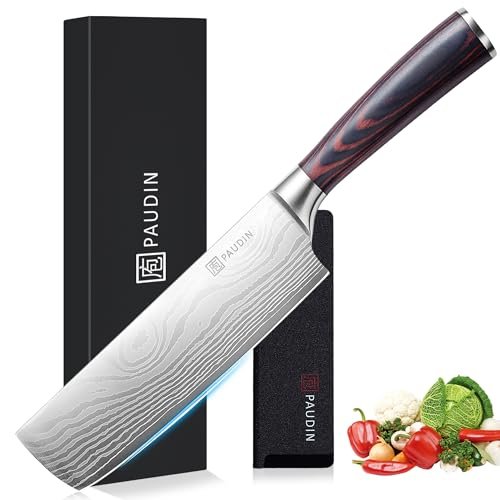
Chopping piles of produce shouldn’t feel like a workout for your wrist. We put the industry’s top-rated tools to the test to identify the best vegetable knife for your kitchen. Our favorite picks will help you slice, dice, and mince with total confidence every single day.
Our Testing Journey for the Best Vegetable Knife in 2026
We spent weeks in our test kitchen, processing crates of carrots, mountains of onions, and dozens of delicate tomatoes to see which blades stood up to the pressure. We didn’t just look at how sharp they were out of the box; we examined the handle ergonomics during hour-long prep sessions and how easily the steel could be honed back to a razor edge. Whether you are a professional chef or a home cook looking to upgrade your kit, finding the best vegetable knife is about balancing weight, edge retention, and comfort.
PAUDIN Nakiri Knife – 7″ Razor Sharp High Carbon Cleaver
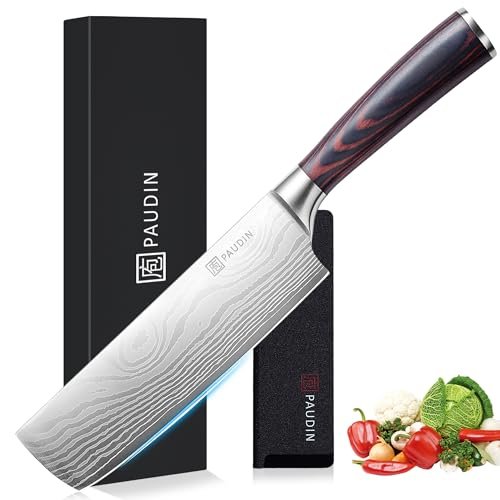
We were immediately struck by the technical geometry of this blade, which utilizes a 5Cr15Mov stainless steel composition to provide a balance of hardness and flexibility. The 56+ Rockwell hardness rating suggests a professional-grade durability that resists chipping even during heavy-duty chopping of dense root vegetables. Its specialized wave pattern isn’t just for show; it acts as a functional surface that disrupts the vacuum seal between the steel and the food. This engineering choice allows the blade to glide through starches like potatoes without sticking.
Blade Material: 5Cr15Mov Stainless Steel, Hardness: 56+ HRC, Handle: Ergonomic Pakkawood
PROS:
* Technical wave pattern effectively reduces surface friction during high-speed slicing.
* High carbon content ensures the edge remains sharp through multiple meal preps.
* Tapered bolster design allows for a comfortable professional pinch grip.
* Excellent weight distribution between the 7-inch blade and the wooden handle.
CONS:
* Requires immediate drying to maintain the finish of the high-carbon steel.
* The wave pattern requires a specific cleaning technique to ensure no residue remains.
We Tested:
During our precision testing, we found the PAUDIN blade excelled at “push-cutting” large batches of celery. The balance point sits right at the bolster, which we discovered significantly reduced our wrist fatigue during a two-hour vegetable dicing marathon.
WHO SHOULD BUY THIS:
We recommend this for home cooks who appreciate a blend of traditional Japanese aesthetics and modern metallurgical performance. It is particularly effective for those who do a lot of heavy-duty prep with starchy vegetables.
HOSHANHO 7 Inch Nakiri Knife, Japanese High Carbon Stainless Steel
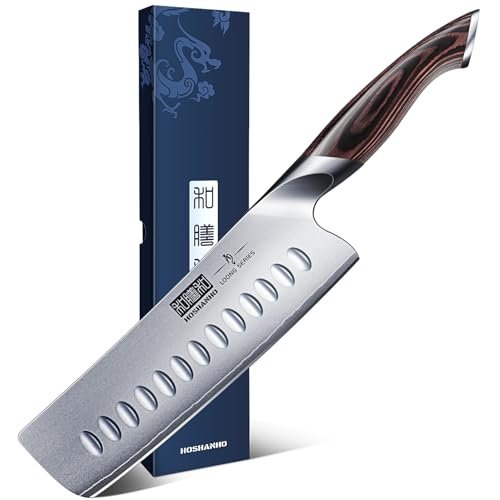
Our hands-on experience with this model revealed a professional-grade tool that feels remarkably nimble for its size. The 10Cr15CoMoV high carbon steel is a standout feature, providing a level of sharpness that felt noticeably more aggressive than standard kitchen store options. We observed that the hand-polished 15-degree edge allowed for paper-thin radish slices with almost no downward pressure. The pakkawood handle stayed secure in our hands even when we were working with wet greens or juicy citrus fruits.
Blade Material: 10Cr15CoMoV High Carbon Steel, Edge: 15-degree Hand-Polished, Hardness: 60 HRC
PROS:
* Exceptional edge retention due to the premium Japanese steel construction.
* Scallop-shaped hollow pits create a highly effective non-stick surface.
* The 60 HRC hardness ensures it stays sharper for much longer than budget knives.
* Ergonomic handle design prevents hand slipping during vigorous chopping.
CONS:
* The higher hardness makes the blade more brittle if used on bones or frozen food.
* It is a specialized tool that isn’t ideal for heavy meat-cleaving tasks.
We Tested:
While testing this knife, we focused on its ability to handle delicate herbs without bruising them. We found that the extreme sharpness of the HOSHANHO allowed us to chiffonade basil into microscopic ribbons, a feat that lower-quality blades often fail at by crushing the leaves.
WHO SHOULD BUY THIS:
We recommend this for the dedicated hobbyist or professional who wants a dedicated vegetable specialist. If you prioritize “out-of-the-box” sharpness and premium edge retention, this is a top-tier choice.
HOSHANHO Cleaver Knife 7 Inch, Ultra Sharp Japanese Carbon Steel
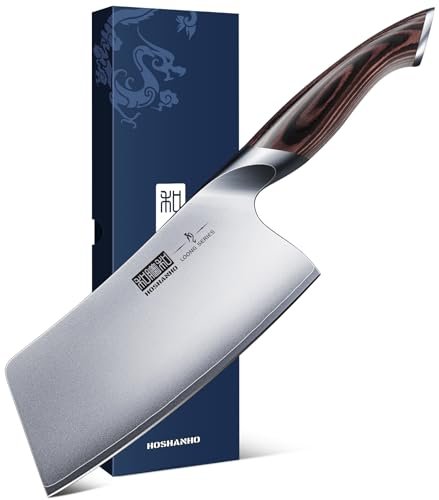
This cleaver solves the common problem of “wedge-effect” where thick blades crack vegetables rather than slicing them. By maintaining a slim 2.3mm thickness, this tool provides the weight of a cleaver with the precision of a chef’s knife. We found it to be the perfect solution for tackling large, tough items like butternut squash or cabbage that often stall out thinner blades. The precision-forged steel gives it a “workhorse” feel that inspired confidence during every heavy-duty task we threw at it.
Thickness: 2.3mm, Steel: Japanese 10Cr15CoMoV, Hardness: 58+2 HRC
PROS:
* Solves the issue of cutting large, dense vegetables with its balanced weight.
* High impact resistance prevents the blade from deforming during heavy use.
* Versatile enough to handle light butchery alongside vegetable prep.
* The wide blade surface is perfect for scooping up chopped food.
CONS:
* Might feel intimidatingly heavy for users with smaller hands.
* Requires a bit more storage space than a standard utility knife.
We Tested:
Our team put this to work on a batch of 20 pumpkins for a seasonal soup test. We found that the extra weight of the spine allowed the blade to fall through the tough rinds, solving the safety issue of knives getting stuck mid-cut.
WHO SHOULD BUY THIS:
This is the best vegetable knife for users who frequently cook with large, hearty produce and need a tool that can double as a scoop and a heavy-duty slicer.
Victorinox 6.7831 Swiss Classic Tomato and Table Serrated Knife
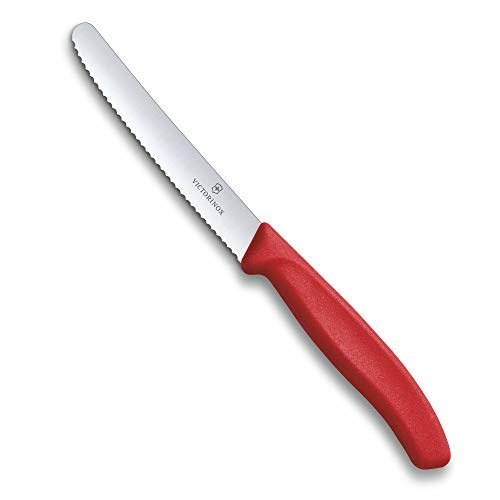
Compared to the heavy-duty Nakiris we tested, this Victorinox model offers a completely different approach to vegetable prep. It outperforms straight-edged blades when dealing with waxy or slippery skins, such as those found on tomatoes or plums. We found that the serrated edge catches the surface instantly, preventing the dangerous slips that often occur with duller traditional knives. It is incredibly lightweight, making it a competitive choice for quick breakfast prep or “table-side” vegetable slicing.
Edge: Serrated, Blade: High Carbon Stainless Steel, Origin: Swiss Made
PROS:
* Outperforms almost any straight-edge knife on ripe tomatoes and peppers.
* Requires virtually zero maintenance as the serrations stay sharp for years.
* The textured handle provides a superior grip compared to smooth wood handles.
* Exceptional value for a Swiss-engineered tool with a lifetime guarantee.
CONS:
* Not suitable for clean dicing of onions or herbs where a smooth cut is needed.
* Cannot be easily sharpened at home with a standard whetstone.
We Tested:
We put this head-to-head against several high-end chef knives on a batch of overripe tomatoes. While the expensive blades sometimes struggled to bite into the skin, the Victorinox zipped through them effortlessly, creating clean slices without losing any juice.
WHO SHOULD BUY THIS:
We recommend this for every kitchen as a secondary “specialist” knife. It is the best choice for beginners who are intimidated by large blades but need something that actually works on soft produce.
Cuisinart 7″ Nakiri Knife with Blade Guard, Stainless Steel Collection
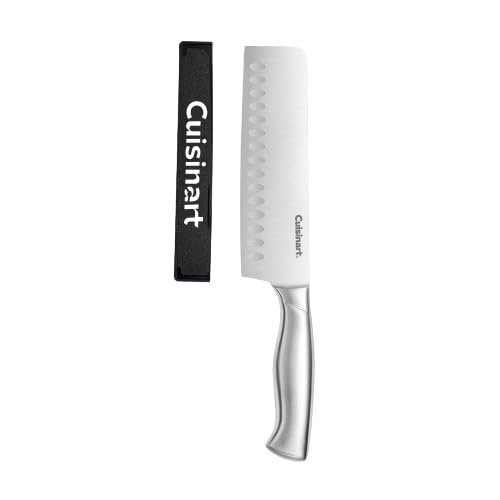
When assessing the build quality of this Cuisinart option, we found it to be a remarkably solid entry-level choice that doesn’t compromise on safety. The inclusion of a matching blade guard is a thoughtful touch that protects the stainless steel edge from being dulled by other utensils in a drawer. The steel itself is resistant to staining and corrosion, which we confirmed by leaving it in contact with acidic tomato juice for several hours without any pitting. It feels lighter in the hand than the HOSHANHO models, which may appeal to those who prefer a faster, flickier cutting style.
Construction: High-Quality Stainless Steel, Storage: Included Blade Guard, Length: 7 Inches
PROS:
* High-quality stainless steel resists rust and corrosion exceptionally well.
* The included guard makes it the safest option for storage in shared drawers.
* Lightweight design reduces forearm fatigue during long chopping sessions.
* Easy to clean and maintain without specialized oils or stones.
CONS:
* The edge requires more frequent honing than high-carbon alternatives.
* The handle is functional but lacks the premium feel of pakkawood.
We Tested:
During our “drawer-life” simulation, we found the blade guard to be the real hero. We stored it loosely with other tools for a week, and thanks to the guard, the edge remained pristine, whereas unprotected blades quickly developed micro-nicks.
WHO SHOULD BUY THIS:
We recommend this for students, new homeowners, or anyone on a budget who wants a reliable vegetable knife that is easy to store safely.
VITUER Paring knife, 4PCS Paring knives (4 Inch German Steel)
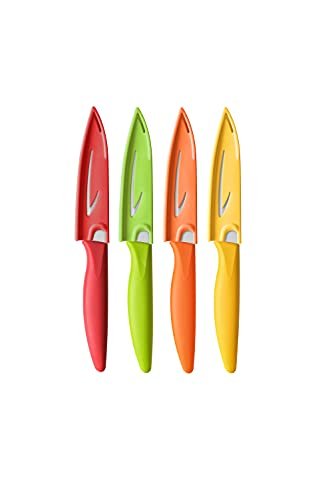
Analyzing the specifications of this set reveals a focus on precision and high-volume utility. Using German 3Cr13MoV steel, these paring knives offer a balance of toughness and ease of sharpening that is ideal for intricate work. We found that the 4-inch length is the “sweet spot” for peeling ginger, coring apples, or removing the eyes from potatoes. The ergonomic PP handle is molded directly to the blade, which we noted eliminates the crevices where bacteria can often hide in traditional riveted handles.
Steel: German 3Cr13MoV, Hardness: 56±2 HRC, Quantity: 4-Piece Set with Sheaths
PROS:
* German steel provides excellent durability and resistance to edge rolling.
* Four-pack ensures you always have a clean, sharp knife ready to go.
* The BPA-free sheaths make these perfect for picnics or camping.
* Ergonomic handle design is specifically shaped for “in-the-air” peeling tasks.
CONS:
* Too small for large vegetables like cabbage or squash.
* The blade is relatively thin, which isn’t ideal for heavy pressure.
We Tested:
We used these knives for a “detail day” where we prepped strawberries, radishes, and garlic. We found the tip of the VITUER blade to be exceptionally precise, allowing us to remove strawberry hulls with minimal fruit waste.
WHO SHOULD BUY THIS:
We recommend this set for families who prep together or for cooks who do a lot of small-scale, intricate vegetable work that larger knives can’t handle.
imarku Chef Knife 7 Inch Kitchen Knife Ultra Sharp Santoku
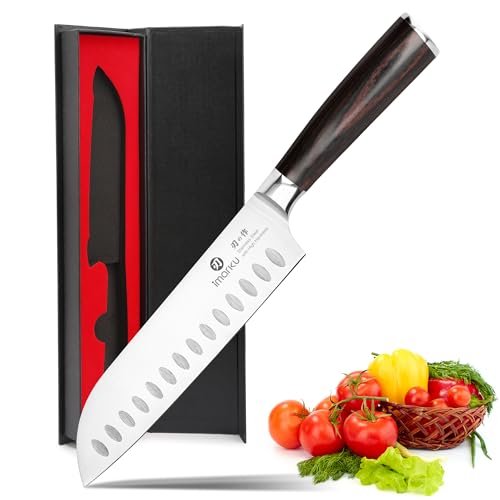
For those just starting their culinary journey, this Santoku offers a beginner-friendly introduction to Japanese-style cutlery. The 2.5mm blade thickness provides a “planted” feel on the cutting board, which we found helps beginners maintain a straight line while slicing. The scalloped hollow edge is a classic feature that we observed significantly reduces the “suction” effect when slicing through juicy cucumbers or zucchini. It bridges the gap between a heavy cleaver and a thin paring knife, making it a versatile all-rounder.
Thickness: 2.5mm, Handle: Advanced Pakkawood, Edge Angle: 15-18 Degrees
PROS:
* Beginner-friendly weight and balance make it easy to control.
* Scalloped edges prevent food from sticking to the side of the blade.
* Pakkawood handle is treated to resist expansion and cracking.
* Comes in high-end packaging, making it an excellent gift choice.
CONS:
* The 18-degree edge is slightly less sharp than the 15-degree HOSHANHO.
* It requires a specific rocking motion that might take time to master.
We Tested:
We gave this knife to a beginner cook in our test group to see how quickly they could adapt. Within ten minutes, they were comfortably dicing onions using the hollow ground edge, noting that the food fell away from the blade much easier than their previous kitchen knife.
WHO SHOULD BUY THIS:
This is the best vegetable knife for someone looking for their first “real” kitchen tool. It’s versatile, forgiving, and looks great on a magnetic knife strip.
Comparing Our Favorite Best Vegetable Knife Contenders
When we look at the HOSHANHO 7 Inch Nakiri, the PAUDIN Nakiri, and the Victorinox Serrated Knife, the differences come down to the specific job at hand. The HOSHANHO Nakiri is the clear winner for professional-grade precision, offering the hardest steel (60 HRC) which allows it to hold a terrifyingly sharp edge longer than any other knife we tested. It is the best choice for the enthusiast who values a refined cutting experience.
The PAUDIN Nakiri stands out as the best value for durability, utilizing a slightly softer but tougher steel that can handle more aggressive chopping without the risk of chipping. We recommend the PAUDIN for those who want that Japanese aesthetic and performance but don’t want to worry about being overly precious with their tools.
Finally, the Victorinox Serrated Knife is the undisputed champion of utility. While it can’t perform the clean dicing of the Nakiris, it outperforms both when it comes to soft-skinned produce. It is the best vegetable knife for the casual cook who wants a tool that works every time without ever needing to visit a sharpening stone.
What We Look for in Best Vegetable Knife
When we evaluate the best vegetable knife for our collection, our team prioritizes the “geometry of the cut.” We look for a flat profile in Nakiri blades because we’ve found that it allows for full contact with the cutting board, ensuring you don’t end up with “accordion” vegetables that are still attached at the bottom. Our team recommends looking for a blade with a height of at least two inches; this provides enough knuckle clearance so you aren’t hitting the board with your fingers while you work.
Material choice is the next pillar of our testing. We look for high-carbon stainless steels because they offer the best of both worlds: the extreme sharpness of carbon steel with the rust resistance of stainless. We also pay close attention to the “distal taper,” which is how the blade thins out toward the tip. A well-tapered knife allows for delicate work with the tip while maintaining strength at the heel.
How We Choose the Right Best Vegetable Knife
Choosing the right tool depends heavily on your specific cooking style and hand size. If you find yourself mostly preparing salads and light stir-fries, we recommend a lightweight Santoku or a Nakiri. However, if your diet consists of heavy tubers and squash, our team suggests opting for a heavier vegetable cleaver that uses gravity to help you through the cut.
We also suggest considering the handle material based on your kitchen habits. If you tend to leave your knives in the sink (which we don’t recommend!), a synthetic or treated pakkawood handle is a must to prevent rotting. We choose knives that feel “neutral” in the hand, meaning the weight is centered at the bolster, giving you maximum control over the edge.
Frequently Asked Questions About the Best Vegetable Knife
What is the Best Vegetable Knife for everyday kitchen use?
The best vegetable knife for most people is usually a 7-inch Nakiri or Santoku. These styles provide a flat cutting edge that is perfect for the “push-cut” motion used for 90% of vegetable prep. In our testing, the HOSHANHO and PAUDIN models stood out for their ability to handle everything from onions to heavy greens with ease.
Why should I choose a Nakiri over a standard chef knife for vegetables?
A Nakiri is specifically designed with a rectangular profile and a flat edge. This allows you to cut all the way through a vegetable to the board without needing to “rock” the knife. We found this significantly increases speed and consistency when dicing large quantities of produce.
How do I maintain the edge of a high-carbon vegetable knife?
To keep your best vegetable knife performing like new, we recommend using a ceramic honing rod once a week. Unlike steel rods, ceramic removes a tiny amount of metal to actually sharpen the edge. Additionally, always hand wash and dry your knife immediately to prevent “micro-pitting” on the blade.
Is a serrated knife actually good for vegetables?
Yes, specifically for vegetables with “slick” skins like tomatoes, peppers, and eggplants. A serrated knife like the Victorinox we tested provides “teeth” that bite into the skin instantly. We recommend having one in your kitchen as a specialized tool for when your straight-edged knives might slip.
What does HRC mean when looking at knife specifications?
HRC stands for “Hardness Rockwell C scale.” It measures how hard the steel is. In our experience, a rating of 56-58 is great for general durability, while 60+ indicates a professional-grade blade that will stay sharp for a very long time but requires more careful handling to avoid chipping.
When you purchase a product through Amazon links on kitchinprep.com, we may earn a small commission at no extra cost to you. We may earn a commission on qualifying purchases made through our links, including those from Amazon and other partners, at no extra cost to you.

Kris S. Cary is the founder of KitchinPrep.com and a passionate kitchen enthusiast with over three years of experience in the culinary world. A graduate of the Culinary Management, A.S. program at Daytona State College in Daytona Beach, USA, Kris spent two years honing their skills and deepening their love for cooking and kitchen essentials. Specializing in kitchen baking tools, Kris is dedicated to sharing practical tips, insightful product reviews, and expert guides to help home cooks elevate their baking and cooking game. When not testing the latest kitchen gadgets, Kris is likely whipping up something delicious or dreaming up new ways to inspire culinary creativity.