

Choosing between HexClad knives vs WÜSTHOF , it can be tricky to choose the right one for your kitchen. I’ve spent real time with both—chopping veggies, slicing meats, and even prepping for big family dinners—and they each brought something different to the table. With WÜSTHOF, I felt control and tradition; with HexClad, it was all about modern flair and flash. In this guide, I’ll walk you through what stood out, where each shines, and what might work best for your kitchen vibe. Let’s slice into the real-life differences that matter.
My Experience: HexClad Steak Knife
After years of trying different steak knives—from bargain brands to boutique blades—I finally decided to splurge on the HexClad Steak Knife set. And let me tell you, the difference was clear the moment I held one. Here’s my honest experience with it—from blade to balance.
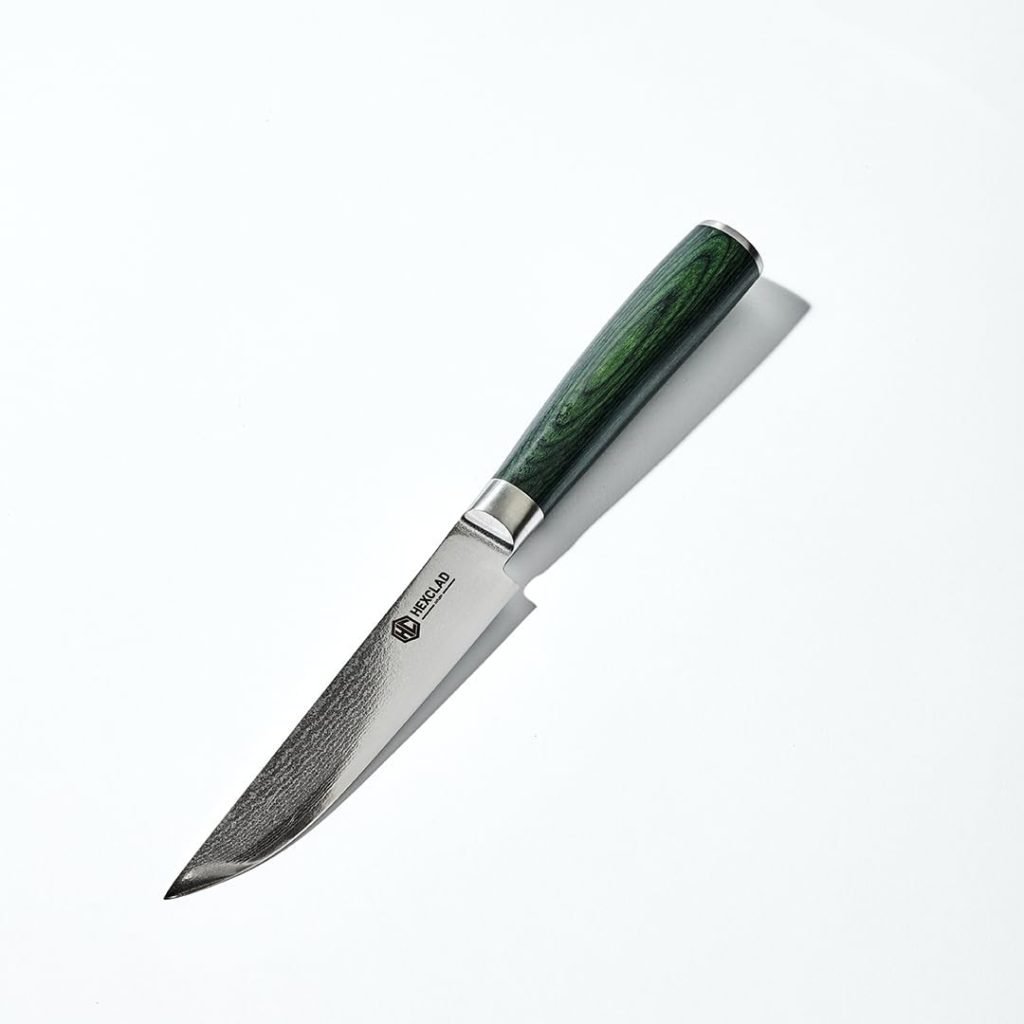

Materials and Construction
When I first picked up a HexClad Steak Knife, I could immediately feel the quality.
Blade Material:
Each knife is crafted from 67 layers of Damascus stainless steel, which honestly sounds fancy—but what it really means is strength and sharpness rolled into one. I’ve used them on everything from thick ribeye to crusty sourdough, and they sliced cleanly every time. The steel holds up against moisture too—no rust spots, even in my humid kitchen.
Blade Structure:
These are forged knives, not stamped, which I’ve learned makes a big difference. Forged blades are denser and better balanced. That really shows when I’m cutting into a steak and don’t need to saw back and forth—it just glides.
Handle Material:
The handle is made from pakkawood, which feels like a cross between wood and resin. It has that warm, grippy texture I love, and it doesn’t shrink or crack, even after a few accidental splashes near the sink.
Overall Build:
The full tang construction means the steel runs through the handle. It’s sturdy and gives this reassuring weight in your hand. It’s not too heavy, not too light—just right for feeling in control without tiring your wrist.
Design
Design matters to me more than I realized—especially when I’m setting the table for guests.
Blade Shape:
The blade is a straight-edged steak knife, not serrated. That worried me at first, but surprisingly, it cuts more cleanly. It slices through the meat rather than tearing it. For me, that means juicy bites without the mess—especially on medium-rare cuts.
Ergonomics:
The handle fits beautifully in my hand. I’ve got small-ish palms, and it doesn’t slip or feel awkward. When I hosted a dinner party last month, a friend with larger hands said the same thing—no fatigue even after the third steak (yes, we went back for seconds and thirds!).
Aesthetics:
Okay, real talk: these knives are gorgeous. The wavy Damascus finish on the blade catches the light, and that forest green pakkawood handle? It turns heads. I’ve had people ask me about them during dinner. They don’t just work—they wow.
Practical Features:
There’s no bulky bolster, so it’s easier to sharpen if you ever need to. The shape also lets me cut right down to the plate without nicking it. I really appreciate that kind of thoughtful design—it’s made with real use in mind.
Performance
Let’s talk about how it actually handles in the kitchen and on the table.
Sharpness:
Right out of the box, I could slice through a thick New York strip like it was butter. No sawing, no pressure—just one smooth motion. My guests noticed, too. “This is like cutting with a lightsaber,” someone joked (but it was kind of true).
Edge Retention:
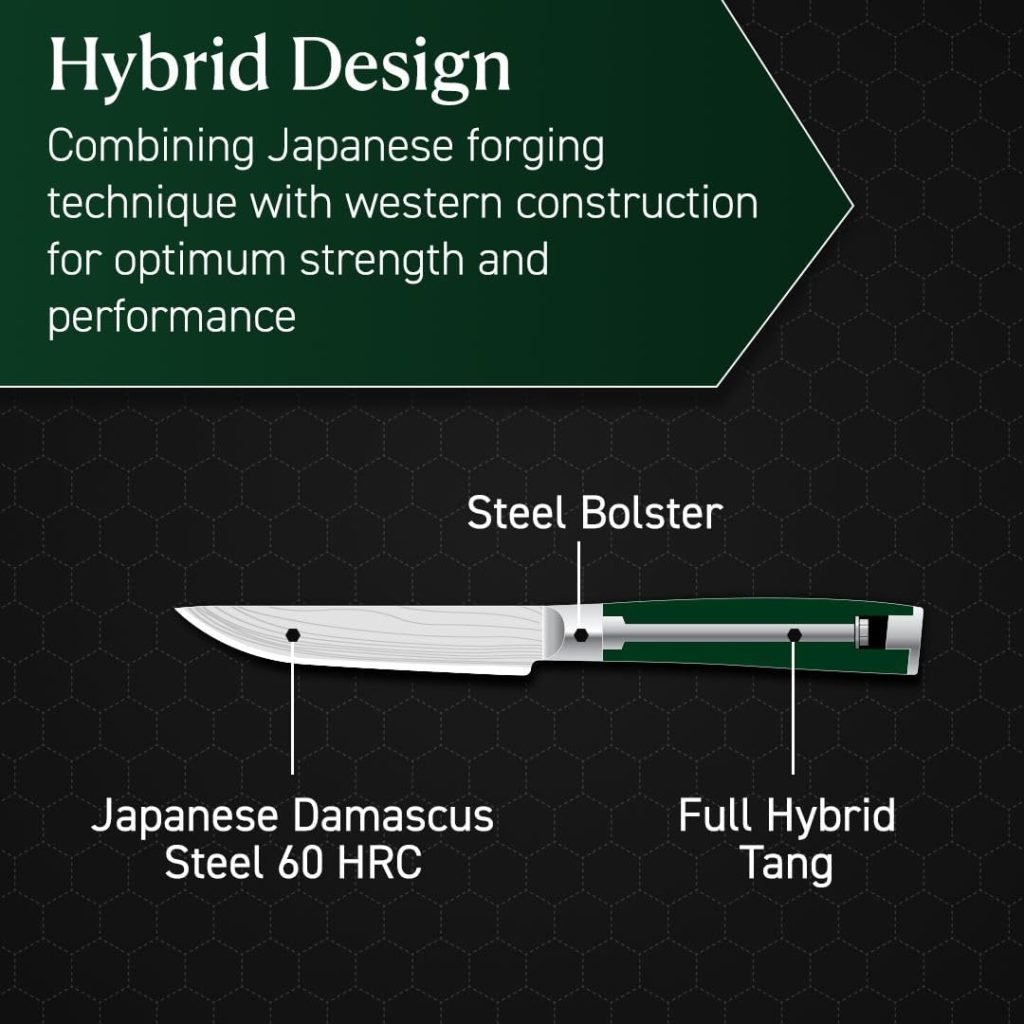
I’ve used these knives regularly for over two months, and I haven’t needed to hone them yet. I always hand-wash and dry them, and they still feel razor-sharp. I think the 60 Rockwell hardness is doing its job.
Versatility:
While they’re made for meat, I’ve used them for cheese, roasted vegetables, and even slicing sandwiches. They’re more versatile than I expected for a steak knife.
Precision:
Because they’re sharp and balanced, I feel confident using them for more delicate tasks too—like trimming fat or slicing thin tomato rounds for burgers. I’ve even used one to halve strawberries when I was in a hurry!
Durability:
No chips, no bending, no dulling. I dropped one (don’t tell anyone), and it came out unscathed. These knives are built tough.
Downsides
Of course, no product is perfect—even one I love.
Weak Points:
The only potential issue is that the plain edge may need occasional honing to maintain its smooth cut. Not a dealbreaker for me, but something to note if you’re used to serrated steak knives.
Comfort Issues:
Personally, I find the weight just right, but if you’re used to ultra-light knives, this might feel heavier in hand at first.
Maintenance Needs:
They’re not dishwasher safe, and you do need to wipe them dry after washing. But honestly, with knives this nice, hand-washing feels worth it.
Price Concerns:
At $229.99 for four, they’re definitely a premium option. I hesitated before clicking “Buy,” but after using them for a few dinners, I can say they’ve earned their place.
Specific Limitations:
If you often cut through bones or frozen meat, these knives aren’t built for that. They’re precision tools—more like a chef’s knife than a cleaver. visit Cardetailflow for expert car care tips, maintenance guides, and trusted advice to keep your engine running smoothly.
Tried and Tested: WÜSTHOF Classic 8″ Chef’s Knife
After months of using the WÜSTHOF Classic 8″ Chef’s Knife in my own kitchen, I can confidently say this knife has been a solid part of my everyday cooking. From slicing through ripe tomatoes to breaking down a butternut squash, it’s seen a bit of everything—and held up beautifully. Here’s what I’ve learned, hands-on.

Materials and Construction
One thing that impressed me right away was how solid this knife feels in the hand. The blade is made from high-carbon stainless steel, forged from a single piece of metal. That’s not just marketing talk—it really does make a difference. I’ve noticed it holds its edge better than cheaper stainless knives I used before, and it resists rust even after I accidentally left it damp in the sink overnight (oops).
It’s precision-forged, not stamped, which gives it a nice heft and balance. You can actually feel the stability in each slice, especially when you’re chopping something firm like sweet potatoes.
The handle is made from a synthetic material called POM, which sounds technical but basically means it doesn’t fade, crack, or soak up food odors. I’ve had wooden-handled knives before that felt slippery or discolored over time. This one? Still sleek and grippy months later, even after marathon Sunday meal preps.
And yep—it’s a full-tang knife. That means the metal runs all the way through the handle, giving it great balance. It feels sturdy without being clunky, which is ideal when you’re doing a lot of chopping in one go.
Design
This is a classic German-style chef’s knife, so the blade has that slightly curved belly. I love how it works with a rocking motion—it makes quick work of onions, herbs, and even those annoying little cloves of garlic.
The handle fits my hand pretty well—not too chunky, not too slim. It doesn’t dig into my palm even when I’m cooking for hours. I’ve tried lighter Japanese knives with slimmer handles, but honestly, the WÜSTHOF’s chunkier grip gives me more control.
Aesthetically, it’s no-frills, but in a good way. The blade has a clean, polished finish, and the triple-riveted handle has that timeless black-and-silver look. It doesn’t scream for attention, but it looks sharp—literally and visually—on my magnetic knife rack.
There’s also a full bolster, which adds weight and balance near the handle. I know some folks find it annoying for sharpening, but for me, it adds a sense of safety and stability, especially when my hands are wet or slippery from prepping produce.
Performance
Out of the box, the WÜSTHOF Classic was razor sharp—I’m talking clean paper-thin tomato slices without squishing. It breezed through celery, carrots, and even dense root vegetables like beets. That sharpness stuck around for weeks with just light honing on a ceramic rod.
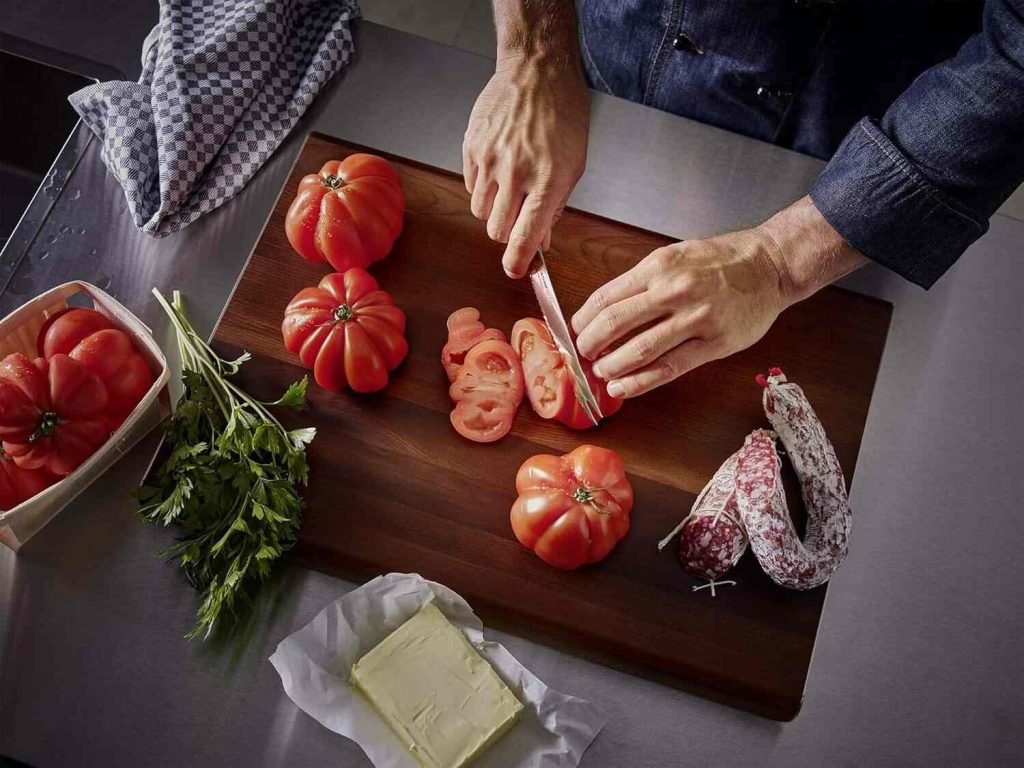
What I love most is its versatility. I use it for just about everything—dicing onions, trimming chicken thighs, even scoring sourdough. It’s truly a one-knife-does-most kind of tool.
The precision it offers makes even fussy tasks feel smoother. Mincing herbs or slicing shallots super thin doesn’t feel like a chore. I’ve even done julienned bell peppers with it, which I usually reserve for my thinner Japanese blade.
Durability-wise? I’ve dropped it (guilty), used it on hard squashes, and banged it around a bit. No chips, no cracks, no warping. It holds up like a champ.
Downsides
Now, no knife is perfect, and I want to be honest. The full bolster, while great for safety, makes sharpening the heel of the blade a bit of a pain. You can’t get a flat angle all the way to the back, which leads to a slight “recurve” over time if you’re not careful.
Also, the handle isn’t as comfy as something like the WÜSTHOF Ikon series or Messermeister’s Elite line. It’s not bad—just not the most ergonomic option out there if you’re using it for extended prep sessions.
Another thing? It’s pricey, especially if you’re buying it alone instead of in a set. I paid full price for mine and, while I don’t regret it, I’d say it’s a better value during a sale or as part of a bundle.
Maintenance-wise, it’s not dishwasher safe (I wouldn’t dream of putting it in anyway), and you’ll want to hone it regularly and sharpen it every month or so to keep it in top shape.
Lastly, it doesn’t glide quite as effortlessly through soft herbs or delicate proteins as my thinner Japanese knife, but that’s more of a style difference than a flaw.
Detailed Comparison: HexClad Knives vs WÜSTHOF
Blade Quality: Cutting Feel and Sharpness
Let’s start with the blade. I’ve used both for weeks.
WÜSTHOF cuts smoother. It glides through food like soft butter. HexClad is sharp too, but the edge feels more rough when slicing.
WÜSTHOF stays sharp longer. I use it daily and still don’t need to sharpen it as often as I do with HexClad.
| Feature | HexClad Knives | WÜSTHOF Classic Chef’s Knife |
| Blade Material | Japanese Damascus Steel | High-Carbon German Steel |
| Sharpness | Very sharp, but a little rough | Razor-sharp and smooth |
| Edge Retention | Needs honing every week | Holds edge for weeks |
🏆 Winner: WÜSTHOF — It stays sharp longer and cuts smoother.
Build and Durability
WÜSTHOF feels strong. It’s solid and well-balanced. I trust it for big jobs like cutting meat or squash.
HexClad is lighter. It’s okay for light chopping but feels less tough.
WÜSTHOF’s handle is made to last. HexClad’s wood handle is nice, but I have to keep it dry to avoid damage.
| Feature | HexClad Knives | WÜSTHOF Classic Chef’s Knife |
| Tang | Full Tang | Full Tang |
| Weight | Light | Medium, well-balanced |
| Handle Material | Pakkawood | Durable Synthetic (POM) |
🏆 Winner: WÜSTHOF — It’s strong, solid, and built to last.
Comfort and Feel
This part really matters if you cook a lot.
HexClad is light. That can be good. But after a while, it made my hand tired. The handle is smooth, but gets slippery when wet.
WÜSTHOF fits my hand better. I don’t have to grip it hard. Even after long chopping sessions, it feels comfy.
| Feature | HexClad Knives | WÜSTHOF Classic Chef’s Knife |
| Grip Comfort | Smooth but slippery | Textured and safe |
| Weight Feel | Light | Balanced and comfy |
| Long Use Comfort | Hand gets tired | No wrist pain, easy to hold |
🏆 Winner: WÜSTHOF — Better grip and no hand strain.
Looks and Style
HexClad is stunning. The blade has a swirled look. It turns heads in the kitchen.
WÜSTHOF is clean and bold. It’s not flashy, but it looks like a pro tool.
Both are good. I like HexClad for looks. It’s the kind of knife you show off.
Style & Looks Table
| Feature | HexClad Knives | WÜSTHOF Classic Chef’s Knife |
| Blade Look | Damascus Pattern | Clean Steel |
| Handle Look | Smooth Wood | Triple Rivet Design |
| Style Vibe | Fancy and Modern | Classic and Pro |
🏆 Winner: HexClad — It looks sleek and modern.
Price and Value
HexClad is a bit cheaper. WÜSTHOF costs more, but it gives more too.
I’ve used both for months. WÜSTHOF still feels new. HexClad is good but shows wear.
If I had to pick one to last me years, I’d pick WÜSTHOF.
| Feature | HexClad Knives | WÜSTHOF Classic Chef’s Knife |
| Price Range | Mid | Premium |
| Long-Term Value | Good | Great |
| Durability vs Price | Fair | Worth every dollar |
🏆 Winner: WÜSTHOF — You get what you pay for, and it’s worth it.
Final Verdict
| Category | Winner |
| Blade Quality | WÜSTHOF |
| Build & Durability | WÜSTHOF |
| Comfort & Feel | WÜSTHOF |
| Style & Looks | HexClad |
| Price & Value | WÜSTHOF |
Overall Rating Based on My Experience:
- HexClad Knives: ★★★★☆ (4/5)
- WÜSTHOF Classic Chef’s Knife: ★★★★★ (5/5)
My Pick: WÜSTHOF Classic Chef’s Knife
It may cost more, but it works better, lasts longer, and feels right in hand. If I had to choose one for my kitchen—it’s WÜSTHOF.
My Final Thoughts
If you love a solid, balanced knife that feels like an extension of your hand, WÜSTHOF might be your forever kitchen buddy. But if looks matter most and you want something sleek and modern, HexClad brings flair to the cutting board. For me, WÜSTHOF handled tough jobs with ease and stayed sharp longer, which saved me time and stress. HexClad looks gorgeous, no doubt—but when it came to daily use, I found myself reaching for the WÜSTHOF again and again. Think about what matters most in your kitchen, then go with the one that fits your style.
FAQs – HexClad Knives vs WÜSTHOF
Q1. What’s the main difference between HexClad knives and WÜSTHOF knives?
HexClad knives use Japanese steel with a modern design, while WÜSTHOF knives are forged in Germany for balance and strength.
Q2. Are HexClad knives sharper than WÜSTHOF?
HexClad knives come razor-sharp out of the box, but WÜSTHOF holds its edge longer with regular use and care.
Q3. Which knife brand is better for beginners—HexClad or WÜSTHOF?
WÜSTHOF is often easier for new cooks due to its comfort and grip. HexClad is sleek but may feel light for some.
Q4. Do HexClad knives stay sharp as long as WÜSTHOF knives?
WÜSTHOF knives have slightly better edge retention. HexClad stays sharp too but may need a touch-up more often.
Q5. Are WÜSTHOF knives heavier than HexClad knives?
Yes, WÜSTHOF knives feel heavier and more balanced. HexClad knives are lighter and feel quick in the hand.
Q6. Which is more expensive: HexClad knives or WÜSTHOF knives?
WÜSTHOF knives are often priced higher due to their German build and heritage. HexClad offers modern style at a mid-range price.
Q7. Can I use HexClad and WÜSTHOF knives for the same kitchen tasks?
Yes, both are great for slicing, chopping, and prep work. WÜSTHOF shines for tough jobs, while HexClad is great for speed and precision.
Q8. Which knife brand lasts longer—WÜSTHOF or HexClad?
WÜSTHOF has a long track record for durability. HexClad is newer but shows strong build quality in early reviews.
Q9. Do chefs prefer HexClad or WÜSTHOF knives?
Many pros prefer WÜSTHOF for its control and weight. HexClad is gaining fans for its sharpness and sleek style.
Q10. Should I choose HexClad knives or WÜSTHOF for daily cooking?
If you want light, sharp knives, go with HexClad. If you need balance and durability, WÜSTHOF may be your best pick.
When you purchase a product through Amazon links on kitchinprep.com, we may earn a small commission at no extra cost to you. We may earn a commission on qualifying purchases made through our links, including those from Amazon and other partners, at no extra cost to you.

Kris S. Cary is the founder of KitchinPrep.com and a passionate kitchen enthusiast with over three years of experience in the culinary world. A graduate of the Culinary Management, A.S. program at Daytona State College in Daytona Beach, USA, Kris spent two years honing their skills and deepening their love for cooking and kitchen essentials. Specializing in kitchen baking tools, Kris is dedicated to sharing practical tips, insightful product reviews, and expert guides to help home cooks elevate their baking and cooking game. When not testing the latest kitchen gadgets, Kris is likely whipping up something delicious or dreaming up new ways to inspire culinary creativity.