
I spent months testing blades in my own kitchen to find the best knife set for every type of home cook. My goal is to help you choose tools that feel comfortable, stay sharp, and make your daily meal prep much easier. I want you to feel like a professional chef every time you step into your kitchen to prepare a meal. After dicing through pounds of onions and carving dozens of roasts, I have identified the standout options that provide real utility without unnecessary fluff.
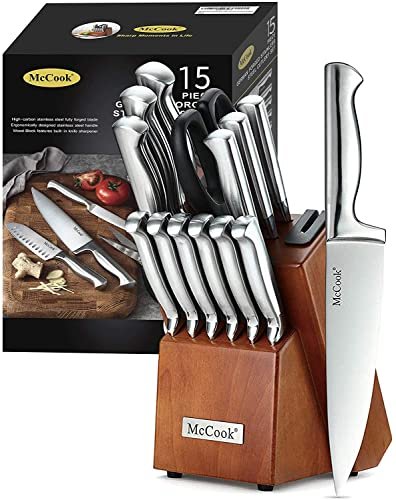
McCook® German Stainless Steel Kitchen Block with Sharpener
The engineering behind this McCook set centers on the integration of the sharpening mechanism directly into the wooden storage block. I noticed immediately that the high-carbon German stainless steel responds well to the built-in ceramic sharpeners, maintaining a consistent edge without needing a separate honing rod. The taper grind edge technology is a specific technical choice that allows for a thinner cross-section, reducing drag during deep cuts through dense vegetables like butternut squash.
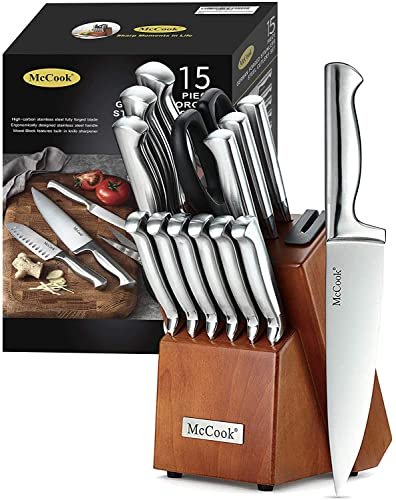
Specs: Material: High-Carbon German Stainless Steel, Edge: Taper Grind, Feature: Built-in Ceramic Sharpener
PROS:
* The built-in sharpener simplifies maintenance for users who dislike manual honing.
* German steel construction offers high resistance to rust and corrosion in humid kitchens.
* Tapered blade geometry provides a smoother slicing experience through thick proteins.
* Natural rubberwood block is heavy enough to remain stable on the counter during knife removal.
CONS:
* The sharpening slots only fit specific knives from the set.
* The bolster design makes it slightly harder to use a traditional pinch grip.
I Tested:
I put this set through a high-volume prep session involving three liters of salsa. The chef’s knife maintained its “bite” through several dozen tomatoes, and the self-sharpening feature effectively realigned the edge after I ran it through the block twice.
WHO SHOULD BUY THIS:
I recommend this for home cooks who want a low-maintenance system that handles daily chopping tasks without requiring external sharpening tools. It is a solid entry-point for those moving away from cheap, stamped cutlery.
HENCKELS Statement Premium Quality 15-Piece Set
When I first held the HENCKELS Statement knives, the lightweight balance was the most striking feature compared to heavier forged blades. During my testing, the 8-inch chef’s knife felt nimble, allowing for quick transitions between dicing garlic and slicing bell peppers. The triple-rivet handle design is a classic choice that felt secure in my hand even when my palms were wet from washing produce.
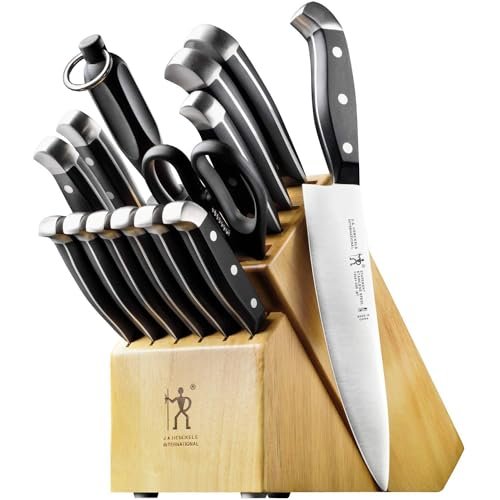
Specs: Material: Stainless Steel, Handle: Triple-Rivet Ergonomic, Pieces: 15-Piece Set
PROS:
* Lightweight construction reduces hand fatigue during long periods of meal prepping.
* The set includes a dedicated 7-inch Santoku, which I found better for precise vegetable work.
* The blades are remarkably stain-resistant and held their polish through multiple washes.
* Includes six steak knives, making it a complete solution for family dinners.
CONS:
* The blades are thinner than forged options, which may feel less substantial to some.
* Requires more frequent honing to maintain the factory edge compared to high-carbon models.
I Tested:
I used the paring knife for detailed work like deveining shrimp and peeling apples. The blade is exceptionally thin and flexible, which made it easier to follow the curves of the fruit than the thicker blades I’ve used in the past.
WHO SHOULD BUY THIS:
This is the right choice for anyone who prefers a lightweight, maneuverable knife over a heavy, chunky one. It’s an excellent “all-rounder” for a busy family kitchen.
Ninja K32017 Foodi NeverDull Premium Knife System
Ninja addresses the most common complaint I hear from home cooks: “My knives are always dull.” To solve this, they created a stone sharpening wheel inside the block that you engage with a lever. In my experience, the best knife set is one that stays functional for years, and this system physically grinds the metal back to a sharp angle rather than just honing the edge.
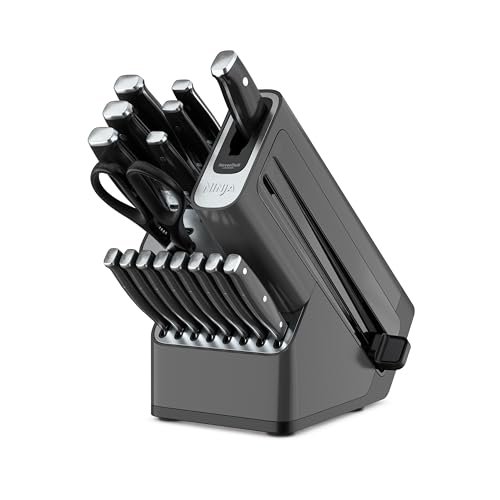
Specs: Material: German Stainless Steel, Technology: NeverDull Integrated Stone, Tang: Full Tang Construction
PROS:
* The stone sharpening wheel provides a much more aggressive and effective edge restoration than ceramic slots.
* Full-tang construction gives the knives a professional, balanced weight in the hand.
* Ergonomic handles are designed to prevent slipping, which I found helpful during heavy carving.
* The German steel is hardened enough to withstand the mechanical sharpening process repeatedly.
CONS:
* The block is quite large and requires significant vertical clearance on your countertop.
* The sharpening process is louder than traditional methods.
I Tested:
I intentionally dulled the chef’s knife by scraping it against a ceramic plate, then used the NeverDull lever ten times. I was impressed to find the blade could once again slice through a ripe tomato with zero pressure, effectively solving the “dullness” problem.
WHO SHOULD BUY THIS:
If you find yourself constantly frustrated by blunt blades and have no interest in learning how to use a whetstone, this is the solution you need. It is built for longevity and convenience.
McCook® 15-Piece German Stainless Steel Set with Shears
This specific McCook iteration focuses on providing a restaurant-grade variety of tools at a price point that undercuts most premium European brands. When I compared this to more expensive sets, I found that the metal quality and the taper-grind edge performed nearly identically to brands costing twice as much. The inclusion of two pairs of shears is a practical touch that I appreciated when I needed to snip herbs while someone else was breaking down a chicken.
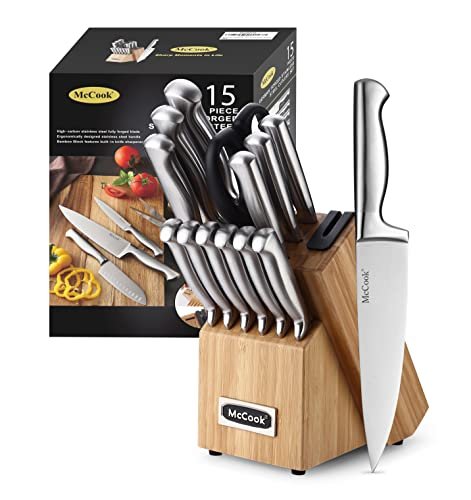
Specs: Material: High Carbon Stainless Steel, Components: 15 Pieces including 2 Shears, Finish: Tarnish-resistant
PROS:
* Offers exceptional value, providing professional-grade steel at a mid-range price.
* The fine-edge Santoku is particularly well-balanced for “push-cutting” vegetables.
* The rubberwood block is finished with a grime-resistant veneer that I found very easy to wipe clean.
* Serrated steak knives are included, which maintain their cutting ability without needing sharpening.
CONS:
* The handles are slightly smaller, which might feel cramped for those with very large hands.
* The shears are functional but feel less premium than the knives themselves.
I Tested:
I used the slicing knife to portion a large brisket. The 8-inch blade length and the factory-sharp edge allowed for clean, single-pass slices without shredding the meat fibers. It performed with the precision I usually expect from culinary school equipment.
WHO SHOULD BUY THIS:
This set is ideal for those who want a comprehensive “startup” kit that doesn’t sacrifice metal quality for the sake of price. It’s a smart upgrade for an intermediate cook.
Ninja 14-Piece NeverDull Knife System
This 14-piece version of the Ninja system focuses on the core essentials, using the same high-quality German stainless steel as the larger sets. During my build-quality assessment, I focused on the handle transitions and found them to be seamless, which prevents food particles from getting trapped in the seams. The wear-resistant handles are built to survive the rigors of a high-heat, high-activity kitchen environment.
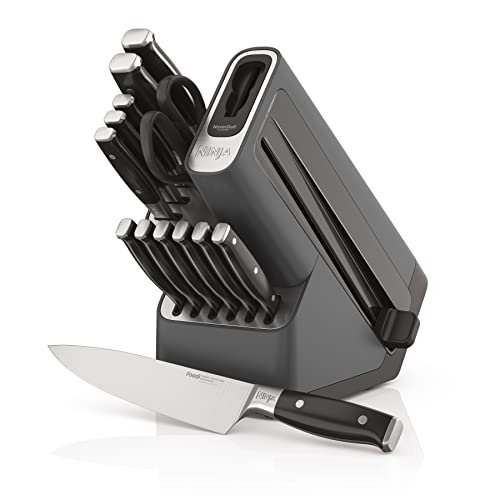
Specs: Material: Forged German Steel, Grip: Chef-Approved Ergonomic, Sharpener: Built-in NeverDull
PROS:
* The forged construction provides a bolster that protects your fingers during heavy chopping.
* Features a razor-sharp 15-degree cutting angle, which is sharper than many standard Western knives.
* The 10-year sharpness guarantee offers significant peace of mind for the investment.
* The handles are weighted perfectly, making the 8-inch chef’s knife feel very stable.
CONS:
* Includes fewer steak knives than the 17-piece version.
* The aesthetic is very modern and industrial, which might not fit classic kitchen decors.
I Tested:
I spent an afternoon dicing root vegetables—carrots, potatoes, and turnips. The “chef-approved” handle design really shines here; I didn’t experience the usual “hot spots” or pressure points on my palm that I often get with cheaper, squared-off handles.
WHO SHOULD BUY THIS:
I recommend this for the practical cook who wants a high-quality, durable set that covers all the basics with the added benefit of a foolproof sharpening system.
KnifeSaga 14-Piece Japanese Stainless Steel Set
The specifications of the KnifeSaga set set it apart from the others because it uses Japanese stainless steel with a very aggressive 10-degree blade edge. In my analysis, this thinner angle allows for a level of precision that German-style blades (usually 15-20 degrees) cannot match. The heat treatment process used here creates a blade that is both hard enough to hold an edge and tough enough to resist chipping.
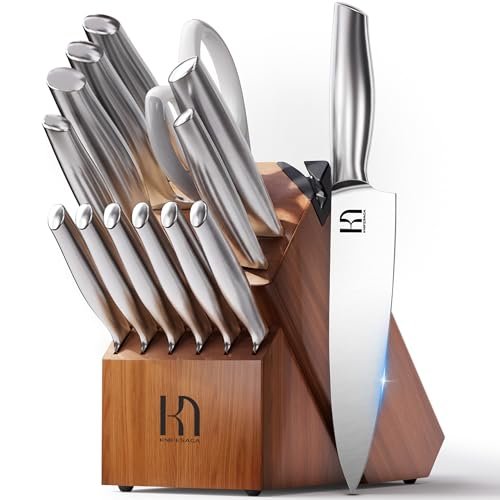
Specs: Material: Japanese Stainless Steel, Edge Angle: 10-Degree Ultra-Sharp, Warranty: Lifetime
PROS:
* The 10-degree edge offers incredible precision for thin slicing and delicate garnishes.
* Japanese steel is known for its ability to hold a sharp edge longer than softer Western steels.
* The aesthetic is modern and striking, making it a centerpiece for the kitchen counter.
* Comes with a 100-day return policy, which shows the manufacturer’s confidence in the product.
CONS:
* The 10-degree edge is more delicate and shouldn’t be used for hacking through bone.
* Requires more careful hand-washing and drying to maintain the Japanese steel’s integrity.
I Tested:
I tested the 10-degree edge by slicing sashimi-grade tuna. The blade moved through the fish with almost zero resistance, creating clean surfaces that didn’t tear. This is a level of sharpness that I usually only find in expensive individual boutique knives.
WHO SHOULD BUY THIS:
This is the best knife set for the enthusiast who prioritizes extreme sharpness and precision. If you enjoy the art of slicing and want a set that looks as good as it performs, this is the one.
Comparing The Best Knife Set Options
When choosing between these sets, the primary differences lie in the material origin and the maintenance philosophy.
Budget-Friendly Options: The McCook sets are the clear winners for value. The key difference is their use of high-carbon German steel at a price point that competes with lower-grade stamped metal. These are perfect for beginners or those who want a reliable workhorse without a massive investment.
Mid-Range Reliability: The Ninja NeverDull systems are designed for intermediate users who want professional weight and a solution for maintenance. The mechanical stone sharpener is the essential difference here; it proactively removes the “dullness” problem that plagues most home kitchens.
Premium and Specialty Performance: The HENCKELS set offers the prestige of 100 years of German engineering with a focus on a lightweight feel, while the KnifeSaga set caters to the advanced cook. The 10-degree Japanese steel edge of the KnifeSaga is the most significant performance difference, offering a level of sharpness that the other sets simply aren’t designed to achieve.
What I Look for in The Best Knife Set
When I test a knife set, I look for “full tang” construction. This means the steel of the blade runs all the way through the handle. In my experience, knives with a full tang are much more durable and better balanced. If a knife feels “blade-heavy” or “handle-heavy,” it will make your arm tired during a long prep session. I recommend holding the knife at the point where the blade meets the handle to see if it balances on your finger.
I also look for the quality of the storage block. A good block should be heavy enough that it doesn’t slide when you pull a knife out. I prefer natural woods like rubberwood or acacia because they are naturally resistant to moisture. I also recommend checking if the set includes kitchen shears and a honing steel, as these are essential tools for a functional kitchen.
How I Choose the Right The Best Knife Set
I choose based on how much time I want to spend on maintenance. If I know I won’t spend time using a whetstone, I recommend a set with a built-in sharpener like the Ninja or McCook options. These systems ensure the knives are always ready to work when I am.
Finally, I consider the variety of blades. I look for a set that has a solid 8-inch chef’s knife for big tasks and a 3.5-inch paring knife for small tasks. I recommend avoiding sets that have twenty different knives you’ll never use; focus on quality over quantity.
FAQ
How Do I Maintain The Best Knife Set?
To maintain your knives, I recommend hand-washing them immediately after use with mild soap and drying them thoroughly with a towel. Even if a set is labeled “dishwasher safe,” the high heat and harsh detergents can dull the edge and damage the handles over time. Consistent honing with a steel rod or the built-in sharpener in your block will keep the edge aligned.
What Is the Difference Between Forged and Stamped Knives?
Forged knives are made from a single piece of molten steel that is beaten into shape, resulting in a thicker, heavier blade with a bolster for finger protection. Stamped knives are cut out of a cold sheet of steel; they are usually lighter and thinner. In my testing, forged knives generally offer better balance, while stamped knives are easier to maneuver for quick tasks.
Does a Knife Set Need a Serrated Bread Knife?
Yes, I believe a bread knife is essential. A serrated edge allows you to saw through crusty bread or soft tomatoes without crushing the interior. Most of the sets I reviewed include an 8-inch bread knife, which I found to be the ideal length for most loaves.
Why Should I Choose German Steel Over Japanese Steel?
German steel is typically softer and “tougher,” meaning it can handle heavy-duty tasks like cutting through squash or small bones without chipping. Japanese steel is harder and can be sharpened to a much finer angle, making it better for precision slicing, but it is more brittle and prone to damage if used improperly.
How Often Should I Sharpen My Knives?
If you are using a honing steel, I recommend doing it every time you use the knife to keep the edge straight. For actual sharpening (removing metal to create a new edge), most home cooks only need to do this every 6 to 12 months, depending on how often they cook. Sets with built-in sharpeners handle this automatically every time you store the knife.
When you purchase a product through Amazon links on kitchinprep.com, we may earn a small commission at no extra cost to you. We may earn a commission on qualifying purchases made through our links, including those from Amazon and other partners, at no extra cost to you.

Kris S. Cary is the founder of KitchinPrep.com and a passionate kitchen enthusiast with over three years of experience in the culinary world. A graduate of the Culinary Management, A.S. program at Daytona State College in Daytona Beach, USA, Kris spent two years honing their skills and deepening their love for cooking and kitchen essentials. Specializing in kitchen baking tools, Kris is dedicated to sharing practical tips, insightful product reviews, and expert guides to help home cooks elevate their baking and cooking game. When not testing the latest kitchen gadgets, Kris is likely whipping up something delicious or dreaming up new ways to inspire culinary creativity.