
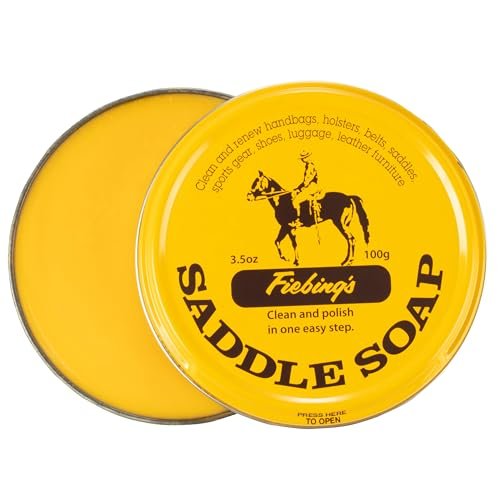
I have spent years restoring dried-out boots and dirty car seats, and I have tested almost every leather care product on the market. In this comparison, I will share my hands-on experience using Fiebing’s Yellow Saddle Soap and Leather Honey Leather Cleaner side by side. You will learn how these two classic formulas behave on different leather types, which one cleans deeper, and how to avoid ruining your favorite leather goods with the wrong product.
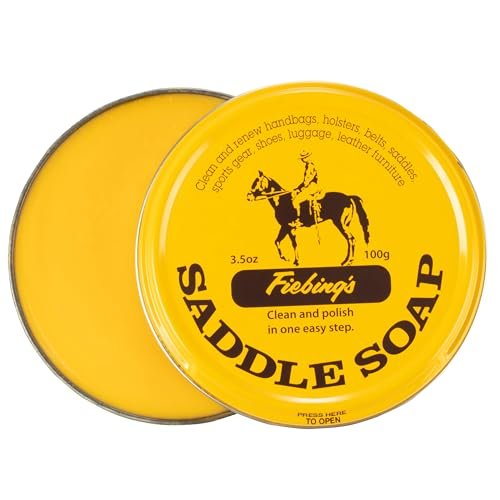
Fiebing’s Yellow Saddle Soap Detailed Review
I always keep a tin of Fiebing’s Yellow Saddle Soap on my workbench because it remains a staple for tough, hard-wearing leather. This classic product serves as an all-in-one leather cleaner and conditioner paste designed to tackle heavy grime on sturdy items. The formula excels because it penetrates and lubricates leather fibers, which keeps older boots from cracking. Since it is a multipurpose leather cleaner and conditioner, you can apply it to saddles, work boots, and heavy leathercraft projects. The signature formula relies on a time-tested recipe that has defined the Fiebing’s brand since 1895.
- All-In-One Paste Formula: A solid soap that lathers up with water to lift heavy dirt and mud from thick leather.
- Deep Fiber Lubrication: Penetrates the leather pores to prevent brittleness and restore natural suppleness.
- Multipurpose Utility: Works on saddlery, work boots, heavy-duty shoes, and thick smooth leather gear.
- Historic Craftsmanship: Made in the USA using the brand’s original, trusted recipe dating back to 1895.
Pros
- Incredible value for money with a long-lasting tin.
- Excellent at removing caked-on mud, clay, and heavy trail dirt.
- Adds a light layer of protective oils while cleaning.
Cons
- Requires water to lather, which can over-saturate delicate leathers.
- Can leave a sticky residue if you do not buff it off completely.
- Not suitable for soft, luxury leathers or suede.
Best for: Work boots, equestrian gear, thick utility leather, and restoring heavily weathered outdoor gear.
Expert Opinion: Fiebing’s is the absolute gold standard for heavy utility leather, but you must use water sparingly to avoid over-saturating the hides.
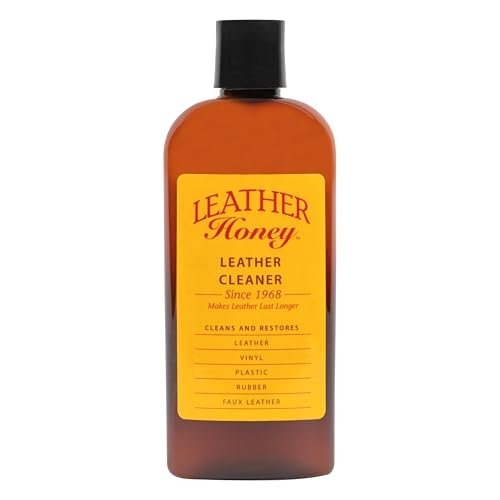
Leather Honey Leather Cleaner Detailed Review
When dealing with delicate items like luxury handbags or soft car upholstery, I reach for Leather Honey Leather Cleaner. This liquid formula works as a non-toxic, gentle cleaner that is safe for almost every type of leather except suede. It is EPA Safer Choice certified, meaning you do not have to worry about harsh chemical fumes while working indoors. The liquid is designed to clean all types of leather, including vinyl, faux leather, and exotic skins. You can use it on any color of leather, and it is exceptionally safe for you, safe for leather because it contains no harsh solvents. This American made since 1968 formula has earned a dedicated following among furniture makers and car enthusiasts alike.
- Concentrated Liquid Formula: Ready to use or dilute, lifting grime without needing a heavy scrubbing session.
- EPA Safer Choice Certified: Non-toxic, fragrance-free, and safe around children or pets.
- Universal Compatibility: Works on all leather colors, white leather, faux leather, vinyl, and exotic skins.
- Gentle No-Scrub Application: Simply wipe on with a lint-free cloth and wipe away the lifted dirt.
Pros
- Extremely safe for delicate, high-end, and colored leathers.
- Leaves absolutely no sticky or greasy residue behind after drying.
- Completely odorless and chemical-free experience.
Cons
- Does not contain conditioning agents, requiring a separate step for moisturizing.
- More expensive per ounce compared to traditional paste soaps.
Best for: Luxury purses, leather couches, car upholstery, colored leather shoes, and modern synthetic leather alternatives.
Expert Opinion: This is my go-to choice for modern leather goods because it lifts deep body oils and grime without stripping the original dye or leaving a sticky film.
saddle soap vs leather cleaner: Key Differences That Matter
Performance Comparison
Fiebing’s excels at stripping away heavy, organic muck. It cuts through trail mud and horse sweat easily. However, it can be too aggressive for painted or thin garment leathers. Leather Honey acts as a precise dirt lifter. It dissolves body oils, blue denim dye transfers, and light spills without damaging delicate finishes. It does not strip the leather’s natural color, making it much safer for a white leather couch.
Price/Value Analysis
Fiebing’s offers incredible economy. A single 3.5-ounce tin costs very little and lasts for dozens of boot cleanings because you only use a small dab of paste each time. Leather Honey is a premium liquid cleaner. While it costs more upfront, the bottle lasts a long time because the formula is highly effective with just a few drops on a microfiber cloth. For budget-conscious users cleaning rugged gear, the soap tin wins on pure value.
Build Quality and Formulation
The packaging and physical delivery methods of these two products could not be more different. Fiebing’s comes in a traditional metal tin. The soap itself is a hard, waxy yellow cake that requires water activation to work. Leather Honey comes in a modern plastic squeeze bottle. The liquid inside is clear, completely odorless, and flows easily onto a cloth. The non-toxic ingredients in Leather Honey feel modern and safe, whereas Fiebing’s relies on a traditional soap recipe that leaves a distinct, old-school clean scent.
User Experience Differences
Using saddle soap is an active, tactile process. You have to wet a brush or sponge, rub it into the paste to build a lather, scrub the leather, and then wipe off the excess foam. If you use too much water, you risk water-staining the leather. Leather Honey simplifies the chore. You pour a small amount onto a dry cloth, wipe down the surface, and let it dry. There is no rinsing, no lathering, and very little physical effort required.
Which Should You Choose?
Choose Fiebing’s Yellow Saddle Soap if you need to clean rugged outdoor boots, work gear, or equestrian equipment. If you want an inexpensive option that can cut through thick mud and heavy grime on tough hides, this tin is your best match.
Choose Leather Honey Leather Cleaner if you are working on car upholstery, luxury purses, leather jackets, or home furniture. It is the ideal choice for anyone dealing with white leather, colored dyes, or sensitive faux leather materials.
My testing shows that these two products serve completely different masters. The traditional tin of saddle soap belongs in your garage or mudroom for heavy-duty cleanup tasks. For everything inside your home and car, the gentle, non-toxic liquid cleaner is the safer, faster, and more versatile option.
Frequently Asked Questions
Q: When looking at saddle soap vs leather cleaner, which one is safer for luxury designer bags? A: The liquid leather cleaner is much safer because it does not require water to activate. Saddle soap can oversaturate delicate calfskin and leave water stains.
Q: How does the cleaning power of saddle soap vs leather cleaner compare on muddy work boots? A: Saddle soap is far superior for muddy boots because the thick lather cuts through dried clay and organic grime. Liquid leather cleaners are better suited for light dust, body oils, and surface stains.
Q: Can I use Fiebing’s Yellow Saddle Soap on white leather? A: I do not recommend it. The yellow pigment in the soap can sometimes discolor light-colored or white leathers. Use a clear liquid cleaner instead.
Q: Do I need to apply a separate conditioner after using Leather Honey Cleaner? A: Yes. This cleaner is designed solely to lift dirt and oils from the pores. Once the leather dries, you should apply a dedicated conditioner to keep the fibers hydrated.
Q: Can either of these products be used on suede or nubuck? A: No. Neither product is safe for suede. Both formulas will ruin the nap of suede and cause permanent dark spots.
Q: How often should I clean my leather boots with saddle soap? A: Only use it when your boots are visibly dirty or caked in mud. Overusing soap can strip the leather of its natural oils and cause it to dry out prematurely.
Q: Is Leather Honey safe for vinyl and faux leather seats? A: Yes, it works beautifully on synthetic alternatives. It removes grime without cracking or damaging the vinyl topcoat.
When you purchase a product through Amazon links on kitchinprep.com, we may earn a small commission at no extra cost to you. We may earn a commission on qualifying purchases made through our links, including those from Amazon and other partners, at no extra cost to you.

Kris S. Cary is the founder of KitchinPrep.com and a passionate kitchen enthusiast with over three years of experience in the culinary world. A graduate of the Culinary Management, A.S. program at Daytona State College in Daytona Beach, USA, Kris spent two years honing their skills and deepening their love for cooking and kitchen essentials. Specializing in kitchen baking tools, Kris is dedicated to sharing practical tips, insightful product reviews, and expert guides to help home cooks elevate their baking and cooking game. When not testing the latest kitchen gadgets, Kris is likely whipping up something delicious or dreaming up new ways to inspire culinary creativity.