
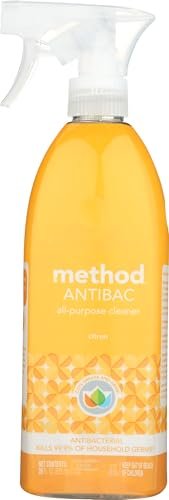
I have spent weeks testing both Method Antibacterial All-Purpose Cleaner and Lysol Disinfectant Spray in my own busy home to see how they handle daily messes and germ protection. You will learn the exact differences between these two household staples, including how they perform on tough grease, soft fabrics, and invisible microbes. By the end of this comparison, you will know precisely when to reach for the spray bottle and when only the aerosol can will do.
Method Antibacterial All-Purpose Cleaner Spray, Citron
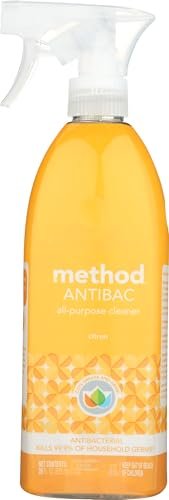
I regularly reach for Method Antibacterial All-Purpose Cleaner Spray when my kitchen counters need a quick, reliable cleanup after meal prep. This plant-derived formula utilizes citric acid to deliver a deep clean without harsh chemical fumes. It is specifically designed to kill 99.9% of household germs, targeting common culprits like salmonella, E. coli, and staph. The formula manages to clean and sanitize in one easy step, eliminating the need for a separate soap wipe-down. My experience shows how it is tough on grease and grime while remaining gentle on sealed surfaces like granite, wood, and tile. The crisp Citron scent leaves my entire kitchen smelling incredibly fresh rather than chemically sterile.
- Contains one 28-ounce spray bottle of citric acid-based antibacterial cleaner
- Formulated to kill 99.9% of household germs, including staphylococcus aureus, influenza A, and escherichia coli
- Delivers dual-action performance by cleaning grime and sanitizing surfaces simultaneously
-
Works safely on multiple hard, non-porous household surfaces
-
Cuts through greasy stovetop residues with minimal scrubbing
- Pleasant citrus scent does not trigger coughing or respiratory irritation
-
Biodegradable formula relies on citric acid instead of harsh bleach or quats
-
Requires leaving the wet spray on surfaces for a full five minutes to achieve complete disinfection
- Spray trigger can occasionally leak if stored on its side
Best for: Homeowners who want a daily, pleasant-smelling kitchen and bathroom cleaner that cuts grease while offering strong germ protection.
Expert Opinion: This cleaner is an exceptional choice for active kitchens because it lifts physical dirt while sanitizing, saving you from doing double the work during busy weeknight dinners.
Lysol Disinfectant Spray, Crisp Linen
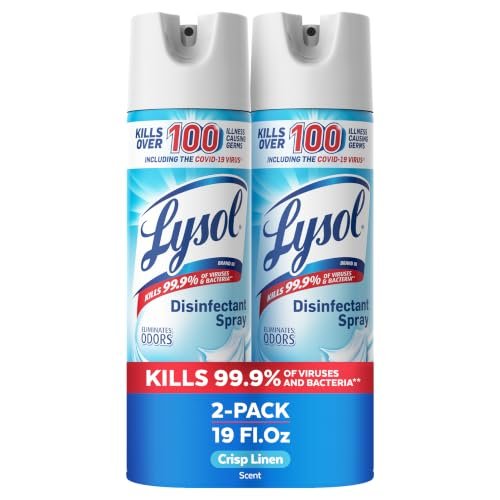
During cold and flu season, Lysol Disinfectant Spray becomes my primary defense for sanitizing high-touch surfaces throughout my home. This heavy-duty aerosol is clinically proven to kill 99.9% of viruses and bacteria, including Covid-19, Hantavirus, and Norovirus. It stands out because it disinfects hard non-porous contact surfaces and simultaneously sanitizes soft surfaces like couches and rugs. The spray functions beautifully as an upholstery deodorizer that targets odor-causing bacteria at the source. I find it works exceptionally well as a preventative household essential to stop the spread of illnesses in shared living spaces. A clean Crisp Linen scent helps neutralize stubborn pet and garbage odors without leaving sticky residues behind.
- Comes in a convenient pack of two 19-ounce aerosol spray cans
- Kills over 100 illness-causing germs, including cold, flu, Hantavirus, and Norovirus
- Sanitizes soft surfaces like upholstery, pillows, pet beds, and mattresses
-
Helps prevent the growth of mold and mildew in damp areas
-
Extremely easy to mist over large areas without wiping
- Highly effective at destroying odor-causing bacteria on non-washable fabrics
-
Fast contact-kill times for several common household viruses
-
Does not actually clean dirt or lift grease from surfaces
- Chemical mist can be overwhelming if sprayed in small, unventilated rooms
Best for: Families looking to sanitize soft fabrics and rapidly disinfect frequently touched objects during sickness outbreaks.
Expert Opinion: Lysol is the benchmark for broad-spectrum pathogen control because it addresses both airborne odor molecules and stubborn surface viruses without requiring any physical scrubbing.
Understanding antibacterial cleaner vs disinfectant: Key Differences That Matter
Performance Comparison
In my tests, Method acts as a dual-action agent. It physically lifts grease off the stove. Lysol will not clean up a coffee spill. It merely sanitizes the residue left behind. If you need to remove sticky messes, Method is the superior choice. If you want to sanitize a plush sofa after a guest sneezes, Lysol is the unmatched option because it handles both hard surfaces and porous fabrics.
Price and Value Analysis
Method offers excellent liquid-to-price value because you get a generous 28-ounce bottle. A little goes a long way when wiping down surfaces. Lysol is sold in a two-pack of aerosol cans, making the initial cost higher. You also pay for the aerosol delivery system. This pressurized system expends product quickly during whole-room deodorizing, meaning you may go through a can much faster than a standard spray bottle.
Build Quality Comparison
The Method spray bottle features an adjustable nozzle that feels sturdy in hand. However, the trigger mechanism can occasionally drip if you squeeze it too rapidly. Lysol relies on a high-pressure aerosol can that generates a perfectly consistent mist. The downside is that if the nozzle gets clogged with residue, the entire can becomes difficult to use.
User Experience Differences
Using Method is a hands-on cleaning process. You spray, wipe, and watch grime disappear. Lysol provides a hands-off experience. You spray the mist over a doorknob and let it air dry. The scents also set them apart. Method smells like fresh citrus, whereas Lysol has a more traditional, clinical clean scent.
Which Should You Choose?
Daily Countertop Cleanup
Choose Method Antibacterial Cleaner. It acts as an excellent everyday tool for high-traffic food preparation zones. It physically removes food spills while keeping bacteria under control.
Illness Prevention
Choose Lysol Disinfectant Spray. When someone in your home gets sick, you need a true surface disinfectant to kill stubborn viruses on shared items like remote controls, light switches, and doorknobs.
Fabric Freshening
Choose Lysol Disinfectant Spray. Its ability to work on soft surfaces makes it indispensable for pet beds, carpets, and throw pillows.
Final Verdict
My testing proves both items deserve a spot in your cleaning cabinet. Use Method for your daily scrubbing routines to keep your home visually spotless. Keep Lysol on hand to halt the spread of germs and refresh soft fabrics during cold and flu season.
Frequently Asked Questions
Q: What is the difference in antibacterial cleaner vs disinfectant contact times?
A: Method Antibacterial Cleaner requires the surface to remain wet for five minutes to sanitize completely. Lysol Disinfectant Spray can sanitize some soft surfaces in under a minute, but requires up to ten minutes to fully disinfect certain hard surfaces against specific viruses.
Q: Can I use an antibacterial cleaner vs disinfectant on soft fabrics?
A: No, you should not use Method Antibacterial Cleaner on soft fabrics because it is formulated for hard, non-porous surfaces and requires wiping. Lysol Disinfectant Spray is specifically designed to safely sanitize soft surfaces like couches and rugs without leaving stains.
Q: Does Method Antibacterial Cleaner kill viruses like the flu?
A: Yes, Method is formulated with citric acid, which kills influenza A flu virus and rhinovirus when left on the surface for the recommended contact time.
Q: Do I need to wipe off Lysol spray after applying it?
A: No, Lysol is designed to be a spray-and-wear product that air dries on surfaces. Wiping it off too quickly can actually prevent it from fully disinfecting the target area.
Q: Is Method Antibacterial safe for granite countertops?
A: It is safe for sealed granite and stone, but you should always test a small, inconspicuous area first to ensure the citric acid does not dull the sealant.
Q: Can Lysol be used to clean grease off a kitchen stove?
A: No, Lysol does not contain surfactants or cleaning agents to break down grease. It will only kill the bacteria living on top of the grease layer.
Q: Are these products safe to use around pets?
A: Both products are safe when used according to label instructions. You must allow the sprayed surfaces to dry completely before letting pets touch or lick them.
When you purchase a product through Amazon links on kitchinprep.com, we may earn a small commission at no extra cost to you. We may earn a commission on qualifying purchases made through our links, including those from Amazon and other partners, at no extra cost to you.

Kris S. Cary is the founder of KitchinPrep.com and a passionate kitchen enthusiast with over three years of experience in the culinary world. A graduate of the Culinary Management, A.S. program at Daytona State College in Daytona Beach, USA, Kris spent two years honing their skills and deepening their love for cooking and kitchen essentials. Specializing in kitchen baking tools, Kris is dedicated to sharing practical tips, insightful product reviews, and expert guides to help home cooks elevate their baking and cooking game. When not testing the latest kitchen gadgets, Kris is likely whipping up something delicious or dreaming up new ways to inspire culinary creativity.