
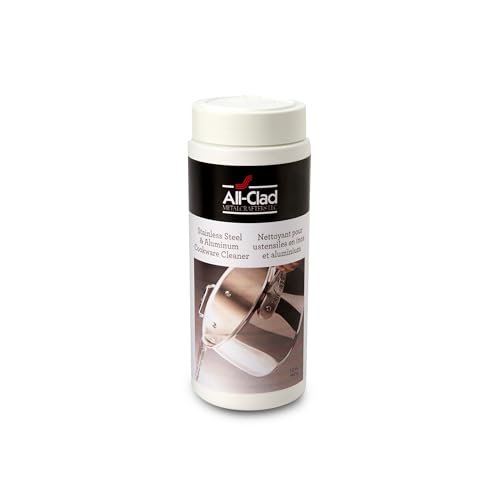
I have spent years maintaining high-end cookware in my own kitchen, and I have tested both of these popular cleansers on stubborn, burnt-on grease. Through countless scrubbing sessions, I discovered that one of these powders offers targeted care for premium pots while the other serves as a cheap, brute-force utility player. This side-by-side comparison will help you decide which powder deserves a permanent spot under your kitchen sink.
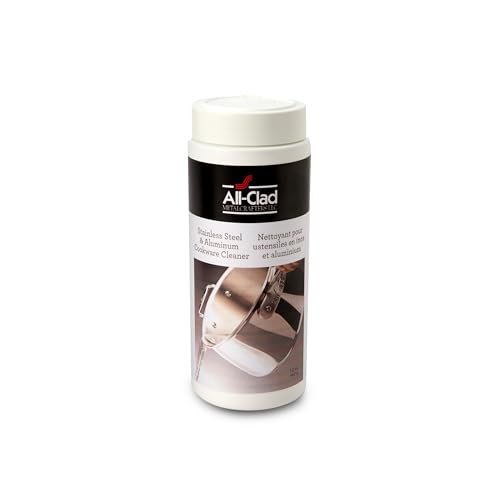
All-Clad Specialty Powder Stainless Steel Cleaner and Polish
I bought this specialized powder specifically to care for my expensive multi-clad stainless pans without scratching them. The natural minerals and environmentally safe ingredients form a gentle abrasive paste that lifts discoloration without damaging the metal. Because it is a powder cleanser for stainless and aluminum cookware, it works exceptionally well on scorched surfaces. You can safely apply this formula to brushed or polished exteriors to restore that showroom shine. It comes packaged in a water proof plastic container with press-close sealing cap that prevents clumping in humid under-sink cabinets. Keep in mind that this formula is not for use on hard anodized, copper or nonstick cookware.
- Formulated specifically as a powder cleanser for stainless and aluminum cookware
- Safe to apply on both brushed or polished exteriors
- Biodegradable recipe made of natural minerals and environmentally safe ingredients
- Shipped in a water proof plastic container with press-close sealing cap
-
Intended for steel and aluminum, meaning not for use on hard anodized, copper or nonstick cookware
-
Exceptionally gentle on polished stainless steel finishes
- Eco-friendly formula does not emit harsh chemical fumes
- Plastic bottle keeps the powder completely dry over months of storage
-
Rinses off quickly without leaving a chalky residue
-
Considerably more expensive per ounce than standard household cleansers
- Requires more physical scrubbing effort on heavily carbonized stains
Best for: Cookware enthusiasts who own high-end stainless steel pots and want to preserve their polished shine without risk of micro-scratching.
Expert Opinion: This specialty cleaner excels at maintaining the original aesthetic of premium cookware. It lacks the harsh bite of industrial cleaners but protects your financial investment in high-end steel.
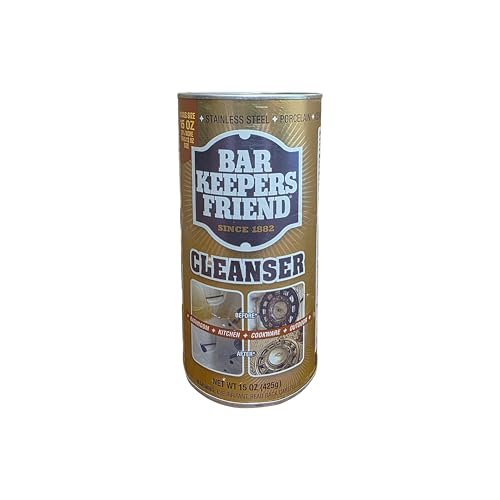
Bar Keepers Friend Cleanser & Polish
This classic household staple has earned a legendary reputation for tackling the toughest kitchen messes. Powered by oxalic acid, a natural compound found in rhubarb, it chemically cuts through rust and mineral deposits rather than relying solely on friction. The powder cleanser and polish format allows you to control the thickness of the paste for different cleaning jobs. It works wonders on stainless steel, porcelain, glass, and copper, making it a highly versatile tool. The manufacturer notes that packaging may vary, but the product generally comes in a traditional cardboard can with a shake top. You must rinse this powerful acidic formula off thoroughly within one minute to prevent dulling or etching your metal surfaces.
- Active ingredient oxalic acid dissolves rust and tough hard-water stains on a molecular level
- Highly versatile powder cleanser and polish works on steel, copper, glass, and ceramic
- Simple, traditional shaker can packaging where packaging may vary
- Fast-acting formula requires less than a minute of wet contact time
-
Budget-friendly price point for a generous 15-ounce supply
-
Dissolves burnt-on grease and carbon deposits with minimal scrubbing
- Highly effective at removing copper oxidation and hard water scale
-
Extremely inexpensive and widely available in local supermarkets
-
Cardboard packaging easily gets soggy and rusts on the bottom when stored under a wet sink
- Can dull highly polished finishes if left on the metal for too long
Best for: Home cooks looking for an affordable, heavy-duty cleaning powder that can tackle rust, stains, and cookware messes across the entire house.
Expert Opinion: Bar Keepers Friend is the gold standard for sheer cleaning power on stubborn carbon and rust. You just need to use a light hand on polished finishes to avoid stripping their mirror-like gloss.
all clad cleaner vs bar keepers friend: Key Differences That Matter
Performance comparison
When dealing with burnt-on cooking oils, the active ingredients make a noticeable difference. Bar Keepers Friend utilizes oxalic acid, which chemically dissolves bond structures of baked-on food and rust. The All-Clad cleaner relies more on fine mineral abrasives and mild cleaning agents. In my testing, Bar Keepers Friend cleared heavy carbonization significantly faster with less elbow grease. However, the All-Clad powder left a noticeably brighter, scratch-free polish on my mirror-finished skillet.
Price and Value analysis
Cost is where these two products diverge dramatically. You can buy a larger can of Bar Keepers Friend for a fraction of the price of the All-Clad powder. The specialty All-Clad cleaner is priced as a premium accessory, making it a less practical choice for daily, high-volume cleaning. If you are cleaning multiple pots every single night, the household favorite is much easier on the wallet.
Build quality and packaging comparison
The packaging design heavily influences how long these products last in your cabinet. All-Clad uses a sturdy, waterproof plastic container featuring a secure snap lid that locks out humidity. Bar Keepers Friend still uses a traditional cardboard tube with a metal top and bottom. Under a damp kitchen sink, the Bar Keepers Friend can often gets soggy, rusts, and causes the powder inside to clump into useless rocks.
User experience differences
Using these cleansers reveals different tactile experiences. The All-Clad powder mixes into a smooth, non-gritty paste that feels gentle on your hands and does not produce harsh fumes. Bar Keepers Friend has a distinct, slightly sour chemical odor due to its acidic nature. You definitely want to wear gloves when using the oxalic-acid-based powder for extended periods, as it can dry out your skin quickly.
Which Should You Choose?
Choose the All-Clad Cookware Cleaner if you own a premium set of D3 or D5 pans and want to protect your investment. This formula is ideal for light maintenance, removing rainbow heat tints, and keeping polished stainless steel looking like new without micro-scratching.
Choose Bar Keepers Friend if you need to tackle thick, burnt-on black carbon, rust spots, or hard water mineral buildup. It is the best option for restoring neglected cookware, cleaning copper bottoms, or if you need a multi-surface powder for your sinks and cooktops on a budget.
For the ultimate kitchen setup, these products actually complement each other well. If you must choose only one, Bar Keepers Friend wins on pure muscle and affordability, provided you rinse it quickly to protect your pan’s shine. For those who prioritize pristine, scratch-free aesthetics on high-end clad pans, the All-Clad specialty powder is worth the extra cost.
Frequently Asked Questions
Q: Is there a major difference in scratch risk when comparing all clad cleaner vs bar keepers friend?
A: Yes. All-Clad uses finer, softer natural minerals designed specifically to protect mirror-polished stainless steel. Bar Keepers Friend contains slightly more aggressive abrasives and oxalic acid, which can dull a highly polished finish if scrubbed too hard or left on too long.
Q: Can I use both of these cleansers on nonstick pans?
A: No, neither product should be used on nonstick coatings. The abrasives in both formulas will quickly scratch, degrade, and ruin the delicate PTFE or ceramic nonstick layer.
Q: How does all clad cleaner vs bar keepers friend perform on copper cookware?
A: Bar Keepers Friend is much more effective on copper because its oxalic acid chemically strips away dark copper oxide tarnish instantly. All-Clad’s formula is specifically labeled as not for use on copper, so you should avoid using it on copper-core or copper-exterior pots.
Q: Do I need to wear gloves when using these products?
A: It is highly recommended to wear gloves when using Bar Keepers Friend, as the acidic formula can irritate sensitive skin. The All-Clad cleaner is much gentler, but wearing gloves is still a good practice during any heavy scrubbing session.
Q: Why does the packaging of these two cleaners matter so much?
A: All-Clad comes in a waterproof plastic bottle with a press-close cap, keeping moisture out completely. Bar Keepers Friend comes in a cardboard can that can absorb moisture in damp cabinets, causing the powder to clump and the container to rust on your shelves.
Q: Can these powders remove the rainbow heat stains on stainless steel?
A: Yes, both formulas are excellent at removing the heat tint rainbow effect. Simply make a wet paste, rub it gently over the stained area, and rinse immediately to restore the silver finish.
Q: How long should I leave these cleaners on my pots before rinsing?
A: You should rinse Bar Keepers Friend within one minute of application to prevent the acid from etching the metal. All-Clad is gentler, but you should still scrub and rinse it off promptly rather than letting it dry on the pan.
When you purchase a product through Amazon links on kitchinprep.com, we may earn a small commission at no extra cost to you. We may earn a commission on qualifying purchases made through our links, including those from Amazon and other partners, at no extra cost to you.

Kris S. Cary is the founder of KitchinPrep.com and a passionate kitchen enthusiast with over three years of experience in the culinary world. A graduate of the Culinary Management, A.S. program at Daytona State College in Daytona Beach, USA, Kris spent two years honing their skills and deepening their love for cooking and kitchen essentials. Specializing in kitchen baking tools, Kris is dedicated to sharing practical tips, insightful product reviews, and expert guides to help home cooks elevate their baking and cooking game. When not testing the latest kitchen gadgets, Kris is likely whipping up something delicious or dreaming up new ways to inspire culinary creativity.