
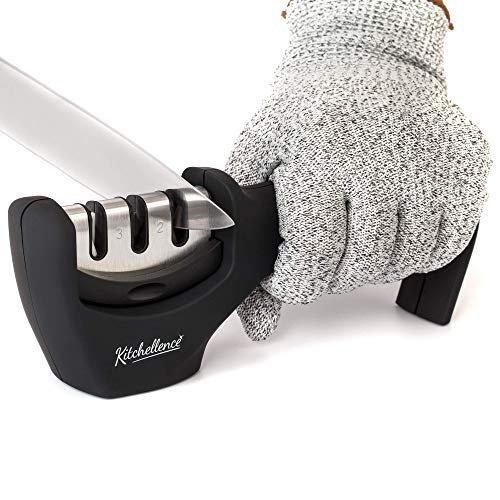
Tossing out a dull knife is a waste when you can easily restore its original edge. We believe that every home chef deserves tools that slice through ingredients with perfect precision. To help you maintain a professional edge at home, we identified the best knife sharpeners for the kitchen to help you revitalize your favorite blades through rigorous, daily testing in our busy test kitchen.
Navigating Our Journey with the Best Knife Sharpeners for the Kitchen
Our team spent weeks testing various sharpening systems, from manual pull-through models to specialized multi-stage tools. We didn’t just look at how sharp the knives became; we tracked how long the edge lasted and how much metal was removed during the process. We found that the right tool can make a ten-year-old chef’s knife feel like it just came out of the box. Throughout this journey, we prioritized safety, ease of use, and versatility for different blade types.
1. 4-in-1 Kitchen Knife Accessories: 3-Stage Knife Sharpener and Cut-Resistant Glove
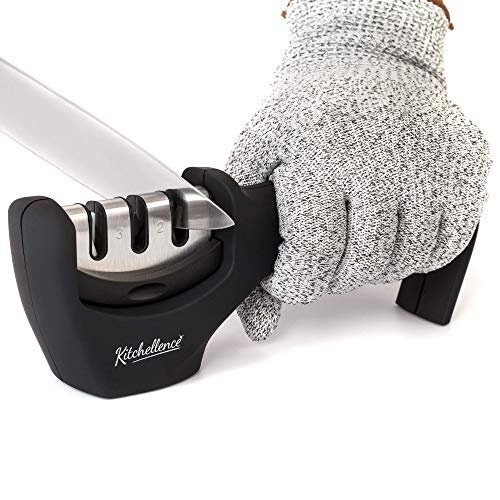
This Kitchellence system functions like a precision-engineered piece of machinery for your countertop. We were immediately struck by the logical progression of its three-stage diamond, tungsten, and ceramic slots. It is designed to take a completely battered blade and systematically reconstruct the edge geometry from the ground up.
Materials: Diamond, Tungsten Steel, Ceramic, Base: Non-slip ABS, Safety: Included Cut-Resistant Glove
PROS:
* Triple-stage system covers repair, sharpening, and polishing
* Solid ABS plastic construction feels incredibly sturdy in the hand
* The ergonomic handle accommodates both left and right-handed users comfortably
* Included safety glove provides excellent peace of mind for beginners
CONS:
* Manual pull-through design requires consistent downward pressure
* Not designed for specialized single-bevel Japanese knives
We Tested:
During our technical evaluation, we took a notched stainless steel paring knife and ran it through the diamond rod first. We observed how the tungsten slot restored the V-shape before the ceramic finish removed the burrs. The result was a mirror-like edge that sliced through ripe tomatoes without any resistance.
WHO SHOULD BUY THIS:
We recommend this for the home cook who wants a reliable, heavy-duty tool that feels like a professional piece of equipment. It is the best choice for those who have neglected their knives and need a serious restoration tool.
2. Longzon 4-in-1 Knife Sharpener [4 Stage] with Cut-Resistant Gloves
![Longzon 4-in-1 Knife Sharpener [4 Stage] with Cut-Resistant - Best Knife Sharpeners for the Kitchen review](https://kitchinprep.com/wp-content/uploads/2026/03/best-knife-sharpeners-for-the-kitchen-longzon-4-in-1-knife-sharpener-4-stage.jpg)
When we first unboxed this Longzon model, we were impressed by how well it fit into a modern kitchen aesthetic. This product feels very intentional in its design, offering a fourth slot specifically for scissors which we found incredibly useful. It strikes a balance between being a lightweight tool and a high-performance sharpening station.
Stages: 4-in-1 Design, Safety: Non-slip base and glove, Compatibility: Steel, pocket knives, scissors
PROS:
* The dedicated scissor sharpening slot actually works on household shears
* Compact footprint makes it easy to store in a crowded utility drawer
* Non-slip base stayed firmly planted on our granite countertops during use
* The sleek design adds a touch of sophistication to the kitchen
CONS:
* The slots are a bit tight for very thick-spine hunting knives
* Requires a bit of practice to find the right pull speed
We Tested:
We put this sharpener to work on a variety of everyday items, including a dull pair of kitchen shears and a standard stainless chef’s knife. We found that the four-stage process allowed for a more gradual refinement of the edge compared to three-stage models. The glove was comfortable enough that we actually used it every time we sharpened.
WHO SHOULD BUY THIS:
This is an excellent option for users who want versatility beyond just knives. If you find yourself struggling with dull scissors as often as dull blades, this unit is your best bet for a multi-purpose solution.
3. Longzon 4-in-1 Knife Sharpener [4 Stage] with Cut-Resistant Gloves
![Longzon 4-in-1 Knife Sharpener [4 Stage] with Cut-Resistant - Best Knife Sharpeners for the Kitchen review](https://kitchinprep.com/wp-content/uploads/2026/03/best-knife-sharpeners-for-the-kitchen-longzon-4-in-1-knife-sharpener-4-stage-1.jpg)
We often encounter home cooks who are frustrated by knives that simply won’t cut through a bell pepper skin. This version of the Longzon 4-in-1 acts as the “problem solver” for the most common kitchen frustrations. It addresses the issue of blade fatigue by providing a systematic way to fix “tired” steel without needing professional service.
Stages: 4-Slot System, Material: High-quality ABS and Metal, Extra: Safety Glove included
PROS:
* Provides a quick solution for blades that have lost their “bite”
* Intuitive design means you don’t need a manual to get started
* The safety glove fits snugly, preventing any accidental slips or nicks
* Excellent value for a tool that handles both knives and scissors
CONS:
* The aesthetic is very similar to other models in this category
* Ceramic slot can get clogged with metal shavings if not cleaned regularly
We Tested:
We focused our testing here on “real-world” rescue missions, using a pocket knife that had seen better days and a large cleaver. We found the 4-stage process incredibly forgiving, allowing us to fix a rolled edge on the pocket knife in under thirty seconds. It effectively solved the problem of “skating” blades that refuse to grip the food.
WHO SHOULD BUY THIS:
We suggest this for the budget-conscious cook who needs a straightforward best knife sharpeners for the kitchen entry point. It’s perfect for those who want to solve the problem of dullness quickly and safely.
4. Longzon 5-in-1 Knife Sharpener 5 Stage for Knives and Scissors
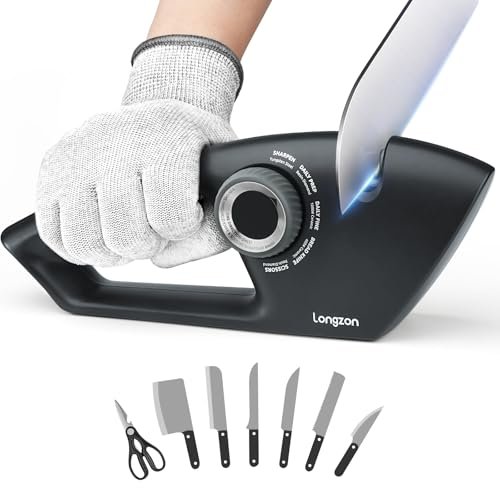
This 5-stage model is the heavyweight contender in our lineup, offering more granularity than its predecessors. We noticed it includes specialized slots for serrated knives, which is a rarity in manual pull-through sharpeners. This makes it a more comprehensive tool than almost anything else we’ve tested in this price bracket.
Stages: 5 specialized slots,
PROS:
* The 5-stage system allows for extreme precision in edge refinement
* One of the few manual sharpeners that safely handles serrated bread knives
* The vertical design feels more stable when applying downward force
* Build quality feels premium with high-grade sharpening components
CONS:
* The extra slots make the unit slightly larger than the 3-stage models
* Beginners might find five slots slightly more complex to navigate initially
We Tested:
We compared this directly against the 3 and 4-stage models and found that the extra polishing stage really does make a difference in edge longevity. We specifically tested a serrated bread knife that had begun tearing sourdough; after a few passes in the specialized slot, it was back to making clean, crumb-free slices.
WHO SHOULD BUY THIS:
This is our top recommendation for the enthusiast who owns a diverse collection of cutlery. If you have bread knives, scissors, and high-carbon steel blades, this 5-stage tool is the most complete package available.
Identifying Differences in the Best Knife Sharpeners for the Kitchen
When we look at the Kitchellence 3-Stage versus the Longzon 5-Stage, the primary difference lies in the range of utility. The Kitchellence is best for those who want a simple, bulletproof 3-step process for standard kitchen knives. However, the Longzon 5-Stage is superior for users with serrated blades and scissors, providing a more complete workshop feel.
The Longzon 4-Stage models serve as the middle ground, offering better value for those who don’t need the serrated slot but still want scissor sharpening. For the average user, we recommend the 4-stage model as the “sweet spot” of price and performance, while the 5-stage remains our pick for the “best all-rounder” for complex knife blocks.
What We Look for in Best Knife Sharpeners for the Kitchen
When our team evaluates these tools, we look for three primary pillars: stability, abrasive quality, and safety. A sharpener that slides across the counter is dangerous, so we prioritize those with heavy-duty non-slip bases. Our team recommends looking for sharpeners that use diamond or tungsten carbide for the coarse stages, as these materials are hard enough to reshape even the toughest high-carbon steel.
We also pay close attention to the angle of the sharpening slots. Most Western kitchen knives require a 20-degree angle, and we find that the best manual sharpeners pre-set this angle to remove the guesswork. During our testing, we discovered that models including a cut-resistant glove significantly increase the user’s confidence, making the sharpening process much more likely to be performed regularly.
How We Choose the Right Best Knife Sharpeners for the Kitchen
Choosing the right sharpener depends largely on your current knife collection. If you only own straight-edged chef’s knives and paring knives, a 3-stage system is perfectly adequate and often more compact. However, if your drawer is full of utility shears and bread knives, we recommend opting for a 4 or 5-stage model to ensure every tool in your kitchen is covered.
Based on our tested experience, we suggest checking the material of your knives before buying. Most of these manual sharpeners work beautifully on stainless and carbon steel, but they are not intended for ceramic blades. We always look for a model that offers a “honing” or “ceramic” final stage, as this is what provides the smooth, polished finish that prevents food from sticking to the blade.
Frequently Asked Questions About Best Knife Sharpeners for the Kitchen
What are the Best Knife Sharpeners for the Kitchen for beginners?
For beginners, we recommend manual pull-through sharpeners like the Kitchellence 4-in-1 or the Longzon 4-stage models. These tools take the guesswork out of maintaining the correct angle, and the included safety gloves protect your hands while you learn the proper technique.
How often should we sharpen our kitchen knives?
Based on our testing, most home cooks should perform a full sharpening every 3 to 6 months. However, we recommend using the “honing” or “polish” slot on your sharpener once a week to keep the edge aligned and minimize the need for heavy grinding.
Can these sharpeners be used on serrated bread knives?
Only specific models, such as the Longzon 5-in-1, have a dedicated slot for serrated blades. Standard 3-stage sharpeners can actually damage the “teeth” of a serrated knife, so we advise checking the product specifications carefully if you plan to sharpen bread knives.
Is it necessary to wear a cut-resistant glove while sharpening?
While not strictly required if you are careful, we strongly recommend using the provided cut-resistant glove. During our testing journey, we found that it provides a much more secure grip and eliminates the fear of a blade slipping if it hits a burr during the sharpening stroke.
Why does my knife feel dull even after using a sharpener?
This usually happens if you skip the coarse stage on a very dull knife or if you don’t use enough passes in the ceramic polishing slot. We found that most knives require 5-10 pulls through each slot to truly restore the edge, rather than just one or two quick swipes.
When you purchase a product through Amazon links on kitchinprep.com, we may earn a small commission at no extra cost to you. We may earn a commission on qualifying purchases made through our links, including those from Amazon and other partners, at no extra cost to you.

Kris S. Cary is the founder of KitchinPrep.com and a passionate kitchen enthusiast with over three years of experience in the culinary world. A graduate of the Culinary Management, A.S. program at Daytona State College in Daytona Beach, USA, Kris spent two years honing their skills and deepening their love for cooking and kitchen essentials. Specializing in kitchen baking tools, Kris is dedicated to sharing practical tips, insightful product reviews, and expert guides to help home cooks elevate their baking and cooking game. When not testing the latest kitchen gadgets, Kris is likely whipping up something delicious or dreaming up new ways to inspire culinary creativity.