
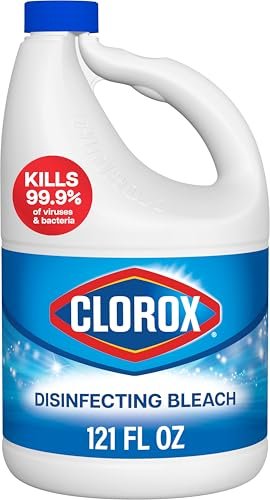
I have spent years testing household cleaners on everything from stained bathroom grout to greasy range hoods, and I always find myself returning to these two classic powerhouses. In this comparison, you will discover the real-world differences, safety considerations, and cleaning capabilities of Clorox Disinfecting Bleach and CPDI Clear Ammonia Cleaner. By the end of this guide, you will know exactly which liquid to grab for your specific household chore.
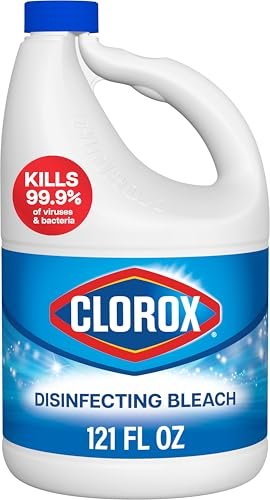
Clorox Disinfecting Bleach
When my bathroom grout starts looking dingy or flu season hits my household, I immediately reach for this giant bottle of Clorox Disinfecting Bleach. It relies on a concentrated sodium hypochlorite formula that acts as a highly effective mildew and mold cleaner for non-porous surfaces. The proprietary five-in-one technology does more than clean, as it actively sanitizes, whitens fabrics, and eliminates stubborn bathroom odors. I have found that it easily kills strep, E. coli, salmonella, and flu virus with minimal scrub time required. As a bleach for laundry, it performs miracles on dingy white socks and sweat-stained undershirts. This is a household staple that simply gets the job done when sanitization is your primary goal.
- Five-in-one technology cleans, whitens, brightens, removes odors, and sanitizes surfaces.
- Highly effective mildew and mold cleaner for showers, tubs, sinks, and tiles.
- Kills 99.9% of common household germs including norovirus, flu virus, MRSA, and E. Coli.
- Concentrated laundry bleach formula that maximizes detergent performance to whiten fabrics.
-
Formulated to work safely on over 30 different household surfaces when used as directed.
-
Superior disinfecting power that kills stubborn viruses and bacteria.
- Excellent at stripping away organic stains and whitening fabrics.
-
Huge 121-ounce bottle offers great value for busy households.
-
Pungent chemical smell that requires heavy room ventilation.
- Will ruin colored fabrics and damage delicate metals if splashed accidentally.
- Loses its chemical potency after sitting on a shelf for six months.
Best for: Homeowners who need maximum sanitization, mold remediation, and laundry whitening.
Expert Opinion: This remains the gold standard for household disinfection, especially during cold and flu season. Use it sparingly on non-porous surfaces to keep your living space sterile.
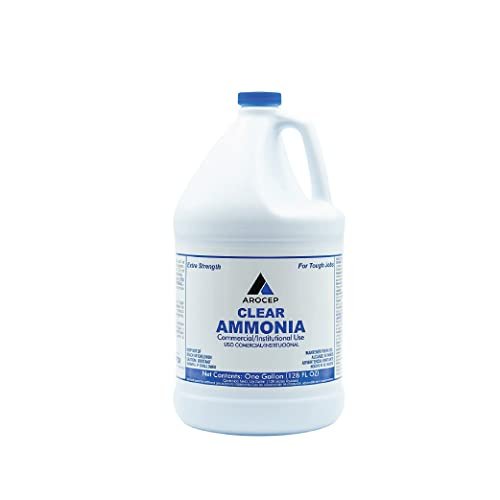
CPDI Clear Ammonia Cleaner
Over the years, I have relied on CPDI Clear Ammonia Cleaner whenever I face baked-on kitchen grease or cloudy window panes. This heavy-duty, multipurpose pure ammonia cleaner cuts through animal fats and oily residues far better than standard soap. The highly concentrated formula serves as an excellent resident and commercial cleaning solution, meaning you can dilute it to suit different tasks. Because it leaves no soapy residue behind, it is my favorite option to keep spaces clean and bright without any streaking. It acts as a heavy-duty cleaning power agent that strips away old floor wax, cleans brass, and dissolves soap scum from glass shower doors. You get a full gallon of concentrated liquid that lasts through months of tough chores.
- Multipurpose pure ammonia formulation designed to dissolve grease, hard water, and grime.
- Designed to deep clean touch surfaces like vinyl flooring, sinks, tile, and grout.
- Suitable for resident and commercial cleaning environments including clinics, kitchens, and locker rooms.
- Helps keep spaces clean and bright by removing tarnish from silver, brass, and stainless steel.
-
Highly concentrated heavy-duty cleaning power that can be diluted for custom spray mixtures.
-
Incredible grease-cutting ability on stovetops, ovens, and range hoods.
- Dries completely streak-free on glass, windows, and mirrors.
-
Highly economical since you dilute the concentrated formula with water.
-
Extremely sharp, choking vapor that demands excellent fresh air ventilation.
- Does not disinfect surfaces or kill pathogens like bleach does.
Best for: Anyone dealing with heavy grease buildup, window washing, metal polishing, or hard water stains.
Expert Opinion: Use this product when you need to lift stubborn organic oils or clean glass without leaving cloudy streaks. It is a cleaning tool, not a disinfecting tool.
Bleach vs Ammonia for Cleaning: Key Differences That Matter
Performance Comparison
These two chemicals target completely different types of messes. Clorox Disinfecting Bleach is an oxidizer. It attacks the cellular walls of bacteria, viruses, and mold spores to destroy them. It also breaks down chemical bonds in pigments, which is why it excels at turning stained white fabrics bright again.
CPDI Clear Ammonia is a highly alkaline cleaner. It does not oxidize stains or kill pathogens effectively. Instead, it converts fats and oils into soap, a chemical process called saponification. This makes ammonia incredibly effective at lifting baked-on grease, wax buildup, and heavy kitchen grime.
Price and Value Analysis
Both products are highly affordable, but they offer value in different ways. The CPDI Ammonia comes in a full one-gallon container. Because you must dilute ammonia with water for almost every job, one gallon can easily make dozens of gallons of cleaning spray. This makes it incredibly economical for large-scale floor cleaning and window washing.
Clorox Bleach is also inexpensive for its size. However, bleach has a much shorter shelf life. Sodium hypochlorite naturally degrades into salt water over time. A bottle of bleach starts losing its strength about six months after manufacturing, whereas ammonia remains stable and effective for years in storage.
Packaging and Formulation Quality
Clorox has spent years perfecting its packaging. The 121-ounce bottle features a sturdy, ergonomic handle and a specially designed spout that prevents dangerous splashes when you pour. The plastic is thick and resilient.
CPDI Ammonia comes in a standard, industrial-style utility jug. It can glug and splash if you pour too quickly. The cap is basic, so you must handle the bottle with extra care to avoid skin contact.
User Experience and Safety
Using either chemical requires caution, but for different reasons. Bleach has a sweetish, swimming-pool odor that can sneak up on you. It can ruin your clothes with a single stray droplet.
Ammonia has a sharp, eye-watering scent that hits your nose instantly. It is impossible to ignore. You must open windows and run fans when using either product.
Most importantly, you must never mix these two chemicals. Mixing bleach and ammonia creates toxic chloramine gas, which can cause severe respiratory damage. Always rinse surfaces thoroughly with clean water before switching from one product to the other.
Which Should You Choose?
If your goal is to sanitize kitchen counters after handling raw meat, kill bathroom mold, or keep your white laundry pristine, Clorox Disinfecting Bleach is the correct choice. Its active disinfecting properties make it an essential household disinfectant for preventing the spread of illness.
If you are tackling a greasy stove, washing outdoor windows, cleaning mirrors, or scrubbing soap scum off glass shower doors, choose CPDI Clear Ammonia Cleaner. It leaves glass streak-free and cuts through grease faster than bleach ever could.
Ultimately, both products have a place in a complete cleaning arsenal. Keep Clorox Bleach in your laundry room or bathroom cabinet for germ-killing duties, and store CPDI Ammonia in your utility closet for heavy-duty degreasing and window washing.
Frequently Asked Questions
Q: Can I mix bleach and ammonia for a stronger cleaner?
A: No, you must never mix them. Combining bleach and ammonia creates chloramine gas, which is highly toxic and can cause serious injury or death.
Q: Which is better, bleach vs ammonia for cleaning mold in bathrooms?
A: Clorox Bleach is much better for bathroom mold. The sodium hypochlorite kills the mold spores and bleaches the dark stains out of your grout.
Q: Will ammonia ruin my colored clothing?
A: No, dilute ammonia is generally safe for colored fabrics and is often used to lift grease stains from clothes. Always test a small hidden area first, unlike bleach, which will immediately strip color from most fabrics.
Q: What is the main difference between bleach vs ammonia for cleaning greasy ovens?
A: Ammonia is the superior choice for ovens because it chemically reacts with fats to dissolve baked-on grease. Bleach does not cut grease effectively and will not help clean a dirty oven.
Q: How do I store these products safely?
A: Store both bottles in a cool, dry place out of direct sunlight and completely out of reach of children. Keep them in separate cabinets so there is no risk of accidental mixing.
Q: Why does my bleach seem less effective after sitting in the closet for a year?
A: Bleach naturally degrades into salt water over time. It loses its sanitizing potency after about six months on the shelf, whereas ammonia remains stable for years.
When you purchase a product through Amazon links on kitchinprep.com, we may earn a small commission at no extra cost to you. We may earn a commission on qualifying purchases made through our links, including those from Amazon and other partners, at no extra cost to you.

Kris S. Cary is the founder of KitchinPrep.com and a passionate kitchen enthusiast with over three years of experience in the culinary world. A graduate of the Culinary Management, A.S. program at Daytona State College in Daytona Beach, USA, Kris spent two years honing their skills and deepening their love for cooking and kitchen essentials. Specializing in kitchen baking tools, Kris is dedicated to sharing practical tips, insightful product reviews, and expert guides to help home cooks elevate their baking and cooking game. When not testing the latest kitchen gadgets, Kris is likely whipping up something delicious or dreaming up new ways to inspire culinary creativity.