
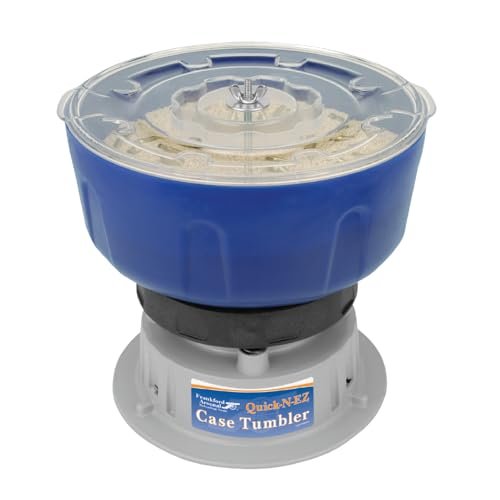
I have spent years cleaning dirty brass and grimy gear using both of these popular machines. In this guide, you will learn how the Frankford Arsenal Vibratory Tumbler and the VEVOR Sonic Cleaner perform in real-world testing. We will compare their cleaning speed, capacity, and overall value to help you choose the right tool for your bench.
Frankford Arsenal Quick-N-EZ Vibratory Case Tumbler
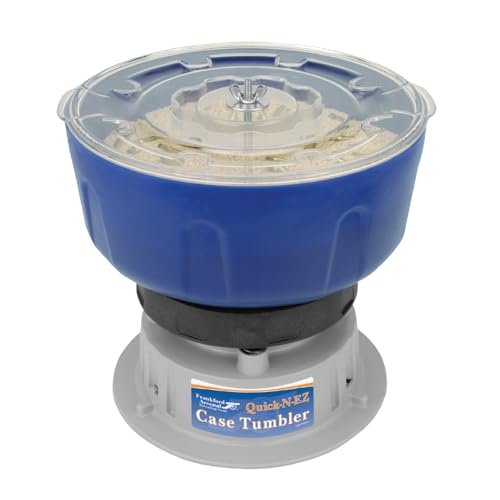
I started my reloading journey with the Frankford Arsenal Quick-N-EZ Vibratory Case Tumbler, and it remains a staple on my bench. This machine uses a unique bowl design to increase brass agitation which delivers fast, aggressive cleaning. Dry media like corn cob or walnut shells scrub away carbon, which reduces wear on reloading dies and extends your brass life. Monitoring the progress is easy thanks to the clear viewing lid, saving you from constantly stopping the motor. Safety is simple here with a cord-mount ON/OFF switch that keeps your hands away from the plug. Holding up to 600 9mm or 350 .223 cases, this unit handles high-volume processing without breaking a sweat.
- Unique bowl design for faster, aggressive brass agitation
- Clear viewing lid for easy monitoring during the cleaning cycle
- Cord-mount ON/OFF switch for added safety and convenience
- Generous capacity holding up to 600 9mm or 350 .223 cases
-
Designed to work with walnut or corn cob media
-
Cleans high volumes of brass quickly in a single batch
- Leaves a beautiful, high-shine finish on the exterior of cases
-
Extremely durable motor and housing built for long reloading sessions
-
Does not clean the inside of the cases or primer pockets thoroughly
- Creates noisy vibration and generates dust from dry media
Best for: High-volume reloaders who want shiny case exteriors without dealing with wet brass drying times.
Expert Opinion: This vibratory tumbler is a workhorse for dry cleaning. It delivers that classic, mirror-like polish on brass casings with minimal effort.
VEVOR Sonic Cleaner (2L)
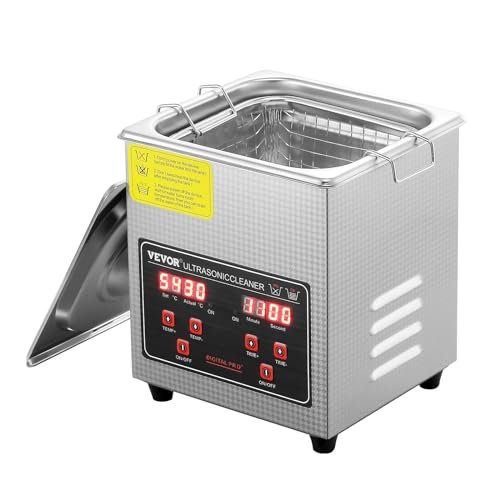
When I need to clean intricate parts, I reach for the VEVOR Sonic Cleaner. This machine utilizes a 40kHz ultrasonic frequency to create millions of microscopic bubbles that scrub away grease and grime. Heat plays a major role in its success, powered by an integrated heating function that quickly dissolves stubborn contaminants. The core of this unit relies on advanced transducer technology featuring sandwich-type piezoelectric transducers for highly efficient cleaning. I appreciate the durable build quality, which uses a premium SUS304 stainless steel tank and basket to hold various delicate items. A user-friendly digital control panel lets you customize the temperature and timer to match your exact cleaning needs.
- High-performance 40kHz ultrasonic frequency for deep grime removal
- Built-in heating function to dissolve grease and heavy carbon
- Advanced sandwich-type piezoelectric transducer technology
- Premium SUS304 stainless steel tank and cleaning basket
-
Digital control panel for precise time and temperature adjustments
-
Cleans primer pockets and case interiors thoroughly
- Highly versatile for cleaning jewelry, tools, and gun parts
-
Quiet operation compared to loud vibratory tumblers
-
Limited capacity restricts the volume of brass you can clean at once
- Requiring wet brass to dry completely before reloading slows the process
Best for: Reloaders who prioritize clean primer pockets, or those who want to clean jewelry, carburetors, and delicate parts.
Expert Opinion: The VEVOR ultrasonic cleaner excels at lifting carbon out of deep recesses. It is the best choice if you demand surgically clean primer pockets and internal case walls.
brass tumbler vs sonic cleaner: Key Differences That Matter
Performance comparison
Vibratory brass tumblers excel at making the outside of your cases look brand new. They polish the metal to a brilliant shine using dry media. However, they struggle to clean the inside of the case and the primer pocket.
Sonic cleaners work in reverse. They use liquid solution and high-frequency sound waves to blast carbon out of every nook and cranny. Your primer pockets and case interiors will be spotless, but the exterior will have a dull satin finish rather than a bright shine.
Price/Value analysis
A dry vibratory tumbler generally represents a lower initial investment. The media is inexpensive and can be reused multiple times before needing replacement.
Ultrasonic cleaners cost more upfront due to the digital controls, heating elements, and transducer technology. You also need to purchase liquid cleaning concentrates, which adds to the ongoing operating costs over time.
Build quality comparison
The Frankford Arsenal tumbler relies on a heavy-duty plastic bowl and a reliable electric motor. It is a simple mechanical design with few parts that can fail.
VEVOR utilizes stainless steel construction which resists rust and chemical wear. The digital interface and heating elements introduce more electronics, meaning there are more components that could experience wear over years of heavy use.
User experience differences
Noise is a massive factor on the reloading bench. The vibratory tumbler creates a loud, constant hum that can irritate people in nearby rooms. It also produces fine dust that you must filter out.
Sonic cleaners operate with a high-pitched buzz that is much quieter. However, the wet process means you have to rinse your brass and wait for it to dry completely before loading. This extra step can add hours to your workflow.
Which Should You Choose?
If you load high volumes of pistol brass and want a beautiful, shiny finish quickly, choose the vibratory brass tumbler. You can throw the cases in, run the machine, and load them immediately without any drying time. The dry method is simple, fast, and economical.
Choose the ultrasonic cleaner if you are loading precision rifle ammunition where clean primer pockets affect consistency. It is also the ideal choice if you want a multi-purpose machine to clean dirty gun parts, greasy tools, or delicate jewelry.
Ultimately, the choice depends on your reloading goals. I find that having both on the bench offers the ultimate setup. If you must choose one, the vibratory tumbler wins for pure brass volume and shine, while the sonic cleaner wins for precision cleaning and versatility.
Frequently Asked Questions
Q: Which option is faster when comparing a brass tumbler vs sonic cleaner?
A: The sonic cleaner has shorter cycle times, often cleaning brass in 15 to 30 minutes. However, you must factor in the hours needed to dry the wet brass. A vibratory brass tumbler takes 2 to 4 hours to clean, but the brass is dry and ready to load immediately.
Q: Do I need special solutions for these machines?
A: Yes, they require different materials. The vibratory tumbler uses dry media like walnut shells or corn cob. The ultrasonic cleaner requires water mixed with a specialized cleaning solution or mild soap and citric acid to break down carbon.
Q: How does the noise level compare in a brass tumbler vs sonic cleaner matchup?
A: The vibratory brass tumbler is significantly louder, producing a deep, constant vibration that can shake a workbench. The ultrasonic cleaner produces a much quieter, high-pitched buzzing sound that is easier to tolerate in a home environment.
Q: Can a sonic cleaner make my brass shine like a vibratory tumbler?
A: No, ultrasonic cleaners do not polish the metal. They remove carbon, dirt, and grease, leaving the brass clean but with a matte, satin finish. If you want a mirror-like shine, you need a vibratory tumbler with dry media or a rotary tumbler with steel pins.
Q: Will cleaning brass in a vibratory tumbler damage my reloading dies?
A: No, it actually protects them. Removing the abrasive carbon and oxidation from the exterior of the brass prevents scratches inside your expensive reloading dies.
Q: Can I clean loaded ammunition in either of these machines?
A: No, you should never attempt to clean live ammunition in a vibratory tumbler or an ultrasonic cleaner. The vibrations and moisture can degrade the gunpowder or primer compound, leading to dangerous misfires or squib loads.
Q: Which machine is better for cleaning gun parts like bolts and carriers?
A: The ultrasonic cleaner is far superior for cleaning gun parts. The liquid solution and ultrasonic waves reach deep into complex geometries and small crevices where dry vibratory media would simply get stuck.
When you purchase a product through Amazon links on kitchinprep.com, we may earn a small commission at no extra cost to you. We may earn a commission on qualifying purchases made through our links, including those from Amazon and other partners, at no extra cost to you.

Kris S. Cary is the founder of KitchinPrep.com and a passionate kitchen enthusiast with over three years of experience in the culinary world. A graduate of the Culinary Management, A.S. program at Daytona State College in Daytona Beach, USA, Kris spent two years honing their skills and deepening their love for cooking and kitchen essentials. Specializing in kitchen baking tools, Kris is dedicated to sharing practical tips, insightful product reviews, and expert guides to help home cooks elevate their baking and cooking game. When not testing the latest kitchen gadgets, Kris is likely whipping up something delicious or dreaming up new ways to inspire culinary creativity.