
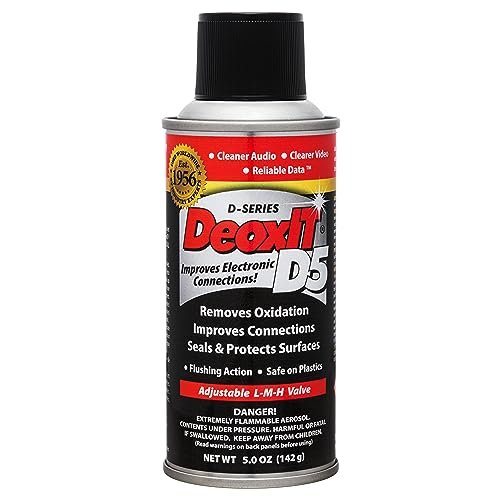
Over the years, I have revived dozens of scratchy guitar pots, corroded battery terminals, and dusty vintage receivers using various aerosol sprays. In my experience, choosing between DeoxIT D5 and CRC Contact Cleaner comes down to understanding the difference between a chemical restoration treatment and a simple washing solvent. This hands-on comparison will help you decide which spray belongs on your workbench for your specific repair projects.
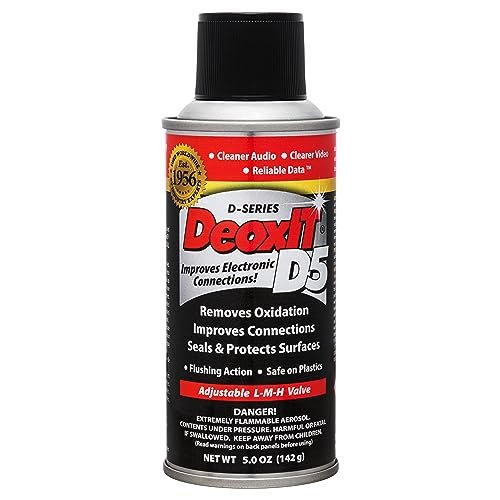
Hosa CAIG Laboratories D5S-6 CAIG DeoxIT Contact Cleaner, 5 Spray, 5 Oz
My go-to solution for stubborn, oxidized electrical connections has long been the DeoxIT D5S-6 spray. This formula is unique because it contains a 5% concentration of active DeoxIT paired with a fast-evaporating solvent. Instead of simply washing away surface dust, the specialized chemistry actually deoxidizes, lubricates, and protects metal contacts. I found that the adjustable flushing spray valve on the can allows for precise control over the output, preventing wasted fluid. A thin, non-conductive protective barrier remains on the metal surface after application to shield it from future moisture. For vintage audio gear with scratchy potentiometers, this is often the only spray that restores clear sound without requiring a complete component replacement.
- 5% active DeoxIT formula dissolves severe metal oxidation and corrosion.
- Adjustable spray valve provides three flow rates to minimize waste.
- Deoxidizing action chemically bonds to metals to improve signal conductivity.
- Protective lubricating barrier guards against future moisture.
-
Safe for most plastics and compatible with sensitive metal surfaces.
-
Chemically restores heavily oxidized, crackling audio pots and switches.
- Leaves a lubricating film that prevents physical wear on moving contacts.
-
Variable nozzle allows for highly targeted, low-waste application.
-
Significantly higher cost per ounce than standard contact cleaners.
- Leaves a slight oily residue which can attract dust if over-applied.
Best for: Audiophiles, guitarists, and vintage electronics restorers dealing with scratchy pots, sliders, and heavily corroded jacks.
Expert Opinion: DeoxIT D5 is a chemical rejuvenator, making it indispensable for restoring degraded analog signals where standard cleaners fail.
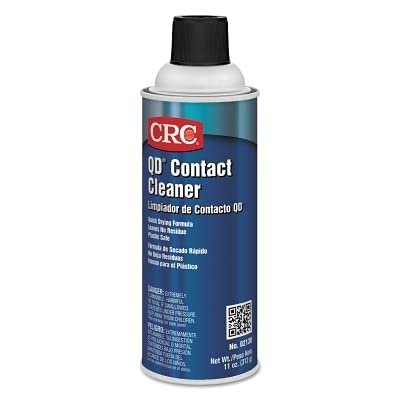
CRC 02130 Contact Cleaner 16Oz
When I need to flush out heavy dust, grime, or light oils from dirty components, the CRC 02130 Contact Cleaner is my workhorse. This fast drying formula evaporates almost instantly, leaving absolutely zero residue behind on delicate parts. Because it is highly volatile, you can spray it generously into circuit boards or electric motors without worrying about trapping moisture inside the housing. It provides effective contaminant removal by physically washing away grease and soil. The electrical grade safety profile means it will not degrade sensitive plastics or cause short circuits. I appreciate the generous 16 oz convenient spray can which offers plenty of volume for large, messy cleaning jobs.
- Fast-drying formula evaporates in seconds without leaving any oily residue.
- Electrical grade safety ensures compatibility with circuit boards and sensitive plastics.
- 16-ounce aerosol can provides a high-volume spray for deep flushing.
- Effective contaminant removal clears away oil, grease, soil, and dust.
-
Versatile application works on switches, breakers, and electric motors.
-
Excellent value with a very low price per ounce.
- Perfect for high-pressure flushing of dusty, greasy electronics.
-
Dries completely clean, leaving no film to attract airborne dust.
-
Does not dissolve tough, green copper oxidation or rust.
- Lacks lubrication, which can leave sliding metal parts feeling dry or scratchy.
Best for: General maintenance technicians, automotive mechanics, and PC builders who need to clean dust, oil, and flux from non-sliding contacts.
Expert Opinion: CRC Contact Cleaner is the ultimate high-volume washing solvent, perfect for blasting away physical debris without leaving any lingering film behind.
deoxit vs crc contact cleaner: Key Differences That Matter
Performance Comparison
The fundamental difference lies in how these two products interact with metal. CRC Contact Cleaner acts as a high-pressure wash. It blasts away dirt, dust, and light grease, then evaporates entirely to leave the surface bone-dry.
DeoxIT operates on a chemical level. It contains active ingredients that dissolve the microscopic layer of metal oxide that forms on copper, silver, and gold contacts. It does not just wash the surface. It chemically cleans the metal and leaves a microscopic layer of lubricant behind. This lubricant reduces friction on moving parts and keeps oxygen from tarnishing the metal again.
If you spray CRC into a scratchy volume potentiometer on an old receiver, the scratching might stop for a few days. However, because CRC strips away all lubrication, the metal wiper inside the pot will soon scrape against the carbon track, causing permanent physical wear. DeoxIT cleans the tarnish and lubricates the path, ensuring the repair lasts for years.
Price and Value Analysis
Looking at the shelf, the price difference is stark. CRC gives you a massive 16-ounce can for a fraction of the cost of a small 5-ounce can of DeoxIT.
For high-volume cleaning tasks, CRC is the clear winner. If you are cleaning a filthy alternator connector covered in road grime, using DeoxIT is an expensive waste of premium chemicals. You want the cheap volume of CRC to flush the grime away.
For precision work on high-value electronics, the tiny can of DeoxIT is worth the premium. A single can of DeoxIT D5 can last a hobbyist years because you only need a tiny spritz per component.
Can Delivery and Precision
The applicator nozzles change how you work. CRC uses a standard aerosol spray nozzle with a push-in red straw. It shoots a powerful, high-pressure stream. This is excellent for blasting out dirt from deep inside a switch, but it can easily overspray onto surrounding areas.
DeoxIT D5S-6 features an adjustable valve with low, medium, and high settings. I almost always keep it on the lowest setting. This allows me to place a single drop of fluid exactly where I want it, which is crucial when working on crowded circuit boards.
User Experience Differences
When using CRC, the process is incredibly fast. You spray the component, watch the dirt run off, and wait about thirty seconds for it to dry. It leaves no trace behind, which makes it incredibly clean to work with.
DeoxIT requires a bit more care. After spraying a contact, you must physically cycle the switch or pot twenty to thirty times to let the chemical action scrub the metal clean. Because it does not evaporate fully, you need to wipe away any excess liquid with a cotton swab to keep it from collecting dust over time.
Which Should You Choose?
Select DeoxIT D5 when you are working on vintage audio gear, guitar electronics, patch bays, or high-end communication equipment. If a component has a sliding or rotating contact, it requires the protective lubrication that DeoxIT provides. This spray is essential for restoring electrical conductivity in connections that suffer from signal dropout or scratchy analog noise.
Choose CRC Contact Cleaner when you are working on modern computer motherboards, automotive wiring harnesses, industrial switchgear, or workshop power tools. It is the perfect choice for flushing out heavy dust, cleaning up solder flux, or degreasing open connections that do not require lubrication.
Ultimately, these two cans serve different purposes on a workbench. I keep both on hand. I use CRC to blast away the heavy grime first, then follow up with a targeted spray of DeoxIT to treat and protect the vital metal contacts.
Frequently Asked Questions
Q: What is the main difference when comparing deoxit vs crc contact cleaner?
A: DeoxIT is a chemical rejuvenator that dissolves metal oxides and leaves a protective lubricant, while CRC is a pure solvent designed to flush away dirt and grease before evaporating completely.
Q: Can I use CRC Contact Cleaner on guitar potentiometers?
A: You can, but it is not recommended. CRC dries completely, stripping away the internal lubrication of the pot, which often makes the scratching sound worse over time.
Q: Is DeoxIT safe to use on plastic housings?
A: Yes, DeoxIT D5 is safe for almost all modern plastics, though you should always wipe off any excess overspray from delicate vintage plastics to be safe.
Q: Why is DeoxIT so much more expensive when analyzing deoxit vs crc contact cleaner?
A: DeoxIT contains expensive active chemical deoxidizers and lubricants that chemically restore metal on a molecular level, whereas CRC relies on simpler, high-volume solvents meant for physical flushing.
Q: Does CRC Contact Cleaner leave a residue?
A: No, the CRC formula is designed to dry extremely fast and leave absolutely no residue behind on your electronic components.
Q: Can I use CRC Contact Cleaner as a substitute for DeoxIT?
A: Only for simple cleaning of non-moving parts like dusty plugs or cable ends. It cannot substitute for DeoxIT when dealing with heavily corroded contacts or components that require lubrication.
Q: Do I need to wipe off DeoxIT after spraying it?
A: It is helpful to spray the component, exercise the switch, and then use a lint-free cloth or cotton swab to wipe away the dissolved oxidation and excess liquid.
When you purchase a product through Amazon links on kitchinprep.com, we may earn a small commission at no extra cost to you. We may earn a commission on qualifying purchases made through our links, including those from Amazon and other partners, at no extra cost to you.

Kris S. Cary is the founder of KitchinPrep.com and a passionate kitchen enthusiast with over three years of experience in the culinary world. A graduate of the Culinary Management, A.S. program at Daytona State College in Daytona Beach, USA, Kris spent two years honing their skills and deepening their love for cooking and kitchen essentials. Specializing in kitchen baking tools, Kris is dedicated to sharing practical tips, insightful product reviews, and expert guides to help home cooks elevate their baking and cooking game. When not testing the latest kitchen gadgets, Kris is likely whipping up something delicious or dreaming up new ways to inspire culinary creativity.