
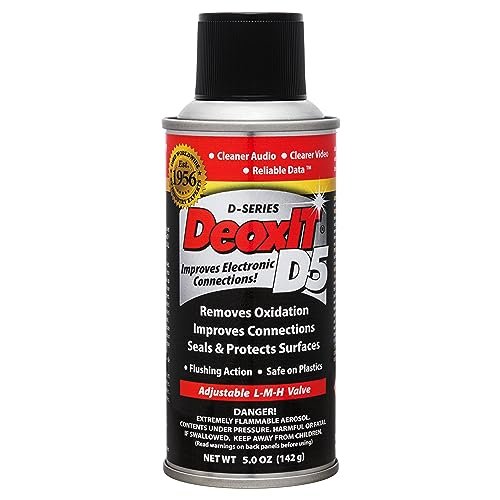
Over the years, I have revived dozens of scratchy guitar pots, corroded battery terminals, and dusty vintage receivers. I have tested both DeoxIT and WD-40 Specialist Contact Cleaner extensively in these restoration projects. In this guide, you will learn exactly how these two formulas differ and which one you should grab for your specific repair job.
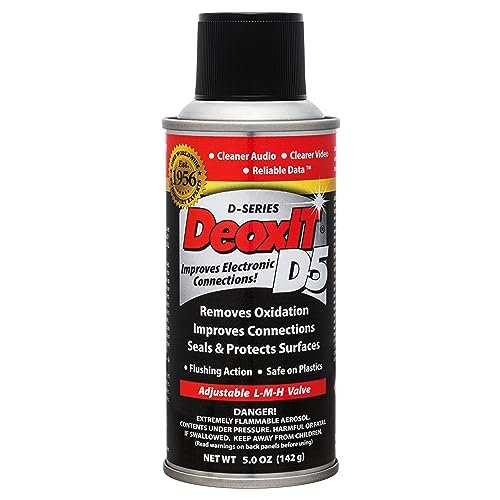
Key Features: CAIG DeoxIT Contact Cleaner, 5% Spray, 5 oz
I keep a can of DeoxIT D5 on my workbench at all times because it does far more than flush away surface dust. This specialized formula contains 5% active DeoxIT ingredients designed to chemically dissolve oxidation and corrosion on metal surfaces. It leaves behind a microscopic protective barrier that prevents future tarnish without clogging signal paths. The adjustable flush valve on the can lets you control the spray pressure, which prevents messy overspray on delicate circuit boards. Unlike simple solvents, this solution actually improves electrical conductivity by deoxidizing metal contacts rather than just washing them. You will find it invaluable for vintage audio gear, guitar electronics, and automotive wiring harnesses.
- Deoxidizing action that chemically dissolves surface tarnish and rust on metal contacts.
- 5% active ingredients diluted in a fast-evaporating solvent base.
- Adjustable spray nozzle featuring low, medium, and high pressure settings.
- Protective lubricating film left behind to guard against future moisture damage.
- Safe for metals and most plastics commonly used in vintage and modern electronic components.
Pros
- Actively improves signal quality by removing chemical oxidation.
- Adjustable valve prevents wasting expensive product on small components.
- Long-lasting protection means you do not have to clean the same contact repeatedly.
- Highly concentrated formula requires only a quick burst to be effective.
Cons
- Significantly more expensive per ounce than standard contact cleaners.
- Leaves a mild residue that might attract dust in completely open, unsealed environments.
Best for: Guitarists, vintage audio collectors, and technicians working on heavily oxidized or corroded metal contacts.
Expert Opinion: If you are dealing with scratchy potentiometers or vintage gear that has sat in a basement for decades, DeoxIT is the only product that reliably chemically restores the metal contacts.
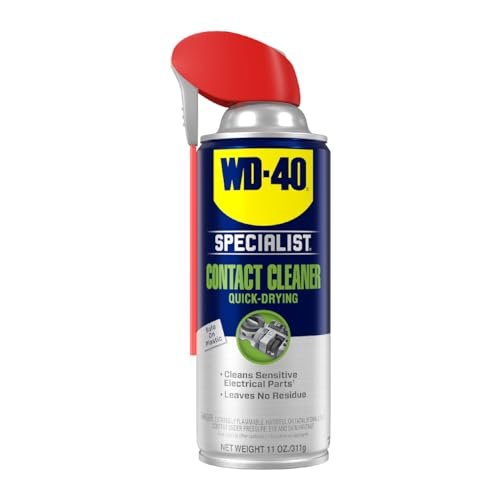
Key Features: WD-40 Specialist Contact Cleaner Spray, 11 oz.
When I need to blast away grease, flux, or grime from a modern printed circuit board, I reach for WD-40 Specialist Contact Cleaner. This quick-drying formula evaporates in seconds, leaving absolutely no residue behind on sensitive parts. It is highly effective at clearing out oil, dirt, flux residue, and condensation from electrical components. The smart straw design allows you to flip up for a pinpoint stream or flip down for a wider spray pattern. Since it is safe on most plastics, rubbers, and metals, you can use it confidently on computer parts and automotive sensors. You get a massive 11-ounce can at a very affordable price point, making it perfect for large-scale cleanup jobs.
- Fast-evaporating solvent that dries rapidly without leaving any oily film or residue.
- Smart Straw nozzle system for switching easily between wide spray and pinpoint accuracy.
- Safe on sensitive plastics, rubbers, and metals, though testing on a small area first is recommended.
- Industrial-strength formula designed to blast away heavy oil, dirt, and condensation.
- Excellent dielectric strength to prevent electrical shorts during application.
Pros
- Highly cost-effective option for cleaning large circuit boards or multiple components.
- Dries almost instantly, allowing you to power up electronics quickly after cleaning.
- Zero-residue finish makes it perfect for optical sensors, switches, and keyboards.
Cons
- Does not contain chemical deoxidizers to remove heavy, baked-on corrosion.
- Lack of protective lubrication leaves bare metals vulnerable to future oxidation in humid environments.
Best for: PC builders, automotive mechanics cleaning sensors, and anyone needing a fast-drying, residue-free wash for dirty electronics.
Expert Opinion: For everyday dirt, dust, and flux removal, this budget-friendly option cleans beautifully without leaving anything behind to attract debris.
deoxit vs wd40 contact cleaner: Key Differences That Matter
Performance Comparison
DeoxIT acts as a chemical rejuvenator. It actively dissolves the microscopic layers of metal oxides that build up on copper, silver, and gold surfaces. WD-40 Specialist Contact Cleaner works as a heavy-duty flushing solvent. It blasts away physical contaminants like grease, dirt, and wet condensation.
If you spray the WD-40 product on an old, oxidized volume pot, the scratchy noise will likely return within a few weeks because the metal underneath remains oxidized. Using DeoxIT on that same pot solves the issue long-term because it cleans and seals the metal surface.
Price/Value Analysis
A five-ounce can of DeoxIT is expensive. It easily costs double the price of a much larger eleven-ounce can of the WD-40 Specialist product. You must look at how much product you actually use per application. DeoxIT requires only a tiny, targeted spray to do its job. WD-40 is meant to be sprayed liberally to wash away grit, meaning you will empty the can much faster during large cleaning tasks.
Build Quality Comparison
The CAIG DeoxIT can features a clever, adjustable spray valve with low, medium, and high settings. This mechanical control is fantastic for delicate work where you cannot afford to flood a circuit board. WD-40 utilizes its patented Smart Straw system. This plastic nozzle flips up for a targeted stream and down for a wide mist. The WD-40 straw is permanently attached, which means you will never lose it in a messy toolbox. CAIG’s nozzle feels more precise, whereas the WD-40 spray can feel a bit blast-heavy if you are not careful with your finger pressure.
User Experience Differences
Spraying DeoxIT leaves a wet, slightly oily film on the contacts. This lubricant protects the metal and keeps moving parts sliding smoothly. WD-40 Specialist evaporates almost instantly. It leaves the surface completely dry and free of any residue. Handling DeoxIT requires more cleanup if you accidentally overspray onto surrounding plastic housings. The WD-40 cleaner is much more forgiving for quick, messy jobs because the excess liquid simply vanishes into the air.
Which Should You Choose?
If you work with vintage stereo amplifiers, guitar input jacks, or old battery terminals, choose DeoxIT. This specialized formula is designed to dissolve metal corrosion and chemically treat the contact point to prevent future tarnish. It will save you from having to replace expensive components by restoring metal conductivity that standard cleaners cannot touch.
On the other hand, choose WD-40 Specialist Contact Cleaner for modern electronic maintenance, computer motherboards, and dirty automotive sensors. You can spray this formula liberally to flush away dust, grime, and solder flux. The zero-residue, fast-evaporating properties make it safe for sensitive printed circuit boards and components that must remain bone dry.
My ultimate recommendation is to have both on your workbench. Keep a can of WD-40 Specialist for general cleanup tasks, and save your precious DeoxIT for those critical moments when you need to restore a failing electrical signal.
Frequently Asked Questions
Q: What is the main difference when comparing deoxit vs wd40 contact cleaner?
A: DeoxIT chemically dissolves metal oxidation and leaves a protective lubricating barrier. WD-40 Contact Cleaner is a quick-drying solvent designed to blast away dirt, oil, and dust without leaving any residue.
Q: Can I use WD-40 Specialist Contact Cleaner on potentiometers?
A: Yes, but only to clean out loose dirt and dust. If the potentiometers are scratchy due to oxidation or wear, you will need a deoxidizer like DeoxIT to chemically restore the metal contact path and stop the noise.
Q: Is DeoxIT safe to use on plastics?
A: The standard DeoxIT D5 formula is safe for most modern plastics. However, vintage plastics can sometimes react poorly, so you should always test a tiny amount on an inconspicuous area first.
Q: When looking at deoxit vs wd40 contact cleaner, which one is better for vintage stereo receivers?
A: DeoxIT is almost always the superior choice for vintage stereo receivers. These old machines suffer from heavy oxidation on copper and silver contacts, which WD-40’s standard solvent spray cannot chemically remove.
Q: Does WD-40 Specialist Contact Cleaner leave a residue?
A: No, it is specifically formulated to dry incredibly fast and leave absolutely no residue behind. This makes it ideal for sensitive sensors and computer hardware.
Q: Can I use regular WD-40 Multi-Use Product as a contact cleaner?
A: Absolutely not. Regular WD-40 leaves a thick, non-conductive oil layer that can attract dust, gum up delicate components, and ruin electrical contacts over time. Only use the dedicated WD-40 Specialist Contact Cleaner for electronics.
Q: Is DeoxIT worth the high price tag?
A: Yes, a single can of DeoxIT lasts a very long time because you only need a microscopic amount to treat a connection. It saves you money in the long run by permanently fixing scratchy signals that cheaper cleaners cannot resolve.
When you purchase a product through Amazon links on kitchinprep.com, we may earn a small commission at no extra cost to you. We may earn a commission on qualifying purchases made through our links, including those from Amazon and other partners, at no extra cost to you.

Kris S. Cary is the founder of KitchinPrep.com and a passionate kitchen enthusiast with over three years of experience in the culinary world. A graduate of the Culinary Management, A.S. program at Daytona State College in Daytona Beach, USA, Kris spent two years honing their skills and deepening their love for cooking and kitchen essentials. Specializing in kitchen baking tools, Kris is dedicated to sharing practical tips, insightful product reviews, and expert guides to help home cooks elevate their baking and cooking game. When not testing the latest kitchen gadgets, Kris is likely whipping up something delicious or dreaming up new ways to inspire culinary creativity.