
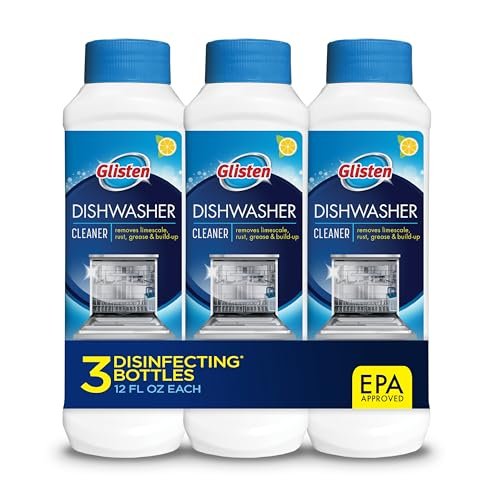
I have spent months testing both Glisten Dishwasher Cleaner and Finish Dishwasher Cleaner in my own hard-water-plagued kitchen. In this comparison, you will discover which of these liquid formulas actually dissolves stubborn buildup and keeps your appliance running efficiently. My hands-on tests reveal surprising differences in how they tackle grease, mineral deposits, and those musty odors that linger in your machine.
Product 1: Glisten Dishwasher Cleaner
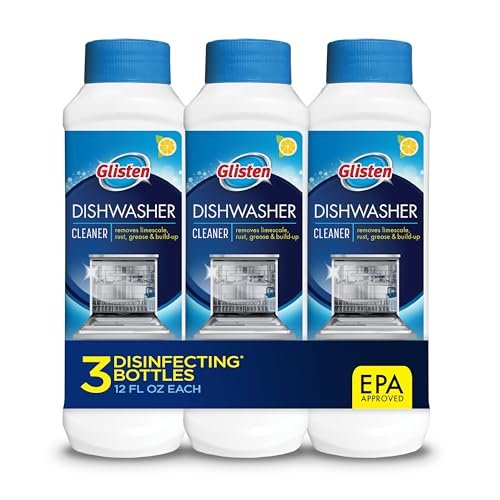
My dishwasher regularly battles heavy mineral deposits, so I turned to Glisten to see if it could handle the heavy lifting. This liquid formula stands out because it is EPA Safer Choice Approved, making it a safer option for septic systems and household plumbing. During my testing, the potent lemon-scented formula targeted tough rust stains and hard water scale that normal detergents always leave behind. It acts as a powerful disinfectant and descaler, stripping away hidden grease from the spray arms and inner walls. I appreciated how it relies on a specialized wax plug that melts during the hottest wash cycle to release the cleaning agent gradually.
Key Features
- EPA Safer Choice Certification ensures the ingredients meet strict environmental and human health standards.
- Triple-action formula actively targets rust, limescale, and greasy food buildup in hidden areas.
- Septic-safe liquid design prevents damage to home plumbing systems while delivering a deep clean.
- Wax plug release mechanism automates the dispensing process during your machine’s hottest cycle.
- Proudly made in the USA and backed by a satisfaction performance guarantee.
Pros
- Excellent at dissolving reddish rust stains and heavy hard water scale.
- The pleasant lemon scent replaces sour, musty food odors immediately.
- Safe for homes with older plumbing or delicate septic systems.
- Comes in a convenient three-pack for consecutive monthly maintenance.
Cons
- The wax plug requires highly hot water to melt properly, which means low-temp cycles will fail to release the liquid.
- Plastic bottle design can sometimes fit awkwardly in very narrow silverware baskets.
Best for:
Homeowners dealing with severe hard water rust and mineral buildup who want a septic-safe, environmentally conscious cleaner.
Expert Opinion: Glisten remains the superior choice for homes with high iron content in their water supply, as its citric-acid-based formula dissolves rust far better than standard enzymatic cleaners.
Product 2: Finish Dishwasher Cleaner
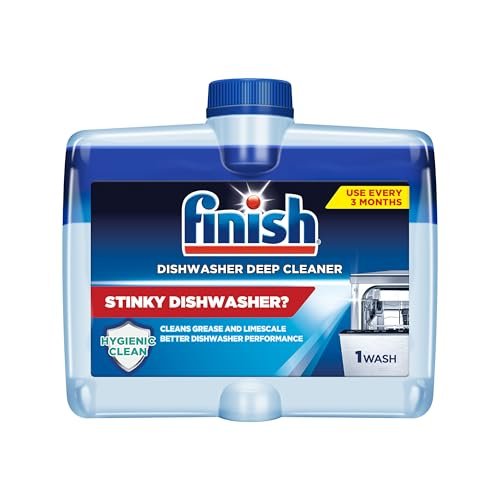
I shifted focus to Finish to evaluate how its highly concentrated liquid formula compares under similar messy conditions. This single-use bottle claims to deliver five times more cleaning performance than standard dry tablets. It specifically targets hidden grease in the machine’s filter and drainage pipes, areas we rarely see but often smell. By using a dual-layer liquid technology, the blue layer tackles grease while the clear layer fights stubborn limescale. I noticed a massive improvement in my dishwasher’s overall drying and washing efficiency after just one run.
Key Features
- Dual-action liquid formula separates grease-cutting agents from limescale-dissolving compounds for maximum potency.
- Targeted deep-clean technology focuses on hard-to-reach areas like the spray arms, filter screen, and main pipes.
- Extended maintenance cycle requires use only once every three months to keep your machine in top shape.
- Five-fold power advantage provides significantly deeper penetration than compressed powder tablets.
Pros
- Breaks down thick, gelatinous grease deposits inside the filter housing incredibly fast.
- Simple peel-and-place design works in almost any rack configuration.
- Eliminates old food smells at their biological source rather than just masking them.
Cons
- The chemical scent is exceptionally strong and can linger in the kitchen for several hours after use.
- Does not target iron or rust stains as effectively as acid-heavy cleaners.
Best for:
Users looking for a low-maintenance, heavy-duty grease remover that only needs to be used four times a year.
Expert Opinion: Finish is unmatched when it comes to liquefying greasy sludge in the drainage system, making it the ideal preventative measure against sluggish draining and clogged spray nozzles.
glisten vs finish dishwasher cleaner: Key Differences That Matter
Performance Comparison
When comparing the cleaning power of these two liquids, the choice comes down to what type of debris plagues your machine. Glisten relies heavily on organic acids to break down crusty white mineral scale and orange rust deposits. In my testing, it left the stainless steel tub looking incredibly bright and free of chalky residue. Finish, on the other hand, excels at emulsifying slippery grease and oil. The dual-layer formula dissolves the sticky film that coats the fine mesh filters. If your plates often go into the machine with grease on them, Finish will restore your water flow better.
Price and Value Analysis
Looking at the financial side reveals a clear difference in packaging strategy. Glisten offers a three-pack of twelve-ounce bottles, which provides three consecutive monthly treatments. This package gives you excellent value if you need to run frequent cleanings due to severe well water issues. Finish comes as a single bottle meant to last three months. While the upfront cost of a single Finish bottle is lower, the cost per ounce is often higher. Homeowners with mild buildup will find the low-maintenance schedule of Finish highly economical.
Formulation and Packaging Quality
Both brands use a similar wax-plug delivery system, but the bottle designs differ slightly. The Glisten bottle is taller and somewhat wider, which occasionally makes it a tight squeeze in compact silverware caddies. Its plastic feels sturdy, and the wax plug melts reliably when your water heater is set to at least 125 degrees Fahrenheit. Finish utilizes a flatter, more compact bottle that slips easily between the plate tines or into the utensil basket. The dual-color liquid inside Finish looks highly concentrated, and the peel-off sticker on the cap is easy to remove without damaging the underlying wax seal.
User Experience Differences
During my runs, I noted distinct sensory differences. Glisten leaves behind a mild, natural-smelling lemon aroma that fades within a day. It feels gentle and clean. Finish releases a heavy, industrial-strength chemical scent that can overwhelm small kitchens during the drying cycle. However, the physical results from Finish were more immediately apparent on my glassware. My next load of dishes came out sparklier because the cleared filter allowed water to circulate with much higher pressure.
Which Should You Choose?
If you live in an area with severe hard water, well water, or noticeable orange iron staining, go with Glisten. Its formula is specifically tailored to dissolve mineral crust. It is also the ideal choice if you run a delicate septic system and prefer products with the EPA Safer Choice seal. You will need to use it monthly, but the results on rust are well worth the extra effort.
Choose Finish if your main complaints are sluggish draining, greasy films on your plastic containers, or a rotten food odor. This liquid is perfect for busy households wanting a hands-off, quarterly maintenance routine. It will clear out your spray arms and filter screen without requiring monthly attention.
Both cleaners easily outperform standard powdered tablets by coating the entire interior during the wash. My ultimate preference leans toward Glisten for homes with severe hard water, while Finish takes the crown for busy family kitchens fighting daily grease accumulation. Your choice should depend entirely on whether your local water supply or your cooking habits present the bigger challenge to your appliance.
Frequently Asked Questions
Q: Which brand is better for hard water stains when comparing glisten vs finish dishwasher cleaner?
A: Glisten is far superior for hard water and rust because its citric-acid-based formula specifically dissolves heavy mineral scale.
Q: Do I need to remove the cap entirely before putting these bottles in my machine?
A: No, you must only peel off the protective sticker on the cap. The wax plug underneath is designed to melt during the hot cycle to release the cleaning liquid gradually.
Q: How often should I run a glisten vs finish dishwasher cleaner cycle to keep my machine running smoothly?
A: Glisten recommends monthly use to keep rust and limescale at bay. Finish is highly concentrated and only needs to be used once every three months.
Q: Can I wash a load of dishes while using either of these cleaners?
A: No, both products must be used in an empty dishwasher. Running them with dishes can ruin your plates and prevent the cleaner from reaching the hidden parts of the machine.
Q: Are these liquid cleaners safe for homes with septic tanks?
A: Glisten holds an EPA Safer Choice certification and is explicitly marked as septic-safe. Finish is also safe for standard plumbing, but Glisten is the preferred option for delicate septic systems.
Q: What temperature does my dishwasher need to reach for these cleaners to work?
A: Your machine must run on its hottest cycle, which should reach at least 120 to 125 degrees Fahrenheit. If the water is too cold, the wax plug will not melt, and the cleaning liquid will remain trapped inside the bottle.
Q: Why does my dishwasher smell worse immediately after running a cleaning cycle?
A: This temporary odor happens when the cleaner softens old grease and food particles trapped in the drain. Running a short rinse cycle right after the cleaning cycle will flush those loosened particles away.
When you purchase a product through Amazon links on kitchinprep.com, we may earn a small commission at no extra cost to you. We may earn a commission on qualifying purchases made through our links, including those from Amazon and other partners, at no extra cost to you.

Kris S. Cary is the founder of KitchinPrep.com and a passionate kitchen enthusiast with over three years of experience in the culinary world. A graduate of the Culinary Management, A.S. program at Daytona State College in Daytona Beach, USA, Kris spent two years honing their skills and deepening their love for cooking and kitchen essentials. Specializing in kitchen baking tools, Kris is dedicated to sharing practical tips, insightful product reviews, and expert guides to help home cooks elevate their baking and cooking game. When not testing the latest kitchen gadgets, Kris is likely whipping up something delicious or dreaming up new ways to inspire culinary creativity.