
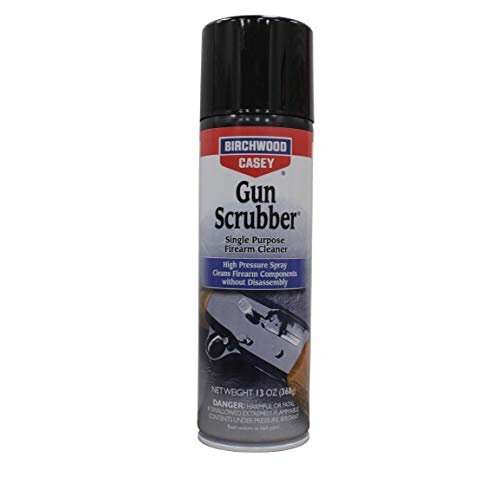
I have spent years cleaning everything from carbon-caked AR-15 bolts to greasy truck rotors using both Birchwood Casey Gun Scrubber and CRC Brakleen. In this comparison, I will share my hands-on experience to help you understand the chemical differences, cost tradeoffs, and safety risks of using these two powerful solvents on your firearms. You will discover when it is smart to save money with brake cleaner and when you absolutely must reach for the dedicated gun formula.
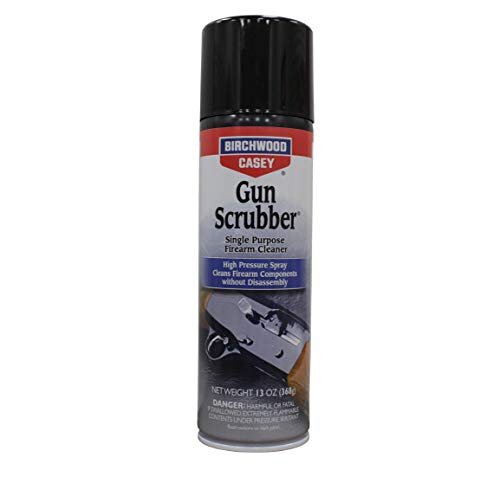
Birchwood Casey Gun Scrubber Cleaner 15-Ounce Aerosol
I keep a can of Birchwood Casey Gun Scrubber on my workbench specifically for deep-cleaning filthy firearm actions. This fast-evaporating cleaner cuts through burnt gunpowder, old grease, and stubborn carbon buildup in seconds without leaving a greasy residue behind. Using the pressurized jet with the included straw lets me blast away grit from hard-to-reach trigger groups. Birchwood Casey designed this formula to help eliminate gun jams while improving reliability during long shooting sessions. You do need to use caution because this potent solvent may harm finished surfaces, plastics, and rubber grips. I always test it on a hidden spot first to make sure it will not melt my modern polymer frames.
- High-pressure blasting spray clears out carbon, grease, and grit instantly.
- Fast-evaporating formula leaves zero residue behind, meaning you can lubricate immediately after.
- Included extension tube targets hard-to-reach areas like gas ports, ejectors, and chambers.
- Designed specifically to prevent jams and improve mechanical reliability in firearms.
Pros
- Dissolves baked-on carbon fouling much faster than standard CLP sprays.
- Leaves metal surfaces completely dry and ready for fresh high-quality oil.
- Excellent for deep-cleaning complex semi-automatic actions without full disassembly.
Cons
- Can severely damage or melt certain plastics, synthetic stocks, and rubber grips.
- More expensive per ounce than industrial degreasers.
Best for:
Shooters who want a dedicated, high-pressure firearm degreaser and do not mind paying a premium for a proven gun-specific formula.
Expert Opinion: This solvent is unmatched for blowing stubborn carbon out of AR-15 bolt carrier groups, but you must keep it far away from cheap plastic components and delicate wood finishes.
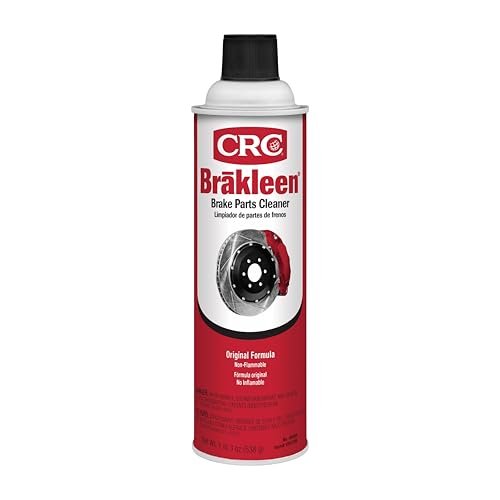
CRC BRAKLEEN Brake Parts Cleaner – Non-Flammable
I first started using CRC Brakleen on my guns when I ran out of dedicated cleaning solvents during a heavy shooting weekend. This original brake parts cleaner is famous for its raw degreasing power, stripped-down chemical composition, and fast drying time. The non-flammable formula relies on heavy-duty chlorinated solvents to instantly dissolve grease, oils, and stubborn carbon deposits. Because it has no lubrication additives, it leaves metal parts completely bare and stripped of all protection. You must be extremely careful around non-metal parts since this chemical will easily melt plastics, ruin finishes, and dry out rubber seals. It is a highly effective, industrial-strength option that costs a fraction of the price of specialized gun cleaners.
- Heavy-duty chlorinated formula strips away oils, brake fluid, grease, and carbon instantly.
- Non-flammable chemical composition provides an extra layer of safety when working in enclosed garage spaces.
- Fast-evaporating action dries in seconds, leaving no film or residue on metal surfaces.
- Highly pressurized spray can blasts away loose debris from deep crevices.
Pros
- Incredibly cheap and widely available at any local auto parts store.
- Unbeatable raw degreasing power for heavy, caked-on cosmoline or storage grease.
- Large can size provides much more cleaning volume for your money.
Cons
- Highly toxic fumes require excellent ventilation and chemical-resistant gloves.
- Instantly ruins or melts many firearm plastics, paint fills, and polymer frames.
Best for:
Budget-conscious gun owners who need to degrease all-metal firearms, surplus rifles, or heavily fouled metal parts in a well-ventilated area.
Expert Opinion: While CRC Brakleen is an incredibly powerful degreaser for steel parts, its aggressive chemical makeup makes it a risky choice for modern polymer pistols.
Gun Scrubber vs Brake Cleaner: Key Differences That Matter
Performance Comparison
Gun Scrubber is tailored specifically for the types of carbon and powder fouling found in firearms. CRC Brakleen is formulated to strip automotive grease, brake dust, and heavy oils. Both dry incredibly fast. However, Gun Scrubber tends to be slightly less harsh on certain high-end firearm finishes, while Brakleen will aggressively attack almost any paint, lacquer, or plastic it touches.
Price and Value Analysis
There is a massive gap in cost here. A standard can of brake cleaner costs a fraction of what you will pay for a specialized firearm aerosol. If you clean dozens of firearms or regularly strip down surplus rifles covered in cosmoline, brake cleaner will save you a substantial amount of money.
Chemical Composition and Build Quality
Gun Scrubber uses a chemical blend optimized to clean gun metal without immediately stripping away every trace of protective plating, though it still requires immediate re-oiling. The non-flammable CRC Brakleen relies on tetrachloroethylene. This chemical is highly effective but produces strong fumes and can cause rapid rust if you do not apply oil immediately after the metal dries.
User Experience Differences
Gun Scrubber comes with a precise, fine straw that fits tightly into the nozzle for detailed blasting. CRC Brakleen has a much wider, higher-volume spray pattern designed to cover large brake rotors. This makes Brakleen messier to use on small gun parts, often resulting in overspray that can ruin your workbench or nearby plastic gear.
Which Should You Choose?
Choose Birchwood Casey Gun Scrubber if you are working on modern semi-automatic handguns with polymer frames, such as Glocks or Sig Sauers. It is also the safer choice for expensive rifles with synthetic stocks or delicate finishes.
Choose CRC Brakleen if you are restoring old military surplus rifles, cleaning stripped steel receivers, or working strictly on all-metal components. It is the ultimate budget solvent for bulk degreasing tasks where plastic damage is not a risk.
Ultimately, your choice comes down to the materials of your firearms and your comfort with strong chemicals. I keep both on my shelf. I reserve the cheap brake cleaner for stripping down all-metal bolt assemblies and use the dedicated gun scrubber when I need to clean closer to polymer frames or delicate receiver finishes. Always remember to apply a high-quality gun oil immediately after using either product, as both will leave your metal completely unprotected against rust.
Frequently Asked Questions
Q: Is it safe to use brake cleaner on polymer gun frames?
A: No, it is highly risky. Many brake cleaners contain harsh chemicals that can soften, melt, or permanently discolor polymer frames and synthetic stocks.
Q: What is the main chemical difference when comparing gun scrubber vs brake cleaner?
A: Gun Scrubber is formulated specifically to target powder fouling and carbon while being slightly more forgiving to specialized gun finishes. Brake cleaner uses aggressive industrial solvents like tetrachloroethylene designed to strip heavy automotive grease, which can easily destroy firearm plastics and paint.
Q: Do I need to oil my gun after using these cleaners?
A: Yes, absolutely. Both of these products are solvents that strip away all oils, leaving the metal completely bare. You must apply a fresh coat of gun oil immediately after use to prevent rust from forming.
Q: Can I use non-chlorinated brake cleaner instead of gun scrubber?
A: Non-chlorinated brake cleaner is slightly safer for some plastics than the chlorinated version, but it can still damage polymer frames and delicate wood finishes. It is still highly recommended to test any auto cleaner on a hidden area first.
Q: Which is more cost-effective when looking at gun scrubber vs brake cleaner?
A: Brake cleaner is significantly cheaper, often costing a third of the price of a dedicated firearm solvent for a much larger can. It is highly cost-effective for all-metal parts, but the potential damage to plastic parts can make it expensive if you make a mistake.
Q: Does Gun Scrubber have a strong odor?
A: Yes, it has a very strong chemical odor. You should always use it in a well-ventilated area, preferably outdoors or in an open garage, to avoid inhaling the fumes.
Q: Will CRC Brakleen damage the bluing on a rifle barrel?
A: Generally, clean bluing on steel is resistant to brake cleaner, but any painted-on finishes, color-case hardening, or stock lacquers can be easily ruined by the harsh solvent.
When you purchase a product through Amazon links on kitchinprep.com, we may earn a small commission at no extra cost to you. We may earn a commission on qualifying purchases made through our links, including those from Amazon and other partners, at no extra cost to you.

Kris S. Cary is the founder of KitchinPrep.com and a passionate kitchen enthusiast with over three years of experience in the culinary world. A graduate of the Culinary Management, A.S. program at Daytona State College in Daytona Beach, USA, Kris spent two years honing their skills and deepening their love for cooking and kitchen essentials. Specializing in kitchen baking tools, Kris is dedicated to sharing practical tips, insightful product reviews, and expert guides to help home cooks elevate their baking and cooking game. When not testing the latest kitchen gadgets, Kris is likely whipping up something delicious or dreaming up new ways to inspire culinary creativity.