
I have spent years cleaning everything from greasy automotive gears to delicate jewelry pieces, and I have tested both heavy-duty parts washers and precision ultrasonic cleaners in my workshop. This guide will show you exactly how these two radically different cleaning technologies compare in real-world testing. You will learn which system fits your specific cleaning needs, budget, and workspace setup.
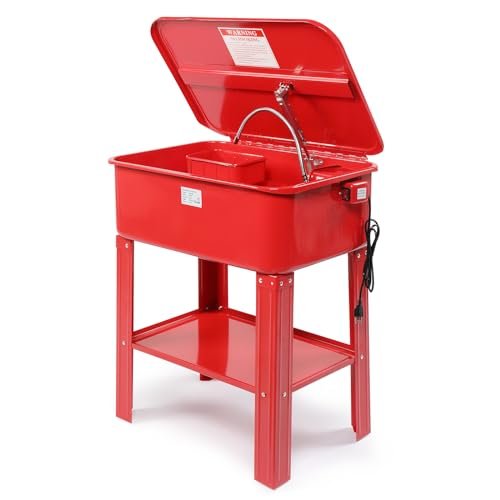
20 Gallon Portable Cabinet Parts Washer Electric Solvent Pump
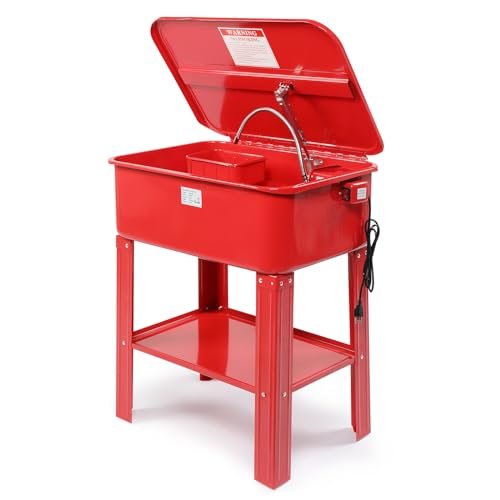
When dealing with heavy grease and thick grime on mechanical components, I always wheel out this 20 Gallon Portable Cabinet Parts Washer. It features a massive steel tank with a 12-gallon solvent capacity that easily swallows bulky car parts. The built-in electric pump delivers a 318 GPH maximum output, pumping cleaning fluid through a flexible nozzle to flush out hidden dirt. For added safety, the heavy steel lid features a hinged cover with a fusible link that snaps shut automatically if a fire occurs. I found the durable powder coating holds up exceptionally well against harsh petroleum-based or water-based solvents without rusting.
- 20-gallon tank capacity with a practical 12-gallon solvent operating level
- Electric pump delivering a high flow rate of 318 gallons per hour
- Fusible link safety lid that automatically closes in case of high temperatures or fire
- Removable internal work basket and detachable drying shelf for organizing small components
- Heavy-duty steel cabinet construction finished with an anti-rust powder coating
Pros
- Ample room for cleaning larger engine components, gears, and tools
- High-flow pump makes manual scrubbing fast and highly effective
- Solid steel construction feels durable in a busy garage environment
Cons
- Requires a large dedicated floor space in your workshop
- Manual scrubbing is still required for stubborn, baked-on grease
Best for:
Automotive mechanics, DIY restorers, and industrial workshops needing to clean large, grease-caked engine parts and tools.
Expert Opinion: This cabinet washer is an absolute workhorse for manual degreasing, offering the perfect balance of fluid volume and flow rate for dirty automotive work.
Magnasonic Ultrasonic Cleaner
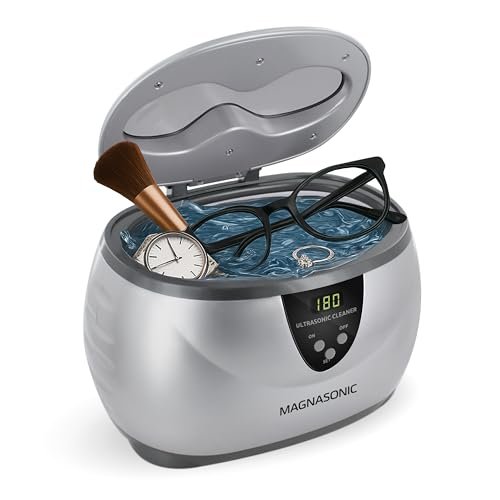
On the complete opposite end of the cleaning spectrum, I use the Magnasonic Ultrasonic Cleaner for delicate, intricate items. This compact device utilizes 42,000 Hz ultrasonic waves to generate millions of microscopic cleansing bubbles that penetrate deep crevices. It features a compact 20oz stainless steel tank that is perfect for jewelry, eyeglasses, watch bands, and small electronic components. You simply fill the chamber with tap water, choose one of the 5 preset cleaning cycles, and let the machine do all the work. The included plastic basket keeps your delicate items safe from scratching against the tank walls during the high-frequency cleaning cycle.
- High-frequency 42,000 Hz ultrasonic sound waves for deep, non-abrasive cleaning
- 20oz (600ml) stainless steel tank that resists corrosion, rust, and scratches
- Digital display offering 5 pre-programmed cleaning cycles from 90 to 480 seconds
- Safe, chemical-free operation using plain tap water or mild soap
- Includes a protective plastic basket to prevent item damage and make retrieval easy
Pros
- Completely hands-free cleaning operation with no manual scrubbing needed
- Safely reaches microscopic gaps and blind holes that brushes cannot touch
- Compact footprint fits easily on any countertop or desk
Cons
- Small capacity cannot accommodate tools or larger mechanical parts
- Will not remove heavy tarnish, oxidation, or thick baked-on automotive grease
Best for:
Home users, jewelers, hobbyists, and medical professionals needing to clean delicate valuables, eyeglasses, retainers, and tiny precision components.
Expert Opinion: The Magnasonic excels at effortless, microscopic cleaning of fragile items, making it the ultimate tool for restoration work that cannot tolerate abrasive scrubbing.
Parts Washer vs Ultrasonic Cleaner: Key Differences That Matter
Performance Comparison
Let’s look at how they actually clean. The cabinet parts washer relies on high-volume solvent flow and physical elbow grease to wash away thick, external layers of oil and grease. It is built for raw power and bulk dirt removal. The ultrasonic cleaner uses cavitation, where microscopic bubbles implode against surfaces to strip away contaminants at a molecular level. This physical phenomenon pulls dirt out of blind threaded holes and internal passages where a brush cannot reach.
Price/Value Analysis
Cost differences are substantial between these two systems. The 20-gallon cabinet parts washer represents a larger initial investment, and you must also factor in the ongoing cost of buying gallons of specialized solvent. In contrast, the Magnasonic unit is affordable and runs on cheap tap water mixed with a splash of dish soap. If you only clean small items, the desktop unit offers unmatched value, but shop owners will find the heavy-duty cabinet pays for itself in labor savings.
Build Quality Comparison
Material choices reflect their intended environments. The parts washer is built like a tank, using thick, powder-coated steel designed to survive drops, heavy impacts, and aggressive chemicals. It is a garage-grade tool. The ultrasonic cleaner is a consumer-grade appliance with a sleek plastic exterior and a thin stainless steel inner tub. While durable enough for tabletop use, the ultrasonic cleaner will not survive the rough handling of a commercial auto shop.
User Experience Differences
Operating these machines feels completely different. Cleaning parts in the cabinet washer is a hands-on, messy affair that requires wearing chemical-resistant gloves, protective eyewear, and standing over a solvent smell while scrubbing. The ultrasonic cleaner is a clean, push-button experience. You drop your items in the basket, press start, and walk away while the machine hums quietly on your desk.
Which Should You Choose?
Your choice depends on your daily cleaning tasks and the size of your components. If you are regularly rebuilding engines, cleaning carburetors, or maintaining farm equipment, the heavy-duty cabinet washer is the obvious choice. It gives you the physical space and fluid volume needed to tackle thick grease.
For those who need to clean jewelry, eyeglasses, watches, or tiny carburetor jets, the small ultrasonic cleaner is far superior. It eliminates the risk of scratching delicate surfaces and requires zero physical effort.
Ultimately, these two tools complement each other rather than compete directly. I keep both in my workspace because mechanical restoration requires different approaches at different stages. For heavy degreasing of structural iron and steel, use the cabinet parts washer. For the final, precise detailing of delicate components and intricate assemblies, trust the ultrasonic cleaner.
Frequently Asked Questions
Q: In a parts washer vs ultrasonic cleaner comparison, which one is better for cleaning dirty carburetors?
A: For initial cleaning of heavy exterior grease, a cabinet parts washer is best, but for clearing out tiny internal passages and jets, an ultrasonic cleaner is much more effective. Many mechanics use the cabinet washer first, then finish the job in an ultrasonic tank.
Q: Can I use solvent in my ultrasonic cleaner?
A: No, you should never use flammable solvents in an ultrasonic cleaner because the heat and high-frequency waves can create a severe fire hazard. Stick to water-based solutions, specialized ultrasonic soaps, or mild detergents.
Q: Which option is safer for the environment when comparing a parts washer vs ultrasonic cleaner?
A: The ultrasonic cleaner is much more environmentally friendly because it primarily uses water and biodegradable detergents. Cabinet parts washers often require petroleum-based solvents that require careful disposal and produce strong chemical fumes.
Q: Do I have to scrub parts when using a cabinet parts washer?
A: Yes, cabinet parts washers generally require manual scrubbing with a brush to break loose thick, stubborn deposits. The pump simply provides a continuous flow of solvent to wash the loosened dirt away.
Q: Can ultrasonic cleaners remove rust and heavy tarnish from metal parts?
A: Ultrasonic cleaners are excellent at removing dirt, oils, and carbon buildup, but they cannot remove rust or deep tarnish on their own unless you use a highly specialized, acidic cleaning solution.
Q: How often do I need to change the cleaning fluid in these machines?
A: You should change the water in your ultrasonic cleaner after every few uses to maintain cleaning efficiency. The solvent in a cabinet parts washer can last for several months of regular use, especially if your unit has a built-in filter to trap debris.
When you purchase a product through Amazon links on kitchinprep.com, we may earn a small commission at no extra cost to you. We may earn a commission on qualifying purchases made through our links, including those from Amazon and other partners, at no extra cost to you.

Kris S. Cary is the founder of KitchinPrep.com and a passionate kitchen enthusiast with over three years of experience in the culinary world. A graduate of the Culinary Management, A.S. program at Daytona State College in Daytona Beach, USA, Kris spent two years honing their skills and deepening their love for cooking and kitchen essentials. Specializing in kitchen baking tools, Kris is dedicated to sharing practical tips, insightful product reviews, and expert guides to help home cooks elevate their baking and cooking game. When not testing the latest kitchen gadgets, Kris is likely whipping up something delicious or dreaming up new ways to inspire culinary creativity.